
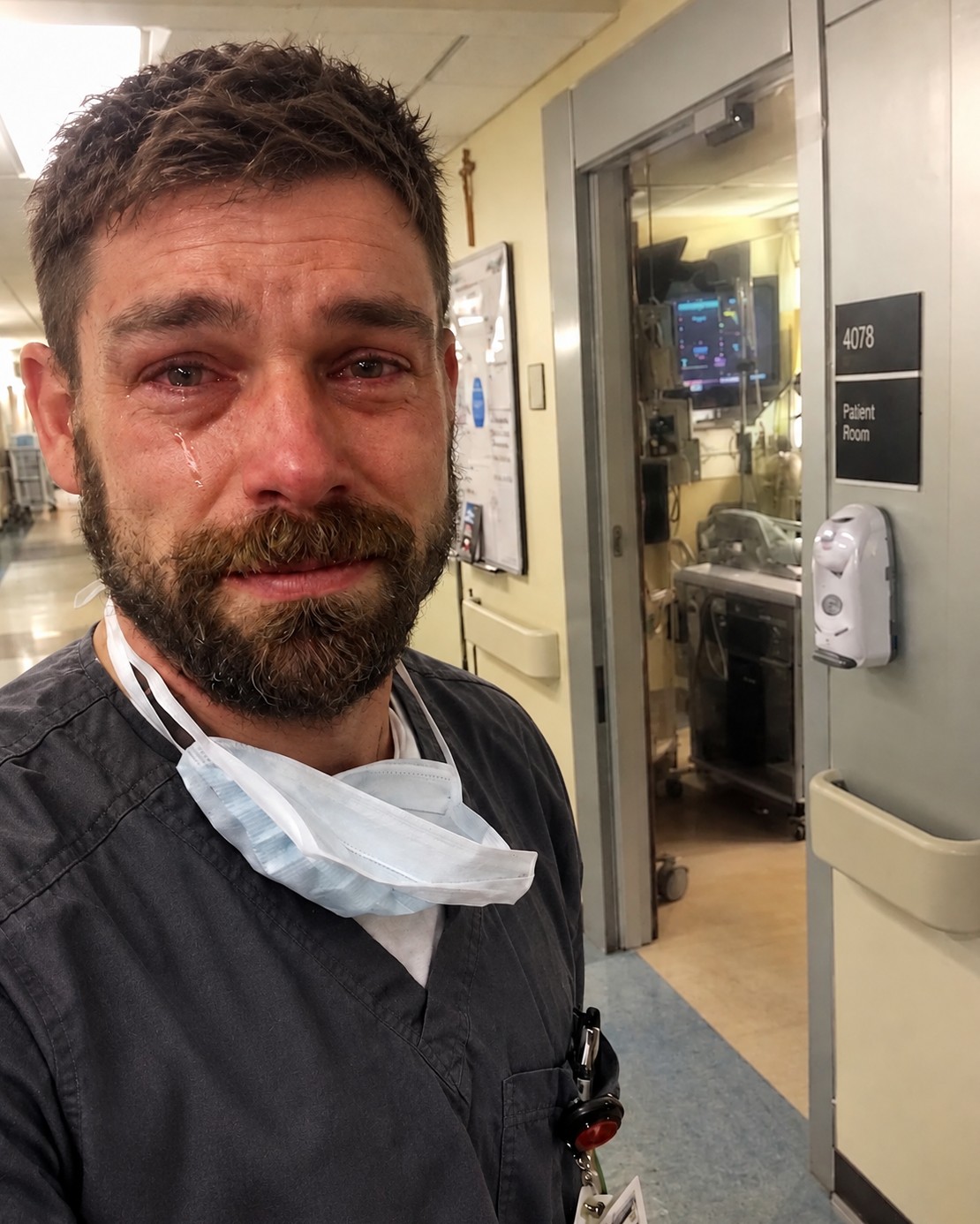
Part 1:
Marcus and I had been married for eleven years. For all those years, I had shared my husband with the hospital.
He was a gifted surgeon, and I had always been proud of the lives he saved. I knew how much his work meant to him.
But during the past year, something had changed.
I started wrapping up his dinner before I even sat down to eat mine.
He missed Thanksgiving.
He missed our wedding anniversary.
And he missed our daughter Lily’s eighth birthday.
Sometimes, Marcus didn’t come home at all.
Whenever I asked him why, he always gave me the same tired answer.
“We’re short-staffed, honey. Please don’t wait up.”
I wanted to complain. I wanted to tell him that Lily needed her father and that I needed my husband.
But whenever he finally came through the door, he looked so exhausted that I couldn’t bring myself to say anything.
Then, one night, I woke up and found him sitting on the edge of our bed.
His back was turned toward me.
His shoulders were shaking.
“Marcus?” I whispered.
He quickly wiped his face before turning around.
“Rough night,” he said quietly. “Go back to sleep.”
I believed him.
Or maybe I simply wanted to believe him.
So that Tuesday morning, after watching Marcus leave the house with his hospital badge clipped to his pocket, I decided to surprise him.
I packed his favorite lunch.
I added a slice of apple pie.
Then I slipped a small note underneath the fork.
It said:
You don’t have to take care of everyone. Let me have a turn.
I smiled as I closed the lunchbox.
For the first time in weeks, I felt excited about seeing my husband.
I drove to the hospital, imagining his face when I walked in.
I imagined him smiling.
Maybe he would finally take a proper lunch break.
Maybe we could sit together for twenty minutes and talk like we used to.
But the moment I stepped into the hospital, something felt wrong.
At the nurses’ station, I saw a woman I had known for years.
She smiled when she first noticed me.
Then the smile disappeared.
“Is Marcus around?” I asked cheerfully. “And please don’t warn him. He’ll tell me I shouldn’t have bothered.”
The nurse looked at the woman beside her.
Neither of them answered.
My smile slowly faded.
“Did something happen to him?” I asked. “Where’s Marcus?”
Still, neither woman spoke.
A strange feeling settled in my stomach.
I was beginning to get angry at the way they were looking at each other when I suddenly saw Marcus’s colleague, David, walking toward me.
He stopped the moment he saw me.
His face was as white as a sheet.
“I’m so glad you’re here!” I said, trying to smile again. “Can you tell me where Marcus is?”
David didn’t answer.
He simply stared at me.
Then I saw his eyes fill with tears.
My heart began pounding.
“David?”
He swallowed hard.
“He hasn’t told you anything, has he?”
Part 2:
My blood ran cold.
The lunchbox in my hand suddenly felt much heavier as I stared at David.
“Told me what?” I asked.
My voice came out sharp and breathless.
“David, what is going on? Is Marcus hurt? Did he collapse?”
David looked down the hallway before placing a trembling hand on my arm.
“Come with me.”
He guided me away from the busy corridor and into a private consultation room.
Once we were inside, he closed the door.
The sounds of the hospital became quieter.
I could still hear monitors beeping in the distance and nurses hurrying through the halls, but inside that room, everything felt strangely still.
David turned toward me.
“Clara,” he said softly, “Marcus isn’t working today.”
I stared at him.
“What?”
“He hasn’t been working as a surgeon for six months.”
A hollow laugh escaped me.
“That’s impossible.”
David didn’t say anything.
I shook my head.
“No. He leaves every morning with his scrubs. He stays overnight when there are emergency calls. He was crying on the edge of our bed last week because of a bad shift.”
David’s eyes filled with tears again.
“He wasn’t crying because of a bad shift.”
My stomach twisted.
“Then why was he crying?”
David lowered his voice.
“He was crying because he couldn’t bring himself to break your heart.”
I stared at him.
“What are you talking about?”
David walked to a small desk along the wall.
He opened a drawer and pulled out a thick medical file.
Then he brought it back to the table and gently pushed it toward me.
“Six months ago, Marcus came in for a neurological evaluation after doctors noticed a tremor in his hand.”
My fingers went numb.
David continued.
“The tests showed early-onset ALS. His fine motor control was already beginning to deteriorate.”
The room seemed to spin.
I couldn’t breathe.
I looked down at the file.
Inside were neurological scans, medical reports, progression charts, and paperwork showing that Marcus had voluntarily surrendered his surgical license.
I stared at the documents without understanding how the words could possibly belong to my husband.
“He stepped away from the operating room immediately,” David said.
His voice broke.
“He knew he could never risk a patient’s life. Even the smallest loss of control could have had terrible consequences.”
I slowly looked up.
“Why didn’t he tell me?”
David wiped his face.
“Because he couldn’t bear the thought of going home and looking at you and Lily and saying that the man who spent his entire life saving everyone else was losing control of his own body.”
Tears filled my eyes.
“He’s been lying to me.”
“He wasn’t pretending to be a surgeon,” David said gently. “He stopped performing surgeries six months ago. But he kept leaving the house at the same time every morning. He kept wearing his scrubs. He wanted you to think he was still working.”
My hand tightened around the lunchbox.
“Where is he?”
David looked at me.
“Where is my husband right now?”
David took a slow breath.
“He’s in the pediatric oncology garden.”
I stared at him.
“The garden?”
“He’s spent almost every day there for the past six months. He reads to the children. He sits with their families. He talks to parents. He helps however he can.”
David’s voice became softer.
“He wanted to keep helping people even after he could no longer hold a scalpel.”
My tears finally spilled over.
“Take me to him.”
Part 3:
I practically ran through the lower-level glass doors.
My heels struck the concrete as I hurried toward the secluded courtyard garden.
I barely noticed the nurses who turned to look at me.
I barely noticed the cold air against my face.
All I could think about was Marcus.
Then I saw him.
He was sitting on a wooden bench beneath a blossoming dogwood tree.
He was wearing a simple jacket over his worn blue scrubs.
A children’s storybook rested in his lap.
Beside him sat a little boy wearing a soft knitted beanie.
The boy was laughing as Marcus used different voices for the characters in the book.
For a moment, I simply stood there.
I watched my husband.
Then I noticed his hand.
There was a faint, involuntary twitch in his right hand as he tried to turn a thin page.
He stopped.
His jaw tightened.
Then he quietly used his left hand to help turn the page.
He immediately returned his attention to the little boy and continued reading with a warm smile.
He didn’t want the child to notice.
My heart broke.
Marcus hadn’t been staying away from our family because he didn’t love us.
He hadn’t been working himself into exhaustion because the hospital mattered more than we did.
He had been grieving.
He had lost the career he had devoted his entire life to, and he had been grieving it alone.
Instead of coming home and letting us see his pain, he had spent his remaining strength comforting children who were fighting their own terrible battles.
“Marcus,” I sobbed.
He froze.
Slowly, he lifted his head.
His dark eyes widened when he saw me standing at the entrance to the garden.
I was still holding the lunchbox.
But now tears were running down my face.
“Clara…”
His voice trembled.
He quickly apologized to the little boy, closed the book, and placed it beside him.
Then he stood.
The movement was awkward.
He took three slow steps toward me before stopping.
His eyes dropped toward the ground.
He looked like a child who had been caught doing something wrong.
“You weren’t supposed to find out like this,” he whispered.
Tears filled his eyes.
“I wanted to give you and Lily one more normal year.”
My heart shattered.
“I wanted you to remember me as strong,” he continued. “As the man who provided for you. Not…”
He swallowed.
“Not as someone who needed to be taken care of.”
I couldn’t listen anymore.
I dropped the lunchbox onto the grass.
Then I rushed forward and threw my arms around his neck.
I buried my face against his shoulder.
For one second, Marcus didn’t move.
Then his arms wrapped around me.
He held me tightly.
I could feel his chest rising and falling against mine.
For six months, he had carried the secret alone.
Now, finally, he let himself cry.
“You stupid, brave, wonderful man,” I sobbed into his collar.
He held me even tighter.
“Did you really think I only loved you because of what your hands could do in an operating room?”
Marcus pressed his face against my hair.
“I was terrified, Clara,” he whispered.
His voice broke.
“I’m so scared.”
I pulled away just enough to look into his tear-filled eyes.
“You don’t have to take care of everyone anymore.”
I reached for his trembling right hand.
I took it gently between both of mine and pressed it against my cheek.
“Let me have a turn.”
Marcus closed his eyes.
A fresh stream of tears ran down his face.
And for the first time since his diagnosis, he wasn’t hiding them.
Part 4:
We walked out of the hospital together that afternoon.
We held hands all the way to the parking lot.
Marcus never returned to the operating room as a surgeon.
But he also stopped hiding from the people who loved him.
That evening, we sat down with our eight-year-old daughter, Lily.
We knew the conversation would be difficult.
Marcus sat beside me on the couch while Lily sat across from us, watching both of our faces.
I held her hand.
“Daddy is sick,” I said gently.
Lily’s eyes immediately filled with fear.
“What kind of sick?”
Marcus reached for her hand.
His movements were already slower than before.
“It’s called ALS,” he explained. “It means my body is going to get tired faster than it should.”
“Are you going to get better?”
Marcus looked at me.
Then he looked back at Lily.
“I don’t know how much time I have,” he said honestly. “But I do know that I’m going to spend that time with you.”
Lily started crying.
I pulled her into my arms.
Marcus wrapped his arms around both of us.
From that night forward, our family stopped pretending everything was normal.
Instead, we learned how to make our new life meaningful.
Over the next two years, the disease slowly took more of Marcus’s physical strength.
But it never took away the heart of our home.
Marcus spent every morning he could making breakfast for Lily.
He walked her to the bus stop when his body allowed it.
He attended her school events.
He was there for recitals.
He celebrated our anniversary.
And he made sure he was present for all the ordinary Tuesday evenings he had once missed while working in the operating room.
Those ordinary moments became the most precious moments of our lives.
Marcus also continued helping families at the hospital.
With David’s support and the hospital board’s approval, he established the Hayes Patient Support Fund.
The foundation provided emotional and financial counseling to families dealing with terminal diagnoses.
It helped parents understand their options.
It helped families struggling with lost income.
It connected patients with grief counselors and support services.
The surgeon who had once saved lives with a scalpel now spent his remaining strength helping people survive the emotional pain that came with serious illness.
His hands became weaker.
His voice became softer.
But his wisdom and compassion seemed to grow stronger.
Then, during the third year after his diagnosis, Marcus became much weaker.
He could no longer do many of the things he had once done without thinking.
But he still wanted to be part of everything.
One quiet autumn afternoon, he sat in his favorite armchair beside the living room window.
A warm blanket covered his legs.
Outside, Lily was playing in the falling leaves.
Marcus watched her for several minutes.
Then he reached out his left hand and squeezed mine.
“Thank you, Clara,” he whispered.
His voice was faint but steady.
I leaned closer.
“For what, sweetheart?”
He smiled.
His dark eyes were filled with a peaceful warmth I hadn’t seen in years.
“For coming to the hospital that Tuesday.”
I smiled through my tears.
“That’s what you’re thanking me for?”
Marcus nodded.
“You saved my life long before I ever needed saving.”
I leaned down and kissed his forehead.
Marcus passed away peacefully in 2022, surrounded by the people he loved and by a home filled with warmth, laughter, and years of sweet memories.
And when I think of him now, I don’t remember him as the distant, exhausted surgeon who missed birthdays.
I remember the man who held my hand.
The man who finally allowed us to love him through the darkest part of his life.
The man who taught us that the greatest healing in the world doesn’t happen in an operating room.
It happens right at home.
Every time I look at Lily, I see him.
She had grown into a bright and compassionate young girl.
And even then, she was already talking about becoming a doctor.
She wanted to help people the way her father had.
Part 5:
Five years after Marcus’s death, the early autumn sun streamed through the glass atrium of the hospital’s pediatric wing.
Long golden patterns stretched across the freshly polished floors.
The hospital had changed over the years.
There were new departments, new equipment, and new faces.
But the quiet courtyard garden on the lower level had remained almost exactly the same.
The dogwood tree beneath which Marcus had once sat with a children’s storybook had grown taller and wider.
Its branches stretched proudly toward the afternoon sky.
Beside the tree stood a simple bronze plaque mounted on a dark slate pedestal.
The inscription read:
Dr. Marcus Vance (1981–2022)
Surgeon, Humanitarian, Father
“The greatest healing in the world doesn’t happen in an operating room—it happens right at home.”
I sat on the wooden bench beside the pedestal.
In my hands was a warm paper cup of black coffee.
The cool breeze carried the familiar scents of clean air and fallen leaves through the garden.
On my lap rested a leather-bound folder containing the annual report for the Marcus Vance Patient Support Fund.
What had started as a small project in our living room during Marcus’s final months had grown far beyond anything we had imagined.
The fund now supported more than twelve hundred families each year.
It provided grants for home healthcare.
It helped cover lost wages for spouses who had to leave work to care for loved ones.
And it placed grief counselors directly into pediatric and oncology wards across three states.
Marcus had once believed that losing his ability to operate meant losing his purpose.
Instead, he had created something that continued helping people long after he was gone.
I heard footsteps behind me.
I turned.
David walked through the glass doors into the courtyard.
He was now the Chief of Surgery.
He still wore his familiar navy scrubs, with a white lab coat thrown loosely over his shoulders.
His hair had begun to turn silver at the temples.
Five years had passed, but I could still recognize the same doctor who had sat across from me and told me the truth about Marcus.
“I knew I’d find you down here, Clara,” David said softly.
I smiled.
“I always stop by before the annual lecture.”
David walked over and sat beside me.
“How are things upstairs?” I asked.
“Chaotic, as usual,” he said with a quiet laugh.
He looked toward the dogwood tree.
“We had three emergency surgeries last night. I was in the operating room until four in the morning.”
He paused.
“But every time my hands get tired, I step over to the window, look down at this garden, and remember what Marcus used to say.”
I looked at him.
“What was that?”
David smiled.
“‘A scalpel can fix a heart, David, but only presence can comfort one.’”
His eyes became glassy.
“He was a better teacher during his final two years than most of us are in a lifetime.”
I looked at the bronze plaque.
“He loved this place,” I whispered.
“He loved those kids.”
“He did,” David said.
Then he nodded toward the glass entrance.
“Speaking of which, your star student is waiting in the auditorium.”
I smiled.
I closed the folder.
Then I stood.
David and I walked together through the hospital and up the wide marble staircase toward the main auditorium.
The hall was packed.
First-year medical residents filled the seats.
Nurses stood along the sides.
Attending physicians and pediatric specialists had gathered near the front.
And sitting in the first row was my daughter.
Lily was thirteen now.
She wore a crisp white coat that looked remarkably like the one her father had once worn.
She had grown so tall.
Her dark, expressive eyes and thoughtful smile were almost exactly like Marcus’s.
For her eighth-grade honors project, Lily had chosen to shadow the hospital’s pediatric palliative care team.
And that day, she was the guest of honor at the annual Marcus Vance Memorial Lecture.
I walked to the podium.
The room slowly became silent.
I looked at all the white coats in front of me.
Then I found Lily’s eyes.
She smiled.
“Thank you, everyone, for being here,” I began.
My voice echoed through the microphone.
“Five years ago, my husband, Dr. Marcus Vance, surrendered his surgical license.”
The room remained completely silent.
“For a long time, Marcus believed that without his hands, without his scalpel, and without his title as a surgeon, he had lost his purpose.”
I paused.
“But he eventually learned something much more important.”
I looked toward Lily.
“Marcus spent his entire career saving lives inside operating rooms. But it wasn’t until he stepped outside those doors—until he allowed himself to be vulnerable, to be seen, and to be cared for by the people who loved him—that he discovered what his true legacy could become.”
I held up the leather report.
“He learned that healing isn’t only about preserving life.”
I took a breath.
“It’s also about honoring the time we are given with one another.”
I looked around the auditorium.
“Because Marcus had the courage to tell the truth about what was happening to him, thousands of families have received help when they needed it most.”
The auditorium erupted into warm applause.
I stood there listening to the applause and thinking about the man who had once believed his life was ending the moment he could no longer hold a scalpel.
He had been wrong.
His life had changed.
His purpose had changed.
But his love had never disappeared.
After the lecture, doctors and residents gathered around the stage.
Many of them shared stories about Marcus and the lessons he had taught them.
Then Lily climbed the steps toward me.
She wrapped her arms tightly around my waist.
“You were amazing, Mom,” she whispered.
I kissed the top of her head.
“Your dad would be so proud of you, sweetie.”
I stepped back and looked at her white coat.
“Look at you.”
Lily smiled.
Then she looked up at me with quiet determination.
“I’m going to be a pediatric neurologist, Mom.”
My heart tightened.
“I want to be the doctor who helps families find hope when things get scary.”
I pulled her into another hug.
“I know you will, Lily.”
I kissed her forehead.
“I know you will.”
Later that evening, long after the auditorium had emptied and the hospital had settled into its quiet nighttime rhythm, Lily and I walked out through the front entrance together.
The crisp evening air touched our faces.
The sweet scent of autumn leaves drifted across the driveway.
I took my daughter’s hand.
Her grip was warm and steady.
For a moment, I looked back at the hospital.
There was a time when that building had represented everything I thought I was losing.
Now it represented something else.
It represented Marcus’s courage.
His compassion.
His love.
His legacy.
Lily squeezed my hand.
We turned away from the hospital and continued walking.
We didn’t step into the night with sadness or regret.
We stepped forward.
Into the cool autumn air.
Into the starlight.
Into the future.
Because the man who had loved us so deeply had left behind a light bright enough to guide us for the rest of our lives.
The End.
