
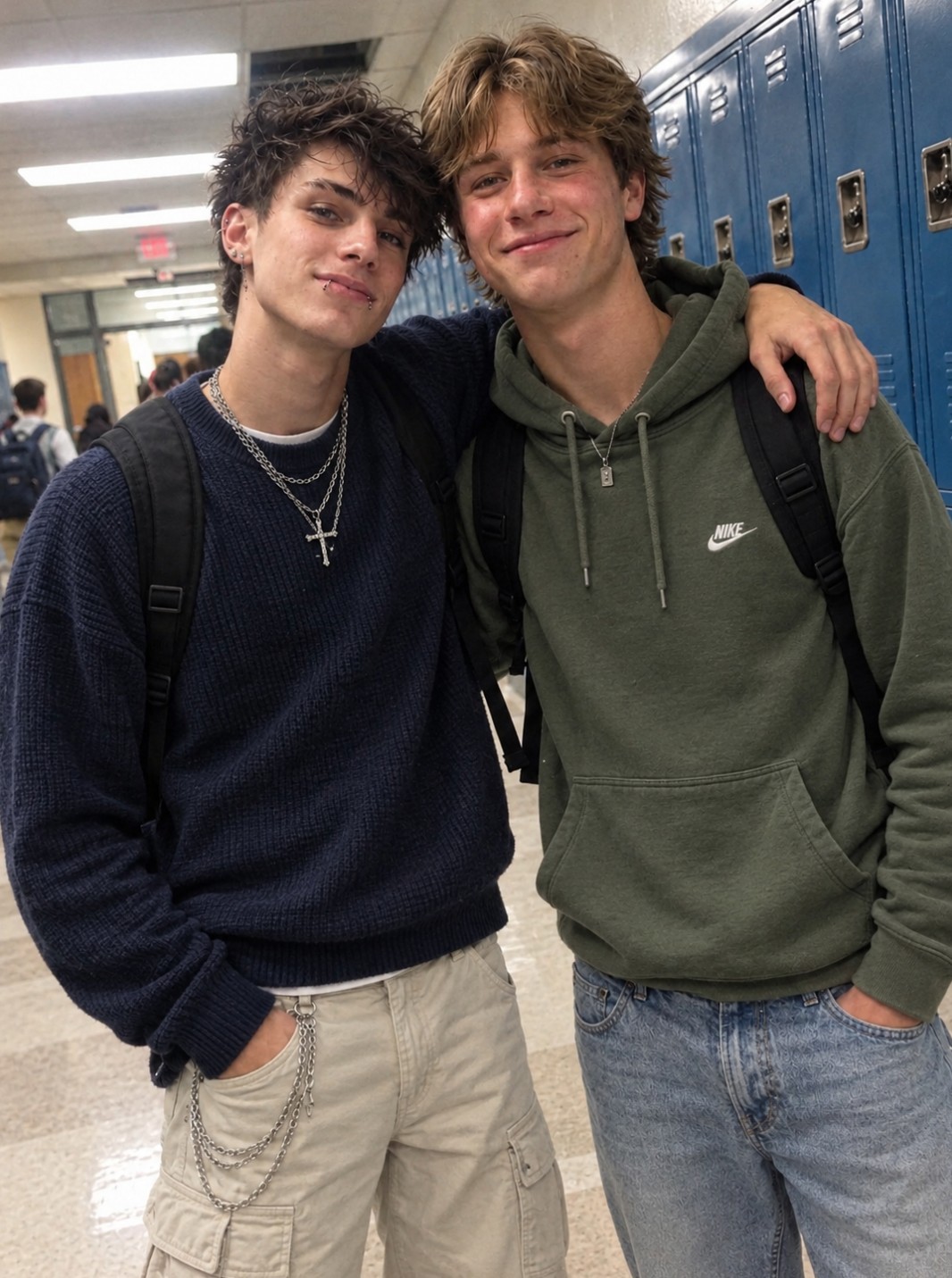
Part 1:
“Brenda, what are you talking about? Toby has been staying at your house since yesterday!” I said, gripping my coffee mug.
There was a long silence on the other end of the phone.
“Elena, I haven’t seen your son in weeks.”
For a moment, I thought I had misunderstood her.
“What do you mean you haven’t seen him? Gavin told me Toby was sleeping at your house last night!”
“And Gavin told me he was staying with Toby!”
My stomach dropped.
Our sons had been best friends since kindergarten. They were both sixteen years old, and for the past two months, they had supposedly been spending almost every weekend together.
Or so we had believed.
“Brenda, think carefully,” I said, my voice suddenly trembling. “When was the last time you actually saw Toby?”
“Early August, I think. Maybe the first week. What about Gavin?”
“It’s been about the same for me.”
Neither of us spoke for several seconds.
Eight weekends.
Eight entire weekends.
Where on earth had our sons been sleeping? What had they been doing? And why had they gone to so much trouble to keep it a secret from us?
I put my coffee down and immediately called Toby.
His phone went straight to voicemail.
I tried again.
Nothing.
My heart began pounding harder with every unanswered call.
“Gavin isn’t answering either!” Brenda cried through the phone. “Elena, something is wrong. I can feel it!”
“Maybe their phones are dead,” I suggested, although I didn’t believe my own words.
I opened my messages and searched for Toby’s most recent text.
There it was.
Mom, Gavin and I ordered pizza. Don’t wait up. Love you.
He had sent it the previous evening, just as he had done so many times before.
I stared at the message, suddenly wondering how many of his previous texts had been lies.
My fingers shook as I typed a reply.
Toby, I know you’re not at Gavin’s house. Call me right now. I’m worried sick.
The message showed as delivered.
But he didn’t read it.
“Elena,” Brenda whispered, her voice breaking, “what if something happened to them?”
“Don’t say that,” I replied quickly. “Please. Let’s not jump to conclusions.”
But the terrible possibilities were already racing through my mind.
Had they been in an accident? Had someone hurt them? Were they trapped somewhere, unable to contact us?
I tried to push those thoughts away, but every minute that passed made it harder.
We started calling their friends.
One by one, we asked whether anyone had seen Toby or Gavin recently. We contacted classmates, checked with parents we knew, and called the places where the boys usually spent their free time.
Nobody had seen them.
Nobody knew where they were.
Brenda even got into her car and drove past their usual hangouts, checking the basketball courts, the shopping center, the park, and the fast-food restaurants where the boys sometimes met after school.
She found nothing.
By midnight, Brenda had driven to my house. We sat opposite each other at my kitchen table, our phones resting in our hands as we waited for either boy to call.
Neither of us had the strength to pretend everything was fine anymore.
“Has Toby been acting strangely lately?” Brenda asked quietly.
I leaned back in my chair and tried to think.
At first, I had believed everything was normal. Toby was sixteen, after all. Teenagers wanted privacy. They wanted to spend time with their friends without answering a hundred questions from their mothers.
But now that I thought about it, there had been signs.
He always returned home looking exhausted.
Sometimes, he would barely say hello before heading straight to the shower. His clothes had become dirtier than usual, and his hands occasionally looked scratched or bruised.
Whenever I asked what he and Gavin had been doing, he gave me vague answers.
“Just hanging out, Mom.”
“Nothing special.”
“We played games and watched movies.”
I had accepted those explanations because I wanted to respect his growing independence.
Now, every little detail seemed suspicious.
“He’s been tired,” I admitted. “Really tired. But I thought he was just growing up. I thought maybe they were staying up all night playing video games.”
Brenda covered her face with both hands.
“I should have noticed something. I’m his mother. How could I not know where my own son was spending his weekends?”
“Don’t blame yourself,” I said, reaching across the table to touch her arm. “I didn’t know either.”
But the words offered little comfort.
The clock on the wall seemed unbearably loud.
One o’clock.
Two o’clock.
Three o’clock.
We barely spoke anymore. We simply stared at our phones, called the boys again, and listened to the same unanswered ringing.
By four in the morning, we had almost decided to call the police and report them missing.
We had no idea where our sons were, and the fact that they had been hiding their whereabouts for eight weeks made the situation even more frightening.
Then, at exactly 4:37 a.m., we heard something that made me jump.
A key turned in the front door.
I shot to my feet so quickly that my chair scraped across the kitchen floor.
The door opened.
Toby stepped inside.
For one brief second, relief flooded through me so powerfully that I nearly cried.
Then I realized he was alone.
There was no Gavin behind him.
“Where have you been?!” I shouted, rushing toward him. “Do you have any idea what you’ve put us through? We’ve been calling you all night!”
Toby stood in the hallway without answering.
“Where is Gavin?” Brenda demanded from behind me.
My son opened his mouth.
“Mom, I—”
“Don’t you dare lie to me!” I interrupted. “We’ve just discovered that you’ve been lying to us for two months! Two months, Toby! Where have you been spending your nights? And where is your best friend?”
He lowered his head.
I expected an excuse. Perhaps he would tell us that he had been staying somewhere with other friends, or that he had done something stupid and was afraid of being grounded.
I was furious, frightened, and desperate for answers.
But then Toby slowly raised his face.
And for the first time that night, I truly looked at him.
His cheeks were pale beneath the dirt. His eyes were red and swollen, and his entire body seemed to tremble. He looked as though he had been awake for days.
His clothes were filthy, and his shoulders sagged under a weight I couldn’t begin to understand.
Suddenly, my anger disappeared.
I grabbed the doorframe to steady myself as my knees threatened to give way.
“Oh God, Toby,” I whispered. “What have you done?”
He looked at me, and tears began gathering in his eyes.
“Why didn’t you tell me sooner?” I asked, my voice breaking. “Whatever is happening, you can tell me. Just please tell me where you’ve been.”
Toby swallowed hard.
Then he finally began to speak.
Part 2: The Secret Beneath the Bridge
Toby didn’t look like a teenager who had come home after a wild party.
He looked like someone who had spent weeks fighting to survive.
Under the dim hallway light, I could see that his clothes were covered in mud, dark grease, and rust. His jeans were torn at the knees, and his sneakers looked as though they had been dragged through a swamp.
His knuckles were bruised and raw. Deep, dark circles surrounded his hollow eyes, and his hands were covered in scratches and thick calluses.
But it wasn’t only his appearance that frightened me.
It was the smell coming from his clothes.
Damp wood. Motor oil. Stale water. Dried sweat.
Whatever my son had been doing, it certainly hadn’t involved sitting on a couch and playing video games.
“Toby, where is Gavin?” Brenda demanded, stepping out of the kitchen.
The moment she saw him properly, her anger vanished.
“Where is my boy?” she asked, hurrying toward him. “Is he hurt? Did something happen to him?”
Toby swallowed again. His throat seemed painfully dry.
Tears filled his red-rimmed eyes and rolled down his dirt-covered cheeks.
“He’s…” Toby began, but his voice failed him.
He took a shaky breath and tried again.
“He’s still there.”
“Where?” I asked.
“At the old train yard near the river. He’s guarding the equipment.”
Brenda stared at him in disbelief.
“Guarding what equipment? Toby, what are you talking about?”
I stepped closer and took my son’s hands.
They were ice-cold and rough beneath my fingers. His palms were covered in thick calluses, and several small cuts crossed his knuckles.
These were not the hands of a boy who had spent the last eight weekends relaxing at his best friend’s house.
“Toby,” I said gently, “look at me. What have you and Gavin been doing for two months?”
He wiped his face with the sleeve of his filthy shirt.
For several seconds, he seemed unable to decide where to begin.
Then he looked from me to Brenda.
“We weren’t just hanging out,” he admitted quietly.
Brenda’s eyes widened.
“What does that mean?”
“We’ve been building something. Well, not exactly building it from scratch. We’ve been trying to repair something that could help a lot of people.”
I exchanged a confused look with Brenda.
Toby took another breath.
“There’s a man living near the abandoned railyard. His name is Mr. Henderson. He used to work for the city, but he lost his home and ended up living in a makeshift camp beneath the river bridge.”
I had never heard the name before.
“Two months ago, Gavin and I saw him trying to repair an old diesel water pump,” Toby continued. “It was sitting near the camp, and it looked like it hadn’t worked in years.”
“A water pump?” Brenda repeated, clearly struggling to understand.
Toby nodded.
“The people living there needed it to drain the water away from their shelters. Mr. Henderson said it had once been used for industrial drainage, but it had broken down a long time ago. It was badly rusted, and several parts were missing.”
I listened in silence, trying to understand how this could possibly explain eight weekends of lies.
Then Toby told us about the flooding.
“Back in July, the city shut down the public water access lines in that area,” he explained. “Then the heavy summer storms came in August. The drainage system couldn’t handle all the rain, and the entire camp flooded.”
His voice grew stronger as he spoke, as though the memories were pushing their way out of him.
“There were families living down there, Mom. Families with little kids. Older people, too. They lost their blankets, their clothes, their food, everything they had managed to put together. Some of their shelters were almost completely destroyed.”
He paused, rubbing his eyes with the back of his hand.
“The city wouldn’t help them because the camp was unofficial. They said it wasn’t a recognized residential area, so there was no proper infrastructure for them to protect.”
I felt a cold sensation spreading through my chest.
“And you and Gavin decided to fix the pump?” I asked.
“Not at first,” Toby replied. “The first weekend, we just went there to bring them some leftover food. We thought we’d give it to them and go home.”
He looked down at his shoes.
“But then we saw a little girl standing in freezing, dirty water. She was shivering so badly she could barely speak. The water had mixed with sewage, and she was already getting sick.”
Toby’s voice cracked.
“She couldn’t have been more than six or seven years old. Her mother was trying to keep her warm with a wet blanket, and there was nowhere dry for them to go.”
He shook his head.
“Gavin and I looked at each other. We didn’t even have to say anything. We both knew we couldn’t just go home, sit on our comfortable couches, and play video games while those people were living like that.”
Brenda pressed her hand against her mouth.
I wanted to tell Toby that he should have come to us. I wanted to remind him that he was only sixteen, that he couldn’t carry the world’s problems on his shoulders, and that there were limits to what two teenagers could do.
But I couldn’t find the words.
Because my son wasn’t finished.
“We started asking Mr. Henderson questions,” Toby continued. “He explained how the pump used to work and what parts it needed. He had spent years working with industrial equipment, so he knew a lot about engines, pipes, and drainage systems.”
“Then what happened?” Brenda asked softly.
“We decided to help him repair it.”
Toby explained that he and Gavin had used their allowance money to buy secondhand tools and spare parts from a scrap metal yard. They searched through piles of discarded equipment, looking for anything that might still be useful.
Some parts were badly damaged. Others were rusted almost beyond repair.
But Mr. Henderson knew how to restore much of the equipment, and the boys were willing to learn.
“Every Friday, we’d tell you we were going to each other’s houses,” Toby said. “Then we’d ride our bikes out to the maintenance shed near the old train yard. We kept some of our tools there, and Mr. Henderson showed us what to do.”
He rubbed his tired eyes.
“We worked six to eight hours a night, sometimes longer. We dug drainage trenches, cleaned out blocked pipes, replaced broken sections, and worked on the pump engine piece by piece.”
I stared at him.
“You did all of that every weekend?”
He nodded.
“Sometimes we’d work until sunrise. We used generator lights because the shed had no proper electricity. When the water started rising in the lower trench, we couldn’t always stop. If we did, the water could reach the generator and shut everything down.”
Brenda sank onto the nearest chair.
“Oh, Gavin,” she whispered.
Toby looked at her, guilt spreading across his face.
“We didn’t tell you because we knew you’d stop us.”
“Of course we would have wanted you to be careful!” Brenda exclaimed, looking up at him. “You could have been injured! You could have drowned! You could have been electrocuted working around all that equipment and water!”
“I know,” Toby whispered.
“Then why?” I asked. “Why didn’t you trust us enough to tell us what you were doing?”
He stared at the floor.
“Because we knew what you’d say. You’d tell us it was dangerous. You’d tell us it wasn’t our responsibility. You’d say we should let the adults handle it.”
He looked up again.
“And maybe you would have been right about the danger. But we also knew the city wasn’t doing anything. Those people were still there, and every time it rained, they were afraid of losing everything again.”
I felt a painful lump form in my throat.
I wanted to be angry with him for lying.
I wanted to demand to know why he had thought it was acceptable to disappear every weekend without telling us where he was.
But I also began to understand why he had been so determined to keep going.
He had seen people who needed help, and he had decided that someone had to do something.
Unfortunately, he had made that decision without understanding just how frightened his mother would be.
Then Toby’s expression changed.
His eyes filled with fresh tears, and his breathing became quicker.
“But tonight…” he whispered.
A cold knot tightened in my stomach.
“What happened tonight?”
Toby pressed his trembling hands together.
“The river wall gave way.”
For a moment, the words didn’t make sense.
“What do you mean?” I asked.
“The rain on Thursday caused the dirt embankment to break apart. The river started pushing through the damaged section, and the camp began flooding again. The water rose much faster than we’d expected.”
He took a shaky breath.
“Gavin, Mr. Henderson, and three men from the camp are trying to hold the sandbag barrier in place. But the old pump jammed, and the water kept rising.”
Brenda stood up so quickly that her chair nearly fell over.
“My son is down there right now?”
Toby nodded.
“Gavin sent me back to get our heavy hydraulic jack and the spare fuel cans from your garage, Mom. We need the jack to lift part of the engine so Mr. Henderson can clear the blocked intake.”
“How long ago did you leave?” I demanded.
“About twenty minutes ago.”
“And you came all the way home on your bicycle in this weather?”
He nodded again.
I looked at my son, barely able to believe what I was hearing.
Then he looked directly at me, and the fear in his face nearly broke my heart.
“I didn’t mean to lie to you, Mom. I swear I didn’t do it because I didn’t love you or because I wanted to hurt you.”
His voice broke.
“I just couldn’t stand there and watch those people lose their homes when we might be able to help them.”
He wiped his cheeks, leaving another streak of dirt across his face.
“If we don’t get that pump running within the next hour, the water could destroy the last shelters they’ve got. There are about forty people down there, Mom. Some of them have nowhere else to go.”
For a few seconds, nobody spoke.
Then Brenda slowly turned toward me.
The anger was still there, buried beneath her fear and worry. We would deal with the lies later. We would talk about trust, responsibility, and the terrible risk our boys had taken.
But right now, two sixteen-year-olds and a group of people were facing a rising river.
And our sons needed help.
Part 3: Into the Mud
Before Toby could say another word, Brenda reached into her purse and pulled out her car keys.
“Get the jack,” she ordered, her voice suddenly firm. “Elena, grab every flashlight, tow strap, heavy blanket, and first-aid kit you can find. We’re taking my SUV.”
I stared at her for a second.
Then I moved.
Whatever I had imagined happening when Toby walked through the door, this was not it. But there was no time to stand in the kitchen arguing about what we should have done differently.
We needed to get to the river.
I rushed through the house, collecting flashlights, a first-aid kit, thick blankets, towels, and anything else I thought might be useful. Brenda checked the garage for the hydraulic jack and fuel cans while Toby gathered the tools he and Gavin had left behind.
Within five minutes, we had loaded the back of Brenda’s SUV with equipment, tarps, drinking water, and supplies.
The hydraulic jack was heavy, and Toby struggled to lift it into the vehicle. I helped him from the other side, noticing once again how badly his hands were shaking.
He looked as though he might collapse from exhaustion.
“Are you sure you’re all right?” I asked.
“I’ll be fine, Mom. We have to go.”
I wanted to argue, but I knew there was no point.
I helped him into the passenger seat while Brenda climbed behind the wheel.
“Tell me exactly where we’re going,” she said.
Toby gave her directions.
We drove through the dark streets, heading toward the industrial outskirts of the city. The roads grew narrower as we left the main highway behind and approached the abandoned train yard.
Outside, the rain started again.
It came down harder and harder, drumming against the roof and hammering the windshield. Brenda gripped the steering wheel while the windshield wipers struggled to keep up.
Toby leaned forward in his seat, watching the road.
“Turn left here,” he said. “Then stay on this road until you reach the old fence.”
Brenda followed his instructions without asking questions.
A few minutes later, the headlights revealed a rusted metal fence standing beside the abandoned railway property.
“There,” Toby said. “We have to go down the embankment.”
Brenda pulled the SUV over as close to the fence as she safely could.
Beyond it, the land dropped sharply toward the river. Massive concrete pillars supported the highway bridge overhead, and beneath them, flickering work lights shone through the darkness.
We could hear rushing water even before we opened the car doors.
It was a deep, continuous roar that seemed to come from everywhere at once.
I climbed out and immediately sank ankle-deep into the mud.
“Stay close to me,” I told Toby.
He nodded and began leading us down the slippery slope.
We moved carefully, holding our flashlights in front of us. The mud slid beneath our shoes, and rainwater ran down the embankment in narrow streams.
By the time we reached the bottom, my heart was pounding.
Then the full scale of the disaster came into view.
Beneath the bridge was a sprawling camp made up of tents, wooden shelters, tarpaulins, and makeshift structures. The water had spread across the low ground, surrounding the shelters and swallowing the paths between them.
Men and women stood in a long line near a damaged mud wall, desperately stacking sandbags to keep the water from rushing farther into the camp.
Some were soaked to the skin. Others were trying to carry belongings from the lowest shelters to higher ground.
A woman clutched a plastic bag filled with clothes against her chest. Nearby, a man struggled to move a small wooden cabinet through the mud.
People were shouting instructions to one another, trying to save what little they had.
Then I saw the pump.
A large yellow industrial machine stood near the center of the camp. Thick hoses ran from it toward the flooded ground, but the engine was silent.
Dark smoke still drifted from the exhaust.
Beside the machine was Gavin.
He was covered in mud from head to toe, desperately pulling on a rusted starter cord. His arms shook with the effort, and his face was twisted with exhaustion.
An elderly man with a gray beard stood beside him, leaning over the engine block and working frantically with a wrench.
That had to be Mr. Henderson.
“Gavin!” Brenda screamed.
Her voice cut through the roar of the river.
Gavin spun around.
The moment he saw his mother, his eyes widened in shock.
“Mom?! Mrs. Elena?!”
He looked from Brenda to me, then toward Toby.
“Toby, you brought them here?”
His expression was almost comical for a moment. Even with the camp flooding around him, he looked like a boy who had just realized he was about to be in serious trouble.
But Brenda wasn’t thinking about punishment anymore.
She splashed through the mud toward him and wrapped her arms around him.
Gavin stood frozen for half a second before hugging her back.
“Mom, I’m sorry,” he whispered.
Brenda held him tightly, completely ignoring the mud soaking into her coat.
“You absolute idiot,” she sobbed. “You brave, stubborn, absolute idiot.”
Gavin buried his face against her shoulder.
“I didn’t know what else to do.”
“We’ll talk about that later,” Brenda said, pulling back to look at him. “Right now, we’re here.”
Mr. Henderson turned toward us.
“The engine’s seized!” he shouted over the noise of the rushing water. “The oil line blew about five minutes ago. Something’s jammed in the intake, and I can’t reach it safely while the engine block is sitting where it is!”
He pointed toward the machine.
“If we can’t lift the block and clear the obstruction, the lower shelters will be underwater in twenty minutes!”
Toby immediately grabbed the hydraulic jack from the equipment we had brought.
“We’ve got it!” he shouted.
He and I struggled through the mud, carrying the heavy tool toward the pump.
Brenda hurried over to help unload the fuel cans while I positioned the flashlights so everyone could see what they were doing.
For the next forty-five minutes, nobody had time to think about the lies, the missed calls, or the eight weekends we had spent wondering where our children were.
There were no mothers and teenagers in that moment.
There was only a group of people trying to prevent a disaster.
Brenda and I held our flashlights over the engine while Toby and Gavin positioned the hydraulic jack beneath the heavy iron frame. Mr. Henderson directed them, explaining exactly where the jack needed to sit so that the engine could be lifted without slipping.
Two men from the camp joined them, helping to steady the machine and move the tools.
The rain poured over us.
Mud covered our shoes and soaked through our clothes. My arms began to ache from holding the flashlight, but I refused to lower it.
The boys worked with an efficiency that left me stunned.
They knew which bolts needed to be loosened. They knew where the fuel line ran and how the hoses connected to the pump. They understood which parts could be moved and which ones had to remain firmly in place.
This wasn’t something they had learned in a single afternoon.
They had spent eight weekends working on that machine.
Eight weekends of digging, cleaning, repairing, and learning from Mr. Henderson.
And now, with the river rising around them, every bit of that work mattered.
“Keep the jack steady!” Mr. Henderson shouted.
Gavin crouched beside the engine, checking its position.
“It’s lined up!”
“Good! Toby, start cranking!”
Toby gripped the lever and threw his weight against it.
The hydraulic jack groaned under the pressure.
Slowly, painfully slowly, the massive engine block began to rise.
An inch.
Then another.
The machine lifted just enough to create a small gap beneath the frame.
“That’s it!” Mr. Henderson shouted. “Hold it there!”
Toby locked the jack in place while Gavin and one of the men steadied the equipment.
Mr. Henderson reached beneath the raised section with a long socket wrench.
I could barely breathe.
The water continued rising around our feet. Behind us, the men and women at the sandbag barrier shouted warnings as another surge of water struck the damaged embankment.
Mr. Henderson twisted the wrench.
Nothing happened.
He adjusted his grip and tried again.
Then—
CLACK!
A loud metallic click echoed beneath the bridge.
Mr. Henderson pulled his arm back.
“The intake is clear!” he shouted. “Gavin, prime the pump! Check the fuel feed!”
Gavin immediately moved to the fuel line while Toby carefully lowered the engine block into position.
They checked the connections as quickly as they could.
“Fuel’s coming through!” Gavin called.
Mr. Henderson nodded.
“Good! Try it!”
Gavin stepped back while Toby grabbed the starter cord.
For a moment, I saw how exhausted my son really was. His arms were trembling, his shoulders sagged, and his face was almost gray beneath the mud.
“Toby, let someone else—” I began.
But he had already taken hold of the cord.
He planted his feet in the mud and pulled with everything he had left.
The engine sputtered.
A puff of black smoke burst from the exhaust.
Then it died.
Everyone froze.
“No,” Gavin whispered.
Toby stared at the machine.
Mr. Henderson immediately checked the fuel line again.
“Give it another try!” he shouted. “The engine’s turning over!”
Toby wiped his hands on his trousers, grabbed the cord, and pulled again.
This time, the engine coughed violently.
The machine shook.
A second later, the diesel engine roared to life.
The sound was so sudden and powerful that I nearly dropped my flashlight.
The entire frame vibrated beneath our feet. Thick rubber hoses shuddered as pressure built inside them.
Then water began rushing through the system.
At first, it came out in uneven bursts. Then the flow strengthened into a powerful torrent of muddy water, pumping it away from the camp and directing it through the drainage channel toward the main river.
Mr. Henderson watched the flow for several seconds, checking the connections.
Then he raised both arms.
“It’s working!”
A cheer erupted from the people standing along the sandbag barrier.
Some laughed. Others cried. A few simply stood still, staring at the water as it began moving away from their shelters.
The danger wasn’t over, but the pump was finally doing its job.
The water level began to drop slowly in the lowest section of the camp.
People hurried to reinforce the sandbags while the drainage system worked. The men at the barrier continued watching the damaged embankment, making sure no new breach opened.
Gavin stepped away from the machine and collapsed into the mud.
He was laughing, but tears ran down his face.
Toby sank beside him, too exhausted to remain standing. He threw an arm around his best friend’s shoulders, and the two boys sat there for a moment, breathing hard.
“You did it,” Gavin whispered.
Toby shook his head.
“We did it.”
Brenda stood beside me, her face wet with rain and tears.
Neither of us said anything.
We simply watched our sons.
They looked battered, filthy, and completely exhausted. Their clothes were ruined, their hands were scraped, and their bodies were trembling from the cold and the strain.
But as the water slowly receded from the shelters, I had never seen two young people look so strong.
They had lied to us, and they had taken risks that frightened me more than I could explain.
But they had also refused to turn away from people who desperately needed help.
And that was something I would never forget.
Part 4: The Measure of a Man
By seven o’clock that morning, the rain had finally stopped.
The clouds began to break apart, revealing a pale, cool sky above the highway bridge. Water still covered parts of the camp, and mud lay everywhere, but the pump continued running.
The immediate danger had eased.
People began checking their shelters and collecting their belongings. Some of the lowest tents had been damaged beyond repair, but the drainage system had prevented the entire camp from being swallowed by the rising water.
Mr. Henderson remained beside the pump, keeping a close eye on the engine and checking that the hoses stayed in place.
Once he was certain the machine was running steadily, he used an emergency radio in the maintenance shed to contact the county dispatcher.
He explained what had happened and requested assistance with the damaged embankment, the flooding, and the people living in the camp.
Not long afterward, two city utility trucks and an emergency response van arrived along the upper ridge.
Several workers climbed down to inspect the site. They looked at the flooded ground, the reinforced sandbag barriers, and the makeshift drainage trenches.
Then the lead engineer approached the pump.
He studied the engine, followed the hoses, and examined the intake bypass that Mr. Henderson and the boys had repaired.
His expression changed as he realized how much work had gone into the system.
“Who designed this intake bypass?” he asked, looking up from his clipboard. “And who reinforced this drainage channel?”
Mr. Henderson glanced toward Toby and Gavin.
“These two boys did most of the work,” he explained. “They helped me rebuild the pump, replace damaged sections, and clear the drainage system. They bought parts with their own money and worked nearly every weekend since August.”
The engineer stared at the boys.
Toby looked uncomfortable beneath the man’s attention. Gavin, who had finally found a dry blanket to wrap around his shoulders, lowered his eyes.
“They did this?” the engineer asked.
Mr. Henderson nodded.
“They learned quickly. They listened, worked hard, and never gave up when something went wrong.”
The engineer looked back at the equipment.
“This is serious work,” he said. “The pump alone wouldn’t solve every problem here, but the repaired drainage system and the reinforced barrier have made a real difference. If that embankment had failed completely, the damage could have been much worse.”
He studied the boys again.
“Off the record, you may have saved the city a couple hundred thousand dollars in emergency infrastructure damage. And, more importantly, you may have helped prevent people from being seriously injured or losing their lives.”
Brenda put an arm around Gavin.
I looked at Toby, who seemed almost embarrassed by the praise.
He hadn’t done any of this for attention. He hadn’t expected a reward or recognition. As far as he was concerned, the people beneath the bridge needed help, and he and Gavin had done what they could.
The engineer continued speaking with Mr. Henderson, discussing what repairs the city would need to make next. The emergency response team began assessing the damage and arranging further assistance for the camp.
For the first time that morning, I felt that the people living there might finally receive the attention they had needed for so long.
By nine o’clock, Brenda, Toby, Gavin, and I were finally back at my house.
The moment we walked through the front door, the familiar smell of fresh coffee made me realize how exhausted I was.
I had barely slept. My clothes were still damp, my muscles ached, and my shoes were covered in mud.
But the boys were in even worse shape.
Toby and Gavin took long, hot showers while Brenda and I prepared breakfast. I made coffee, fried eggs, toasted bread, and brought out everything I could find that might help two hungry teenagers recover from a night of hard physical labor.
By the time they came downstairs, both boys had clean clothes and damp hair.
They looked completely different without the mud covering their faces.
They looked like what they were: two sixteen-year-old boys who should have been worrying about school, homework, and what to do on the weekend.
Instead, they looked as though they had aged years in the space of one night.
I wrapped them in thick fleece blankets and guided them to the dining table.
Brenda placed an enormous plate of food between them.
For several minutes, nobody spoke. The boys were too hungry to do much more than eat, and the mothers were too tired to begin the conversation we all knew was coming.
Finally, Brenda folded her arms and leaned back in her chair.
“So,” she began, trying very hard to sound stern, “let’s talk about the last two months.”
Gavin stopped chewing.
Toby slowly put down his fork.
“Eight weekends,” Brenda continued. “Eight weekends of lying to us. Sneaking out every Friday night. Telling us you were sleeping at each other’s houses. Sending messages that made it sound as though everything was perfectly normal.”
She shook her head.
“And you even arranged things so that each of us believed the other mother knew where you were!”
Gavin looked down at his plate.
“We’re really sorry, Mom,” he said quietly. “We know we broke your trust.”
“You certainly did,” I replied.
I placed two large mugs of hot chocolate on the table, one in front of each boy.
“You have no idea what we went through last night. We spent hours calling you, checking everywhere we could think of, and imagining the worst possible things that might have happened to you.”
Toby’s face fell.
“I’m sorry, Mom.”
“Do you know how many times I wondered whether you were hurt somewhere? Whether you were lying in a hospital? Whether someone had taken you somewhere and you couldn’t call me?”
My voice trembled despite my efforts to control it.
“I wasn’t angry because you were helping people. I was terrified because I had no idea where my child was.”
Toby stared at his hands.
“I know,” he whispered. “I should have told you.”
“Then why didn’t you?”
He took a deep breath.
“Because we thought you’d say no.”
I sat down beside him.
He looked at me, his eyes filled with exhaustion and regret.
“We didn’t do it because we wanted to hurt you, Mom. We just saw something wrong, and we knew that if we asked permission, the adult world might give us a hundred reasons why we couldn’t fix it.”
He paused.
“We thought you’d tell us it was too dangerous. You’d tell us to stay away and let the city handle it. And we were afraid that if we walked away, nobody else would help those people.”
Brenda looked at Gavin.
He nodded slowly.
“We knew what we were doing wasn’t safe,” he admitted. “We knew we should have told you. But once we started helping Mr. Henderson, it was hard to stop. Every weekend, there was something else that needed fixing. Then the flooding got worse, and we thought we were running out of time.”
I looked at my son.
Suddenly, I remembered the little boy who had once hidden behind my legs on his first day of kindergarten.
He had been so frightened of the other children that he had refused to let go of my hand. I had spent nearly half an hour reassuring him that he would be safe, that his teacher would look after him, and that I would return to pick him up.
I remembered the boy who used to run to me crying whenever he scraped his knee. The boy who wanted me to check under his bed when he thought there might be monsters hiding there.
Somewhere along the way, that little boy had grown up.
And I hadn’t fully realized it.
Now he sat in front of me with bruised, calloused hands and tired eyes, having spent two months doing exhausting work for people he barely knew.
He had made a terrible mistake by keeping it secret.
But he had also shown a kind of courage and compassion that I could only hope to see in my child.
I reached out and gently brushed a damp strand of hair away from his forehead.
“You’re right about one thing,” I said quietly. “We probably would have told you it was too dangerous. We would have wanted you to stay home and let trained adults deal with the problem.”
Toby nodded.
“But that doesn’t mean we wouldn’t have helped,” I continued. “We could have found a safer way to support Mr. Henderson and the people at the camp. We could have contacted the right people, brought supplies, and made sure you weren’t putting yourselves in danger.”
He looked at me.
“I know that now.”
“I hope you do,” I said. “Because helping people is a good thing. But you have to understand that your life matters, too. You cannot help anyone if you get yourself seriously hurt.”
Toby lowered his head.
“I know, Mom. I’m sorry.”
Brenda reached across the table and squeezed Gavin’s hand.
“The same goes for you,” she said. “You did something wonderful, and I am incredibly proud of you both. But I never want to go through another night like last night.”
Gavin nodded.
“I promise we won’t do that again.”
Brenda sighed.
“I have never been more furious with you in my life,” she said. “And I have never been more proud of you, either.”
For a moment, the room was silent.
Then Gavin looked up with a tired, crooked grin.
“So… does this mean we’re not grounded until we’re thirty?”
Brenda stared at him.
Then she burst out laughing.
“Oh, you are absolutely grounded!”
Gavin’s smile disappeared.
“Mom!”
“Don’t even try it,” she replied, wiping a tear from her cheek. “You are both grounded. But we’re going to have a proper conversation about that after everyone has slept.”
She pointed a finger at him.
“And starting next weekend, you two will help Mr. Henderson organize the supplies the city is bringing to the camp. You will do it with our knowledge, our permission, and proper supervision.”
Toby looked relieved.
“That’s fair.”
“Good,” Brenda said. “Because if I ever discover that you’ve been disappearing every weekend without telling me again, you’ll wish being grounded until you’re thirty was the worst thing that could happen to you.”
Gavin let out a nervous laugh.
Toby finally smiled, too.
The tension in the room began to ease.
The boys returned to their breakfast with the enormous appetites of teenagers who had spent the entire night fighting a flood. They ate their eggs, finished their toast, and drank every drop of their hot chocolate.
Brenda and I watched them, exchanging tired smiles.
We still had a great deal to discuss. We needed to rebuild trust, establish rules, and make sure the boys understood how dangerous their actions had been.
But for that moment, we were simply grateful that they were sitting at the table in front of us.
Alive.
Safe.
Home.
Part 5: What My Son Had Really Been Doing
Later that afternoon, Brenda and Gavin finally went home so they could get some much-needed sleep.
The house grew quiet.
I spent some time cleaning up the kitchen and putting away the supplies we had brought back from the camp. My body ached with exhaustion, and every time I sat down, I felt as though I could fall asleep immediately.
But my mind kept returning to the events of the previous night.
I couldn’t stop thinking about the moment Toby had walked through the front door at 4:37 a.m.
For hours, I had imagined terrible possibilities. I had pictured him injured, frightened, or trapped somewhere, unable to reach me.
Instead, he had come home covered in mud, carrying the weight of a secret that had grown bigger and more dangerous with every passing weekend.
I still didn’t approve of the way he had handled it.
There was no excuse for making his mother believe he was safe at a friend’s house when he was actually working beside a flooded river in the middle of the night.
But I was beginning to understand the person he was becoming.
That afternoon, I walked past his bedroom and noticed that the door was slightly open.
I looked inside.
Toby was asleep on top of his bedcovers, still wearing his clean clothes. One arm rested across his chest, and his phone was loosely held in his other hand.
He had fallen asleep before he could even lock the screen.
His face looked peaceful for the first time in weeks.
I stepped quietly into the room.
The sight of him sleeping brought tears to my eyes. He looked so young again, and yet I knew he had spent the previous night doing things that many adults would have been afraid to attempt.
I gently pulled his thick quilt over his shoulders.
Then I sat on the edge of the bed and looked at his hands.
Even after he had washed them, the bruises and scratches were still visible. His palms were rough, and the calluses showed how much hard work he had done.
I carefully moved his phone onto the bedside table and brushed the hair away from his forehead.
Then I leaned down and kissed him.
For eight weeks, I had believed that my son was drifting away from me.
I thought he was becoming secretive, distant, and increasingly unwilling to share his life with his mother. I had assumed it was simply part of growing up.
In some ways, it was.
He was becoming more independent. He was making his own decisions, discovering what mattered to him, and learning that the world was much bigger than our home and the familiar streets around it.
But I had misunderstood what his silence meant.
He hadn’t been spending those weekends trying to escape his family.
He hadn’t been using his newfound freedom simply to have fun without supervision.
He had been working beneath a bridge, helping people whose names we had never known and whose suffering we had never seen.
He had been learning how to repair machinery, dig drainage trenches, reinforce barriers, and work alongside people whose lives were very different from his own.
He had been trying to make a difference.
And he had been doing it with his best friend, one exhausting weekend at a time.
I looked at his sleeping face and felt a mixture of pride, relief, and sadness.
I was proud of the compassion he had shown. I was grateful that he had survived the night unharmed. But I was also sad that he had believed he couldn’t come to me with something so important.
I wanted him to understand that he never had to carry a burden like that alone.
If he saw something wrong in the world, I wanted him to know that he could tell me. If he wanted to help someone, I wanted to find a way to help him do it safely.
I couldn’t promise that I would always agree with his decisions.
I couldn’t promise that I would never tell him something was too dangerous.
But I could promise that I would listen.
Because growing up shouldn’t mean having to face every difficult decision alone.
I pulled the quilt a little higher around his shoulders and watched him sleep.
For two months, I had wondered where my son was going every Friday night.
Now I finally understood.
He had been discovering the kind of person he wanted to become.
And somewhere beneath that bridge, among the mud, broken machinery, and rising water, he had learned something that no classroom could easily teach.
Being a good person wasn’t just about feeling sorry for people who were suffering.
Sometimes, it meant getting your hands dirty and doing what you could to help.
But it also meant learning when to ask for help yourself.
I smiled sadly, stood up, and walked toward the door.
Before leaving, I took one last look at my son.
He had spent eight weekends helping others find a little more safety in their lives.
Now it was his turn to rest.
I closed the bedroom door softly and walked down the hallway, leaving him to enjoy the first real, peaceful sleep he had earned in two months.
And as I returned to the quiet kitchen, I realized something else.
I had spent sixteen years trying to teach my son how to become a good man.
I hadn’t realized that, in his own imperfect way, he had already begun.
The End.
