
Part 1:
Minutes after my eighteen-year-old daughter was wheeled down the hallway for her honor walk, my husband disappeared after answering a single phone call.
I was standing in the corridor with tears streaming down my face when her doctor came hurrying toward me.
“Your husband begged me not to tell you the truth about your daughter,” he said, struggling to catch his breath.
I stared at him in disbelief.
I had believed that losing my sweet girl was the worst thing I would ever have to endure. I thought nothing could hurt more than watching my daughter take her final journey through the hospital where we had spent almost a year fighting to save her life.
But I was wrong.
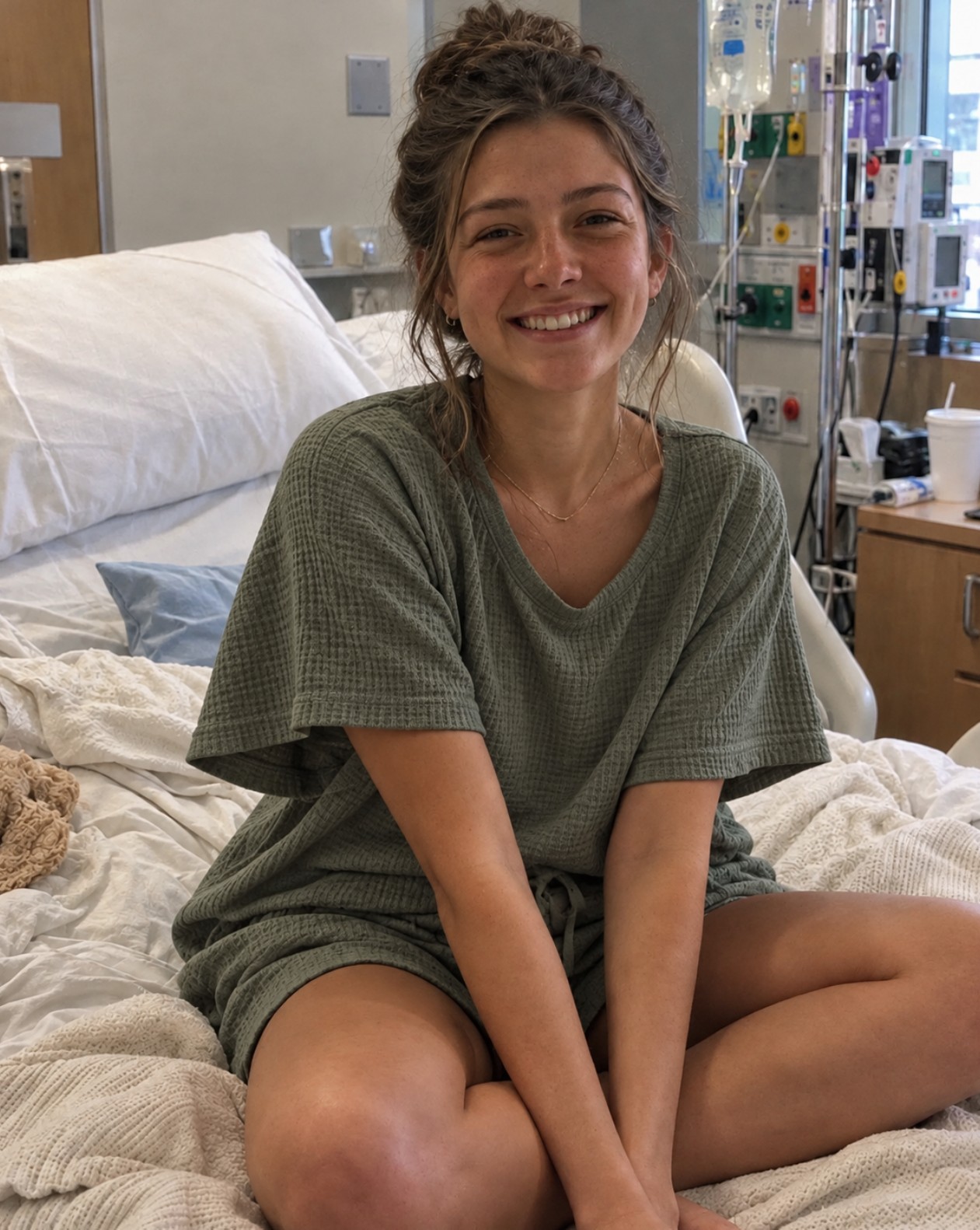
My daughter, Hannah, had been battling a severe illness for nearly a year in the intensive care unit at St. Vincent Medical Center in Minneapolis. My husband, Kenneth, and I had practically lived there beside her. We took turns sitting by her bed, speaking to her, holding her hand, and praying for a miracle.
Kenneth wasn’t Hannah’s biological father, but he had raised her with love since she was six years old. He had been there for every bedtime story, every doctor’s appointment, every scraped knee, and every childhood nightmare.
Hannah called him Dad, and he had earned that title through years of love and devotion.
I had always believed I could trust Kenneth with my life. More importantly, I had trusted him with my daughter’s heart.
I never imagined that, during the most painful days of our lives, he would keep something so important from me.
It all began one quiet evening when Hannah was sitting in her hospital bed, staring at a tray of food she hadn’t touched.
She looked thinner than she had just a few months earlier. Her illness had taken so much from her, but her eyes still held the same kindness that had always made her special.
Suddenly, she looked up at me.
“Mom, if I don’t make it through this, I want to donate my organs.”
I immediately put down my cup of coffee on the bedside table and shook my head.
“Please don’t talk like that, sweetie. You’re going to get better. You’re going to come home with us.”
Hannah gave me a sad but gentle smile.
“Mom, I’m being serious. I really want to do this.”
I reached for her hand.
“There’s no reason to think about that right now. We need to focus on getting you better.”
“But what if I don’t get better?” she asked quietly.
I couldn’t answer.
For months, I had been trying to convince myself that my daughter would survive. Every time a doctor came into her room, I searched his face for good news. Every time Hannah smiled at me, I took it as a sign that she was getting stronger.
The thought of losing her was something I couldn’t bear to face.
But Hannah wasn’t willing to turn away from the possibility.
“If there’s even a small chance that someone else can go home to their family because of me, I want that to happen,” she continued. “I don’t want another family sitting in a cold hospital room, feeling as helpless as we do right now.”
Her words broke something inside me.
I looked down at our joined hands, trying to hold back my tears.
Kenneth was sitting near the window, listening to our conversation. Unlike me, he didn’t cry. He simply looked at Hannah and gave her a slow, thoughtful nod.
“I support whatever decision you make, Hannah,” he said gently, reaching over to pat her arm.
I turned toward him, almost hoping he would say something else. I wanted him to tell her that she was going to survive, that we would bring her home, and that we didn’t need to discuss organ donation.
Instead, he respected her wishes.
For several days, I struggled with Hannah’s decision.
Every part of my heart wanted to believe she would recover. If she got better, we would never need to think about organ donation again. We could leave the hospital behind and return to the ordinary life I had dreamed of giving her.
But Hannah remained firm.
She had thought carefully about her decision, and she wanted to help someone else if she couldn’t survive.
Eventually, I realized that I couldn’t deny her that choice simply because I was afraid of losing her.
With a heavy heart, I sat down with her and completed the necessary paperwork to document her wishes. I signed the donor registry forms because I loved my daughter too much to take away the chance to make one final, meaningful decision about her life.
Even then, I continued to hope that the forms would never need to be used.
For three agonizing weeks, we held on to that hope.
Then, one day, Hannah’s condition worsened, and despite the medical team’s efforts, she passed away.
My beautiful girl was gone.
I couldn’t understand how the world could continue moving when mine had just fallen apart.
I wanted to scream. I wanted to demand that someone bring her back. I wanted to trade places with her if that was what it took to hear her voice one more time.
But there was nothing I could do.
Before Hannah was taken to the operating room for the organ donation procedure, the hospital staff arranged an honor walk in her memory.
Doctors, nurses, technicians, and other medical staff lined both sides of the bright main corridor. Some stood quietly with their heads bowed. Others stood at attention, paying their respects as Hannah’s bed passed between them.
The hallway was filled with a silence that seemed almost impossible to describe.
Kenneth and I walked directly behind her bed, holding on to each other as though we might collapse if we let go.
I was numb with grief. Watching the medical staff honor my daughter’s final act of kindness made me cry even harder.
My sweet Hannah had spent nearly a year fighting for her own life, yet even during her darkest moments, she had thought about the suffering of others.
Kenneth wrapped his arm tightly around my shoulders as I buried my face against his chest.
“She did something truly beautiful today, Grace,” he whispered near my ear.
I could barely respond. I simply held on to him and cried.
Then his phone vibrated loudly inside his coat pocket.
At first, I barely noticed. I was too focused on following Hannah’s bed toward the operating room.
But Kenneth pulled out his phone, glanced at the screen, and suddenly froze.
All the color drained from his face.
He looked as though he had just received the most terrible news imaginable.
“I have to go downstairs right now,” he stammered.
He stepped away from me.
I lifted my head, confused by his sudden change in behavior.
“What are you talking about?” I asked, wiping my tears with the back of my hand. “Where are you going?”
He wouldn’t look me in the eyes.
“Kenneth, what’s wrong? Who’s calling you?”
He said nothing.
Instead, he turned around and hurried down the hallway, leaving me standing alone near the surgical doors.
I watched him disappear, unable to understand how he could walk away from me at such a moment.
Our daughter was about to undergo the procedure she had chosen to help others after her death. We were supposed to face this together.
Yet he had left without giving me a single explanation.
I stood there motionless, holding a small purple ribbon that one of the nurses had pinned to my sleeve earlier.
I couldn’t stop wondering what had happened.
Was someone else in danger? Had the doctors discovered a problem? Was Kenneth hiding something about Hannah’s final hours?
Before I could make sense of it, I heard heavy footsteps approaching from behind.
“Wait! Please wait a moment!”
I turned around.
Dr. Bradley, Hannah’s primary physician, was hurrying toward me. His face was filled with a level of distress I had never seen during our entire year at the hospital.
“Mrs. Miller, I really need to speak with you,” he said, trying to catch his breath.
I immediately became frightened.
“Is something wrong, Doctor? Did something happen to Hannah?”
He glanced down the hallway in the direction Kenneth had gone.
Then he looked back at me.
“Your husband begged me to keep the truth about Hannah from you.”
My stomach tightened.
I stared at him, barely able to believe what I had just heard.
“What truth?” I demanded. “What are you talking about? Did something happen to my daughter before she died?”
Dr. Bradley took a deep breath.
And in that moment, I realized that there was something about my daughter’s final days that I had never been told.
Something my own husband had gone to great lengths to keep hidden.
Part 2:
“Yes, something happened,” Dr. Bradley explained gently. “But it isn’t what you’re thinking.”
He guided me toward a row of vinyl chairs along the corridor and waited until I sat down.
My legs felt weak beneath me.
I had spent almost a year listening to doctors explain test results, treatments, complications, and frightening possibilities. I thought I had already heard every piece of news a mother could possibly dread.
But this was different.
This time, the doctor wasn’t talking about my daughter’s illness.
He was talking about my husband keeping a secret from me.
“I was hoping I wouldn’t have to tell you this today,” Dr. Bradley continued. “I honestly believed your husband had his reasons for keeping it private. But after seeing what just happened, I don’t think I can remain silent any longer.”
I grabbed his forearm.
“Please, Doctor. Just tell me what it is.”
He hesitated before answering.
“A few days before Hannah passed away, she asked me some very specific questions about whether one of her donated organs could go to a particular patient.”
I stared at him.
“A particular patient? Who?”
Dr. Bradley shook his head.
“I’m sorry, Mrs. Miller, but I can’t disclose the identity of a patient on the transplant waiting list. Medical privacy rules prevent me from sharing that information with you.”
“Then why are you telling me any of this?”
“Because I believe you need to speak with your husband,” he replied. “I’m sorry, but that’s all I can tell you.”
He gave my hand a brief, sympathetic squeeze before standing up.
I remained in the chair, staring at the floor.
My thoughts immediately turned to Kenneth.
Over the previous few weeks, I had noticed things about his behavior that I hadn’t thought much about at the time.
He had been taking late-night phone calls in a whisper. Sometimes he would leave Hannah’s room and disappear into the stairwell, where he would remain for twenty minutes or longer.
Whenever I asked whether something was wrong, he always claimed that he was dealing with work or handling a personal matter.
I had been too worried about Hannah to question him further.
Now, every one of those memories returned with a new and troubling meaning.
Had Kenneth been talking to someone about Hannah’s organs?
Had he somehow influenced our daughter into making her decision?
Had he been trying to save someone he cared about without telling me?
And why had he rushed away during the honor walk?
Anger began to rise inside me, pushing aside some of my grief.
“Was this all about my husband?” I called after Dr. Bradley. “Did Kenneth persuade Hannah to do this?”
The doctor stopped and turned back toward me.
“I’ve told you as much as I’m legally permitted to tell you,” he said. “Please speak to Kenneth, Mrs. Miller.”
Then he walked away.
I sat there for several minutes, trying to steady my breathing.
I knew I needed to find my husband, but I was terrified of what he might tell me.
Finally, I stood up and made my way down two flights of stairs to the third floor.
After checking the nearby corridors, I spotted Kenneth through the glass panel of a small family consultation room.
He was sitting at a wooden table with a couple I had never seen before.
The woman looked to be in her late forties or early fifties. She was crying quietly into a crumpled tissue, while the man beside her held her close with one arm wrapped protectively around her shoulders.
Kenneth was leaning forward, speaking to them in a low voice.
I couldn’t hear what he was saying, but the expressions on their faces told me that they were dealing with something deeply emotional.
Then Kenneth glanced toward the glass door.
The moment he saw me, he froze.
His face turned pale, and he slowly pushed back his chair.
“Grace, please,” he said as he stood up. “Let me explain.”
I pushed the door open.
“Then explain right now.”
My voice sounded sharper than I had intended, but I couldn’t help it.
“The doctor just told me that Hannah wanted one of her organs to go to a specific patient. He also told me that you begged him to keep the truth from me. What does that mean, Kenneth?”
My husband opened his mouth, then closed it again.
I looked at the couple sitting at the table.
“Does this have something to do with these people?”
Kenneth remained silent.
His silence frightened me more than any answer could have.
“Who are they?” I demanded, stepping farther into the room. “And why are you hiding things from me? If you love me at all, Kenneth, please stop lying to me.”
He swallowed hard.
“Grace, I never lied to you about Hannah’s medical condition. I never lied about her treatments or what the doctors told us. I swear to you.”
“Then what have you been hiding?”
He glanced at the couple, then looked back at me.
“She wanted to explain everything to you herself,” he whispered.
I frowned.
“Who did?”
Kenneth reached into the inner pocket of his jacket and carefully pulled out a folded piece of notebook paper.
He held it out to me.
My name was written across the front in familiar, rounded handwriting.
Mom.
I recognized the handwriting immediately.
It was Hannah’s.
The anger inside me vanished so quickly that I almost felt dizzy. In its place came a deep, cold sense of dread.
I reached for the letter, but my fingers were shaking too badly to take it at first.
“When did she write this?” I asked.
“Last week,” Kenneth replied quietly.
I looked at him in disbelief.
“Last week? You’ve been carrying this around in your jacket for a week?”
He lowered his eyes.
“She made me promise that I wouldn’t give it to you until after she was gone.”
I stared at the folded paper.
My daughter had written me a letter during the final days of her life, and my husband had kept it hidden from me.
I didn’t know whether to be furious with him or terrified of what those pages contained.
“Why didn’t you tell me she had written something for me?”
“Because I promised her I wouldn’t.”
I shook my head, unable to find the words to express how much that hurt.
Then I took the letter from his hand.
“I need to read this alone.”
“Grace, please wait—”
But I was already walking away.
I hurried down the quiet corridor, holding the letter tightly in my hand. I didn’t want anyone watching me. I didn’t want to answer questions or listen to explanations.
I needed to hear my daughter’s voice, even if it was only through her handwriting.
At the far end of the East Wing, I found the small hospital chapel.
The room was empty, filled with soft amber light. Rows of wooden pews stood beneath the quiet glow of the ceiling lamps, and the silence offered me a brief escape from the noise and confusion of the hospital.
I walked to the very back and sat down.
For several seconds, I couldn’t bring myself to unfold the paper.
I was afraid of what I might read.
Finally, I took a deep breath and opened it with trembling hands.
The first line stopped me cold.
“Dear Mom, if you’re reading this letter right now, it means that something I deeply hoped for actually came true.”
I closed my eyes.
What could my daughter possibly have been hoping for during her final days in that hospital bed?
I wiped away a tear and forced myself to continue.
“During my treatments over the past few months, I made friends with a girl named Chloe who stays down the hall from me. We played card games together whenever we were both too exhausted to do anything else. She cheats at cards every single time, but somehow we always end up laughing so hard that we forget how miserable we feel.
“Chloe told me that she’s been waiting for a kidney transplant for almost two years. At first, I just thought of her as another sick kid stuck in the same terrible place I was. I felt sorry for her, but I didn’t understand what she was going through.
“Then I started noticing her mother sitting outside her room every day.”
My throat tightened.
I could almost hear Hannah speaking those words in her soft, thoughtful voice.
I continued reading.
“Her mother sits in the waiting room just like you always do, Mom. She watches every doctor’s face before they even begin to speak. She buys paper cups of coffee and forgets to drink them because she’s too busy staring at the floor.
“One day, I looked out my window and realized I wasn’t just looking at a stranger.
“I was looking at us.”
I pressed my hand over my mouth to keep from sobbing aloud.
My daughter had seen another mother suffering, and she had recognized something familiar in that woman’s fear.
She had seen me.
The letter continued.
“That was the day I asked Dad to help me find out whether I could donate one of my organs to Chloe. He helped me ask the doctors all the difficult questions and understand the hospital paperwork.
“Dad kept telling me that I should tell you what I was thinking. He wanted me to explain everything to you right away, but I said no.
“It’s not because I trust him more than I trust you, Mom. Please don’t ever think that.
“It’s simply because you still talk about me coming home every single day.”
The words blurred before my eyes.
I could no longer stop the tears.
I remembered every promise I had made to Hannah during those terrible months.
“When you come home, we’ll redo your bedroom.”
“When you get better, we’ll finally take that beach trip.”
“When you’re home again, you can eat whatever you want, and I’ll never complain about the mess in the kitchen.”
I had clung to those promises because they gave me something to believe in.
Whenever I spoke about the future, Hannah would smile at me. Sometimes she would squeeze my hand or tell me that she loved me.
I had taken those moments as signs that she shared my hope.
Now I wondered how much pain she had hidden behind those gentle smiles.
I looked down at the letter and continued reading.
“I knew you desperately needed that hope to get through every day. I couldn’t bear the thought of making you sit beside my bed while also worrying about whether another little girl might live because your daughter had died.
“That’s why I kept this from you, Mom.
“I didn’t want you to feel like you had to think about losing me before you were ready. I wanted you to keep loving me, hoping for me, and believing in me for as long as you could.
“I know you might be upset when you read this, but I hope you’ll understand someday.”
I pressed the paper against my chest and began to cry.
For a moment, I had believed my daughter had shut me out of something important.
Now I understood that she had been trying to protect me.
She had known how desperately I wanted her to survive. She had seen the fear I tried to hide, even when I smiled and told her everything would be all right.
And she had made a decision based on that love.
I wiped my face and forced myself to read the final lines.
“I couldn’t go home with you, Mom, but I truly hoped I could help Chloe go home with hers.
“Please don’t be too angry with Dad. He hated keeping this secret from you every single second, but I made him promise. He was only trying to respect what I wanted.
“I love you so much, Mom. More than I could ever explain.
“Love, Hannah.”
I lowered the letter into my lap.
The chapel remained silent around me, but inside my heart, everything was breaking all over again.
My daughter had known she might die. She had been frightened, sick, and exhausted, yet she had still found the strength to think about another family.
And my husband had carried her secret because he had promised her he would.
I sat there for several minutes, crying quietly.
Then I heard the heavy wooden door creak open behind me.
I turned my head.
Kenneth stepped into the chapel and walked toward the pew behind mine. He sat down quietly, leaving a little space between us.
For a while, neither of us spoke.
Finally, I wiped my eyes and looked back at him.
“You still should have told me,” I whispered. “You shouldn’t have kept me in the dark.”
Kenneth bowed his head.
“I know I should have.”
His voice broke, and for the first time that day, I saw tears streaming down his face.
“But how could I refuse her dying wish, Grace? She was eighteen years old. For almost a year, doctors and nurses had been making decisions about her treatment and doing everything they could to keep her alive.
“She begged me to let her have control over one meaningful thing before she left us. She wanted to decide what she could give to someone else.
“I couldn’t take that away from her, too.”
I looked down at Hannah’s letter.
I was still angry with him. I wished he had found a way to explain the situation without breaking his promise to our daughter.
But I was beginning to understand why he had done what he did.
He hadn’t kept the secret because he didn’t trust me.
He had kept it because Hannah had asked him to.
And because he had loved her enough to honor her final wish.
After a moment, I turned toward him.
“The couple in that room,” I whispered. “Who are they?”
“They’re Chloe’s parents,” Kenneth answered. “Clara and Mark.”
I held my breath.
“Is Chloe receiving Hannah’s kidney?”
Kenneth looked down at his hands.
“The hospital can’t officially confirm the identity of the donor to us without the proper authorization. But Hannah had asked about Chloe specifically, and the timing of the transplant suggests that her wish may have been fulfilled.”
I held the letter carefully between my fingers.
My daughter had been thinking about this for weeks, and I had known nothing about it.
“Why did you beg Dr. Bradley not to tell me today?” I asked.
Kenneth took a shaky breath.
“Because I promised Hannah that you’d read her words first. I wanted you to hear the truth directly from her, not from me or anyone else.”
I looked away.
“I understand why you did it,” I said quietly. “But that doesn’t mean it didn’t hurt.”
“I know.”
He didn’t try to defend himself any further.
He simply sat beside me, crying quietly, while I held our daughter’s letter.
After a few minutes, I stood up and smoothed my coat.
“I want to go back upstairs,” I said. “I want to meet Chloe’s parents properly.”
Kenneth rose from the pew and offered me his arm.
This time, I took it.
We walked out of the chapel together and returned to the third-floor consultation room.
The couple was still there, sitting side by side. The woman’s eyes were red and swollen from crying, and the man looked as though he hadn’t slept properly in days.
When we entered, both of them stood up.
The woman glanced at Kenneth, then turned toward me with a frightened expression.
“Grace, this is Clara and Mark,” Kenneth said gently. “They’re Chloe’s parents.”
Clara took a hesitant step toward me.
“I am so incredibly sorry,” she whispered.
I looked at her, confused.
“What are you sorry for, Clara?”
She pressed the crumpled tissue in her hand.
“I’m sorry for being happy on a day like today,” she confessed, her voice trembling. “I don’t know how else to explain it. Today is probably the worst day of your entire life, and yet our family has just received the miraculous phone call we’ve been praying for every night for two years.”
I looked at the untouched paper cup of coffee on the table beside her.
Then I noticed how she kept twisting her plastic visitor wristband around her fingers.
Suddenly, I understood exactly what Hannah had seen.
This was a mother who had spent months waiting for a miracle, terrified that the next doctor who approached her would bring more terrible news.
She had been living in the same world of fear and uncertainty that I knew so well.
And now, while my daughter was gone, her daughter had been given a chance to live.
I took a step toward her.
“You’re allowed to be happy today,” I told her gently. “Please don’t feel guilty about that. Hannah wanted this to happen more than anything.”
Clara covered her mouth with both hands and burst into tears.
“We honestly had no idea at first,” she sobbed. “Chloe told us that Hannah had been asking the medical staff some detailed questions, but Kenneth made it very clear that nothing was guaranteed.”
Mark nodded, pulling his wife closer.
“He told us not to build our hopes around it. He said that everything depended on the transplant team, the medical requirements, and the decisions of the people responsible for matching donors with recipients.”
That sounded exactly like Kenneth.
He had always been careful and practical, even during the most frightening moments of our lives. He would never have promised something he couldn’t control.
I looked at Clara again.
“How close were Hannah and Chloe?”
Clara’s face softened as she thought about the two girls.
“They were much closer than we ever realized. One night, a nurse actually had to come into Chloe’s room and separate them because they were laughing so loudly while playing cards. The other patients were trying to sleep!”
For the first time that day, I felt a small, genuine smile touch my lips.
It was the first time since Hannah’s death that someone had spoken about her as an ordinary eighteen-year-old girl.
Not as a patient.
Not as a dying child.
Not as an organ donor.
But as Hannah.
The girl who cheated at games, laughed too loudly, and made friends with another child who understood what it meant to be sick.
I wanted to hear more.
I wanted to know everything Chloe remembered about my daughter.
I wanted to collect every story, every little detail, and every memory that could help me feel close to Hannah again.
Clara reached out and gently touched my arm.
“Hannah talked about you all the time, Grace.”
I looked at her.
“What did she say about me?”
Clara managed a small smile through her tears.
“She said you worried far too much about everything.”
A quiet, tearful laugh escaped me.
“Well, that certainly sounds like her.”
Clara nodded.
“She also said you always pretended not to cry when you were sad. She told us that you tried to be strong for her, even when you were frightened.
“And she said that whenever she felt scared at night, she would comfort herself by imagining what it would be like to go home with you.”
My smile disappeared.
I looked down at Hannah’s letter, holding it tightly in both hands.
My brave girl had been frightened, too.
She had faced a terrible illness for almost a year, endured treatments that exhausted her, and lived with the uncertainty of not knowing whether she would ever leave the hospital.
Yet she had tried to protect me from her fear.
She had kept smiling because she knew I needed those smiles.
And now, even after her death, she had left me with a reminder of how deeply she had loved me.
I was still looking at the letter when a nurse appeared in the open doorway.
She wore blue scrubs and carried a tablet in her hand.
“Mr. and Mrs. Miller?” she called out warmly.
Clara and Mark immediately stood straighter.
For a moment, neither of them seemed able to breathe.
The nurse smiled.
“Chloe is out of surgery and has been transferred to recovery. The transplant went well, and she is stable. Her new kidney is already functioning. The surgeon will be coming out shortly to give you a full update.”
Clara let out a sound that was half laugh and half sob.
She turned into her husband’s chest, and Mark wrapped both arms around her as tears streamed down his face.
For two years, they had prayed for the news they had just received.
And now, finally, they had a reason to hope.
After a few moments, Clara lifted her head and looked at me.
Pure joy shone across her face, but it was quickly replaced by guilt.
She seemed afraid to leave me standing there while she rushed toward her daughter.
I understood.
She was thinking about my loss, even as she tried to process her own family’s miracle.
I stepped closer and gestured toward the door.
“Go,” I told her. “Go see your daughter.”
Clara hesitated.
“Grace, I don’t know how to thank you. I don’t even know what to say.”
“Go to your daughter,” I repeated, holding up my hand. “She needs you.”
Clara suddenly stepped forward and wrapped her arms around me.
Her hug was tight and desperate, as though she had been holding back her gratitude for so long that she could no longer contain it.
“Thank you,” she whispered against my shoulder. “Thank you so much.”
I held her for a moment before gently pulling away.
Then I looked directly into her eyes.
“Please don’t thank me, Clara. This wasn’t my decision to make.”
I lifted Hannah’s letter.
“This beautiful gift was entirely hers.”
Clara nodded repeatedly, tears spilling down her cheeks.
“Then our family will make sure we never, ever forget her.”
Mark stepped closer and placed his large hand over mine.
“We won’t let Chloe forget what Hannah did for her, either. When she’s old enough to understand everything, we’ll tell her the story. We’ll tell her about the brave girl who wanted her to have a chance at life.”
Their words brought a sharp pain to my chest.
But beneath that pain, I felt something else.
Comfort.
For the first time since Hannah had died, I could imagine a future in which her name would be spoken with love instead of sorrow.
Somewhere in this hospital, another family would remember her.
They would remember her laughter, her kindness, and the extraordinary decision she had made during the hardest time of her life.
She would not be remembered only as the girl who had died too young.
She would also be remembered as the girl who had helped another child survive.
Clara and Mark followed the nurse down the bright corridor toward the recovery unit.
I watched them disappear around the corner.
Kenneth came to stand beside me.
For a while, we said nothing.
Then I spoke without looking at him.
“I’m still very angry with you for keeping this from me.”
“I know, Grace,” he replied quietly. “And you have every right to be.”
“You kept something enormous from me during the hardest month of my life. I don’t know whether I would have made the same choice if Hannah had told me herself.”
I paused, swallowing the lump in my throat.
“But I finally understand why you did it for her.”
Kenneth’s eyes filled with tears again.
He nodded silently, unable to find the words to answer.
I wasn’t ready to tell him that everything was forgiven. The hurt was still there, and it would take time for us to work through it.
But I no longer believed he had abandoned me out of selfishness or indifference.
He had been trying to honor our daughter’s final wish, even though doing so had meant carrying a painful secret.
I reached out and took his warm hand.
Together, we walked slowly down the long corridor toward Hannah’s room.
The room was quiet when we arrived.
Her monitors were turned off, and the bed had been neatly made. The familiar belongings that had filled the space during her long illness seemed strangely out of place now.
Just a few hours earlier, I had followed my daughter down the hallway, believing with all my heart that her life was coming to a tragic and absolute end.
I had thought that when Hannah died, everything she had hoped for would die with her.
But she had understood something I had been too overwhelmed by grief to see.
She couldn’t control the illness that was taking her life away.
She couldn’t force her body to recover or promise me that she would come home.
But she could still choose what she wanted to leave behind.
She could choose kindness.
She could choose compassion.
And she could choose to give another family something I had been desperately praying for myself.
A chance.
Somewhere else on the third floor of St. Vincent Medical Center, Chloe was slowly waking up from surgery.
Her mother would soon sit beside her bed, hold her hand, and begin making plans for the day they could finally go home together.
She would imagine the things they could do once Chloe was strong enough. She would dream about ordinary mornings, family meals, and the simple joy of watching her daughter grow up.
She would make the same kinds of hopeful plans I had made for Hannah, right up until my daughter’s final breath.
And I knew that thought would hurt.
Losing my precious girl would never become easy simply because another mother had been given the chance to keep hers.
My grief would remain with me. There would be mornings when I woke up and forgot, for one brief second, that Hannah was gone. There would be birthdays, holidays, and quiet evenings when I would reach for my phone to call her before remembering that I never would again.
There would be moments when the unfairness of it all would feel too heavy to bear.
I would miss her laugh.
I would miss the sound of her footsteps in our home.
I would miss the way she looked at me when she wanted something, and the way she could make me smile even when I was determined to stay angry.
I would miss every ordinary thing I had once taken for granted.
But as I stood in her empty hospital room, clutching her final letter against my heart, I finally understood what my daughter had been trying to give me.
She hadn’t left me with a bitter reason to remember her death.
She had left me with a light to hold on to during the darkest days ahead.
She had shown me that love doesn’t always mean holding on as tightly as possible.
Sometimes, love means giving something away, even when doing so breaks your heart.
Hannah had wanted to come home with me. I knew that with every part of my being.
She had dreamed of leaving the hospital, returning to her bedroom, and living the life we had talked about so many times.
But when she realized she might not get that chance, she found another way to make a difference.
She couldn’t come home with me.
So she did everything she could to help another daughter go home with her mother.
And although I would spend the rest of my life wishing my own daughter had been given that same chance, I would never stop being proud of the young woman she had become.
My Hannah had been eighteen years old.
She had been sick, frightened, and facing a future she could barely imagine.
Yet even then, she had found room in her heart for someone else’s pain.
That was the legacy she had chosen.
And no matter how deeply I mourned her, no matter how many tears I would shed in the years to come, I knew one thing with absolute certainty.
My daughter had left this world with love in her heart.
And somewhere down the hall, another mother was about to hold her daughter again.
THE END.
