
Part 1:
That was the moment I decided Mom deserved a very different kind of birthday present.
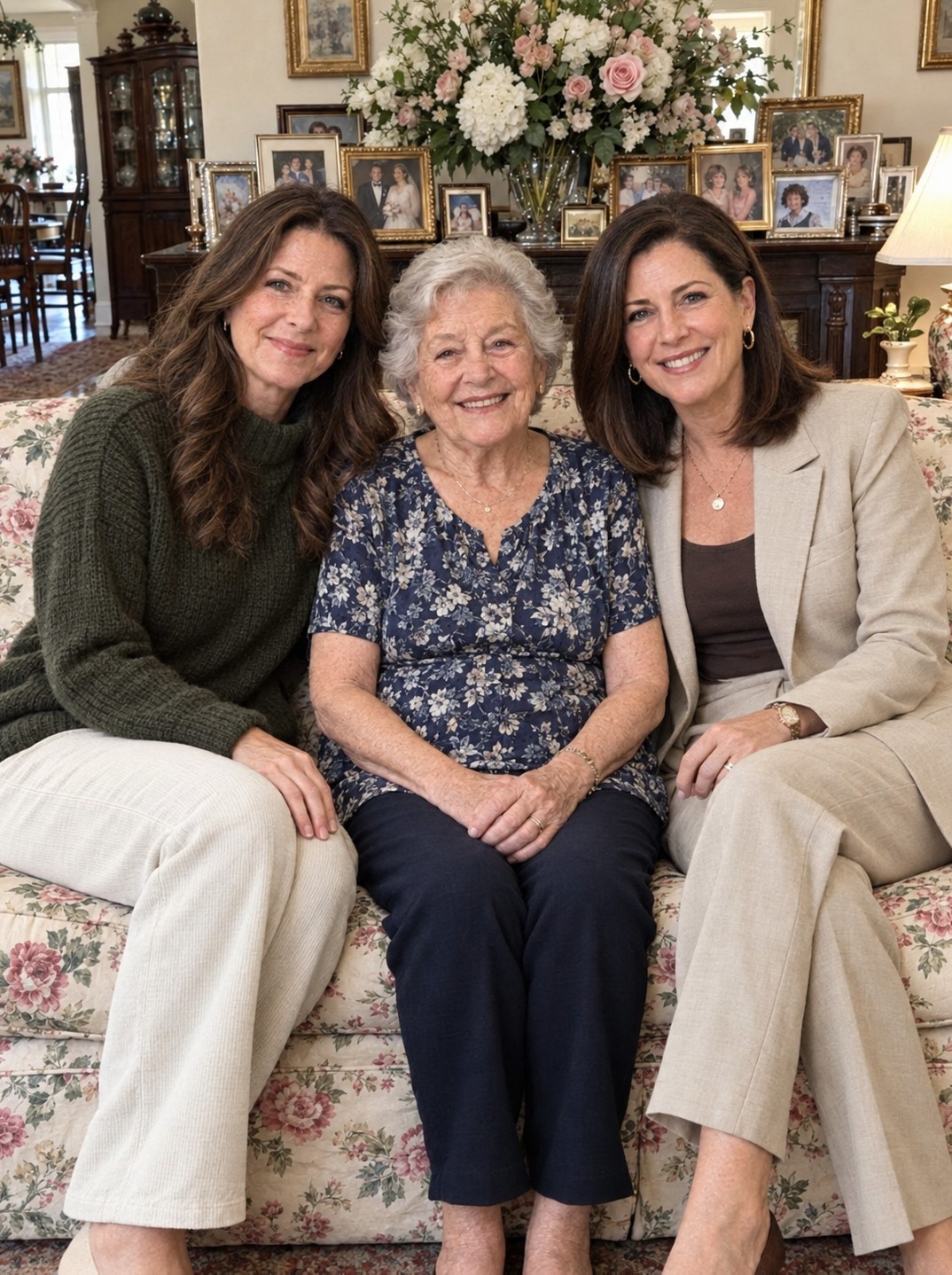
My mother, Margaret, had just turned seventy.
We had gathered at her house for her birthday dinner, and everyone was supposed to bring a small gift.
Vanessa, my older sister, arrived carrying a designer handbag that probably cost more than my monthly car payment.
That was normal for her.
Vanessa lived in a beautiful house. She took expensive vacations, wore designer clothes, and drove luxury SUVs. Her husband, Julian, owned three dental clinics.
For years, Vanessa had been the sister everyone called successful.
So when it was time to give Mom her birthday presents, I expected something elaborate from her.
Instead, Vanessa opened her purse, pulled out a twenty-dollar bill, tucked it inside a birthday card, and slid it across the table toward Mom.
“There,” she said lightly. “Something simple.”
Mom smiled.
“Thank you, honey.”
But I saw the disappointment she tried to hide.
She folded the card almost immediately and slipped it beneath her plate.
That tiny gesture made my chest tighten.
Because Mom had never treated Vanessa like someone who “didn’t need much.”
Quite the opposite.
For years, Mom had babysat Vanessa’s children. She cooked for them, drove across town whenever Vanessa needed help, and stayed overnight whenever one of the children was sick.
And when Vanessa and Julian bought their first house, Mom had taken money from her own retirement savings to help them.
She had never kept score.
Vanessa clearly had.
I nearly said something.
Then I remembered the wooden keepsake box in Mom’s bedroom.
A few months earlier, while helping her clean out a closet, I had seen what she kept inside.
Old report cards.
Childhood drawings.
Hospital bracelets.
Family photographs.
Birthday cards.
Mother’s Day notes.
Decades of tiny memories most people would have thrown away.
And tucked underneath everything were two small notebooks.
They were filled with dates, numbers, and short handwritten notes.
Nothing dramatic.
At least, that was what I had assumed.
Sitting at Mom’s seventieth birthday dinner, I suddenly had an idea.
“Mom,” I said, “I actually left your real gift at home.”
Vanessa laughed.
“You forgot her birthday gift?”
“I didn’t forget it. I just didn’t bring it inside.”
Mom smiled.
“You don’t have to do anything else, Maya.”
“I want to.”
The dinner continued, but I couldn’t stop thinking about the scrapbook I had been planning to make for her.
The next afternoon, I returned to Mom’s house.
Everyone came back for leftover birthday cake and coffee.
This time, I carried in a large wrapped box.
Vanessa raised an eyebrow.
“Very dramatic.”
I ignored her and placed it in front of Mom.
She carefully removed the wrapping paper.
Inside was a scrapbook.
I had stayed up late putting it together.
I had copied and arranged the things Mom had saved over the years: pictures of us as children, Mother’s Day cards, school drawings, family notes, old photographs, and other small pieces of our family history.
Mom slowly turned the pages.
At first, she laughed.
Then she cried.
Then she laughed again through her tears.
Even Vanessa smiled at a few of the old pictures.
For a moment, I thought I had managed to repair the mood from Mom’s birthday dinner.
Then Mom reached the final pages.
And the entire room changed.
One of those pages contained a photocopy from one of the old notebooks.
I had included it because it looked like another family record: a date, several numbers, and a short handwritten line.
It meant nothing to me.
But the second Vanessa saw it, she stood up.
Fast.
Too fast.
“Where did you get that?”
Her voice was completely different.
I looked at her.
“From Mom’s keepsake box.”
Vanessa reached across the table and snatched the scrapbook.
“Why would you put this in here?”
I frowned.
“Why wouldn’t I?”
She began flipping backward through the pages, her hands shaking.
Then she stopped.
She stared at one particular entry.
Mom saw it too.
All the color disappeared from her face.
“Mom?” I asked.
She didn’t answer.
Instead, she slowly pushed her chair away from the table and walked toward the hallway.
Vanessa immediately stood.
“Mom, wait.”
Mom kept walking.
A few seconds later, she returned from her bedroom holding something in her palm.
A small brass key.
Vanessa froze.
“No.”
Mom walked past us toward the old wooden dresser near the wall.
I had seen that dresser my entire life, but the bottom drawer had always been locked.
I had never thought much about it.
Until then.
Mom knelt in front of it.
Vanessa rushed around the table.
“Don’t.”
Mom said nothing.
“Mom, seriously. Don’t open that.”
I stared at my sister.
She looked terrified.
Not embarrassed.
Not irritated.
Terrified.
“What’s in the drawer?” I asked.
Neither of them answered.
Vanessa stepped closer.
“We don’t need to do this.”
That sentence changed everything.
Because suddenly I understood that whatever was inside that drawer wasn’t just Mom’s secret.
Vanessa knew about it too.
Maybe she always had.
Mom placed the brass key into the lock.
Vanessa whispered, “Please.”
Mom finally looked up at her.
There was no anger in her face.
Only exhaustion.
Then she turned the key.
Click.
And in that instant, I realized the twenty-dollar birthday gift was no longer the biggest insult in the room.
It had simply opened the door to something our family had buried years ago.
Part 2:
The drawer slid open with a soft scraping sound.
Inside were several thick, yellowed envelopes bound with faded red rubber bands, a blue bank ledger, and three legal-size folders.
I leaned forward, my heart pounding.
“Mom? What is all this?”
Mom didn’t answer immediately.
She reached into the drawer and lifted out the top folder.
She placed it on the carpet.
Written across the cover, in my late father’s bold and unmistakable handwriting, were two words:
VANESSA — LOAN AGREEMENTS
Vanessa took a sharp breath and turned toward the window.
I looked at the dates written on the folder.
They covered twelve years.
“I don’t understand,” I said, looking from Mom to Vanessa. “Dad died eight years ago. We all knew he left you a modest life insurance policy, Mom. You always told us most of his money had been tied up in investments.”
“They weren’t bad investments, Maya,” Mom said quietly.
Her voice trembled.
“They were your sister’s lifestyle.”
I stared at Vanessa.
“What?”
“It wasn’t like that!” Vanessa snapped.
Her hands clenched at her sides.
“Julian’s dental practice was struggling when he bought out his first partner. We were in over our heads, and Dad offered to help us.”
Mom slowly pulled the blue bank ledger from the drawer.
“Your father didn’t simply help you, Vanessa.”
She opened the ledger.
“He borrowed against this house. He used money from his private pension. And when Julian wanted to open his second clinic in the suburbs, your father transferred two hundred and forty thousand dollars to help finance it.”
My breath caught.
“Two hundred and forty thousand?”
Mom nodded.
“And that wasn’t the first payment.”
She turned another page.
“Over the twelve years before your father died, the total financial assistance recorded here came to more than six hundred thousand dollars.”
Tears filled her eyes.
“Your father believed Julian’s promises. He believed that once the clinics became profitable, the money would be returned to our retirement savings.”
I slowly stood up.
The size of the betrayal settled over me like a heavy weight.
For twelve years, I had worked two jobs to pay off my college loans.
When I bought my tiny two-bedroom condo, I took out a high-interest mortgage because I refused to ask my aging parents for money.
Meanwhile, Vanessa had been driving luxury SUVs, wearing designer clothes, and taking expensive vacations in Europe.
And all that time, our father had been using his own money to keep her family’s growing lifestyle and business afloat.
“Did Julian ever pay it back?” I asked.
I looked directly at Vanessa.
She swallowed.
She wouldn’t meet my eyes.
“Things were complicated,” she said quietly. “Expanding the practice took more capital than we expected. Then we bought the house in the hills…”
“You bought a two-million-dollar house,” I whispered.
My voice began to shake.
“You bought a mansion while Dad was taking extra consulting shifts at sixty-eight years old just to keep up with the interest payments on the home-equity loan?”
“Dad said it was fine!” Vanessa cried.
“He said he wanted us to succeed! He told me not to worry about when we would pay him back!”
“He told you that because he loved you!”
Mom’s quiet voice suddenly cut through the room.
“Your father loved both of you. He couldn’t say no to Vanessa’s dreams, even when saying yes was destroying him financially.”
Mom closed her eyes for a moment.
“After your father died, I learned just how bad things had become.”
The room went silent.
“Your father died of a massive heart attack at his desk,” Mom continued. “He had been working eighty-hour weeks because he was trying to keep everything together without admitting to me how close we were to financial ruin.”
Vanessa flinched.
She opened her mouth, but no words came out.
Mom ran her fingers over the worn cover of the ledger.
“After your father passed away eight years ago, I found these files in his safe-deposit box. I found the promissory notes signed by both Vanessa and Julian.”
She pulled another folder from the drawer.
“The repayment periods on some of those original notes have now expired. I knew that meant the situation would be complicated legally. That’s one reason I kept these records instead of destroying them.”
I looked down at the scrapbook lying open on the table.
The page I had photocopied wasn’t a family memory at all.
It was a ledger entry written in Dad’s handwriting:
Oct. 14 — Sent $20,000 to V. Rent due on Clinic 2. Cancelled my medical insurance upgrade.
My stomach turned.
I looked at Vanessa.
“You knew.”
She stared at me.
“You knew Mom was living on a fixed Social Security income in this old house with a leaking roof. You knew Dad had died after working himself into the ground trying to keep your family’s finances together.”
I pointed toward the scrapbook.
“And yesterday, on Mom’s seventieth birthday, you handed her twenty dollars and acted like that was all an old woman needed.”
Vanessa’s face went pale.
“I… I forgot the exact numbers,” she whispered. “Julian handles most of the finances now. I thought…”
“You didn’t think,” I said.
My voice was cold.
“You just stopped caring.”
Vanessa looked away.
For several seconds, nobody spoke.
Then she grabbed her designer bag.
She didn’t stay for the leftover cake.
She walked out the front door and drove away so quickly that her tires squealed against the pavement.
I stayed with Mom.
Neither of us said much about the money that evening.
Instead, we sat together on the porch, holding hands and watching the sun disappear below the horizon.
For the first time, I understood why Mom always looked so tired.
Why she refused to let us buy her new clothes.
Why she kept repairing the same old things instead of replacing them.
And why she had guarded that dresser drawer for so many years.
She hadn’t just been protecting old documents.
She had been protecting her daughters from the truth about their father’s sacrifice.
Part 3:
“Why didn’t you ever tell me, Mom?” I asked softly as I poured her another cup of tea.
Mom stared toward the darkening yard.
“Because I didn’t want you to hate your sister.”
She took a slow breath.
“Your father loved both of you so much, Maya. He made a terrible financial mistake because he couldn’t say no to Vanessa’s big dreams.”
She looked down at her hands.
“When he died eight years ago, I thought exposing everything would destroy what was left of our family. I thought if I stayed quiet, eventually time would heal it.”
“Silence didn’t heal it, Mom,” I said gently.
She looked at me.
“It just gave Vanessa a chance to pretend she was better than the rest of us.”
Mom didn’t answer.
At eight o’clock the following evening, the doorbell rang.
It had now been two days since Mom’s seventieth birthday dinner.
I opened the door.
Julian stood on the porch.
Vanessa’s husband was usually a polished, confident man who wore expensive suits and carried himself as though nothing could ever shake him.
Tonight, he looked completely different.
His tie was loosened.
His hair was messy.
And his face was tense.
Vanessa stood several steps behind him.
Her eyes were red and swollen from crying.
“Maya,” Julian said, his voice tight. “We need to speak with your mother.”
I didn’t move.
“She’s resting.”
“Please, Maya,” Vanessa whispered. “Let us in.”
Before I could answer, Mom appeared behind me.
“It’s all right, Maya.”
She looked at Vanessa and Julian.
“Let them in.”
We sat in the formal living room.
It was the same room where, just two days earlier, Vanessa had placed a twenty-dollar bill in a birthday card for Mom.
Julian set a thick leather briefcase on the coffee table.
He opened it and removed several legal documents.
“Margaret,” he began, his tone formal and careful, “Vanessa told me what happened yesterday.”
He paused.
“Actually, she told me what happened over the last two days. I wasn’t aware that your husband had kept such detailed records of the financial assistance he provided us during the early years of my practice.”
“Financial assistance?” I asked sharply. “Is that what you call taking hundreds of thousands of dollars from an older couple while the husband worked himself to death?”
Julian gave me a hard look.
Mom raised one hand.
“Maya.”
I stopped.
Mom looked at Julian.
“Go on.”
Julian cleared his throat.
“When your husband advanced those funds, there was an understanding that the money would help capitalize my practice. I believed some of it would be treated as an investment, while other amounts would be repaid as loans.”
Mom nodded.
“The paperwork says otherwise.”
“Yes,” Julian admitted.
He looked uncomfortable.
“The documents show personal debts. However, the repayment periods on several of those original notes have now expired.”
“Yes,” Mom said quietly.
Julian took a deep breath.
“That means there may be legal limits on what can still be recovered under those particular documents. I don’t want to pretend otherwise.”
Mom watched him carefully.
“Then why are you here?”
Julian looked at the contract in front of him.
“Because I don’t want this situation to destroy the family.”
He pushed a document across the table.
“I am prepared to offer you a structured settlement.”
I looked at the document.
Julian continued.
“I would pay you two thousand dollars a month for the rest of your life. In exchange, you would sign a formal release stating that all past financial claims connected to your late husband’s advances have been fully settled.”
I stared at him.
He spoke as if he were offering Mom a generous favor.
Two thousand dollars a month.
After more than six hundred thousand dollars had passed through their hands over the years.
Mom didn’t answer.
She picked up her reading glasses.
Then she carefully read every page of the agreement.
“Two thousand dollars a month,” she repeated.
“Yes,” Julian said.
A little of his old confidence returned.
“It would make sure you never have to worry about your daily expenses again, Margaret. I believe it’s a fair solution.”
Mom slowly removed her glasses.
Then she reached into the pocket of her cardigan.
She took out the small brass key.
She placed it on top of Julian’s contract.
“Julian,” she said quietly, “do you know what else was in my husband’s bottom drawer?”
Julian frowned.
“What do you mean?”
Mom didn’t answer immediately.
Instead, she looked at me.
I suddenly realized there was more.
Much more.
Part 4:
Mom reached beside her chair and picked up a small black USB flash drive.
She placed it next to the brass key.
“My husband was an accountant for forty years, Julian,” she said evenly.
“He didn’t just record the dates and amounts of the checks he wrote. He kept copies of the wire-transfer receipts. He kept corporate registration documents from your first clinic. And he kept copies of personal emails you sent him between 2012 and 2018.”
Julian’s expression changed.
“Margaret, those were private business communications—”
Mom raised her hand.
“In those emails, you gave my husband instructions about how to route several payments through a separate account in Delaware.”
Julian went still.
Mom continued.
“The records concern three payments of eighty thousand dollars each. You wanted the money moved through that account rather than recorded directly as taxable business income.”
Vanessa slowly turned toward her husband.
“Julian?”
He didn’t look at her.
Mom reached for a printed document.
“You wrote that if the IRS questioned the money, you intended to describe it as a personal gift from an elderly relative.”
Julian’s face went gray.
Vanessa stared at him.
“What is she talking about?”
Julian finally found his voice.
“Margaret, you’re misunderstanding the accounting.”
“No,” Mom said.
Her voice remained calm.
“I spent months going through these documents after your father died. I also had financial and legal professionals review what I found. I am not going to make accusations based only on my memory.”
She tapped the papers.
“These documents will be given to my attorney. If anything needs to be reported to the proper authorities, my attorney will handle it.”
Julian’s hand hovered over the contract.
His fingers were shaking.
“Margaret…”
He swallowed.
“You wouldn’t actually use those documents against us.”
Mom leaned back in her chair.
“I am seventy years old, Julian.”
She looked around the room.
“I have lived in this modest house for forty-five years. I don’t care about luxury cars, European vacations, or country-club memberships.”
Her eyes hardened.
“But I do care about the honor of the man I loved for nearly half a century.”
Nobody spoke.
“My husband died trying to keep your business afloat,” Mom continued. “And while he was doing that, my daughter was learning to believe that our family existed to support her lifestyle.”
Vanessa began crying.
Mom pushed Julian’s settlement agreement back across the table.
“I will not sign this release tonight.”
Julian stared at her.
“And I will not accept your charity.”
Vanessa suddenly dropped to her knees beside Mom’s chair.
“Mom, please!”
She was sobbing now.
“If those records cause an investigation, we could lose everything. The clinics, the house, Julian’s license…”
Mom looked down at her.
“Then you should have thought about that before you handed me twenty dollars on my seventieth birthday and acted as if that was all an old woman needed.”
Vanessa covered her face.
Julian sat completely still.
Finally, he looked at Mom.
“What do you want?”
His voice was barely above a whisper.
“Name your terms.”
Mom looked at me.
There was a soft, tired smile on her face.
Then she turned back to Julian.
“First, I want everything reviewed by independent attorneys.”
Julian nodded slowly.
“Second, I want the legitimate debts and obligations that can still be enforced properly documented.”
She paused.
“And third, I want a settlement that gives me enough financial security to live independently for the rest of my life.”
Julian remained silent.
Mom continued.
“I also want Maya protected from being left out of her father’s legacy.”
I immediately shook my head.
“Mom, no.”
“Yes, Maya.”
She reached for my hand.
“Your father spent years helping Vanessa while you worked two jobs and paid your own way. I don’t want his sacrifices to leave you with nothing.”
Julian shifted in his chair.
“What exactly are you asking for?”
“I am not deciding the legal details tonight,” Mom replied. “My attorney will review the records, the old agreements, the assets involved, and what can legally be resolved. Then your attorney can do the same.”
She looked directly at him.
“If we reach an agreement, it will be written properly and signed by everyone involved.”
Julian slowly nodded.
For the first time, he seemed to understand that this wasn’t going to be solved with a quick check and a carefully written release.
“And the records?” he asked.
Mom looked at the USB drive.
“They remain with my attorney while everything is reviewed.”
Julian nodded.
“I’ll have my lawyer contact yours in the morning.”
He picked up his briefcase.
His confidence was gone.
Then he walked out without another word.
Vanessa remained on the floor beside Mom’s chair.
She cried quietly for several minutes.
Finally, she reached out and touched Mom’s hand.
“Mom…”
Her voice broke.
“I’m so sorry.”
Mom looked down at her.
“I was stupid,” Vanessa whispered. “I was so caught up in looking successful that I forgot what you and Dad gave up for me.”
Mom didn’t immediately answer.
She didn’t offer easy forgiveness.
She didn’t push Vanessa away either.
Instead, she reached down and gently wiped a tear from her daughter’s cheek.
“Forgiveness takes time, Vanessa,” Mom said.
Vanessa nodded through her tears.
“Real love isn’t measured in twenty-dollar bills or grand gestures when people are watching.”
Mom squeezed her hand.
“It’s measured by what you’re willing to sacrifice when nobody is looking.”
Part 5:
The legal and financial negotiations took several months.
Mom’s attorney reviewed the old loan agreements, bank records, property documents, and the information stored on the USB drive.
Julian’s attorneys reviewed everything as well.
There were difficult meetings.
There were arguments.
There were documents that had to be corrected and old records that had to be explained.
But eventually, a settlement was reached through the attorneys.
Mom received enough money to secure her financial independence for the rest of her life.
The settlement also included a transfer of family assets to Maya, giving me a meaningful part of the family legacy after years of supporting myself without my parents’ financial help.
The exact details stayed private between the family and our attorneys.
But for the first time, Mom no longer had to worry about whether she could afford to repair her own home.
Six months after her seventieth birthday, the spring sun shone warmly over Mom’s backyard.
The old wooden fence had been repaired.
The roof had been completely replaced.
And the garden was filled with fresh hydrangeas and roses.
I sat on the newly built back porch with Mom, drinking iced tea.
For the first time in years, she wasn’t worried about money.
Vanessa came around the side of the house carrying a basket of fresh pastries from a local bakery.
She was dressed simply in jeans and a soft cotton sweater.
No designer handbag.
No expensive jewelry.
No carefully polished image.
Over the previous months, she had started coming to Mom’s house every Sunday afternoon.
She helped with the garden.
She cooked dinner.
She repaired little things around the house.
And, slowly, week by week, she was trying to rebuild the trust she had broken.
She placed the basket on the porch table and sat beside us.
“Happy Sunday, Mom,” Vanessa said softly.
She offered a genuine, humble smile.
Mom reached over and took her hand.
“Happy Sunday, honey.”
I looked toward the window of Mom’s bedroom.
The old wooden keepsake box was still sitting on her nightstand.
Inside were the drawings, report cards, photographs, birthday cards, and all the little memories Mom had saved for decades.
But the bottom drawer of the old dresser was no longer locked.
The old debts had finally been brought into the open.
The secrets had been faced.
And the truth had changed all of us.
Mom leaned back in her chair and took another sip of tea as a gentle breeze moved through the yard.
She didn’t look like an old woman who “didn’t need much.”
She looked like a woman who had spent her entire life giving everything she had to her family.
And finally, she had reclaimed something she had almost forgotten she deserved.
Her home.
Her dignity.
Her independence.
And her peace.
As I looked at my mother sitting between her two daughters, I realized something.
Sometimes the smallest insult can uncover the biggest truth.
Vanessa had thought twenty dollars was enough for her mother’s seventieth birthday.
But that twenty-dollar gift had opened a drawer that had been locked for years.
And once the truth came into the light, our family could never go back to pretending.
For the first time in a very long time, Mom smiled without hiding anything behind it.
And this time, nobody at the table looked away.
The End.
