
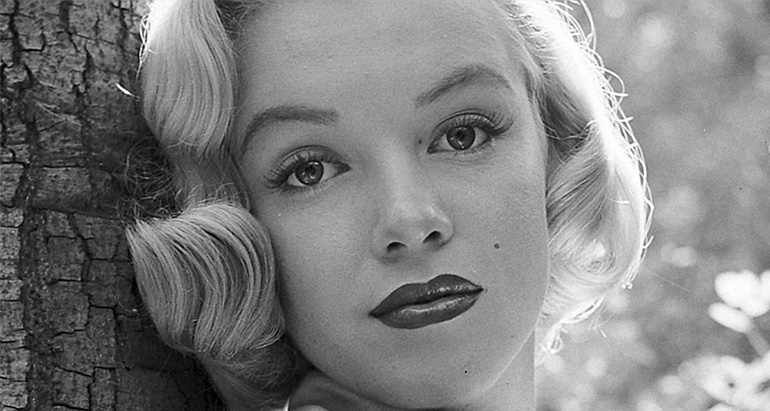
She is still omnipresent. And this after almost six decades since her mysterious death. Marilyn Monroe was probably the most fascinating star in American film history, and to this day her fans are not clear on what her unique effect on her audience was based on. Was it her flowing, bright blonde hair? Or rather the picturesque curves of her flawless body? Perhaps it was also her deep and sometimes smoky voice that impressed the world. Some contemporaries, however, believed that it was the obvious vulnerability that accompanied Marilyn Monroe on her journeys and contributed to the creation of the legend. Above all, it was the inconsistencies surrounding her death on a sunny day in August 1962 that continue to stir emotions to this day.
Profile: Marilyn Monroe
- Name: Norma Jeane Mortenson
- Date of birth: June 1, 1926 Place of birth: Los Angeles, California, United States
- Spouse: Arthur Miller (married 1956–1961), Joe DiMaggio (married 1954–1955), James Dougherty (married 1942–1946)
- Parents: Mother: Gladys Pearl Baker, Father: unknown
- Siblings: Berniece Baker Miracle, Robert Kermitt Baker
- Zodiac sign: Gemini
- Date of death: August 4, 1962
- Place of death: Brentwood, Los Angeles, California, United States
Childhood and Youth
The diva from Hollywood was born an illegitimate child.
Much of Marilyn Monroe’s life story was shrouded in a mysterious veil. The future Hollywood diva was born an illegitimate child, and the public was never to know who the father of this beautiful woman was. It was said that a certain Charles Stanley Gifford, who worked at the film studio “FBO Pictures,” was a possible candidate as the father. He was the boss of the cutter Gladys Pearl Baker Mortenson Eley, Marilyn’s biological mother. It is said that there was an affair between the two in the 1920s. They were employed in the company founded by Joseph P. Kennedy, the founder of the most prominent American family, under the name “Radio Corporation of America.”
The illegitimacy of the daughter was to be concealed at the baptism
Gladys Pearl’s family originally came from Arkansas and later lived in Los Angeles. In 1917, the mother of the future actress married a certain “Jap” Baker. From this marriage, the son Robert Kermit and the daughter Berniece Inez Gladys were born. After a few years, the marriage ended in divorce, which prompted the children’s father to abduct his son and daughter to Kentucky. Gladys Pearl married the Norwegian immigrant Martin Edward Mortenson in 1924, but this marriage also broke down after just four months. On June 1, 1926, her later famous daughter was born at the “General Hospital” in Los Angeles. Her mother gave the girl the name Norma Jean Mortensen on the birth certificate. So she used the name of her divorced husband. She listed his address as “unknown.” For the church baptism on December 6, 1926, Gladys Pearl changed the name once again to cover up her daughter’s illegitimacy. She chose the first name Norma out of sympathy for the actress Norma Talmadge and the last name Baker in memory of her first husband.
Card games and cinema visits were “temptations of the devil”
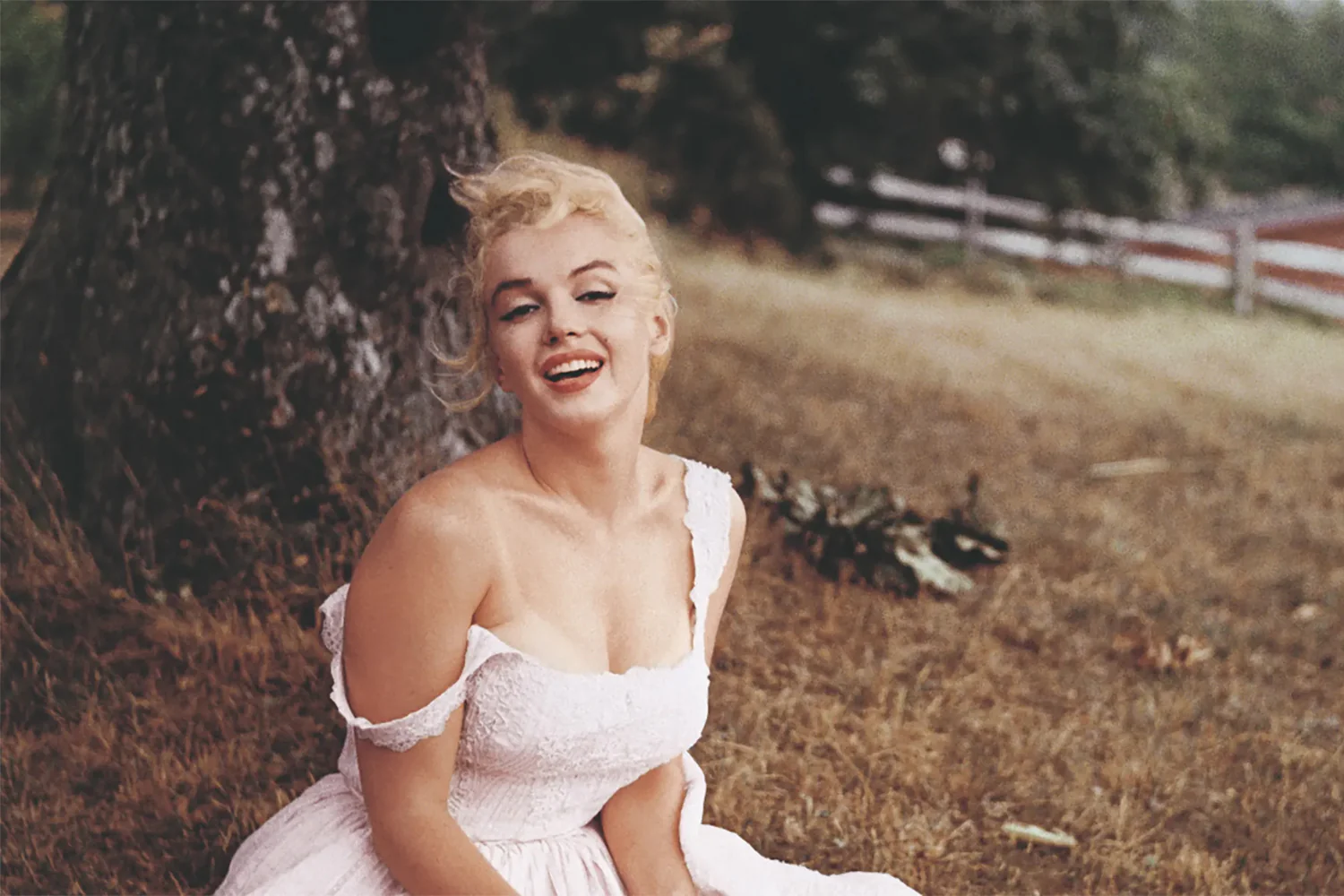
It was a problematic environment into which the young Norma Jean Mortensen was born. Because her mother was apparently mentally unprepared for her new role and probably also financially unable to provide her baby with a pleasant life. In later years, Marilyn Monroe still described her childhood as “stable and happy.” Her mother had decided to place her daughter with foster parents. These were Albert and Ida Bolender, who led a Christian life in the rural surroundings of the metropolis of Los Angeles, in the district of Hawthorne. Albert Bolender earned his living as a postman, and the couple repeatedly took in foster children to supplement their income. It is said that the Bolenders considered dance parties, card games and cinema visits to be “the devil’s temptations.”
A House with Boarders and a Severe Nervous Breakdown
When young Norma Jean was seven, she was back in the care of her mother, who continued to work as a cutter in a film studio and, in the summer of 1933, bought a small house in Hollywood with a loan from the Home Owners Loan Corporation. She shared the accommodation with her sub-tenant, actor George Atkinson, and his family. They shared the living room, bathroom, and kitchen. Many years later, when her career as an actress had begun, Marilyn Monroe said that she had been sexually abused during that time. Biographers found no confirmation of this claim, but Atkinson was named as a possible perpetrator. A year later, Gladys Pearl suffered a severe nervous breakdown. Doctors diagnosed the onset of paranoid schizophrenia. Norma Jean was taken in by Grace McKee, a friend of her mother’s. The community gave her guardianship of the young girl, who was now attending Washington Street School in Hawthorne. Her mother spent months in a nursing home and at Metropolitan State Hospital, was declared incompetent and was only able to visit her daughter sporadically.
Sexual harassment and a flight to California
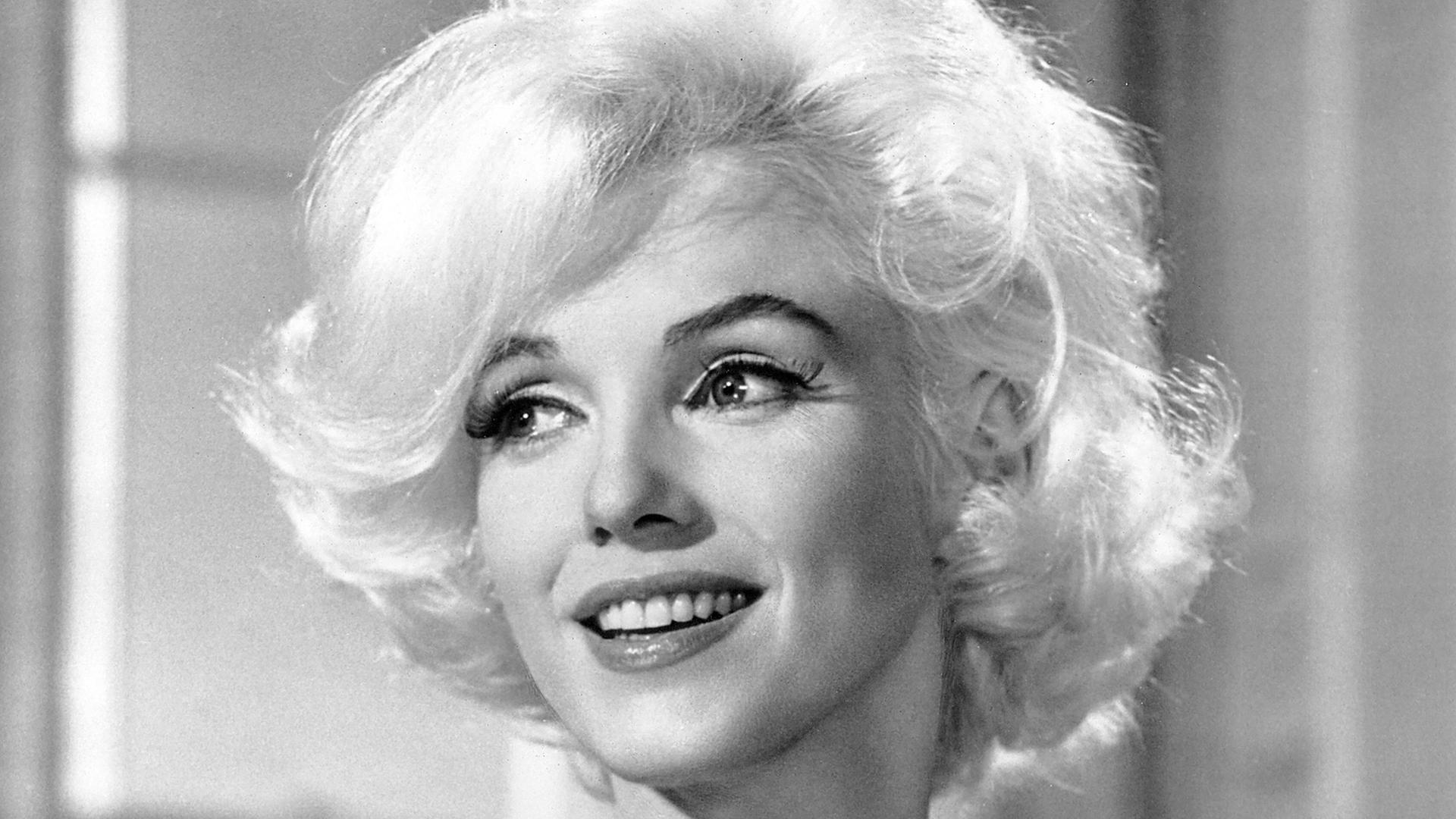
The aforementioned Grace McKee was to play an important role in the young girl’s life. On the one hand, because she replaced her friend’s daughter as a mother for some time. On the other hand, because she herself dreamed of a film career and inspired Norma Jean for it. But on a November day in 1935, their paths diverged because her newlywed husband, Erwin Silliman Goddard, could not envision a life for three. Norma Jean ended up in an orphanage in Los Angeles for almost a year and a half and only returned to the Goddards in June 1937. One day, she was sexually assaulted by the drunken Goddard and fled to a great-aunt in California. But when she was also pressured there by one of her cousins, she eventually ended up with an aunt of Grace McKee. She was now twelve years old and felt protected and cared for in her new home by Ana Lower.
Training and Studies
“The only person who made me know what love means…”
The young Marilyn Monroe thus experienced a childhood as a half-orphan. Ana Lower was a wealthy and warm-hearted widow, and Marilyn, who was still officially called Norma Jean, affectionately called her “Aunt Ana.” Later she said, “This woman was the only person who let me know what love means.” Starting in the fall of 1939, Norma Jean attended Emerson Junior High School in Westwood Village, on the outskirts of Los Angeles. From time to time, she wrote humorous contributions for the school newspaper, but her performance was rather average. Her classmates later remembered that the girl was quite shy and tended to stutter. Her foster mother had now developed some health problems, so Norma Jean moved back in with the Goodards for a few months and attended Van Nuys High School in the heart of the San Fernando Valley starting in September 1942.
Marriage
At sixteen, a first marriage to a young neighbor
In 1942, the time Norma Jean spent with the Goodard family was finally over, as her foster parents moved to West Virginia for professional reasons. The young girl was threatened with a return to the Los Angeles orphanage, but together with her neighbor James Dougherty, she hatched a plan. The 21-year-old had a job at the Lockheed aircraft factory and was known to everyone as “Jim.” On June 19, 1942, just days after her 16th birthday, Norma Jean married her young boyfriend, but had to leave University High School in Los Angeles because married minors were not tolerated there. Thus, she was denied a diploma while her husband, who had just outgrown his youth, was called up to the Navy. Norma Jean was forced to work in the assembly department of an armaments company. There she sprayed lacquer on the fuselage of planes. Later, she was trained to check parachutes.
Career
A photographer on behalf of the future President Ronald Reagan
Chance played a significant role in the actress’s later career, as one day she met the army photographer David Conover at the arms company. He was tasked with photographing young women at work. His client was none other than the later American president Ronald Reagan, who served as a captain in his country’s air force. And the 26-year-old photographer apparently could not get enough of the appearance of the young Norma Jean and had no problems getting her excited for a photo session. His photographs appeared in the military newspaper “Yank – the Army Weekly,” and the images under the title “Rosie the Riveter” had long since achieved a kind of cult status in America. The photo model in the armaments factory enthused thru her natural charisma, and soon there were numerous anonymous admirers. Apparently, Norma Jean had succeeded in “flirting” with the cameras.
A first contract as a photo model and a trip thru California
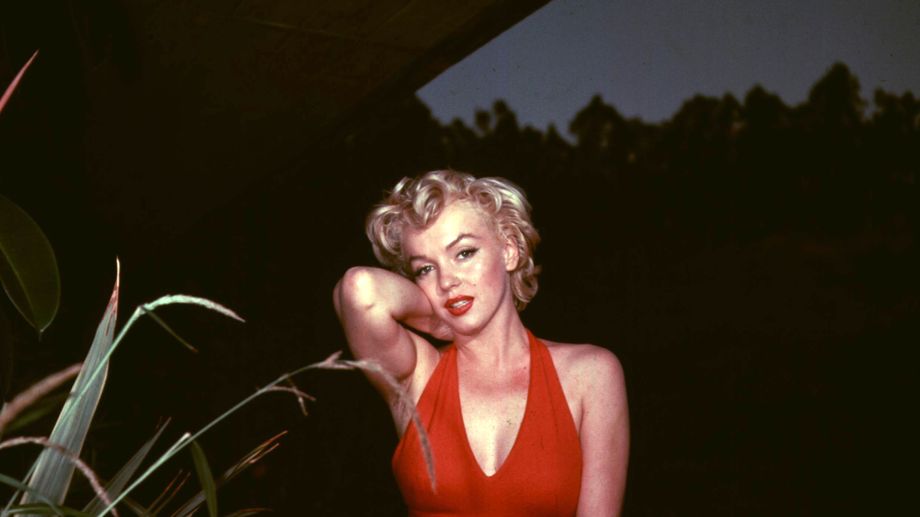
In the autumn of 1945, the life of the young lady changed because David Conover had persuaded her to apply as a model. The Blue Book Agency in Hollywood offered her a contract, and she was trained as a photographic model and mannequin. At the same time, she was advised to dye her dark, curly hair blonde and straighten it for a shampoo commercial. With André de Dienes, a photographer of Hungarian descent who came to America after his mother committed suicide, the young model traveled thru California, Nevada and Washington for photo shoots. And in 1946, Norma Jean first smiled from the covers of national magazines. Her vital statistics were published there, too. At that time, she weighed 107 pounds, was 166 centimeters tall, and had measurements of 91, 61, 86 with a dress size of 38.
A star was born – a star with a new stage name
The talent scouts of the film studio “20th Century Fox” had long had their eye on Norma Jean. Her new agent, Helen Ainsworth, arranged for her to meet with Ben Lyon, who was on the lookout for up-and-coming actors. Norma Jean impressed, got a contract and exactly 75 dollars a week. However, there was a hurdle in this contract – she had to be single. And that, in turn, led to her first divorce from a marriage contract. Ben Lyon, her patron, was intensely involved when Norma Jean was trying to get a stage name. Finally, she chose “Marilyn” as her first name and “Monroe” as her last name. At first, “Marilyn” was difficult for her to say, as it reminded her of the American tap dancer Marilyn Miller, who had performed as a musical star on Broadway for decades. And she derived “Monroe” from her mother’s maiden name. A star was born – a star with a new stage name.
The divorce from James Dougherty and minor extra roles
The young Marilyn Monroe was extremely ambitious and went to the studio every day to improve her skills as a dancer and singer in classes. Finally, she got her first break in a film – as an extra in the musical comedy “The Shocking Miss Pilgrim.” She played a telephone operator there, but this role was so insignificant that Marilyn was not even mentioned in the credits. In the meantime, a lot had changed in the life of the actress debutante. The marriage to James Dougherty was finally divorced on September 13, 1946, and before Marilyn adopted a stage name, she bid farewell to braces. But initially, she was only given extra roles. For example, in the comedy “Scudda Hoo! Scudda Hay” or in “You Were Meant for Me.” The successes of these productions were extremely limited for the studio, and since the involvement of the very young Marilyn Monroe did not bring the hoped-for breakthrough, her contract was not renewed.
A new contract at Columbia Pictures and bleached hair
For further training, she was once referred to the Actors’ Laboratory Theater. This acting school was originally located above Sharkey’s Bar and then found a new home on North Laurel Avenue in Hollywood. The company was proud to open its doors to students of all races. But when the Lab was vilified as a communist organization, it lost financial support and was blacklisted. Before the theater was closed, after its founder Roman Bohnen suffered a fatal heart attack during a performance, Marilyn Monroe met some experienced actors there. In March 1948, thanks to the mediation of Joe Schenk, the chairman of the board of Fox Studios, Marilyn signed a six-month contract with the film and television production company Columbia Pictures. The boss of this company hired her on the condition that she bleached her hair and removed her mole.
A German-American became Marilyn Monroe’s mentor
It was the acting teacher Natascha Lytess who would decisively influence the further path of Marilyn Monroe. She had studied in Berlin under the name Natalia Postmann and was part of the famous acting troupe of Max Reinhardt. When the National Socialists came to power in Germany, the Jewish woman emigrated to the United States. At Columbia Pictures, she worked as a private tutor and became a mentor to Marilyn Monroe because she was convinced of her abilities. In a biography about Natascha Lytess, it is said that she was the one who awakened the young actress’s intellectual curiosity and gently introduced her to more complex roles. The German-American also fought for Marilyn Monroe to get her first major role in the film “I Dance in Your Heart.” The Motion Picture Herald published a glowing review, and Natascha Lytess became Marilyn Monroe’s constant companion. It was said that the two had a lesbian relationship in the early fifties.
A corrected overbite, bleached teeth, and a nose job
Marilyn Monroe had some corrections made to her body. Thus, a slight overbite was corrected, her teeth were whitened, and finally, a cartilaginous bump on the tip of her nose was removed by cosmetic surgeons. Anyone who was paying attention and following the actress’s career at the time would have noticed that her appearance was changing a little. Her new agent was now called Johnny Hyde. He was the vise president of the William Morris Agency and had gained significant influence in the Hollywood film industry. He had become interested in Marilyn when she was photographed by pin-up photographer Bruno Bernard at the Racquet Club in Palm Springs. Johnny Hyde was 31 years older than Marilyn Monroe, but that did not stop him from courting the young actress. When he proposed to her, she turned him down. Nevertheless, he negotiated a new contract with 20th Century Fox for his beloved. A few days after signing the contract, he died of a heart attack at the age of 55.
Naked on red velvet and the star of a calendar page
Since a considerable part of her income had to be set aside for acting lessons, rent and a car, Marilyn Monroe accepted almost all offers at the threshold of the 1950s. Thus, she posed naked for the photographer Tom Kelley on red velvet. The picture was published as a calendar page two years later. When a journalist asked her years later if she was really wearing nothing during that photo session, she replied with a wink: “Yes – the radio…” The aforementioned photo appeared again in 1953 – this time in the first issue of “Playboy.” Marilyn Monroe only had a regular income when she signed a seven-year contract with the film studio “20th Century Fox” in October 1950. However, the negotiated fee was much lower than what became common in later years. In the film “Love Happy,” she had a relatively small role, but her partner was none other than Groucho Marx, one of America’s most successful comedians and the eloquent speaker of the famous Marx Brothers.
Transformation from a film starlet to a carefree actress
The brief appearance alongside Marx apparently impressed the producers. They sent their blonde young diva on an advertising campaign thru the United States and also to the film’s premiere in New York. However, she initially remained in smaller roles, before she achieved a surprising breakthrough in a major production. In the film “The Asphalt Jungle,” Marilyn Monroe played the part of the naive Angela Phinlay, and thus the mistress of an aging and fraudulent lawyer. When asked many years later what her most interesting role was, she said “The Asphalt Jungle.” Later, she played a groupie in a film, then a witty receptionist or a shady photo model. Within a few years, Marilyn Monroe had transformed from a film starlet into a serious actress.
The short and tempestuous marriage with a baseball player
In 1952, a blind date was arranged for Marilyn Monroe. She met an American baseball player with Italian roots: Joe DiMaggio. In the United States, he was called “The Yankee Clipper.” He was the first professional athlete to sign a 00,000 contract and had a failed marriage behind him. When he first met Marilyn Monroe, he was 39 years old and had just retired from his baseball career. Although he had imagined a “homely wife”, the two apparently hit it off. They married on January 14, 1954, at San Francisco City Hall. A brief marriage followed, with numerous temper tantrums on both sides. Joe suffered above all from jealousy. One episode was typical of that period. When Marilyn was in New York for the famous scene in the film “The Seven Year Itch”, where her skirt was blown up by a subway vent in front of a crowd of onlookers, Joe DiMaggio was said to have watched the event with a “death stare” (as director Billy Wilder put it). After exactly 247 days, Marilyn Monroe filed for divorce.
A pneumonia in Korea and saloon singer in the Western
During an impromptu show in front of thousands of American soldiers in war-torn Korea, Marilyn Monroe wore only a thin evening gown on February 16, 1954. On her return to Hollywood, she suffered from pneumonia. A classic Western titled “River of No Return” brought her the next leading role – this time alongside Robert Mitchum. However, the filming was initially under a bad star, as Marilyn Monroe broke her leg. After some delays, production started, and in some scenes, the audience saw the actress with her legs covered. In the Western classic “River of No Return,” Marilyn Monroe slipped into the role of saloon singer Kay Weston and fascinated with her enchanting songs. Director Otto Preminger was less enthusiastic about working with his leading actress. His conclusion after the film: “Marilyn is like Lassie. You have to shoot the same scene 14 times before she barks in the right place…
A film company of her own and the marriage to Arthur Miller
In the mid-1950s, Marilyn Monroe had established herself at the absolute top of American actresses and founded her own film company, “Marilyn Monroe Inc.” She hoped for better roles, because after various Westerns she was apparently frustrated. She no longer wanted to appear “in third-rate cowboy films.” She moved her center of life from Hollywood to New York, where the actor Lee Strasberg was her mentor and where she was advised by his wife Paula before filming. On June 29, 1956, she married for the third time. This time, the American writer Arthur Miller was her chosen one. The wedding took place two days later according to Jewish rites. She met her world-famous eleven-year-older groom while filming the movie “Age Doesn’t Protect Against Foolishness.” After the procedure, which was hard for her to endure, she converted to the Jewish faith.
The desire for children led to three miscarriages
Marilyn Monroe hoped for security above all from this marital union alongside her older husband. Both wanted children, but the actress developed an inflammation of the uterine lining, which led to three miscarriages. With increasing horror, Arthur Miller noted his wife’s growing pill consumption, and after numerous arguments, Marilyn Monroe’s third marriage was also dissolved in Mexico on January 24, 1961. The filming was also problematic because the blonde diva repeatedly arrived late on set and often forgot her lines. Marilyn Monroe developed sleep disorders, which she tried to combat with increased doses of pills. Nevertheless, the film “Some Like It Hot” became a box office hit in 1959. The film, directed by Billy Wilder, became a classic and is considered the best comedy in film history.
The Depressive Mood in a “European Film”
Marilyn Monroe’s last completed film was called “The Misfits” in 1961, and she starred alongside Clark Gable. The screenplay was written by her then-husband Arthur Miller, and the role of the main character Roslyn was tailor-made for Marilyn Monroe. In this film, she was looking for more respect and humanity and the meaning of her life. The American critics sensed a depressive undertone in it and referred to it as a “European film.” Which at that time was anything but a positive description. Marilyn Monroe was permanently in medical and psychoanalytical treatment in the early 1960s. She suffered from depression and self-doubt. During a trip to New York, she fell ill with a viral infection. Due to her absence, the production costs for the film “Cleopatra” skyrocketed.
A legendary serenade for Kennedy and emerging rumors
But while filming “Cleopatra,” Marilyn Monroe received an invitation to the 50th birthday of American President John F. Kennedy. On May 29, 1962, she appeared at New York’s Madison Square Garden in a nude dress adorned with 2,500 rhinestones and breathed a “Happy Birthday, Mr. President” into the microphone. This short appearance went on to become a worldwide success, but it also led to Monroe’s dismissal by her film studio. She had appeared at the Garden and the President’s gala without her company’s consent. At the gala, in front of 15,000 paying spectators, many observers were overcome by the feeling that there was more between Marilyn Monroe and John F. Kennedy than just mutual affection. The president was known as a womanizer, and in later biographies of Kennedy’s life, it was said that his wife, Jackie, knew about most of his affairs and tolerated them. Rumors of a hot relationship between the sex symbol of a whole generation and the most important man in the Western world began to circulate. Marilyn Monroe was accompanied by pianist Hank Jones during her birthday serenade, and Kennedy thanked her with the words: “Now I can retire, after having the Happy Birthday sung to me in such a sweet and agreeable way…”
Her romances and affairs dominated the headlines
In her youth, Marilyn Monroe was known to have stuttered and therefore sought treatment from a speech therapist. But at the end of her career, and during filming with Dean Martin, the speech impediment returned due to her anxiety and depression. In the summer of 1962, she tried to get her life back on track and bought a house in Brentwood, California, for $75,000. But her problems had increased after her separation from Arthur Miller. Her fame had faded, and it was almost only her romances and affairs that made headlines in the tabloids. Shortly before her death, she sought the help of the well-known psychiatrist Dr. Ralph Greenson. Many years later, audio tapes surfaced that were recorded during a treatment session with Marilyn Monroe and were leaked to the public due to the indiscretion of a prosecutor.
Death and Theory on Suicide
After the sudden death, the death certificate stated “probably suicide.”
On August 5, 1962, the concerned housekeeper Eunice Murray called Dr. Greenson. At three o’clock in the nite. The psychiatrist came to the actress’s house on Fifth Helena Drive in Brentwood, smashed a window and found Marilyn Monroe dead in her bed in the bedroom. The official cause of death was given as: Died of an overdose of sleeping pills. There was an empty box of the drug on the nightstand, and the autopsy report by pathologist Thomas Noguchi mentioned an overdose of the barbiturate Nembutal. The death certificate read: “Probable suicide.” The news of the world star’s early death at just 36 years old spread around the globe, and the funeral was organized by her former husband Joe DiMaggio, her half-sister Berniece Baker Miracle and her financial advisor Inez Melson. The body of Marilyn Monroe was interred in a bronze casket in the “Corridor of Memories” at Westwood Village Memorial Park Cemetery in Los Angeles.
The theory of suicide was on weak ground
The death of Marilyn Monroe raised many questions and conspiracy theories never ceased. Some details of her death were strange, and contemporaries were convinced that this woman was not at all suicidal. Surprisingly, the autopsy revealed no contents in the stomach of the deceased that would indicate the taking of pills. There was also no glass of water. A quantity of tablets this size would hardly be able to be taken without liquid, said the experts who investigated the case. But outside interference was also excluded, as no puncture wounds were discovered. Many were convinced that the suicide theory was on worryingly weak ground. Marilyn Monroe left her cash fortune to her half-sister, her mother, her secretary, and a friend.
