
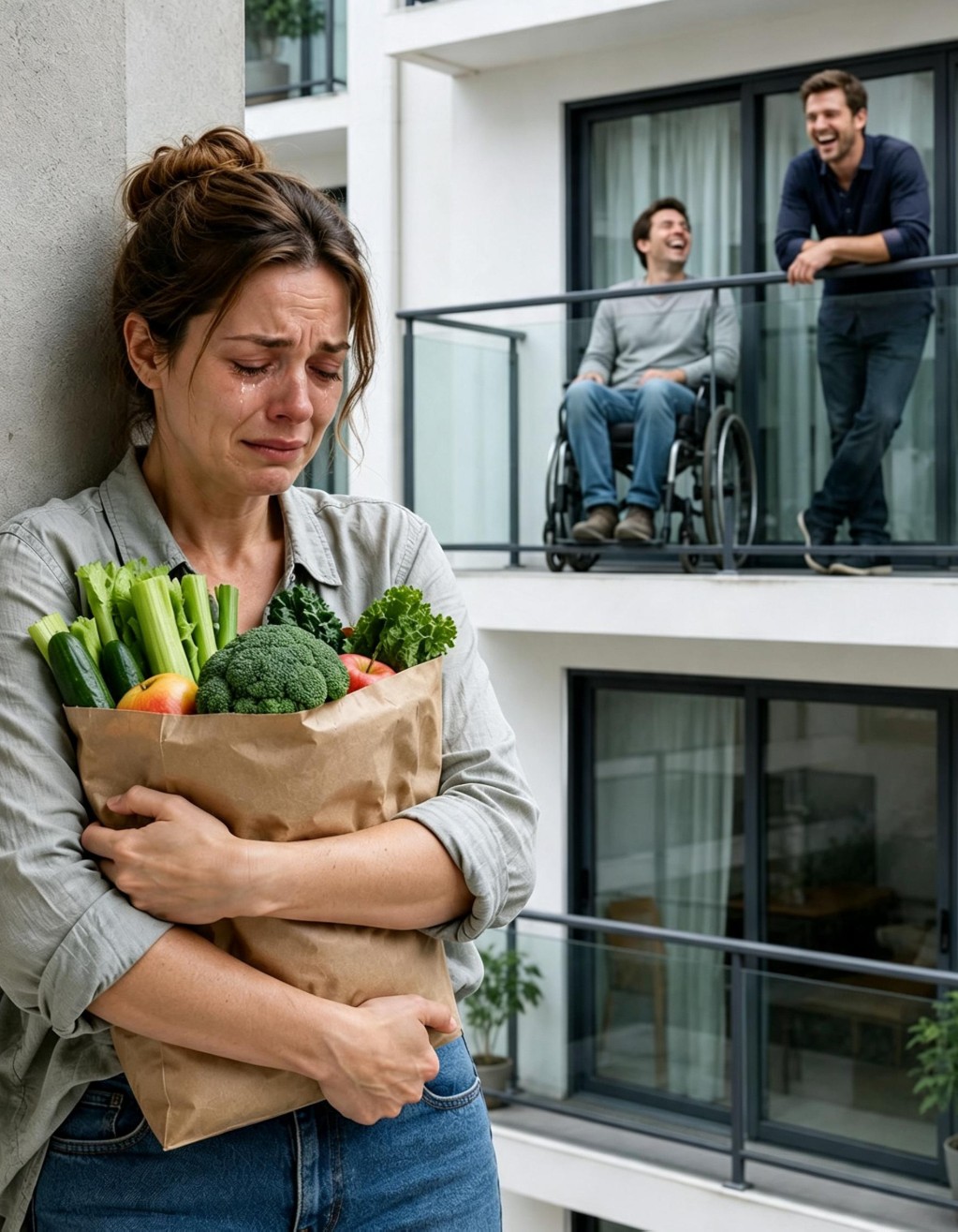
Part 1: Five Years of Sacrifice
If someone says “five years” out loud, it can sound almost trivial.
Just five years.
A small piece of time that can be marked on a calendar and left behind.
But when those five years are measured in hospital corridors, prescription schedules, sleepless nights, insurance calls, and the stale smell of antiseptic that never quite leaves your clothes, time does not pass normally.
It gathers around you.
It becomes heavy.
It presses against your chest until you are no longer simply living through time. You are carrying it.
My name is Tessa Callahan, and I am thirty-two years old.
When I look into the mirror now, I sometimes struggle to recognize the woman staring back at me.
Her shoulders slope forward as if she is always preparing for another blow. Her eyes are surrounded by deep shadows that years of poor sleep have carved into her face. And her hands tell the story even more clearly than her eyes do.
They are rough from endless washing.
They are sore from lifting weight that was never meant to be carried by one person.
They are marked by years of gripping the cold metal rails of wheelchairs and the hard edges of hospital beds.
There was a time when my life looked ordinary.
More than ordinary, actually.
It looked hopeful.
I met my husband, Patrick O’Connor, at a neighborhood fundraiser in a quiet town called Willow Creek.
Patrick had a charm that made people feel as though meeting him was some kind of special event. When he spoke at the dinner table, people seemed to lean closer without realizing it. When he smiled at you, he had a way of making you believe the smile belonged only to you.
I fell for him quickly.
We married soon afterward, full of plans and confidence about the future.
We talked about having children together, traveling, and eventually buying a larger house somewhere peaceful.
We wanted a life that felt earned.
A life we could look back on and say, “We built this together.”
At the time, I believed Patrick wanted the same thing.
I believed our future belonged equally to both of us.
I was wrong.
Five years before that morning at the hospital, everything changed on a dangerous stretch of road outside Pine Ridge.
Patrick had been returning late from a regional sales conference.
There was a sharp curve on that road that local drivers always warned people about. Everyone knew it was dangerous, but like most people, Patrick probably believed he could handle it.
That night, another driver crossed the center line after drinking too much.
The collision was violent.
Metal twisted and broke.
Patrick survived.
But the accident permanently damaged the lower half of his body, leaving him unable to walk.
At Saint Jude Mercy Hospital, a neurologist explained what had happened.
He spoke gently, but there was no false hope in his words.
The damage was permanent.
Patrick would need long-term assistance.
His life would never return to the way it had been before the accident.
When the doctor finished explaining everything, the room became completely silent.
I remember staring at Patrick.
I remember how frightened he looked.
I reached for his hand.
“I’m not leaving you,” I told him.
“We’ll figure this out together.”
And I meant every word.
At that moment, I believed love meant staying no matter how difficult life became.
I believed loyalty meant enduring anything.
What I did not understand was that sacrifice, when it has no limit, can slowly hollow a person out until there is almost nothing left of them.
Part 2: The Life I Gave Away
The years after the accident became one long cycle of exhaustion.
My alarm went off before sunrise.
I prepared Patrick’s medications.
I helped him get dressed.
I prepared meals, cleaned the house, arranged transportation, dealt with insurance companies, made medical appointments, and kept track of paperwork that seemed to multiply every month.
I taped medication schedules to the refrigerator because there were too many pills and too many times to remember.
I spent hours on the phone with insurance representatives who transferred me from one department to another.
Sometimes I would spend an entire afternoon trying to solve one problem, only to hear someone tell me, “You’ll need to contact another department.”
Then the process would start all over again.
At night, I often slept on the uncomfortable sofa.
I did that because I needed to hear Patrick if he called for help.
I learned how to lift him without hurting his fragile body.
I learned how to move his wheelchair.
I learned which medications made him tired and which ones upset his stomach.
I learned how to smile when I was exhausted.
Most importantly, I learned how to hide my resentment.
People constantly praised me.
“You’re so strong, Tessa.”
“I don’t know how you do it.”
“Patrick is lucky to have you.”
Every time someone said those things, I smiled.
But sometimes, inside, I wanted to scream.
I wasn’t strong.
I was simply trapped inside a responsibility I had once willingly accepted.
And I had no idea that Patrick saw my devotion very differently.
Five years after the accident, my life had become almost completely organized around his needs.
Then came one particular Tuesday.
It could have been any Tuesday during those long five years.
My alarm rang at 4:30 in the morning.
The city outside was still dark and cold.
The house was silent.
I moved through the rooms carefully, wearing clothes chosen for comfort and function rather than appearance.
As I prepared for the day, I ran through my usual mental checklist.
Medication.
Breakfast.
Hospital.
Insurance call.
Laundry.
Dinner.
Patrick had been asking for pastries from a bakery near the hospital for several days.
He complained that hospital food made him feel like a burden.
So I thought bringing him something warm and familiar might make him feel better.
Maybe, I told myself, a small kindness could make the morning easier for both of us.
I drove to the bakery.
It was already open.
Warm light spilled through the windows, and the smell of butter, sugar, and fresh pastry filled the air.
For a few minutes, I pretended I was simply another woman buying breakfast for the man she loved.
The cashier smiled at me.
“What can I get you this morning, dear?”
“Two cinnamon rolls and a box of plain pastries,” I said, adjusting my coat. “And one large black coffee to go.”
I paid in cash and carried the paper bag carefully to my car.
As I drove toward the medical center, the bag rested on the passenger seat.
I imagined Patrick smiling when he saw it.
I imagined him thanking me.
I imagined that, for once, he might recognize what I was doing for him.
I had no idea that within minutes, I would discover exactly what he thought of my devotion.
Part 3: What I Was Worth to Him
The hospital greeted me with the familiar chill of disinfectant.
After five years, even that smell felt like part of my life.
I walked through the entrance and asked where Patrick was.
A hospital volunteer told me he was in the garden courtyard with another patient.
I thanked her and headed toward the glass doors.
Before I entered the courtyard, I heard Patrick’s voice.
I stopped.
He was talking to another man.
I couldn’t see them clearly yet, but I recognized Patrick immediately.
“You really do get used to it over time,” Patrick was saying with a shrug.
I stepped closer.
“People think it’s tragic,” he continued, “but honestly, it has its distinct advantages.”
The other man laughed.
Then he asked, “Your wife does everything for you. Doesn’t that bother you?”
Patrick answered immediately.
“Why would it bother me? She’s reliable, and she doesn’t go anywhere.”
My feet stopped moving.
Patrick continued.
“She has nowhere else to go.”
There was something cruel in the way he said it.
A smirk entered his voice.
I stood just outside their line of sight, still holding the paper bag of pastries.
The other man chuckled.
“Sounds like you landed pretty well for yourself.”
“I certainly did,” Patrick replied.
His voice was completely calm.
“I have total care without paying for a nursing facility. No overwhelming care costs. She handles everything.”
The other man laughed again.
Patrick continued.
“Just patience and hope keeping her in place.”
I stared at the glass doors.
I couldn’t breathe properly.
Then the other man asked, “What about your inheritance?”
Patrick’s voice became quieter.
But not quiet enough.
“My assets are fully secured for my son and my sister,” he said. “Family stays family.”
His son was from a previous relationship, something Patrick had always made clear before our marriage. But what I had never realized was that he had already arranged his assets so that I would receive nothing.
Then Patrick laughed.
“Tessa thinks loyalty earns permanence.”
The two men laughed.
I stood there frozen.
For five years, I had believed I was caring for my husband because we loved each other.
Now I understood.
Patrick did not see me as his wife.
He saw me as free labor.
He saw my loyalty as something he could use.
He saw my exhaustion as proof that I had nowhere else to go.
The bag in my hand suddenly felt unbearably heavy.
The cinnamon rolls I had bought with such good intentions suddenly seemed almost insulting.
I had spent five years giving him everything I had.
And he was sitting in a hospital garden bragging about how cheaply he had obtained my devotion.
I did not confront him.
I did not scream.
I did not cry.
I simply turned around.
Near the exit was a large trash bin.
I dropped the entire bag inside.
The pastries disappeared beneath other people’s discarded hospital trash.
Then I walked to my car.
Something inside me had changed.
The anger was enormous.
It burned through me like wildfire.
But underneath the anger was something even more powerful.
Clarity.
If I reacted emotionally, I could lose everything.
If I stayed calm, I could take my life back.
Part 4: The Plan
Patrick texted me only minutes later.
“Where are you?”
Then another message arrived.
“I’m hungry. Where are the pastries?”
I stared at the screen.
For a moment, I almost laughed.
Then I typed my reply.
“My car stalled in the cold. I’ll be late.”
That was all.
I did not drive home.
Instead, I drove to the county library.
I parked outside, walked inside, and found a quiet table between rows of books.
For the first time in years, my hands felt steady.
I opened my laptop.
I began researching.
I needed to understand my legal rights.
I needed to know what Patrick had done with our finances.
I needed to understand what I could legally document.
Most of all, I needed a way out.
Over the following weeks, I became extremely careful.
My routine did not change.
I still woke up early.
I still prepared Patrick’s medications.
I still helped him.
I still answered his questions.
I still acted like the same exhausted wife he had always expected to obey him.
But secretly, I was preparing my future.
I gathered copies of financial documents.
I preserved legal paperwork.
I reviewed insurance policies.
And what I found made my stomach turn.
Several policies and financial arrangements named Patrick’s family members, including his son and sister, while leaving me out.
The man I had spent five years caring for had been preparing his financial future without me.
I also began documenting his behavior.
When conversations needed to be preserved, I made sure I followed the recording laws that applied where I lived rather than secretly recording anything that could later be challenged.
I kept written records of important conversations, dates, financial decisions, medical responsibilities, and incidents.
I documented how much of his daily care I provided.
I saved copies of messages.
I kept records of expenses.
I was no longer simply surviving each day.
I was building a record of the truth.
Eventually, I contacted an old colleague named Sarah Jenkins.
Sarah had known me before the accident.
She remembered the woman I used to be.
When I told her what had happened, she listened without interrupting.
She did not tell me to calm down.
She did not tell me that Patrick was disabled and therefore deserved my sympathy.
She simply listened.
When I finished, Sarah was silent for several seconds.
Then she said, “Tessa, you need an attorney.”
“I know,” I replied.
“I know someone,” she said. “Her name is Rebecca Stone. She is precise, and she doesn’t get intimidated easily.”
Rebecca Stone did not give me the sympathy I had expected.
Instead, she gave me something far more useful.
A strategy.
“You don’t need revenge,” Rebecca told me during our first meeting. “You need protection. We are going to make sure you leave this situation with your rights intact.”
For the first time in years, I felt like someone was standing beside me.
Part 5: Too Late to Stop Me
Patrick never realized what was happening.
He continued believing I was the same woman who would always remain beside him.
He expected me to keep cooking.
Keep cleaning.
Keep arranging his appointments.
Keep lifting him.
Keep making his life comfortable.
He had no idea that I was preparing to leave.
By the time he finally understood, it was too late.
Rebecca helped me begin the necessary legal process.
Financial records were examined.
Hidden assets became part of the legal investigation.
Court filings were submitted where appropriate.
Accounts connected to the dispute were subject to court orders and restrictions.
The story Patrick had told his family began to collapse.
He tried to make me look like the cruel one.
He accused me of abandoning him.
His relatives accused me of betrayal.
One of them even told me, “After everything Patrick has been through, how can you do this to him?”
I looked at her calmly.
“Ask him what he said about me in the hospital garden,” I replied.
She went silent.
The evidence mattered more than their accusations.
The records showed the years of care I had provided.
The financial documents showed what Patrick had arranged.
The messages showed the pattern of his behavior.
The truth was no longer based on what either of us claimed.
It was documented.
Patrick had spent years convincing himself that my loyalty belonged to him permanently.
He had mistaken my love for weakness.
That was his greatest mistake.
The legal process took time.
There were difficult meetings.
There were arguments.
There were moments when I wondered whether I had the strength to continue.
But every time I felt myself weakening, I remembered those words.
“She has nowhere else to go.”
That sentence became my motivation.
I would make sure I had somewhere else to go.
Part 6: The Door Behind Me
The day I finally moved out of our house, something strange happened.
I expected to feel devastated.
I expected to cry.
I expected to feel guilty.
Instead, I felt light.
Remarkably light.
I carried my belongings outside and looked at the house one last time.
For five years, I had thought of that place as my home.
But standing there, I finally understood what it had become.
A prison.
The front door closed behind me.
And for the first time in five years, I was not thinking about whether Patrick needed something.
I was thinking about what I needed.
My future.
My freedom.
My own identity.
I got into my car and drove away.
Months later, the hospital called.
Patrick had been admitted again.
The person on the phone explained that he needed assistance and asked whether I could come.
I listened quietly.
Then I said, “No. I’m sorry, but I am no longer responsible for his care.”
There was a pause.
Then the hospital representative thanked me and ended the call.
I felt no hatred.
I simply felt finished.
Patrick now had to rely on the people he had chosen to put before me.
His son.
His sister.
The family he had proudly protected while treating me as though I were nothing more than unpaid help.
For five years, I had believed leaving him would make me heartless.
Instead, leaving him gave me back my life.
Part 7: The Woman I Became
Today, I live in a different part of the state.
I sit in a sunlit café that Sarah and I opened together.
The windows let in warm afternoon light.
There is always the smell of fresh coffee in the air.
People come and go around me, carrying their own stories, their own problems, and their own hopes.
Sometimes I write during the quiet hours.
Sometimes Sarah sits across from me with her coffee and asks how I am doing.
And every now and then, I realize something that still surprises me.
I am happy.
Not because everything that happened was suddenly erased.
It wasn’t.
I still remember the hospital corridors.
I still remember the alarms before sunrise.
I still remember the endless insurance calls.
I still remember lifting Patrick when my back was already hurting.
I still remember sleeping on the sofa so I could hear him if he called.
And I remember standing outside that hospital garden with a bag of pastries in my hands while the man I loved laughed about how useful I was.
I will never forget that moment.
But I no longer live inside it.
I am thirty-two years old.
And for the first time in five years, I am not measuring my life by someone else’s medication schedule.
I am not waiting for someone to call my name from another room.
I am not calculating how much time remains before the next appointment.
I am not sacrificing every part of myself so another person can remain comfortable.
I am living.
One morning, Sarah placed a cup of coffee beside my notebook.
“You look different,” she said.
I smiled.
“I feel different.”
She looked at me for a moment.
Then she smiled back.
“You finally look like Tessa again.”
I looked through the café window at the sunlight spreading across the street.
For years, I had believed that love meant staying no matter what.
Now I understand something different.
Love should never require you to disappear.
Loyalty should never mean surrendering your dignity.
And caring for another person should never mean giving them permission to own your life.
I spent five years holding someone else upright.
In the end, I had to learn how to stand on my own.
And once I did, I discovered that I had never been as weak as Patrick believed.
I had simply been carrying too much for too long.
Now I am whole again.
And dignity, once reclaimed, does not need anyone’s permission to exist.
THE END.
