
Part 1:
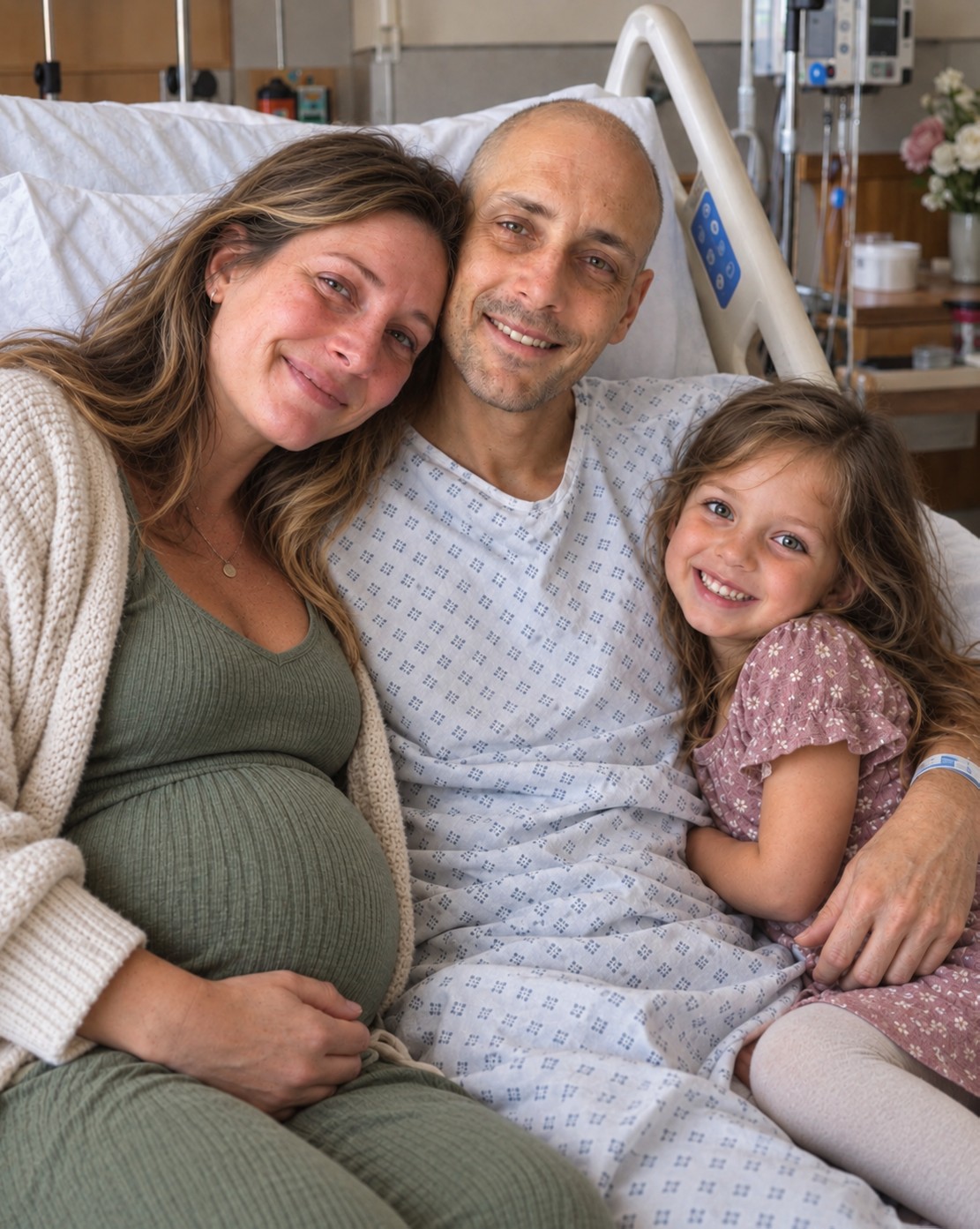
Simon died while I was six months pregnant, leaving me with two children to think about and more questions than I ever expected to have.
I was thirty-five years old and six months pregnant with our second daughter. Our four-year-old daughter, Sadie, still believed Daddy was going to get better because that was what children did. They believed the adults around them when the adults said everything would be okay.
For eight months, my entire life had been reduced to lists.
Medication times.
Oncology appointments.
Insurance calls.
Bills.
Sadie’s preschool schedule.
My prenatal appointments.
And all the little things that had to be done every day when the person you loved most was seriously ill.
Simon watched me one afternoon as I sat at the kitchen table, carefully sorting his pills into the weekly organizer.
“You know you don’t have to control every second of the day, right?” he said.
I looked at him.
“I am six months pregnant, Sadie is four, and my husband has cancer,” I answered softly. “Which part should I stop controlling?”
“Maybe start with me,” he suggested with a faint smirk.
“You are the least trustworthy one,” I replied, forcing a smile.
Simon gave me a tired grin.
“We have been together since high school,” he reminded me gently.
“Exactly. So I have evidence.”
He shook his head.
“You are terrifying.”
“Good,” I told him. “Because cancer should be terrified of me.”
He laughed.
Then he coughed.
The laugh turned into a hard, painful coughing fit. He grabbed the edge of the kitchen table and held on until it passed.
I watched him carefully.
That was us.
I organized everything.
Simon made jokes.
And neither of us said the obvious thing out loud.
We both knew he was getting worse.
During the last few months of his illness, Simon also started disappearing for long stretches of time.
At first, I tried not to question it.
He had enough problems without me watching every move he made.
But eventually, I couldn’t ignore it.
One afternoon, he walked through the front door looking exhausted.
“Where were you?” I asked.
“Just out,” he replied quietly.
“For three hours?”
“I needed air.”
I stared at him.
“You can barely walk through the local grocery store without stopping to rest.”
He slowly removed his coat.
I noticed something sticking out from inside the pocket.
“What is in your jacket?”
“Nothing.”
“Those are papers.”
I could see the thick edges of several documents.
Simon sighed.
“Gemma…”
“And you were on your laptop at two this morning.”
He reached out and gently touched my arm.
“Please don’t interrogate the dying man.”
I closed my eyes.
“I hate that joke.”
“I know.”
“Whatever you are doing, you can tell me.”
“I wish I could.”
He looked down at his hands.
“Then tell me right now,” I urged him.
He glanced at the documents hidden inside his coat.
“You already have enough to carry.”
“That is not your decision to make.”
“It should be sometimes.”
He looked directly into my eyes.
“If someone needed help tomorrow, you would forget to ask whether you could afford to give it.”
I frowned.
“That sounds like a compliment.”
“It scares me.”
“Why does it scare you?”
“Because you never know when to let someone else be the problem.”
His words stayed with me.
At the time, I thought he was simply talking about my personality.
I thought he was telling me that I worried too much and tried to solve everyone’s problems.
So I made a decision.
I would let him have one corner of his life where cancer and I were not constantly watching him.
I would give him some privacy.
That decision became the first thing I regretted after he died.
Five weeks later, Simon’s condition became much worse.
It happened quickly.
Much more quickly than I was ready for.
I sat beside his hospital bed, holding his hand in the quiet room.
The machines made soft sounds around us.
Simon looked pale and exhausted.
“You look scared,” he whispered.
He could barely lift his fingers.
“So do you,” I replied, brushing my thumb gently across his hand.
“I am allowed to be.”
“So am I.”
He almost smiled.
“You will be okay.”
“Don’t say that.”
“You will.”
“No, Simon.”
He squeezed my fingers with what little strength he had left.
“Promise me you will keep going.”
I was already crying.
“I don’t know how.”
“You will figure it out,” he whispered. “Because you always do.”
Those were the last clear words he said to me.
Not long afterward, Simon slipped away.
He was gone.
And suddenly the lists that had filled my life no longer mattered.
There were no more medication times.
No more oncology appointments.
No more insurance calls about treatment.
There was only grief.
And two children who still needed me.
Three days after Simon died, I sat at the kitchen table with a heavy funeral bill and two overdue notices spread out in front of me.
A woman from the bank sat across from me.
She cleared her throat awkwardly.
“There isn’t enough left to cover next month, Gemma.”
“I know.”
“And the loan against the house…”
“I know about the loan,” I interrupted gently.
She hesitated.
“Do you have any other savings?”
“We spent them all.”
“Anything you could sell?”
I looked around the room.
“I already sold my jewelry.”
The woman lowered her eyes.
“I am so sorry.”
“So am I.”
She looked at the paperwork.
“Was it for his medical treatment?”
“Yes.”
I swallowed hard.
“When someone offers one more treatment, you don’t ask whether you can afford hope.”
She went quiet.
There was nothing else she could say.
Because when hope dies, the bills stay.
A week after the funeral, I returned to St. Jude Regional Hospital to collect Simon’s remaining belongings.
A nurse named Brenda met me at the desk.
She handed me a clear plastic bag.
“I am so sorry for your loss, Gemma.”
“Thank you, Brenda.”
I held the bag against my side.
Inside were Simon’s watch, his phone charger, his toiletries, a paperback novel, and a gray women’s cardigan.
I pulled the cardigan out.
“This isn’t mine.”
Brenda looked at it.
“Oh.”
She seemed uncomfortable.
“I thought it belonged to the woman who visited him frequently.”
I looked at her.
“What woman?”
“I assumed she was family.”
“Simon didn’t have any family left.”
Brenda’s expression changed.
“I am sorry. I shouldn’t have assumed.”
“How often was she here?”
“Several times,” Brenda said. “Sometimes she stayed for a few hours.”
“What did she look like?”
“Dark hair. Early forties, I would guess.”
“Did they argue?”
“Not that I ever saw.”
“What did they do during those visits?”
Brenda thought for a moment.
“Mostly talked. There were usually papers spread out everywhere.”
“Papers?”
“Yes.”
My stomach tightened.
I immediately remembered the documents I had seen inside Simon’s coat.
“Can I see the security footage?”
Brenda shook her head.
“I can’t show you hospital surveillance.”
“Then tell me who she was.”
“I honestly don’t know her name.”
I didn’t let the matter go.
After several conversations with hospital administration, I was eventually allowed to view a few minutes of footage related to Simon’s visits.
I sat in front of the monitor.
Then I saw her.
The woman from the hospital.
“I have never seen her before in my life,” I whispered.
A staff member beside me pointed toward the screen.
“She came in carrying that blue folder.”
“How long did she stay?”
“Almost two hours.”
I watched the footage carefully.
Then I noticed another timestamp.
“And that clip?”
“That was the following day.”
The woman appeared on screen again.
This time, she was crying.
“She is crying,” I whispered.
The staff member nodded.
“Were they alone in the room?”
“Gemma…”
“Were they?”
He hesitated.
“Mostly.”
I stared at the screen.
For three days, I replayed everything in my head.
Simon disappearing.
The hidden papers.
The late-night laptop sessions.
The secret phone calls.
The woman.
The cardigan.
The blue folder.
At two in the morning, I lay alone in our bedroom and stared into the darkness.
“Were you cheating on me?” I whispered.
The words sounded horrible in the empty room.
I hated myself for asking that question to a dead man.
The next morning, someone knocked firmly on my front door.
Sadie was sitting at the kitchen table with her crayons.
“Mommy, who is here?” she asked without looking up.
“I don’t know, baby.”
I walked toward the entryway.
When I opened the door, my breath caught.
It was her.
The woman from the hospital footage.
She was standing on my porch holding a thick brown envelope tightly against her chest.
“Are you Gemma?” she asked.
“Who are you?”
“My name is Nora.”
“Why were you visiting my husband in the hospital?”
Nora held out the envelope.
“Simon asked me to bring you this.”
“That wasn’t my question.”
“I know.”
She looked nervous.
“He asked me to give this to you only after his death. Never before.”
“What is in there?”
I refused to take it.
Nora studied my face.
Then she said something that frightened me more than the cardigan ever had.
“So you really don’t know what he left you?”
I stared at her.
And then I snatched the envelope from her hands.
Part 2:
I ripped the envelope open with shaking fingers.
Inside was a short letter written in Simon’s familiar handwriting.
I read it once.
Then again.
Then a third time.
It said:
“Gemma, I am sorry you are learning this without me. There is a five-year-old boy named Leo. You don’t owe him anything, and if you want to stop here, you can stop. But if you find him, you will understand why I couldn’t walk away. I am sorry I never told you.”
My mind spun.
“Leo who?”
Nora said nothing.
“Is Leo your son?”
“No.”
“Were you sleeping with Simon?”
“No.”
“Then who is he?”
“I can’t tell you.”
I actually laughed.
It was not because anything was funny.
The entire situation was simply too unbelievable.
“You come to a pregnant widow’s house with a letter from her dead husband telling her to find a five-year-old boy, and you can’t tell me who he is?”
Nora looked down.
“Simon wanted you to decide whether you wanted to keep looking.”
“Why would he do that?”
“Because once you know the truth, you can’t unknow it.”
“Stop talking like you’re speaking lines in a movie.”
She flinched.
“You’re right. I’m sorry.”
“Who are you really?”
Nora took a breath.
“I grew up in foster care. Simon and I knew each other from the children’s home.”
That stopped me.
Simon almost never talked about those years.
“You knew him when he was a kid?”
“Yes.”
“And what about now?”
“I work with social services. I help families and children moving through the system.”
“That is why you were visiting him?”
“Yes.”
“What were you helping him with?”
“Finding Leo. And understanding what legal options existed for him.”
I swallowed.
“Then whose child is Leo?”
Nora shook her head.
“I promised Simon I wouldn’t tell you.”
“That is ridiculous.”
“Maybe it is.”
She remained calm.
“But Simon wanted you to decide whether you wanted to keep looking. He didn’t want me putting another heavy responsibility in your lap during the week he died.”
I stared at her.
“Did he have another secret family?”
Nora’s expression changed.
“That is exactly the question Simon made me promise not to answer.”
“So that is a yes.”
“It means if you want the real answer, you have to keep looking yourself.”
Then she turned and walked down the porch stairs.
By the time Nora disappeared down the driveway, I was convinced Simon had a secret son.
The next morning, I opened Simon’s laptop.
He had changed the master password recently.
I sat there for twenty minutes trying different combinations.
Then I tried the exact date we first met in high school.
The computer unlocked.
I stared at the screen.
“Seriously, Simon?”
Sadie looked up from her toys.
“Is Daddy inside the computer?”
My throat tightened.
“No, sweetheart. Mommy is just looking for something important.”
One name appeared again and again in Simon’s recent browser history and saved files.
Leo C.
I stared at the name.
“Who are you?”
“Mommy?”
I turned toward Sadie.
“Nothing, baby. Everything is fine.”
I kept searching.
Then I found recorded legal fees.
Monthly childcare expenses.
And a financial file named:
LEO TRUST.
My heart stopped.
“You set up a trust for him?”
Sadie walked over.
“Is that Daddy’s computer?”
“Yes, honey.”
“Are you mad at Daddy?”
I kept looking at the screen.
“I don’t know yet.”
“Are you mad at Daddy?”
I stroked her hair.
“Yes.”
“At Daddy?”
“I think so.”
“Why?”
“Because he should have told me what he was doing.”
Sadie looked thoughtful.
“Can you ask him?”
My hand froze on the mouse.
“No, baby. I can’t.”
“Oh.”
She quietly returned to her toys.
I continued searching.
Then I found comprehensive life insurance documents.
Simon had carefully protected guaranteed money for me, for Sadie, and for the baby who had not even been born yet.
He had planned for us.
He had protected us.
And somehow, at the same time, he had been secretly planning something involving another child.
I opened the digital maps.
One physical address appeared repeatedly in his history.
The same address.
Again and again.
It was about forty minutes away in the nearby suburban town of Oakridge.
I grabbed my phone and called Nora.
“I found the money files.”
There was a long silence.
“Gemma…”
“I am going to that address right now.”
“Please don’t show up angry.”
“So he really is Simon’s son.”
“I didn’t say that.”
“You didn’t have to.”
“Whatever you think Simon did, don’t make Leo pay for it.”
“I would never hurt an innocent child.”
“I know.”
Nora’s voice softened.
“That is why Simon trusted you.”
“Don’t tell me what my husband thought.”
I hung up.
I drove to Oakridge convinced I was about to confront living proof that my entire marriage had been built on a giant lie.
But the person waiting for me at that quiet residential address was about to turn my entire theory upside down.
The house belonged to an approved foster-care family.
A kind-looking woman answered the door.
“Hello. I’m Denise.”
“I am Gemma.”
Her expression changed immediately.
She looked at me with deep sympathy.
“You’re Simon’s wife.”
“You knew him?”
“He came here to visit Leo.”
My knees felt weak.
“Can I see him?”
Denise looked at my visibly pregnant body and exhausted face.
Then she stepped aside.
“Come inside.”
I walked into the living room.
A little boy was sitting on the rug, building an elaborate wooden train track.
He looked up.
He had dark eyes.
And a stubborn cowlick on the left side of his head.
I grabbed the back of a nearby dining chair to steady myself.
“Oh my God.”
Denise moved closer.
“Are you okay, Gemma?”
“He looks just like Simon.”
Denise looked at Leo.
Then back at me.
“He does look a little bit like him, I suppose.”
A little bit?
To me, there was no doubt.
I had convinced myself within seconds that this was Simon’s son.
I wasn’t thinking about other explanations.
I wasn’t thinking about genetics or family connections.
I was simply looking at a little boy who looked so much like the man I had just buried.
“Leo,” Denise said gently, “this is Gemma.”
His face brightened.
“I know who you are.”
I stared at him.
“You know who I am?”
“Simon showed me your picture.”
My throat tightened.
“He did?”
“And Sadie’s picture too.”
Leo placed another piece of wooden track onto the floor.
“What did he tell you about us?”
“He said Sadie really likes dinosaurs.”
Despite everything, I smiled.
“She really does.”
“And he said you make delicious pancakes every Sunday morning.”
My smile disappeared.
Simon had sat in this room.
He had talked about our home.
Our daughter.
Our Sunday mornings.
He had talked about me.
“How often did he come here?” I asked Denise.
She hesitated.
“Quite a few times over the past few months.”
“Did he always come alone?”
“Not always.”
“Who came with him?”
“An older woman named Mrs. Callahan.”
The name immediately sounded familiar.
Mrs. Callahan had once been connected to Simon’s childhood records. Simon had mentioned her name briefly months earlier when he was trying to locate old foster-care information, although he had never explained exactly why.
“What did she tell you about Leo?”
“Almost nothing.”
“Nothing?”
“Gemma, this is a foster-family home. We have several children staying here. We are given the information necessary to care for them properly, but we aren’t given every detail about their private family histories.”
“But you knew Simon.”
“I knew he cared deeply about Leo.”
“As his father?”
Denise’s expression tightened.
“I can’t answer that.”
“Because you’re legally not allowed to?”
“Because I honestly don’t know.”
I looked at Leo.
He was happily rolling a blue wooden train along his track.
I thought I was finally close to the truth.
But I had no idea how much bigger the truth actually was.
Part 3:
I stepped into the hallway and called Nora again.
“She knows everything.”
“Who knows what?”
“Mrs. Callahan.”
I looked through Simon’s old contacts and found her number.
“She knows who Leo really is.”
I called.
Mrs. Callahan answered on the fourth ring.
“Mrs. Callahan?”
“Yes?”
“My name is Gemma. I am Simon’s wife.”
There was a short silence.
“Oh,” she replied softly.
That single word told me I had finally reached someone who knew exactly what was happening.
“Simon contacted you late last year.”
“Yes, he did.”
“I need to know why.”
She was quiet.
“I think we need to talk in person.”
Two hours later, I was sitting across from an eighty-one-year-old woman in her quiet living room.
Mrs. Callahan looked tired but kind.
She reached toward a side table and picked up an old, faded photograph.
Then she pushed it toward me.
“Which one is Simon?” she asked.
I looked down.
Two young boys stood together in the photograph.
One was taller.
The other looked smaller.
Mrs. Callahan touched the taller boy.
“That is Simon.”
“And who is the other child?”
“That is Julian.”
I frowned.
“Who is Julian?”
Mrs. Callahan looked directly at me.
“Julian was Simon’s older brother.”
I stared at her.
“Simon didn’t have a brother.”
“He did.”
“He was an only child.”
“Not biologically.”
I couldn’t speak for a moment.
Mrs. Callahan continued.
“Simon grew up believing he had no remaining biological family because he had lost contact with Julian when they were children.”
I looked at the photograph again.
“How?”
“Simon and Julian entered the child welfare system after their parents died in an accident. They were separated and placed in different foster homes.”
“And they lost each other?”
“Yes.”
“How?”
“There were mistakes in the state records. Names were entered incorrectly in different files. Addresses changed. Records were transferred. The boys were eventually unable to find each other.”
I stared at the two children in the photograph.
“And Simon only discovered this last year?”
“Yes.”
“Did he find Julian?”
Mrs. Callahan looked down.
“He tried.”
“What happened?”
“Julian had already died two years earlier.”
My chest tightened.
“No…”
Mrs. Callahan’s eyes filled with sadness.
“He had died before Simon ever learned where he was.”
I thought about Leo sitting on Denise’s floor.
The wooden train.
The dark eyes.
The stubborn cowlick.
I whispered, “No.”
Mrs. Callahan gently placed her hand over the photograph.
“Leo is Julian’s son.”
For several seconds, I couldn’t breathe.
“So Simon wasn’t…”
“No, Gemma.”
She shook her head.
“Simon was not Leo’s father.”
My eyes filled with tears.
“He was his uncle.”
I looked down at the photograph again.
Two young boys.
Two brothers.
Separated as children.
One had grown up believing he was alone.
The other had died before Simon could ever find him.
“He spent his whole life thinking he was completely alone.”
“Yes.”
“And when he finally discovered his brother, his brother was already gone.”
Mrs. Callahan nodded.
“But Julian’s son was still here.”
Leo.
Suddenly, every strange thing Simon had done during the last months of his life looked different.
The secret drives.
The papers.
The late-night laptop sessions.
The woman at the hospital.
The trust.
The visits to Oakridge.
The way he had refused to tell me.
“That is why he couldn’t walk away from him,” I whispered.
Mrs. Callahan nodded slowly.
“That is what he told me.”
I closed my eyes.
For months, Simon had believed he had no family.
Then, when he was already sick and running out of time, he discovered he had a brother.
And that brother had a son.
Simon had finally found family.
But he had found it too late.
That night, Nora came to my house to check on me.
I opened the door and let her inside without saying anything.
We sat together in the living room.
For a while, neither of us spoke.
Then I asked the question that had been sitting inside me all day.
“Why didn’t he just tell me the truth?”
Nora looked down at my heavily pregnant stomach.
“Do you really need me to answer that for you?”
“Yes.”
I needed to hear it.
“He watched you sell your precious jewelry to pay the bills.”
“I chose to do that for him.”
“You took out a heavy loan against your house.”
“I chose that too.”
“You were six months pregnant. You were raising Sadie. You were driving him to endless oncology treatments. You were fighting insurance companies. You were barely sleeping.”
“So what?”
Nora looked at me.
“So he knew exactly what you would do if he told you about Leo.”
“What would I have done?”
I already knew the answer.
But I needed her to say it.
“You would have said yes immediately.”
I looked away.
“You would have helped him without hesitation. You might even have offered to take Leo into your own home before you stopped to ask whether you could physically, emotionally, or financially handle it.”
I swallowed.
“He really thought I would do that?”
“He knew with absolute certainty that you would.”
I looked toward the desk where Simon’s letter was still sitting.
“Then why leave the letter at all?”
“Because telling you that Leo existed wasn’t the same as deciding Leo’s future for you.”
I stared at her.
Nora continued.
“He wanted you to have a choice.”
I looked toward the window.
“He still should have told me.”
“Yes.”
Nora didn’t argue.
“He should have.”
“I loved him with all my heart. But that doesn’t make keeping secrets right.”
“No, it doesn’t.”
I wiped my eyes.
“But now I understand why he did it.”
“Understanding something is different from forgiving it immediately.”
“I know.”
I took a breath.
“What about the trust?”
Nora nodded.
“Part of the money connected to Leo came from Julian’s estate. When Simon finally discovered what had happened to his brother, he worked with social services and an attorney to make sure Leo’s inheritance and support were protected.”
“And the rest?”
“Simon added money himself and set up the trust so Leo would have financial support without taking money away from your household.”
I gave a small laugh through my tears.
“Of course he made elaborate financial spreadsheets.”
Nora laughed softly.
“So many detailed spreadsheets.”
“He knew I would investigate everything as soon as I found out.”
“He knew that absolutely.”
“And he knew I would be furious.”
Nora smiled.
“He thought you would be terrified.”
For the first time since Simon’s funeral, I laughed.
A real laugh.
It surprised me.
It felt strange.
But it also felt good.
I still wasn’t ready to become Leo’s legal guardian immediately.
I had another baby coming.
I had Sadie.
I had a house with a large loan against it.
I had funeral bills.
Medical bills.
And a life that had been turned upside down.
But for the first time, I was ready to ask myself a different question.
Not:
“Why did Simon do this to me?”
But:
“Could I eventually do this for Leo?”
Part 4:
Over the next few weeks, I began taking things one step at a time.
I called Leo’s assigned social caseworker.
I met with Denise several times.
I spoke with Nora.
And I met with a family-law attorney to understand what guardianship would actually mean.
I didn’t want to make a decision because I was grieving.
I didn’t want to make a decision because Simon had asked me to.
And I certainly didn’t want to make a decision because I felt guilty.
If I was going to become part of Leo’s life, I wanted to do it because I genuinely believed it was right.
During one meeting, the attorney looked at me seriously.
“Can you actually afford to raise another child right now, Gemma?”
I didn’t try to pretend.
“Not right at this moment.”
He nodded.
“Good.”
I blinked.
“That is a rather strange response from a lawyer.”
He gave me a small smile.
“It means you are actually thinking carefully before making a massive life promise.”
I nodded slowly.
“I am starting to understand how important that is.”
He explained that guardianship would involve more than simply bringing Leo home.
There would be evaluations.
Court paperwork.
Financial considerations.
Social-service requirements.
Questions about Leo’s emotional needs.
Questions about my ability to care for him while raising Sadie and preparing for a newborn.
There was no simple answer.
And strangely, I was grateful for that.
Simon had always wanted to fix things quickly.
I had always wanted to control everything.
But this time, I knew I had to slow down.
One quiet evening, I walked up the hill to Simon’s grave at Oakwood Cemetery.
The sky was turning dark.
I carried the old photograph with me.
The photograph of Simon and Julian as children.
I placed it carefully against Simon’s headstone.
I looked down at his name carved into the stone.
“You found him too late,” I whispered.
My voice broke.
“But you found Leo.”
I wiped away a tear.
“And you made sure he wasn’t abandoned.”
My hand rested gently against my stomach.
The baby kicked.
I smiled through my tears.
“So did I.”
I looked at Simon’s name again.
“I am doing this my way, Simon.”
For the first time, I understood what the real gift he had left behind actually was.
It wasn’t a forced obligation.
It wasn’t a secret burden.
It wasn’t a command.
It was a choice.
Simon hadn’t decided that I would become Leo’s mother.
He hadn’t decided that I would raise another child.
He had simply made sure that I knew Leo existed.
Then he trusted me to decide what came next.
That mattered.
It didn’t erase the fact that he had kept an enormous secret from me.
It didn’t make the secrecy right.
But it helped me understand the love behind it.
Part 5:
The legal guardianship process continued slowly.
There were forms.
Meetings.
Home visits.
Conversations with social workers.
And many difficult questions.
I didn’t rush any of them.
I was still pregnant.
I was still grieving.
And I was still learning how to live without Simon.
But Leo began visiting our house regularly.
At first, the visits were short.
Then they became longer.
Every weekend, he came over to play with Sadie.
The first time he arrived, Sadie stood at the front door staring at him.
Then she smiled.
“Do you like dinosaurs?” she asked.
Leo nodded.
“Simon told me you did.”
Sadie looked at me.
“Daddy told him about my dinosaurs?”
“He did.”
She immediately grabbed one of her favorite toys.
“Come on. I’ll show you.”
Leo followed her into the living room.
Within minutes, they were sitting on the floor together, surrounded by dinosaurs and wooden train tracks.
I stood in the doorway and watched them.
For the first time, I didn’t see a secret.
I didn’t see a betrayal.
I didn’t see proof of something terrible Simon had done.
I saw two children who had lost someone they loved.
One had lost her father.
The other had lost his father and almost lost the only family connection he had left.
And somehow, Simon had managed to find that connection before he died.
I still didn’t know exactly what our household would look like a year from now.
I didn’t know whether Leo would eventually become my legal ward.
I didn’t know how everything would work financially.
I didn’t know how I would balance a newborn, Sadie, Leo, the house, and my grief.
For once in my life, I didn’t have a rigid plan.
And I was completely okay with that.
Simon had spent his final months trying to make sure the people he loved would be protected after he was gone.
He had protected Sadie.
He had protected our unborn daughter.
He had protected me.
And, in the final months of his life, he had protected the nephew he had only recently discovered.
He had been trying to repair a family that had been broken apart long before I ever knew his name.
I couldn’t give Simon back the brother he never got the chance to know.
I couldn’t give Julian back the years he had lost with his own brother.
I couldn’t undo the mistakes that had separated two children and left them believing they were alone.
But maybe I could make sure their family wasn’t lost twice.
Part 6:
Months later, I still thought about the conversation I had with Simon in our kitchen.
“You never know when to let someone else be the problem,” he had told me.
At the time, I thought he was talking about my habit of trying to control everything.
Now I understood.
He had known exactly what I would do.
If he had told me about Leo while he was alive, I would have immediately tried to fix everything.
I would have called social services.
I would have found a lawyer.
I would have started making lists.
I would have calculated every expense.
I would have worried about where Leo would sleep.
I would have wondered how to explain everything to Sadie.
And I probably would have said yes before anyone had even asked me whether I was ready.
That was why Simon had been afraid to tell me.
Not because he didn’t trust me.
Because he trusted me too much.
He knew I would carry the burden.
He knew I would try to save everyone.
And he knew I might forget that I was allowed to say no.
I still wished he had trusted me enough to tell me while he was alive.
I wished I could have sat across from him and argued about it.
I wished I could have told him how angry I was.
I wished he could have explained every spreadsheet himself.
I wished I could have asked him about Julian.
I wished I could have heard him tell me about the brother he had spent most of his life believing was gone.
Most of all, I wished he could have seen Leo and Sadie playing together.
But wishes don’t bring people back.
They only remind you how much someone mattered.
One Sunday morning, Leo and Sadie were in the kitchen waiting for pancakes.
Sadie climbed onto her chair.
“Mommy, are there enough for everybody?”
“Yes.”
“Even Leo?”
“Especially Leo.”
Leo smiled.
“Simon said your pancakes were the best.”
I looked at him.
“He did?”
Leo nodded.
“He said you made them every Sunday.”
I smiled.
“Your uncle remembered that.”
“He talked about you a lot,” Leo said.
My hand paused over the pancake batter.
“What did he say?”
Leo shrugged in the innocent way only a child can.
“He said you were strong.”
My eyes filled with tears.
I turned toward the stove so the children wouldn’t see me cry.
Simon had been wrong about one thing.
I wasn’t strong because I knew how to control everything.
I wasn’t strong because I could handle every bill, appointment, form, and emergency.
I wasn’t strong because I never broke down.
I was strong because, even after losing him, I was learning to keep going.
Exactly as he had asked me to.
The legal guardianship process is still moving forward, one step at a time.
I don’t know exactly what our household will look like a year from now.
But Leo visits our house regularly.
He plays with Sadie.
He knows where the dinosaur toys are kept.
He knows which chair at the kitchen table is usually his.
And slowly, without forcing it, he is becoming part of our lives.
I am not pretending everything is easy.
It isn’t.
There are still financial worries.
There are still moments when I am angry with Simon.
There are still nights when I miss him so badly that it hurts.
There are still moments when I wish he had told me everything.
But I no longer see Leo as the secret Simon left behind.
I see him as the family Simon found at the very end.
A family he had spent his entire life believing he didn’t have.
And perhaps that was the most painful part of the whole story.
Simon had spent years believing he was alone.
Then, when he finally discovered that he had a brother, he learned that brother was already gone.
But Julian had left behind a son.
A little boy who needed someone.
So Simon did what he had always done when someone needed help.
He tried to protect him.
Only this time, he couldn’t do it himself.
So he left the choice with me.
Not an obligation.
Not a demand.
A choice.
I couldn’t give Simon back the brother he never got the chance to know.
I couldn’t change the past.
I couldn’t erase the years that Julian and Simon had lost.
But maybe I could make sure their family wasn’t lost twice.
And for now, that is enough.
THE END.
