
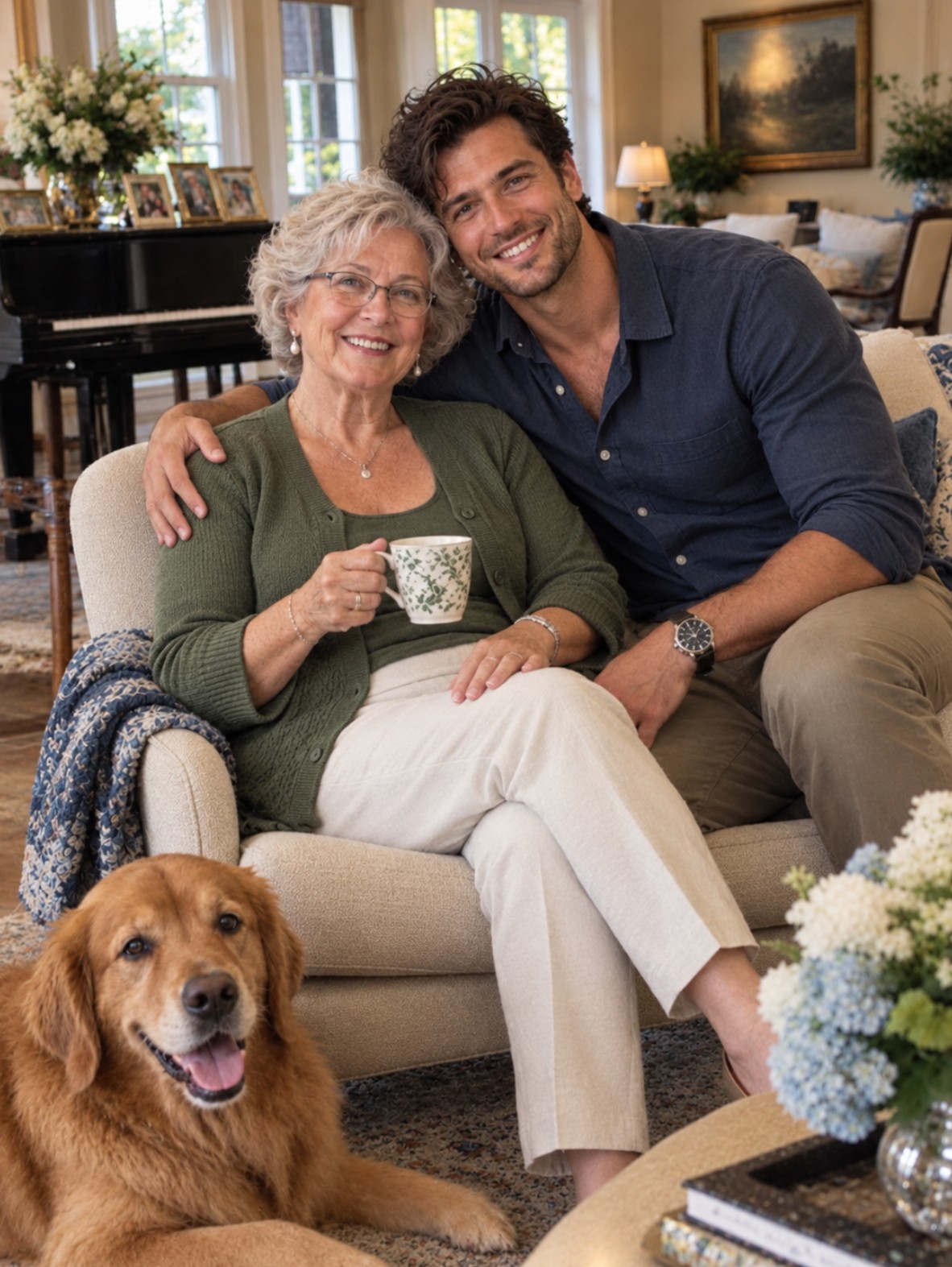
One night, I decided to have the drink examined by a laboratory. When the doctor reviewed the results, his expression changed. He quietly closed his office door and asked, “MA’AM, DOES YOUR HUSBAND KNOW YOU’RE HERE?” What he revealed next made me question everything about my marriage…
Part 1:
My name is Eleanor Hollis, and I’m sixty-four years old. Six months ago, I married Graham, a successful thirty-one-year-old millionaire. Almost everyone in my family questioned my decision, and some people openly wondered what a handsome, wealthy young man could possibly want with a woman my age.
Graham owned a thriving medical technology investment company, an elegant mansion, and several valuable properties. He had enough money to live comfortably without ever worrying about his finances.
I was a retired elementary schoolteacher living on a modest pension and my retirement savings.
Our lives were completely different, but whenever someone asked why Graham had chosen me, I smiled and gave the same answer.
“Because I genuinely believe he loves me.”
And at the time, I truly believed it.
During the first few months of our relationship, Graham treated me wonderfully. He surprised me with flowers, prepared breakfast every morning, and remembered even the smallest details about my preferences.
He knew which flowers I loved, which books I enjoyed reading, and which recipes reminded me of my childhood.
Sometimes, I would catch him watching me while I sat in my favorite reading chair.
“Why are you staring at me?” I would ask playfully.
He would smile and shake his head.
“I’m just making sure you’re really here.”
I thought it was a romantic thing to say. I never imagined those words would eventually make me feel uneasy.
My younger sister, Joyce, had been worried about our relationship from the beginning.
One afternoon, she visited me and sat across from me at the kitchen table.
“Eleanor, I need to ask you something, and I want you to answer honestly.”
I put down my cup of tea.
“What is it?”
“Graham is thirty-one years old. He’s wealthy, successful, and handsome. He could have almost any woman he wanted. Why would he choose someone twice his age?”
I sighed.
“Perhaps because he loves me, Joyce.”
She looked at me with concern.
“I hope that’s the reason. I really do. I just don’t want you to get hurt.”
I reached across the table and squeezed her hand.
“I’m not a helpless old woman. I know what I’m doing.”
Joyce didn’t argue, but I could see that she wasn’t convinced.
I desperately wanted to believe I had finally found happiness again. After spending so many years working, raising my students, and taking care of everyone around me, I thought I had found someone who wanted to take care of me for a change.
Our wedding was beautiful, and the first months of marriage felt almost magical.
Every morning, Graham brought me breakfast. He bought me thoughtful gifts and encouraged me to relax instead of worrying about household chores.
Whenever I thanked him, he would kiss my forehead and say, “You deserve to be spoiled, sweetheart.”
I believed him.
Then, three months into our marriage, Graham insisted that I visit a private medical clinic.
One morning, while we were having breakfast, he placed a brochure beside my plate.
“Sweetheart, I want you to make an appointment at this clinic.”
I glanced at the brochure.
“What kind of clinic is it?”
“They specialize in advanced medical screening. They have the latest equipment and some excellent specialists.”
“But I already had my annual examination.”
“I know, darling. I’m not saying anything is wrong with you. I just want to make sure you’re healthy.”
I frowned.
“Why are you suddenly so concerned about my health?”
He reached across the table and took my hand.
“Because I love you. I want us to have as many happy years together as possible.”
His answer sounded reasonable, and eventually, I agreed.
The clinic was located inside a modern building with mirrored windows. Everything looked expensive, from the polished floors to the comfortable waiting room.
A physician named Dr. Vincent Pryor greeted us when we arrived.
He was a well-dressed man in his fifties who spoke with the confidence of someone accustomed to being trusted.
“Mrs. Hollis, it’s a pleasure to meet you. Your husband has told me quite a bit about you.”
I glanced at Graham.
“He has?”
“Only good things, of course,” Dr. Pryor replied with a smile.
I underwent several examinations and answered questions about my medical history. The staff also gave me a thick stack of documents to sign.
Some of the forms contained unfamiliar medical terminology.
I began reading one of them more carefully, but Graham touched my shoulder.
“Don’t worry, darling. I’ve already reviewed everything. It’s just routine paperwork.”
I hesitated.
“I’d still like to understand what I’m signing.”
“Of course,” he said, giving my hand a reassuring squeeze. “But we’re going to be here all day if we read every page. The doctor has explained everything to me.”
Trusting my husband, I signed the documents.
It was a decision I would later regret more than I could have imagined.
After the appointment, Graham seemed even more attentive than before.
He began preparing a special bedtime drink for me every evening. It consisted of warm milk, honey, cinnamon, and a little vanilla.
When he first brought it to me, I smiled.
“My mother used to make something similar when I was a little girl.”
He looked pleased.
“I remembered you telling me that.”
He placed the cup beside my favorite reading chair and sat down next to me.
“Here you go, sweetheart. This will help you relax.”
I took a sip.
The drink was warm and comforting, and the familiar smell reminded me of my childhood.
At first, I thought it was another thoughtful gesture from my husband.
But after several weeks, I began noticing changes in myself.
I was unusually tired in the mornings. Sometimes, I struggled to concentrate on a simple conversation. I occasionally forgot where I had put things, and there were moments when I couldn’t remember small details from the previous day.
At first, I blamed my age.
Then I wondered whether I was simply adjusting to married life.
Whenever I mentioned my exhaustion, Graham gave me the same explanation.
“You’ve been doing too much lately, Eleanor. You need more rest.”
“I don’t think I’ve been doing anything unusual.”
“Your body might need time to adjust. Just relax, sweetheart.”
I wanted to believe him, so I tried not to worry.
But the problems continued.
Sometimes, I would begin telling Graham a story and suddenly forget what I had been saying. Other times, I would wake up feeling as though I hadn’t slept at all.
Graham gradually began answering questions for me whenever we met friends or attended social gatherings.
“Eleanor has been a little tired lately,” he would explain. “She needs to take things easy.”
At first, I appreciated his concern.
Eventually, however, I began to feel as though I was losing confidence in my own judgment.
One afternoon, Joyce came to visit.
The moment she saw me, she frowned.
“You look exhausted.”
“I’m fine.”
“Eleanor, look at me. You don’t look fine.”
I tried to laugh.
“Perhaps I need a holiday.”
She sat beside me and took my hand.
“Have you been sleeping properly?”
“Not really.”
“And are you still feeling forgetful?”
I looked down at my hands.
“Sometimes.”
Joyce’s expression grew more serious.
“Then you need to speak with your own doctor. Someone who isn’t connected to Graham or that private clinic.”
Before I could answer, Graham appeared in the doorway carrying a bouquet of flowers.
“Look what I found for my beautiful wife!”
Joyce smiled politely, but I noticed that her expression changed when she mentioned arranging an independent medical appointment.
“That’s a good idea,” Graham said quickly. “I’ll take care of it.”
He promised to arrange the appointment, but the days passed, and nothing happened.
Whenever I reminded him, he found another excuse.
The specialist was unavailable.
The clinic needed additional records.
We should wait until the following week.
Eventually, I stopped asking.
Then, one evening, I walked into the kitchen unexpectedly and saw something that changed everything.
Graham was standing beside the counter, holding a small dark bottle.
My cup of warm milk sat in front of him.
I watched as he carefully added several drops of liquid to the drink.
For a moment, I couldn’t move.
Then he noticed me.
His hand jerked, and he quickly slipped the bottle into his pocket.
“Graham, what did you just put in my drink?”
He turned toward me with a smile that looked almost natural.
“Nothing unusual, darling. Just a little special flavoring.”
I stared at him.
“Flavoring? Since when do you add flavoring to my milk?”
“Since I discovered something that makes it taste even better.”
“Then why did you hide the bottle?”
His smile weakened.
“Eleanor, you’re worrying about nothing.”
He picked up the cup and held it out to me.
“Come on, sweetheart. It’s getting cold.”
I looked at the drink.
For the first time since our marriage, I felt afraid of something my husband had prepared for me.
“Let me see the bottle,” I insisted.
His expression tightened.
“Why are you making such a big deal out of this?”
“Because I asked you a simple question.”
He stared at me for several seconds before giving a small, impatient sigh.
“It’s just a supplement. Something the clinic recommended.”
“What supplement?”
“Something to help you sleep.”
“Then why didn’t you tell me?”
“Because I didn’t think it was important enough to worry you.”
I wanted to believe that explanation. I wanted to believe there was a simple answer that would make everything feel normal again.
But something about his nervous expression troubled me.
I accepted the cup without drinking from it immediately.
Graham watched me.
“Please, sweetheart. You need your rest.”
I took a small sip.
He continued watching until I drank more.
That night, I slept for hours, but the following morning, I woke feeling worse than ever.
My head felt heavy, and I struggled to gather my thoughts.
Graham was sitting beside me when I finally opened my eyes.
“How are you feeling?” he asked softly.
“Not very well.”
He closed his eyes for a moment.
“I’m sorry.”
I stared at him.
“Sorry for what?”
He seemed to realize that he had said something strange.
“I mean, I’m sorry you’re having such a difficult morning.”
I said nothing, but his answer stayed with me.
Over the following days, I began paying closer attention to his behavior.
Graham always prepared my evening drink himself.
He never let me prepare it.
He never drank any of it.
And whenever I suggested skipping it, he became strangely insistent.
One evening, I told him I wanted to spend a few days at Joyce’s house.
“I think a change of scenery might do me some good.”
His answer came so quickly that it surprised me.
“Not right now.”
I looked at him.
“Why not?”
He paused before softening his voice.
“Your treatment schedule could be interrupted.”
I frowned.
“My treatment schedule?”
For a moment, he looked genuinely startled.
Then he quickly corrected himself.
“I meant your wellness routine. You’ve been sleeping poorly, and I don’t want you to lose the progress we’ve made.”
“What progress?”
“Eleanor, please. Don’t turn this into an argument.”
He kissed my forehead and walked away before I could ask anything else.
That night, I lay awake for hours, thinking about his strange behavior.
The bottle.
The drink.
The clinic.
The documents I had signed without reading properly.
And the way Graham always seemed to know what I needed before I had even told him.
For the first time, I began to wonder whether my husband was hiding something far more serious than a harmless supplement.
Then, late that night, I heard his voice.
I had almost fallen asleep when I noticed that his side of the bed was empty.
A faint sound came from the bedroom window.
Graham was standing there with his phone pressed to his ear, speaking in a low voice.
I closed my eyes and remained perfectly still.
“Yes, I’m still following the instructions,” he whispered.
He listened for a moment.
“But she’s becoming suspicious.”
My heart began to pound.
Graham turned toward the window.
“I can’t make any more changes. She’s already having difficulties.”
There was another pause.
Then he spoke again, and the words that followed made my blood run cold.
“We’re running out of time. If this continues, we could lose her.”
I held my breath.
Who was he talking about?
And what did he mean by losing me?
Graham listened to the person on the other end for several seconds.
Finally, he whispered, “I know what happened to the others. I’m not letting that happen again.”
The call ended.
He stood silently by the window before returning to bed.
I pretended to be asleep as he slipped beneath the covers.
But I didn’t close my eyes again for the rest of the night.
I had trusted this man with my heart, my home, and my future.
Now I was beginning to fear that I had also trusted him with my life.
And I knew I couldn’t continue drinking something I didn’t understand.
The following evening, I decided to find out what Graham had been putting into my drink.
I waited until he received a telephone call and stepped into the hallway.
While he was distracted, I carefully set aside a sample of the warm milk in a clean container and sealed it.
I had no idea what I was looking for, but I knew I needed someone independent to examine it.
The next morning, after Graham left for work, I took the sample to a private laboratory.
The receptionist asked me to explain what I wanted tested.
“I believe someone may have been adding an unknown substance to my drink,” I told her. “I need to know what’s in it.”
She looked concerned but didn’t ask unnecessary questions.
“Some substances require specialized testing, Mrs. Hollis. We’ll examine the sample and contact you when we have more information.”
I left the laboratory feeling nervous but relieved that I had finally taken the first step toward finding the truth.
Two days later, my phone rang.
“Mrs. Hollis?” a woman asked. “This is the laboratory. Dr. Gordon Whitfield would like to speak with you in person as soon as possible about your results.”
Something in her voice made my stomach tighten.
“Is there a problem?”
“Dr. Whitfield would prefer to explain the findings himself.”
I agreed to come in that afternoon.
When I arrived, Dr. Whitfield was sitting behind his desk, studying a report on his computer.
He was a serious-looking man in his early sixties. He greeted me politely, but his expression changed as soon as I sat down.
He glanced toward the door, stood up, and closed it.
“Mrs. Hollis, before we discuss the results, I need to ask you something.”
I gripped my handbag.
“What is it?”
“Does your husband know you came here?”
“No,” I whispered. “He doesn’t know anything about this.”
Dr. Whitfield nodded slowly.
“Good. I think we should have this conversation privately.”
My hands began to tremble.
“Doctor, please tell me. Is there something in that drink I should be worried about?”
He hesitated before turning his computer screen toward me.
“Your sample contains an unfamiliar medical compound associated with an experimental research program. It isn’t an ordinary food ingredient, and its presence in your drink raises serious concerns.”
I stared at him.
“An experimental research program?”
“Yes. I cannot determine the full purpose or effects of the substance from this sample alone. But I strongly recommend that you receive an independent medical assessment before taking anything else associated with this program.”
My throat felt dry.
“Could it explain why I’ve been so tired? Why I sometimes struggle to remember things?”
“It’s possible that the substance is relevant to your symptoms, but we would need a proper medical evaluation to establish that. I don’t want to make assumptions before we have all the facts.”
I nodded, struggling to process his words.
Then he asked a question that made me feel even more uneasy.
“Have you visited a private medical clinic recently? One that offered advanced screening?”
“Yes. My husband arranged an appointment for me about three months ago.”
“Was the physician’s name Vincent Pryor?”
I stared at him.
“How do you know that?”
Dr. Whitfield didn’t answer immediately.
Instead, he opened another file on his computer.
“My laboratory has worked with organizations connected to that facility. When I reviewed your results, I noticed a connection that concerned me.”
He turned the screen toward me again.
There was my full name.
My home address.
My date of birth.
And beneath my personal information was a heading I had never seen before.
RESEARCH PARTICIPANT.
I leaned closer to the screen, certain I must have misunderstood something.
“What does that mean?”
Dr. Whitfield looked at me with deep concern.
“According to these records, you were enrolled in an experimental program investigating biological processes associated with aging.”
I shook my head.
“No. That’s impossible. I’ve never agreed to participate in medical research.”
“The clinic has documents bearing your signature.”
I felt as though the room were spinning.
I remembered the thick stack of forms. I remembered Graham telling me that everything was routine and that he had already reviewed the paperwork.
I had trusted him.
I had signed because I believed he would never put me in danger.
“But I didn’t know what I was signing,” I whispered.
Dr. Whitfield leaned forward.
“Mrs. Hollis, informed consent means understanding what you’re agreeing to, including the nature of the research, its potential risks, and your right to make your own decision. We need to investigate how your enrollment was handled.”
I pressed my hands against my knees to stop them from shaking.
Then he showed me another detail.
Graham’s company was listed among the financial backers of the research program.
I stared at the screen, unable to speak.
My husband hadn’t simply arranged a medical examination.
He was financially connected to a program I had never knowingly agreed to join.
Suddenly, his insistence that I follow a particular routine made terrible sense.
But I still didn’t understand why he had chosen me.
Before I could ask, Dr. Whitfield’s telephone rang.
He glanced at the screen, and his expression changed.
“It’s your husband,” he said quietly.
My heart seemed to stop.
“Graham? How does he know I’m here?”
“I don’t know.”
Dr. Whitfield let the call go unanswered. Then he stood, walked to a cabinet, and retrieved a sealed envelope.
“Someone delivered this yesterday,” he explained. “They left instructions that it should be given to you if your results revealed a connection to the research program.”
I stared at the envelope.
My name was written across the front.
“Who delivered it?”
“The person didn’t leave a name.”
With trembling fingers, I opened it.
Inside was an old photograph of a hospital room.
A narrow bed stood against the wall, and a young man was standing beside it.
In the bed lay a silver-haired woman.
The moment I saw her face, I felt a chill run through my body.
She looked astonishingly like me.
She had the same eyes, the same mouth, and even a similar hairstyle.
I turned the photograph over.
It was dated twenty-seven years earlier.
On the back, someone had written a message in dark ink.
ELEANOR IS NOT THE FIRST. ASK GRAHAM WHAT HAPPENED TO THE OTHER THREE.
My hands began shaking so badly that I nearly dropped the photograph.
I looked again at the young man standing beside the bed.
He had Graham’s face.
The same eyes.
The same jawline.
The same unmistakable expression.
But the photograph had been taken twenty-seven years ago.
My husband was only thirty-one.
How could someone who looked exactly like Graham appear in a photograph taken when he was about four years old?
I turned toward Dr. Whitfield.
“Who is this man?”
Before he could answer, someone knocked on the office door.
Then I heard a familiar voice.
“Eleanor?”
My blood ran cold.
It was Graham.
“Sweetheart, I know you’re in there.”
I clutched the photograph against my chest.
For months, I had trusted his explanations, accepted his gifts, and believed his promises.
Now I was beginning to wonder whether I had ever truly known him at all.
I stood up, walked toward the door, and raised my voice.
“Graham, why have you been hiding this research from me?”
For several seconds, there was no answer.
Then I heard him take a deep breath.
“Because I thought I could protect you.”
I tightened my grip on the photograph.
“Protect me from what?”
His reply was so quiet that I almost didn’t hear it.
“From what happened to the others.”
And in that moment, I realized that the mystery of my evening drink was only the beginning.
The truth about my marriage was far more disturbing than I had ever imagined.
Part 2:
I had always believed that the most frightening thing a person could discover about their marriage was infidelity.
I was wrong.
Discovering that your husband had been keeping secrets was bad enough. Discovering that he might have been putting something into your drink without your informed consent was terrifying.
But learning that he had chosen you because you resembled a woman connected to a mysterious medical research program was something else entirely.
As I stood in Dr. Whitfield’s office, clutching the photograph, I struggled to understand what was happening.
“Eleanor?” Graham called again from the other side of the door. “Please let me explain.”
I turned toward Dr. Whitfield.
“Should I let him in?”
“That decision is entirely yours,” he replied. “But I want you to understand that you don’t have to speak with him if you feel unsafe. We can contact someone you trust or arrange for you to leave through another exit.”
I thought about Joyce.
Then I looked at the photograph again.
I had spent months believing that Graham’s attention and affection were signs of love.
Now I needed answers more than I needed reassurance.
“Let him in,” I said. “But I want you to stay here.”
Dr. Whitfield nodded.
I unlocked the door.
Graham stepped into the room, looking nothing like the confident, charming man I had married.
His tailored suit was wrinkled, his hair was untidy, and his hands trembled slightly.
When he saw the photograph in my hand, he stopped.
For several seconds, neither of us spoke.
Then I raised the photograph.
“Who is this woman?”
Graham lowered his eyes.
“Her name was Rosalind Hale.”
“And the man standing beside her?”
“My father.”
I looked at the photograph again.
The resemblance between Graham and his father was extraordinary.
At least one mystery had been explained.
But the photograph raised even more questions.
“Why does Rosalind look so much like me?”
Graham pulled out a chair but didn’t sit down.
“Rosalind was a very important person in my father’s life. She helped raise him when he was young. Later, she developed a complicated neurological condition.”
“What kind of condition?”
He shook his head.
“I don’t know all the medical details. I only know that her health gradually declined, and my father became determined to find a way to help her.”
His father had eventually become a physician and dedicated himself to studying her illness.
Over time, he became convinced that certain biological processes involved in Rosalind’s condition might be connected to aging.
He began exploring an experimental treatment that he hoped would improve her health.
“Did it work?” I asked.
Graham’s expression darkened.
“No. Rosalind died after struggling with her condition.”
I glanced at the photograph.
“And the other three people mentioned in this message?”
Graham swallowed.
“My father continued his research. He began working with other participants whose medical profiles he believed might be useful to his studies.”
Dr. Whitfield interrupted.
“Physical resemblance alone is not a scientifically valid reason to select research participants. And any experimental treatment must be evaluated according to appropriate medical and ethical standards.”
“I understand,” Graham replied quietly.
I looked directly at my husband.
“What happened to the other three?”
He hesitated before answering.
“All three experienced serious medical difficulties. Two eventually died, and the third survived but continued dealing with long-term health complications.”
I gripped the back of a chair.
“And you knew about this?”
“Not at first.”
“When did you find out?”
Graham looked away.
“Before we married.”
His answer felt like a slap across the face.
Before we married.
Before the flowers.
Before the wedding.
Before he promised to love and protect me.
He had already known about the troubling history of the research.
I struggled to breathe normally.
“Did you choose me because I resembled Rosalind?”
Graham’s eyes filled with tears.
“Not only because of that.”
For a moment, I couldn’t speak.
Then I shook my head slowly.
“Do you hear yourself? You can’t even give me a simple answer.”
“Eleanor, please. Let me explain.”
“How did you find me?”
He took a deep breath.
“At a charity fundraiser.”
I remembered that evening clearly.
The event had supported retired teachers and children’s literacy programs. I had attended because a former colleague had invited me to speak about the importance of reading.
After my speech, Graham had approached me.
He had complimented my words, asked about my teaching career, and listened attentively as I spoke about the children I had taught.
He seemed genuinely interested in me.
I remembered how surprised I had been when he asked for my telephone number.
But now, as I stood in front of him, I realized that our meeting might not have been as accidental as I had believed.
Graham admitted that he had first seen my photograph in a database associated with the research program.
He had learned about my background before introducing himself.
My age.
My career.
My family.
Even some of my personal preferences.
I stared at him.
“You knew all those things about me before we met?”
He nodded reluctantly.
“Some of them.”
“The flowers I like?”
“I knew your preferences.”
“My favorite childhood recipes?”
“Some of that information was in the records.”
“And the books I loved when I was a little girl?”
He closed his eyes.
“I found out about those later.”
I remembered the way he had surprised me with flowers, prepared my mother’s recipes, and brought me books I hadn’t read in years.
Some of those gestures had felt so personal.
I had believed they came from conversations we had shared and the time he had spent getting to know me.
Now I wondered how much of our relationship had been built on information he had gathered before I ever knew he existed.
“Did you actually fall in love with me?” I asked.
“Yes,” he whispered.
“Or did you fall in love with the possibility of continuing your father’s research?”
Graham covered his face with his hands.
“At first, I wanted to meet you because of the program. I won’t lie about that. But after hearing you speak, everything changed.”
I stared at him.
“How convenient.”
“Eleanor, please.”
He explained that his father had spent years regretting his inability to help Rosalind.
When his father died, Graham inherited his research files and became determined to continue the work.
He had invested money in the project, hoping that newer technology and more advanced medical methods might produce better results.
Eventually, Dr. Pryor persuaded him that the research could be continued through a newer program.
Graham claimed he had initially believed the program would be properly supervised.
“When I met you, I thought you might benefit from the medical screening,” he said. “I thought the research could help you, too.”
I shook my head.
“But my regular doctor never told me I had the condition your researchers claimed I had.”
Graham looked away.
Three weeks earlier, he had discovered discrepancies between my original medical results and the records later used to justify my enrollment.
The original screening hadn’t identified the condition the research team claimed I had.
“So the records were inaccurate?”
“It appears that way.”
“Who changed them?”
“I don’t know everything yet.”
“You’re a financial backer of the program, Graham. You knew about the research. You arranged the clinic appointment. You watched me sign those documents. And now you’re telling me you don’t know what happened?”
He flinched.
“I know how this sounds.”
“No, you don’t. Because if you did, you wouldn’t still be standing there asking me to trust you.”
For the first time, Graham had no answer.
I thought about the evenings when he had placed the warm drink beside me.
The nights when I had struggled to remember ordinary conversations.
The mornings when I had felt too exhausted to get out of bed.
And the times I had wondered whether something was wrong with my mind.
All those months, I had blamed myself.
I had wondered whether age was finally catching up with me.
I had even felt embarrassed when I forgot small things in front of friends.
Meanwhile, my husband had known that I was part of a research program I had never knowingly agreed to join.
“Why did you keep giving me the drink?” I asked.
Graham’s face crumpled.
“Dr. Pryor told me the treatment needed to follow a schedule. He claimed that changing it without medical supervision could cause additional problems.”
“And you believed him?”
“At the time, yes.”
“Even when I told you I was feeling worse?”
He lowered his head.
“I was worried.”
“You were worried? Graham, I was the one experiencing those symptoms!”
He began to cry.
“I know.”
“You knew I was having trouble remembering things. You knew I was exhausted. You knew I was becoming frightened by what was happening to me. And still, you continued giving me that drink without telling me the truth.”
He said nothing.
I looked at Dr. Whitfield.
“Can the substance be identified properly? Can someone determine whether it caused my symptoms?”
“We can arrange further testing and an independent medical evaluation,” he answered. “The laboratory findings are concerning, but we shouldn’t claim a direct cause until the evidence supports it. We also need to preserve all relevant records.”
I nodded.
“Then that’s what I want.”
Graham stepped forward.
“Eleanor, please. I can explain everything if you’ll just give me time.”
I raised my hand.
“No. You don’t get to make these decisions for me anymore.”
He stopped.
For the first time since our marriage, I saw him understand that I wasn’t going to accept another reassuring explanation simply because he delivered it with a gentle voice.
Dr. Whitfield asked Graham whether he had evidence of the research irregularities.
Graham admitted that he had copied several records from the company files but hadn’t reported the problems.
He claimed Dr. Pryor had threatened to remove him from decisions about my participation if he interfered.
I stared at him in disbelief.
“You allowed this to continue because you were afraid of losing control of the program?”
“No. I thought I could fix it quietly.”
“By continuing to hide it from me?”
He looked down.
I had finally reached the point where I could no longer separate his intentions from his actions.
Perhaps he had genuinely developed feelings for me.
Perhaps he had even convinced himself that the research could help me.
But he had still placed his own judgment above my right to decide what happened to my body.
And no amount of affection could change that.
I turned toward Dr. Whitfield.
“I want every record connected to my enrollment reviewed. I want an independent medical examination, and I want to know exactly what I signed.”
He nodded.
“We’ll take the appropriate steps to preserve the evidence and arrange an independent assessment.”
I looked at Graham one final time.
“And I want you to stop making decisions for me.”
He nodded silently.
After he left to retrieve the research documents, Dr. Whitfield helped me arrange a medical evaluation. He also explained how the laboratory findings and the clinic records could be preserved for an independent review.
Then I called Joyce.
The moment she heard my voice, she knew something was wrong.
“Eleanor? What’s happened?”
I tried to answer, but my voice broke.
“I need you.”
“Where are you?”
I told her.
“I’ll be there as soon as I can. Don’t go anywhere alone if you don’t feel safe. I’m coming to get you.”
She arrived shortly afterward.
When I saw her walk into the waiting room, I could no longer hold back my tears.
She wrapped her arms around me.
For several moments, I couldn’t speak.
Finally, I managed to explain what had happened.
I told her about the drink, the clinic, the research program, and the photograph of Rosalind.
Joyce listened without interrupting.
When I finished, she held me even tighter.
She didn’t say, “I told you so.”
She didn’t criticize me for trusting Graham.
Instead, she whispered, “You’re coming home with me.”
I nodded.
For the first time in months, I felt safe enough to cry without worrying about what someone might think of me.
That night, I stayed with Joyce.
I barely slept, but at least I wasn’t lying beside a man whose explanations I could no longer trust.
The following morning, Graham delivered copies of the research files to Dr. Whitfield.
I wasn’t present when the documents were first reviewed, but I later learned that some of them confirmed what we already suspected.
My original medical screening had not supported the condition later used to justify my participation.
The records also documented my dizziness, confusion, and excessive sleeping.
Those symptoms had been noted by the research team.
Yet the program had continued without a proper, independent review of my condition or a clear explanation to me of what was happening.
Even more troubling, some of the documents contained Graham’s initials.
He couldn’t honestly claim that he had been completely unaware of the problems.
The records also raised questions about Dr. Pryor’s role in my enrollment and the way the clinic had obtained my consent.
As the review continued, investigators began examining the clinic’s practices and the experiences of earlier participants.
One case particularly interested Dr. Whitfield.
It belonged to the third woman mentioned in the photograph’s message.
Her records suggested that she had withdrawn her consent and attempted to report the research program.
But her file ended abruptly.
There was no clear record of what happened after she raised her concerns.
No one knew whether she had managed to make her voice heard.
I couldn’t stop thinking about the photograph.
Someone had known that the research might resume.
Someone had discovered my name.
And someone had taken the trouble to warn me before it was too late.
Several days later, Graham called me.
I almost ignored the call, but I wanted to know whether anything had changed.
“Eleanor, Dr. Pryor knows the documents have been released for review,” he said.
“Good.”
“He’s claiming you knowingly agreed to everything.”
I looked at the paperwork spread across Joyce’s kitchen table.
“Then he’ll have to explain why I was never properly informed about the research.”
Graham remained silent.
Then he told me something else.
He had discovered a statement written by the third woman, in which she described how her concerns had been dismissed even after she reported troubling changes in her health.
I closed my eyes.
I knew exactly how she must have felt.
The fear.
The confusion.
The growing suspicion that the people who were supposed to help her were hiding something.
And the terrible realization that she might have to fight to make anyone believe her.
Before ending the call, I asked Graham a question I had been avoiding.
“If I hadn’t discovered that bottle in the kitchen, would you eventually have told me the truth?”
There was a long silence.
I waited.
Finally, he whispered, “I don’t know.”
Those four words told me more than any explanation he could have given.
He had been willing to let me continue living in ignorance while he waited for a result that might never come.
I ended the call without saying goodbye.
For the next several weeks, I focused on my health and began making arrangements to separate from Graham.
It wasn’t an easy decision.
I had loved him.
I had believed in our future together.
And part of me still wanted to understand how a man who had once made me feel so cherished could have allowed something like this to happen.
But I knew that returning to our marriage without accountability or honesty would mean surrendering my own judgment all over again.
I couldn’t do that.
One afternoon, I received an update from Dr. Whitfield.
The review of the research program was continuing, and the clinic had been asked to provide additional records.
Dr. Pryor had been removed from his responsibilities within the program while the concerns were investigated, and the clinical trial had been suspended pending further review.
It wasn’t a final judgment, and there were still many unanswered questions.
But at least the concerns were no longer being ignored.
Then Dr. Whitfield told me something that changed the direction of the investigation.
The third woman was alive.
Her name was Gwen Sutter.
She had survived the earlier research program but continued to experience significant health challenges.
After learning that the research might have resumed, Gwen had begun investigating what had happened to the other participants.
She eventually discovered my name in the records.
When she realized that I might be in danger of repeating her experience, she arranged for the photograph to reach Dr. Whitfield.
I sat quietly, trying to take it all in.
For months, I had wondered who had sent the warning.
Now I finally knew.
And I realized that the person who had helped me uncover the truth was someone who understood my experience better than almost anyone else could.
Part 3:
Several weeks after I left Graham, I returned to the mansion with Joyce and a person helping me arrange the practical details of our separation.
I wasn’t returning to reconcile.
I wasn’t returning to hear another explanation.
I simply wanted to collect my belongings.
My books.
My mother’s photographs.
The small jewelry box I had inherited from her.
And the handmade quilt Joyce and I had sewn together years earlier.
Those things belonged to my life before Graham, and I wanted to take them with me as I began rebuilding that life.
When we entered the mansion, everything looked exactly as I remembered it.
The polished floors.
The expensive furniture.
The enormous windows overlooking the garden.
The elegant rooms that had once seemed like the beginning of a wonderful new chapter.
But I no longer felt at home there.
Graham was waiting in the entrance hall.
He looked older than I remembered, although only a few weeks had passed.
His usual confidence had disappeared, and his eyes were red.
When he saw me, he took a cautious step forward.
“How are you feeling, Eleanor?”
“Better.”
He nodded slowly.
“I’m glad.”
For a moment, we stood in silence.
Then he told me that Dr. Pryor had been removed from the research program pending further review and that the clinical trial had been suspended.
Graham had also begun cooperating with investigators.
He said he had provided them with the records he possessed and answered their questions about his involvement.
I listened without interrupting.
Then I asked the question that had been troubling me since I first saw the photograph.
“Have they discovered who sent it?”
Graham nodded.
“Yes.”
I felt my chest tighten.
“Who?”
“The third woman. Gwen Sutter.”
I stared at him.
“She really is alive?”
“Yes. She survived the earlier trial, although she’s continued to experience health problems.”
He explained that Gwen had spent years trying to understand what had happened to her.
She had questioned the research team, requested records, and attempted to bring attention to the problems she had experienced.
But her concerns had not received the attention she believed they deserved.
When she learned that a similar research program might be continuing, she decided to investigate.
Eventually, she discovered my name and recognized the possibility that I had been drawn into the same program.
She contacted Dr. Whitfield and arranged for the photograph to be delivered if my laboratory results revealed a connection to the research.
I looked down at the photograph in my handbag.
“Why didn’t she contact me directly?”
Graham hesitated.
“She was afraid you wouldn’t believe her.”
I thought about that for a moment.
Six months earlier, I might have dismissed a stranger who appeared with a photograph and a frightening story about my husband.
I had trusted Graham completely.
I had believed his explanations because I loved him and wanted our marriage to succeed.
If Gwen had approached me before I discovered the bottle, I might have defended him.
The realization hurt, but I couldn’t deny it.
“She’s probably right,” I said quietly.
Graham lowered his head.
“I know I have no right to ask you for anything, Eleanor, but I hope you’ll eventually understand why I did what I did.”
I looked at him.
“Then answer one more question honestly.”
He nodded.
“Did you ever intend to tell me the truth?”
He opened his mouth, then closed it again.
For several seconds, he seemed unable to find the right words.
Finally, he said, “I kept waiting for the right moment.”
I stared at him.
“When would that have been?”
“When the research produced something positive.”
“And if it never did?”
He looked away.
I didn’t need him to answer.
I already knew what his silence meant.
He had been waiting for the research to succeed before deciding whether I deserved to know what was happening to me.
I took a deep breath.
“Graham, I believe you may have developed genuine feelings for me. But you became so focused on finding answers for your father that you forgot I was a person with my own rights, fears, and choices.”
Tears filled his eyes.
“I really did fall in love with you.”
“I believe that,” I replied.
He looked surprised.
“But love isn’t just about how you feel. It’s also about how you treat someone. You can’t claim to protect a person while hiding information that affects their health and their future.”
He lowered his head.
“I know.”
“Do you? Because for months, I trusted you when you told me I was simply tired. I trusted you when you said I needed more rest. I even began doubting my own memory because I believed you knew better than I did.”
Graham wiped his eyes.
“I never wanted you to suffer.”
“But you allowed it to happen.”
He didn’t argue.
For the first time, I felt no need to convince him of anything.
I had spent too much time trying to understand his choices.
Now I needed to focus on my own.
“I’ve decided our marriage is over,” I told him.
His face crumpled.
“Eleanor, please. I know I’ve made terrible mistakes, but I love you. We can work through this.”
I shook my head.
“No. I can’t rebuild a marriage when I no longer know which parts of it were honest.”
“I’ll do anything to make things right.”
“Then cooperate fully with the investigation. Tell the truth, even when it makes you look bad. Give them every record you have, and don’t hide anything to protect yourself or your company.”
He nodded.
“I will.”
“And don’t do it to win me back. Do it because it’s the right thing to do.”
He looked at me for a long moment.
Then he whispered, “I’m sorry.”
I believed his regret was genuine.
But an apology couldn’t restore the months I had spent feeling confused, exhausted, and frightened by changes I couldn’t explain.
It couldn’t erase the fact that he had allowed me to participate in a research program without ensuring that I understood what I was agreeing to.
And it couldn’t restore the trust I had once placed in him.
I collected my belongings and walked toward the entrance.
Graham followed me as far as the doorway.
“Eleanor?”
I turned.
“I hope you find happiness again.”
For a moment, I felt a familiar sadness.
Then I nodded.
“I hope you learn to respect other people’s choices.”
With that, I walked out.
This time, I didn’t look back.
The weeks that followed were difficult, but I slowly began to feel more like myself again.
My doctors continued monitoring my health and arranging appropriate tests. They were careful not to promise an immediate recovery, and I learned that rebuilding my strength would take time.
Some mornings were still harder than others.
But gradually, my energy improved.
I began concentrating for longer periods.
I remembered the names of books I wanted to read and appointments I needed to attend.
I could follow conversations without worrying that I would suddenly lose track of what someone was saying.
Most importantly, I began trusting my own judgment again.
I moved into Joyce’s guest room temporarily while I arranged my own living space.
She never pressured me to talk about Graham when I wasn’t ready.
Sometimes, we would sit together in the kitchen, drinking tea and discussing ordinary things.
Other times, we would laugh about old memories from our childhood.
Those simple moments helped me more than I could explain.
For the first time in months, I was making decisions without worrying about whether someone else would approve of them.
I chose what I wanted to eat.
I decided when I wanted to sleep.
I went for walks when I felt like it and rested when I needed to.
No one told me what I should be feeling.
No one insisted that they knew better than I did.
And slowly, I began to recognize myself again.
Then, one afternoon, I finally met Gwen Sutter.
We arranged to meet at a small café not far from Joyce’s house.
When I arrived, I saw a woman sitting near the window with a cane resting beside her chair.
She had silver hair, gentle eyes, and a quiet manner.
She stood carefully when I approached.
“Eleanor?”
“Yes. You must be Gwen.”
She smiled.
“I’m glad you came.”
We sat down and ordered coffee.
For a few moments, neither of us knew what to say.
Then I placed the photograph on the table.
“Thank you for sending this.”
Gwen looked at it sadly.
“I wish I could have warned you sooner.”
“You didn’t know me. You had no reason to believe I would listen.”
She shook her head.
“I should have tried anyway.”
I studied her face.
“What happened to you?”
Gwen folded her hands around her cup.
“At first, I believed the doctors genuinely wanted to help me. They explained the program in a way that sounded promising, and I thought I was contributing to something that might improve people’s lives.”
She paused.
“But then I started experiencing problems with my health. I became dizzy, exhausted, and confused. When I raised my concerns, they told me that I was probably stressed or that my symptoms were unrelated to the research.”
I felt a chill run through me.
It sounded so familiar.
Gwen continued.
“I started questioning myself. I wondered whether I was remembering things incorrectly or exaggerating how bad I felt. The more I tried to get answers, the more I felt as though nobody was listening.”
I looked down at my hands.
“I know exactly what you mean.”
She nodded slowly.
“Eventually, I withdrew my consent and tried to report what had happened. But getting anyone to take my concerns seriously was difficult.”
“Did you ever find out what the treatment did to you?”
“Not completely. Some of my health problems continued, and I never received all the answers I wanted.”
I felt a deep sadness for her.
For years, she had lived with questions that might never be fully answered.
And now, because she had refused to give up, she had helped me discover the truth before I spent even longer in the same situation.
“Why did you warn me?” I asked.
Gwen looked directly into my eyes.
“Because nobody listened when I first asked questions. I couldn’t stand the thought of someone else going through the same thing without knowing what was happening.”
I reached across the table and squeezed her hand.
“Thank you. I don’t know what would have happened if you hadn’t sent that photograph.”
She gave me a sad smile.
“I don’t know either. But you’re here now, and you know the truth.”
We sat together for a long time, talking about the research program, the people connected to it, and the difficulties we had both experienced.
I realized that Gwen wasn’t simply a woman who had helped me uncover a mystery.
She was someone who had endured her own frightening experience and still found the courage to help another person.
Before we left, she gave me a small smile.
“Live well, Eleanor. That’s enough.”
I carried those words with me long after we said goodbye.
The investigation into the research program continued.
I provided the records I had received and answered questions about my experiences. I also continued working with my doctors to understand my symptoms and monitor my recovery.
Eventually, my separation from Graham became final.
He didn’t contest it.
I learned that he continued cooperating with the investigation, although I no longer followed every development closely.
I had spent enough time thinking about his decisions.
It was time to focus on my own future.
One day, a letter arrived from Graham.
I recognized his handwriting immediately.
For several minutes, I simply stared at the envelope.
Part of me wanted to throw it away without opening it.
Another part wanted to know whether he had finally understood what he had done.
Eventually, I sat at the kitchen table and opened it.
The letter was several pages long.
Graham admitted that he had mistaken control for protection. He acknowledged that his determination to continue his father’s work had overshadowed my well-being and that he had failed to respect my right to make decisions about my own health.
He also admitted that he had allowed his feelings for me to become tangled up with his hopes for the research.
One sentence stayed with me.
I thought I was helping you have a better future, but I forgot to respect the life you already had.
I read those words several times.
Perhaps, in his own way, Graham had finally begun to understand.
Perhaps he genuinely regretted what he had done.
But understanding his regret didn’t mean I had to return to him.
I folded the letter and placed it in a drawer.
I didn’t respond.
Some apologies deserve acknowledgment, but they don’t always require reconciliation.
And sometimes, the healthiest thing a person can do is accept that someone is sorry without allowing that person back into their life.
A year after discovering the mysterious bottle, I moved into a small house near Joyce.
It wasn’t a mansion, and it didn’t have expensive furniture or enormous windows overlooking a perfectly maintained garden.
But it was mine.
The house had a sunny kitchen, a modest garden, and enough shelves for all my beloved books.
I filled the rooms with things that made me happy.
My mother’s photographs.
The handmade quilt Joyce and I had sewn together.
A comfortable reading chair beside the window.
And flowers that I chose myself.
Every morning, I opened the curtains and let the sunlight fill the kitchen.
I prepared my own breakfast and planned my day.
Sometimes, I visited Joyce.
Other times, I walked through the neighborhood or spent an afternoon reading in the garden.
I also returned to something I had always loved.
Teaching.
Twice a week, I volunteered at a children’s reading program.
The first morning I arrived, a little girl approached me with a book held tightly against her chest.
She couldn’t have been more than seven years old.
“Can you help me read this?” she asked.
I smiled.
“Of course, sweetheart. Let’s read it together.”
We sat beside each other, and I helped her work through the words.
Whenever she struggled, I encouraged her to try again.
When she finally finished a difficult sentence, her face lit up with pride.
“I did it!”
“You certainly did,” I told her. “And you should be proud of yourself.”
She hugged the book and ran off to show her teacher.
I watched her go, smiling.
In that moment, I felt something I had been missing for a long time.
I felt like Eleanor again.
Not a wealthy man’s wife.
Not a research participant.
Not a woman whose future was being decided by other people.
Just Eleanor Hollis.
A retired teacher who loved books, cared about children, and still had a meaningful life ahead of her.
My marriage had changed me, but it hadn’t taken away everything that made me who I was.
I was still capable of learning.
I was still capable of loving.
And I was still capable of beginning again.
One evening, after spending an hour working in my garden, I returned to the kitchen and prepared myself a warm drink.
Milk.
Honey.
Cinnamon.
And a touch of vanilla.
The familiar smell filled the room.
For a moment, I stopped stirring.
I remembered Graham standing beside the kitchen counter.
The small dark bottle.
The questions he wouldn’t answer.
The way he had insisted that his decisions were always for my benefit.
I remembered the exhaustion and confusion, and how frightened I had been when I realized that I could no longer trust the person I loved.
Then I looked around my own home.
The kitchen was quiet.
The garden outside was peaceful.
My books waited on their shelves, and my favorite chair stood beside the window.
Nobody was questioning my judgment.
Nobody was insisting that I follow a routine I didn’t understand.
Nobody was making decisions about my health without my permission.
I carried the cup to the window and took a small sip.
The drink tasted exactly as it had when my mother prepared it during my childhood.
Warm.
Sweet.
Comforting.
I took another sip and watched the last light of the day disappear beyond the garden.
Then I set the cup down.
Half of the drink remained.
I looked at it for a moment.
A year earlier, I might have felt obligated to finish it because someone had prepared it for me. I might have worried that refusing would upset the person who gave it to me.
I might even have convinced myself that the person insisting I drink it knew what was best for me.
But that evening, I simply smiled.
I could drink the rest.
I could leave it on the table.
Or I could pour it away.
The decision belonged entirely to me.
And after everything I had experienced, I finally understood something that I wished I had understood much earlier.
Real love doesn’t require you to surrender your freedom.
Love isn’t about controlling another person’s choices and calling it protection.
It isn’t about hiding the truth because you believe you know what is best for someone else.
And it certainly isn’t about expecting another person to trust you blindly while you keep secrets that could affect their life.
Real love is built on honesty, respect, and the understanding that every person deserves a voice in decisions about their own future.
I was sixty-five years old when I finally began to understand how important that lesson was.
For a long time, I had worried that leaving Graham meant losing the chance to be loved again.
But I discovered something far more valuable.
I hadn’t lost my chance at happiness.
I had simply stopped searching for it in someone else’s promises.
My life was still mine.
My future was still open.
And I was finally free to decide what came next.
I lifted my cup once more, took a small sip, and smiled at the quiet garden outside my window.
For the first time in a very long while, I wasn’t afraid of what tomorrow might bring.
Because whatever happened next, I would face it as myself.
And that was more than enough.
The End.
