
The Night My Grandma Stopped Being Invisible
My grandma spent years cleaning the floors of my high school, invisible to everyone who thought they mattered.
But one night after the talent show, an entitled mother in shiny designer boots decided to remind her of her “place.”
What happened next proved that sometimes the smallest voices deliver the biggest lessons.
I’m sixteen, and I’ve learned something most adults still don’t understand — money doesn’t define dignity, but it sure makes people act like it does.
My family has never had much.
Mom works at the city library, surrounded by shelves of books she can’t afford to buy.
She spends all day cataloging bestsellers, then comes home too tired to read even one page.
Dad left when I was eight. His calls stopped two years later — like we had been deleted from his life, along with his conscience.
So it’s just been us three — me, Mom, and Grandma Martha.
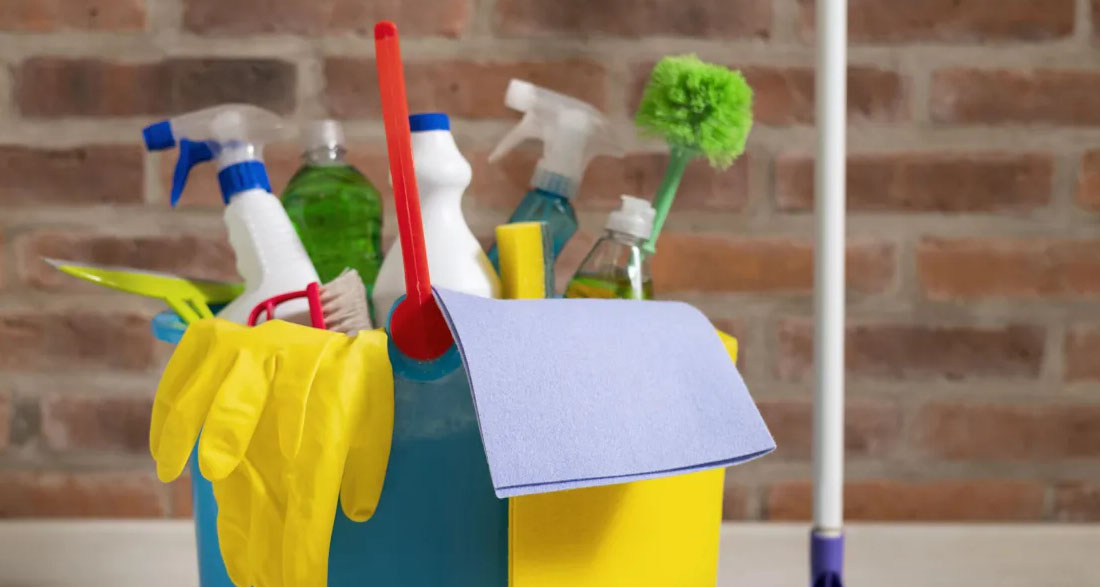
Grandma’s been working at Scottsville High longer than most teachers have. She’s the school janitor.
She mops hallways after everyone’s gone home, empties trash cans that always seem to refill faster than she can handle, and scrubs away gum, graffiti, and the carelessness of a thousand teenagers who never look her in the eye.
And somehow, after all that, she still wakes up early on Saturdays to make me pancakes — always with extra chocolate chips because she never forgets how I like them.
When I was little, I used to think Grandma had magical powers because she knew every corner of my school.
She’d tell me about the “secret” water fountain that always ran coldest, or the locker that jammed unless you lifted it a certain way.
She even knew which stairwell echoed the loudest — “in case you ever want to scare your friends,” she’d wink.
I thought it was amazing, like I had my own private guide to the world I was growing up in.
But things changed in fourth grade. That’s when the whispers started.
“Your grandma’s the janitor, right?”
The way they said it — with those smug little grins — it wasn’t curiosity. It was cruelty dressed up as interest.
Some kids would drop paper or wrappers near my desk and giggle, saying, “Guess your grandma will get it later!”
Others would walk a wide circle around her when she mopped the hallway, acting like being near her might make them dirty too.
It stung every time.
But here’s what I never let myself forget — I was never ashamed of her.
Because shame meant they were right, and they weren’t.
Grandma Martha was — and still is — the kindest person I know.
She remembers every birthday. She brings cookies for the crossing guard.
Once, she stayed two hours late just to help a teacher dig through a dumpster to find her lost wedding ring.
On weekends, she volunteers at the community center.
Every Thanksgiving, she donates what little she can to the food bank, even when we don’t have much ourselves.
That’s who she is.
But not everyone sees people like her.
“Don’t let them see it bother you, sweetheart,” she’d tell me when I came home fuming.
“People who mock honest work are just advertising their own emptiness.”
I’d nod, but inside I’d boil.
Why did she have to comfort me when she was the one being disrespected?
“You work harder than any of their parents!” I’d snap.
She’d smile and smooth my hair.
“Maybe so. But hard work isn’t always what people choose to see.”
Last week, our school held its annual Talent Show.
It’s a big deal — parents arrive dressed like they’re going to a movie premiere.
The air smells like expensive perfume and competition. Flashy jewelry blinds you more than the stage lights.
Moms cluster in the lobby comparing handbags.
Dads check their watches like being there is a chore.
Kids run around in sparkling costumes that probably cost more than our month’s rent.
I sat in the audience and watched kids sing, dance, and act.
Some were good, some not so much — but what stood out wasn’t the performances.
It was how the adults behaved — proud, loud, and dripping with ego.
When it was over, everyone gathered in the hallway. Parents bragged. Kids posed with trophies.
I slipped out early — too much noise, too many fake smiles. Besides, I had homework.
Later that night, Grandma was in the kitchen making tea.
The smell of chamomile and lemon filled the air — her favorite combo.
As she stirred her cup, she said quietly, “I started my shift around seven. Wanted to finish the main hallway early so I could catch the 7:30 bus.”
Her voice was calm, almost amused.
But when she told me what happened next, my heart burned.
“I was mopping near the lockers when this woman stopped in front of me. Tall. Perfect hair, like she’d just stepped out of a salon.
Fur coat — even though it’s barely cold enough. And her boots, Kate… those boots probably cost more than my paycheck.”
I tensed. “What did she say?”
Grandma gave a humorless smile. “She looked me up and down and said, ‘Well, isn’t this adorable.’”
She mimicked the woman’s syrupy tone, and it made my stomach twist.
Then she added, “‘Just be careful, okay? My boots probably cost more than what you make in a year.’”
My jaw dropped. “She didn’t!”
“Oh, she did,” Grandma said, taking a slow sip. “Then she looked at me again and said, ‘Must be nice, huh? Getting to hang around the school even after graduation.’”
I felt sick. “What did her friends do?”
“They laughed,” Grandma said softly. “Those sharp, mean little laughs. Like I was the joke.”
My blood boiled. “So what did you do?”
She met my eyes and said, “I kept mopping.”
Then she shrugged. “People like that want a reaction. They feed on it. I wasn’t going to give her the satisfaction.”
“That’s not fair, Grandma!”
She smiled faintly. “I know, sweetheart. But sometimes staying calm is stronger than shouting. Let her feel big. She’ll shrink soon enough.”
She paused, and her eyes twinkled. “And then it happened.”
“What?” I leaned forward.
“Everything went quiet. All the laughter stopped. And I looked up to see a boy — maybe eleven or twelve — standing there. He was holding a trophy, still wearing his little talent show costume.”
“A boy?”
“Her son,” Grandma said softly. “And the look on his face, Kate… it broke my heart. He looked crushed. Like he’d just seen his hero turn into a stranger.”
“What did he do?”
Grandma smiled faintly. “He walked right up to her and said, loud enough for everyone to hear, ‘Mom, why are you being mean to her? You always tell me to respect people who work hard. She’s cleaning, not hurting anyone.’”
My mouth fell open. “He said that? In front of everyone?”
“In front of everyone,” Grandma said, nodding. “The whole hallway went silent.”
She mimicked the woman’s embarrassed laugh. “‘Oh, sweetie, I was just joking—’”
“But he stopped her,” Grandma continued proudly. “He said, ‘It’s not funny. You’d be mad if someone talked to my grandma like that.’”
I had goosebumps. “What did she do?”
“Her face turned red as her lipstick. People were staring. One teacher even stopped to watch. She looked like she wanted the floor to swallow her whole — which, considering I’d just mopped it, would’ve been quite a mess.”
I burst out laughing. “Grandma!”
“What?” she chuckled. “I’m allowed a little humor in my own story.”
“So then what happened?” I asked.
Her voice softened. “The boy put his little trophy on the floor and said, ‘I’m really sorry for my mom. She was wrong. I’ll talk to her at home, I promise.’”
“He apologized for her?”
“He did,” Grandma said, eyes glistening. “He looked like a little man trapped in a kid’s body — like he understood something his mother forgot a long time ago.”
She smiled faintly. “Then someone started clapping. Just one person at first. Then another. Within seconds, everyone in that hallway was clapping — not for the talent show, but for that boy.”
I could almost see it — parents frozen, a mother humiliated, a janitor standing tall.
“What did the woman do?” I asked.
“She grabbed her son’s hand and left. Didn’t say a word. Just marched off, those fancy boots clicking on my clean floor.”
Grandma laughed softly. “A few of her friends followed, but others stayed behind. One woman even came up to me and said, ‘I’m so sorry.
I should’ve said something sooner.’ Another said she appreciated how spotless the halls always were.”
She shrugged. “Small things. But they mattered.”
For a while, we sat in silence. The tea had gone cold.
Outside, a car drove by, and the world felt quiet — too quiet for what my heart was feeling.
Then Grandma spoke again. “You know what’s funny, Kate? I’m not even mad at her. I’m grateful.”
“Grateful?” I frowned. “Grandma, she humiliated you!”
She shook her head gently. “She tried to. But she failed. And I’m grateful for her son — because somehow, she raised a boy who knows better. That gives me hope. Maybe his generation will be kinder than ours.”
My throat tightened. “I’m proud of you, Grandma. But you shouldn’t have to take that. Nobody should.”
“You’re right,” she said softly. “Maybe next time, I’ll speak up first.”
“What would you say?” I asked.
She thought for a moment, then smiled.
“I’d probably say, ‘I’m sorry you need to measure your worth by your boots.
I measure mine by the kindness I put into the world. And on that scale, ma’am, you’re coming up short.’”
I grinned. “That’s perfect!”
“Well, I’ve had a few hours to think about it,” she chuckled. “In the moment, I probably would’ve just squeaked out something about respecting all work. But next time, I’ll find my voice.”
“And I’ll be right there with you,” I said.
“I know, sweetheart,” she smiled. “You always have been.”
Grandma still mops floors, empties trash, and scrubs away the mess others leave behind.
Her back aches, her hands crack from the cleaning solutions, but she never complains.
Because she knows what truly matters.
And that boy — wherever he is — saw it too.
He saw past the mop and the uniform. He saw a human being who deserved respect.
I hope he never forgets that night.
And I hope his mother never forgets either.
Because those shiny boots will wear out.
That fur coat will go out of style.
But the sound of applause for a child who chose kindness over cruelty?
That’s something that will echo through those hallways long after the floors have been mopped clean.
