
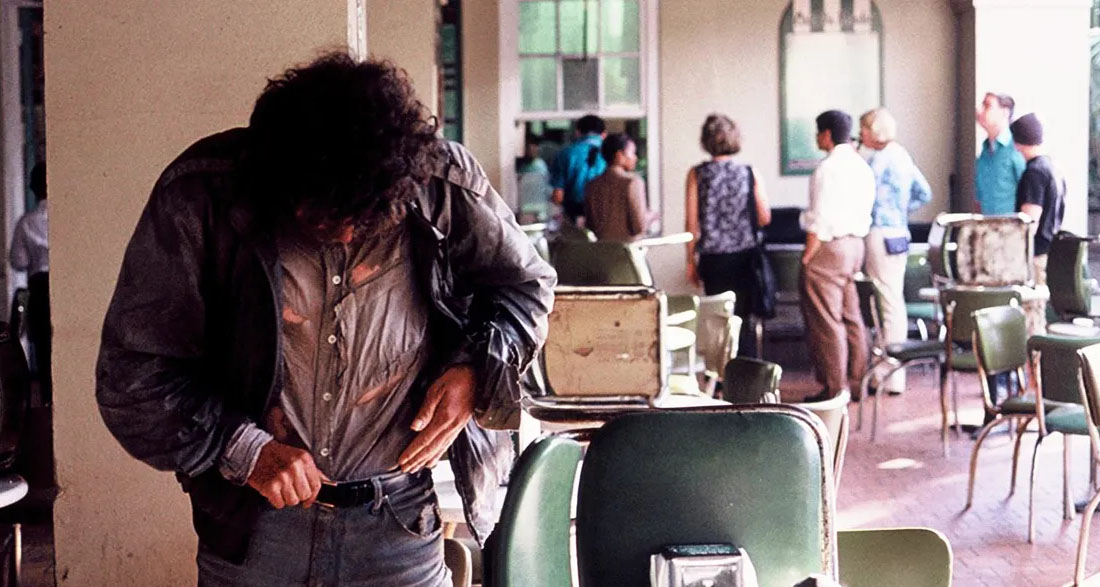
The Man in the Dirty Coat
A man walked into our luxury restaurant wearing a coat the color of dirty snow — and the moment he stepped through the door, everyone wanted him gone.
Everyone except me.
And what happened next changed my life forever.
Even now, months later, I sometimes drift off during slow shifts, replaying that day in my head. Sometimes, I wonder if it was all just a beautifully strange dream.
When I got hired at The Golden Fork, I thought I’d finally made it. This wasn’t like the old greasy diner where your shoes stuck to the floor and the coffee tasted like burnt tires. No — this was the place downtown.
The kind of restaurant where the menus were thick as books, where the napkins were folded like origami swans, and a pianist played soft melodies in the corner.
Every detail screamed luxury — and every mistake could cost you your job or your tip. The guests barely looked at you, but they always wanted to be looked at.
I was twenty-four, tired of just surviving, and desperate for a fresh start.
That’s when I met Lila. She’d started the same week I did — twenty-seven, bold, sharp-tongued, and stunning.
She wore designer perfume, kept her nails perfect, and had a story for every rich man she’d ever served — or dated.
At first, we got along well. She was hilarious, and we bonded over the exhaustion of double shifts and sore feet. But over time, I noticed something about her — she was obsessed with appearances.
Money, status, luxury — that was her world.
She once told me, “If you look like you belong to them, they’ll treat you like one of them.”
We were in the break room that day, eating crushed protein bars between orders, when she pulled out her lipstick like it was a weapon.
“You don’t just serve money, Maya,” she said, applying it carefully. “You have to become the fantasy.”
I laughed then, but deep down, I knew she wasn’t wrong. In that place, image was everything.
It was a busy Thursday afternoon when it happened. The restaurant buzzed with life — businessmen talking deals over crab cakes, influencers posing with martinis, and couples whispering over truffle pasta.
I was moving fast between tables when the door opened.
At first, I didn’t notice. But everyone else did.
The chatter dropped instantly. Someone stopped mid-bite. Even the pianist hit a wrong note and froze.
I turned toward the entrance — and saw him.
He wore a long, frayed coat the color of dirty snow. His shoes were cracked and muddy, his beard tangled like seaweed.
His hands shook slightly, not from cold but from nerves. His eyes darted around the room like he expected to be kicked out at any moment.
Lila, returning from a table nearby, groaned under her breath. “Oh, hell no,” she muttered. “He’s going to scare off the whole lunch crowd.”
The room had gone silent. Even the music stopped completely.
Lila marched straight to the host stand and whispered to Brennan, our nervous, soft-spoken college-aged host.
“We can’t seat him, right?!” she hissed, crossing her arms.
Brennan looked helpless. “He asked politely,” he said. “The manager’s out meeting suppliers.”
Lila rolled her eyes. “Not my problem. But I’m not taking him.”
And just like that — he landed in my section.
I took a deep breath and walked toward him.
He looked up, offering a shy smile. “Hi,” he said softly. “Could I get a menu, please?”
His voice surprised me. It wasn’t rough or slurred. It was calm, deliberate — almost refined, like a man who once read poetry aloud.
“Of course,” I said, handing him a menu. “Take your time.”
His hands trembled as he turned the pages, but he read them carefully — like someone who hadn’t been given a choice in a long time.
Finally, he said, “I think I’ll just have the soup and a coffee.”
“That sounds perfect,” I said with a smile, feeling dozens of eyes burning into my back as I walked away.
Lila leaned over when I passed her. “Girl, he’s not paying,” she whispered. “You’ll end up covering it.”
“I don’t mind,” I said quietly. “He’s hungry.”
She scoffed. “Kindness doesn’t pay bills.”
I ignored her and went to place the order.
When I brought the soup and coffee, I set them down gently. “Here you go,” I said.
He looked up at me with watery eyes and whispered, “Thank you. It’s been a long time since someone looked me in the eye.”
I turned quickly before he could see my expression. Those words hit me right in the chest.
He ate slowly — savoring each spoonful as if every taste held a memory. When he was finished, he neatly folded the napkin, placed it beneath the bowl, and left quietly.
I sighed and went to clear the table, ready to pay for his meal myself.
But when I lifted the plate, I froze.
Under the napkin was a crisp $100 bill — and a note.
“You’ve found the secret to happiness — kindness. Watch how it returns to you.”
My hands shook. I just stared at the note.
When I showed Lila, she laughed so hard she almost dropped her tray of wine glasses. “Please! He probably fished that out of a trash can,” she said. “You just got lucky.”
Maybe she was right. But something in me said otherwise.
That note meant something.
A month later, he came back.
Same coat. Same calm smile. But something was different — his shoulders were straighter, his steps steadier. His eyes looked lighter, brighter.
He waved at me like an old friend.
When Lila saw him, she muttered, “Here we go again.”
I smiled and led him to the same corner table. “Back for more soup?” I teased.
He chuckled. “Not today. I think I’ll try the steak. And maybe some dessert.”
I raised an eyebrow but took his order. There was no hesitation in his voice this time, no trembling.
When I brought the meal, he smiled warmly. “Thank you again,” he said.
After dessert, he stood and clapped his hands twice.
The room went dead silent.
Then he said, loud enough for everyone to hear, “My name is Elliot Reeves — and I own this restaurant.”
Gasps filled the air. I froze mid-step.
Lila’s jaw dropped. Brennan’s tablet nearly slipped from his hands. Even the pianist froze with his fingers above the keys.
Then, Elliot reached up — and peeled off his beard.
It came off in one piece. Underneath was a clean-shaven man in his mid-fifties, handsome and sharp-eyed. His old coat suddenly looked like a disguise.
“I’ve been coming here in disguise,” he said clearly, “to see how my staff treats someone who doesn’t look rich.”
No one spoke. Customers were whispering, stunned.
Then Elliot walked toward me. My heart raced so hard I thought it might burst.
“Only one person,” he said, stopping in front of me, “treated me with kindness. Only one person looked me in the eye and fed me without judgment.”
He smiled softly. “You reminded me why I opened this place.”
“What’s your name?” he asked.
“M-Maya,” I managed to say.
He nodded. “Maya, you’re everything this restaurant should stand for.”
Then he turned to the manager, who had just come in looking confused. “Effective immediately, she’s the new shift lead. And triple her pay.”
The room erupted.
Half the staff clapped. The others just stood frozen — including Lila.
I was shaking. My throat tightened as tears burned my eyes.
Later that night, after the chaos calmed down, Elliot found me near the service hallway.
“You reminded me of my wife,” he said quietly. “She passed a few years ago. She used to say, ‘Kindness is never weakness.’ I forgot that for a while.”
I cried right there, next to the freezer. He just smiled kindly, the way someone does when they truly mean it.
After that day, Elliot became part of my life. Every week, he’d visit the restaurant and sit at his favorite booth near the window.
We’d talk for hours — about life, grief, the people we served, and the lessons we learned.
Sometimes, he’d just sit there with a coffee, watching me work. It became our quiet rhythm.
Until one day… he didn’t come back.
Three months later, I got a call. Elliot had passed from a sudden heart attack. No warning.
His son, Caleb, spoke softly on the phone. “He talked about you a lot,” he said.
The funeral was peaceful, full of people who had no idea about his secret visits.
After the service, a tall man with gentle eyes approached me. “You’re Maya?” he asked. “My father said you were the reason he started smiling again.”
A week later, I received a letter — written in Elliot’s neat handwriting.
“Maya — you taught me there’s still light in people. Thank you for feeding me when I was invisible. Enclosed is something to help you feed others.”
I opened the next paper — and my knees nearly gave out.
It was the deed to The Golden Fork.
He had left me the restaurant.
I couldn’t believe it. I cried for hours.
Lila tried to sue, claiming I’d manipulated him, but Elliot’s lawyers shut her down completely.
I renamed it Maya’s Table.
And right by the entrance, there’s a plaque that reads:
“In memory of Elliot Reeves — who believed kindness feeds the soul.”
Every Sunday, I keep his old booth open. No reservations. It’s always waiting — for anyone who needs it.
Two weeks ago, someone did.
We had just closed for the night when the front door creaked open. A teenage boy walked in — thin, with dirt on his cheeks and a ripped hoodie.
“Are you still open?” he asked quietly.
I hesitated only a moment before saying, “For you? Always.”
He sat in Elliot’s booth. I made him pancakes and cocoa. He looked at the food like it was the first real meal he’d seen in days.
Then he looked up and asked, “You’re Maya, right? My grandpa used to talk about you.”
My heart stopped. “Your grandpa?” I whispered. “Was he…?”
“Elliot Reeves,” the boy said. “He told me that if I ever needed help, I should find you. He said you’d understand.”
He handed me a crumpled note. It was Elliot’s handwriting.
“Maya — kindness never ends with you. Keep it going.”
I couldn’t hold back the tears.
That night, I fed the boy, gave him clean clothes, and found him a safe place to sleep.
And as I wiped my eyes, I heard Lila’s old voice echo in my mind — “Kindness doesn’t pay bills.”
But she was wrong.
Kindness had paid me back in ways money never could.
Now, every time I serve someone who feels invisible, I say the same words I said to Elliot that first day:
“Don’t worry about it.”
Because sometimes, that’s all it takes to change a life.
