
My name is Sarah, and I’m 34 years old. I’m a single mom of two—Lily, who’s three, and Noah, just eleven months old.
I drive a city bus. It’s not glamorous work—no corner offices, no comfy cubicles—but it pays the bills, puts food on the table, and keeps the lights on for my kids. That’s enough for me.
Their father left before Noah was born. I haven’t heard from him since. No cards. No child support. Not even a voicemail on their birthdays. Just silence.
Thankfully, my mom lives with us. She’s my rock, my backup, the one who gets up early when I have late-night shifts, who kisses my children’s foreheads when I can’t, and who hands me a cup of coffee without a word, knowing I need it most.
We take turns being exhausted, and somehow, we make it work.
Most nights, my last bus route ends close to midnight. The city is quiet then. The streets are empty, the sidewalks almost lifeless, and it feels like the world is holding its breath.
I do my usual sweep through the bus before heading home—checking seats, picking up lost gloves or wrappers, making sure no one is hiding in the back hoping to ride out the cold.
Usually, I find nothing of value. Maybe a candy wrapper, sometimes a forgotten soda can. But that night… that night was different.
The cold was bone-piercing, the kind that sinks through your coat and straight into your bones. The windows were fogged from the inside, and every time I exhaled, a puff of white mist floated in front of my face.
I was already dreaming about my warm bed, about curling up next to Lily and Noah, smelling that soft baby scent that clung to Noah’s neck.
The digital clock above my dashboard read 11:52 p.m. I parked the bus in the empty yard. All the other drivers were gone. I switched off the lights and began my usual walk-through.
Halfway down the aisle, I heard it—a soft cry.
It was weak, almost invisible, but it stopped me in my tracks.
“Hello?” I called out, my voice echoing faintly in the empty bus.
Nothing.
Then a whimper came again, fragile but urgent. My heart raced as I moved toward the back. The dim red glow of the emergency exit light barely illuminated the aisle, but that was enough.
And then I saw her.
A tiny bundle curled up on the last seat, wrapped in a pink blanket rimed with frost.
I stepped closer, my hands trembling, and gently pulled the blanket back. My breath caught.
“Oh my God…” I whispered.
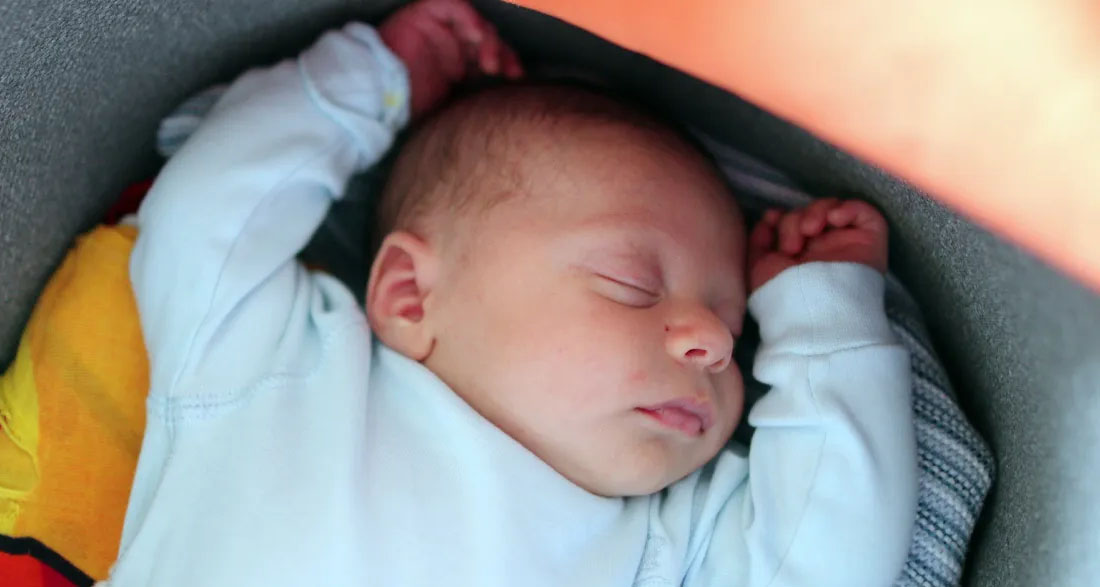
It was a baby girl. Her skin was pale, her lips tinged blue. She wasn’t crying anymore—just making tiny, shivering breaths, almost like she’d run out of strength.
I scooped her into my arms, pressing her against my chest. “Hey… hey, I’ve got you,” I whispered, though I didn’t even remember choosing to speak. “It’s okay. You’re safe now.”
There was no bag, no car seat, no clue who had left her. Just a folded piece of paper tucked inside the blanket. My hands shook as I opened it:
“Please forgive me. I can’t take care of her. Her name is Emma.”
No signature. No explanation. Just those heartbreaking words.
I didn’t think. I ran.
By the time I reached my car, my fingers were numb, but I managed to start the engine, crank the heat, and hold her close under my coat. “Stay with me, baby girl. Please… just stay with me,” I whispered the whole way home.
When I burst through the front door, my mom was instantly on her feet.
“Sarah? What happened? What’s wrong?!” she asked, panic in her eyes.
“Blankets! Quick! She’s freezing!” I gasped.
We wrapped her in everything we could find—Lily’s quilts, thick towels from the linen closet, my winter coat. My mom rubbed her tiny fingers between her palms. “Her fingers are like ice, Sar… so cold…”
We sat on the floor near the heater, whispering soft prayers neither of us had said in years. Her breaths were shallow, her eyes still closed.
Then it hit me. “I’m still breastfeeding,” I said, voice catching. “I can try to… I can help her.”
My mom nodded. “Try. You might be able to save her.”
I held Emma to my breast, praying. For a few heart-stopping seconds, nothing happened. And then… a stir. A latch. A faint suckle.
“She’s drinking! Mom… she’s drinking!” I cried, tears streaming down my face. I kissed her forehead over and over. “You’re safe now. You’re safe, baby.”
We didn’t sleep that night. I held her against my skin, swaddled in layers, rocking her like I used to rock Lily when colic stole our nights. I hummed lullabies I hadn’t sung in months, letting her tiny heartbeat steady mine.
By morning, her cheeks were pink, her fingers curling and unclenching, small fists ready to hold on. I called 911, my hands still shaking. The dispatcher stayed calm as I explained everything.
“You did the right thing,” she said. “Help is on the way.”
Paramedics arrived, checked her vitals, and nodded.
“She’s stable,” one said. “You may have saved her life.”
I handed them a bottle of milk, some diapers, and Noah’s tiny hat. “Please… tell them she likes to be held close,” I said.
“You’ve done more than enough,” the paramedic said gently.
For three days, the house was quiet but alive with memory. I couldn’t sleep, couldn’t focus. I kept seeing her tiny blue lips, her fragile breaths, and that first latch at my breast.
One evening, trying to feel normal, I decided to make roast chicken. My mom and I moved around the kitchen quietly, peeling potatoes and slicing carrots. Lily mashed her potatoes seriously, standing on a chair.
“Make sure it’s extra buttery,” I said with a wink.
“That’s the best part, Mommy!” she said, smiling.
Then I heard it—a low hum outside. I looked out the window and froze. A black Rolls-Royce Phantom gleamed under the streetlights. Too long, too perfect, too out of place on our cracked pavement.
A man stepped out. Older, tall, silver hair neatly combed, long wool coat, leather gloves.
“Are you Sarah? The bus driver?” he asked.
“Yes,” I said, swallowing hard.
“I believe you’re the woman who found a baby on your bus.”
“Emma,” I whispered. “Is she okay?”
“She’s alive… because of you,” he said softly. “She’s my granddaughter. My name is Henry.”
“My granddaughter?!” I gasped.
Henry nodded, sitting on the porch bench. “My daughter, Olivia, has struggled for years—depression, addiction. We didn’t even know she was pregnant.
She disappeared months ago. When she saw the news about Emma and you finding her, she turned herself in. She wanted to make sure Emma was safe.”
“She must have loved her,” I said. “To let her go and then come back.”
“She did,” Henry said. “And you… you loved her enough to keep her alive.”
He handed me an envelope. “Not as payment,” he said. “Just… gratitude.”
Inside was a letter and a check—enough to cover a year of rent and every overdue bill.
Three months later, Henry called.
“Sarah, Emma’s doing beautifully. Healthy, strong, always smiling.”
“I think about her every day,” I said.
“She’s a fighter,” he said. “Just like you.”
“Tell her… she was loved that night,” I whispered.
“I will,” he promised.
Now, every night after my shift, I walk through the bus. I stop at the last seat. I listen.
Sometimes, I swear I hear her again. Soft. Fragile. Alive.
Because miracles don’t always arrive in sunlight or fanfare. Sometimes, they come wrapped in a thin pink blanket—and leave behind a love that never lets go.
