
When I found out my 10-year-old daughter had been skipping school, I never imagined following her would lead me into an abandoned building — and to the truth about my husband’s death.
A truth that shattered everything I thought I knew about him… and showed me that grief wasn’t the only shadow haunting our family.
It’s been 13 long months since my husband, Mark, died. Thirteen months of waking up to an empty bed, of cooking meals for two instead of three, of watching our daughter, Lily, try to grow up without her father by her side.
The doctors said it was a heart attack. A sudden one. Mark was only 36 — strong, healthy, full of life.
That morning he kissed me goodbye, promised he’d be home early to make spaghetti for dinner. Then, just like that, he was gone.
The hardest part wasn’t the funeral, or the endless stream of condolences, or even the unbearable silence that filled the house afterward.
The hardest part was watching Lily break. Watching my little girl’s bright spirit shatter into a thousand pieces I couldn’t glue back together.
Mark had been her world. Every night, he’d sit on her bed and hum a soft, wordless tune until she fell asleep.
He told her stories about knights and queens who always stood up for what was right, even when it was hard. And on her birthdays, he carved little wooden birds for her — each one unique, each one special.
After he died, Lily changed. My talkative, cheerful daughter turned quiet. She came home from school and locked herself in her room. She stopped telling me stories about her day. She only drew.
And her drawings scared me. They were always the same — a crumbling old building, a man standing by a river with his face turned away, and a bird with a bent wing that looked broken.
When I showed them to my sister, she put a hand on my arm.
“It’s grief,” she said softly. “Give her time.”
But grief wasn’t the only thing happening.
Last Tuesday, my phone rang during my lunch break.
“Mrs. Carter? This is Ms. Rodriguez from Riverside Elementary.”
My heart dropped instantly. “Is Lily okay?”
“I’m calling because she’s missed three days of school this week, and we haven’t received any absence notes.”
The sandwich in my hand turned to dust. “I’m sorry, what?”
“Lily hasn’t been in class since Monday.”
“There must be some mistake.”
But the teacher’s voice was firm. “Mrs. Carter, I’ve been marking her absent. Are you sure?”
And the truth was… I wasn’t sure of anything anymore.
That afternoon, I waited on the couch for Lily to come home. At 3:30 sharp, she walked through the door.
“Hey, sweetheart,” I said carefully. “How was school today?”
She froze in the doorway. Just for a moment, but I saw it. Her shoulders tensed, her grip tightened on her backpack strap.
“It was fine,” she said quickly. “We did multiplication tables in math.”
“Yeah? That sounds fun.”
“Mm-hmm.” She started for the stairs. “I have homework.”
“Lily?”
She turned, and for one second, I saw the fear and guilt in her eyes.
“Nothing. I love you.”
“Love you too, Mom.”
And then she was gone.
But my hands wouldn’t stop shaking. If she wasn’t at school, where had she been?
The next morning, I decided to follow her.
I watched as she ate her cereal, packed her lunch, kissed my cheek.
“Have a good day, baby,” I said.
“You too, Mom,” she replied with a smile.
She left at 8:00 sharp, and three minutes later, I was on her trail, half a block behind, ducking behind cars like I was in some bad spy movie.
At first, everything looked normal. She took her usual route toward school. Relief washed over me. Maybe it had been a misunderstanding.
But then, three blocks from Riverside Elementary, she turned right.
Toward the abandoned factories.
My stomach dropped. She walked like she knew exactly where she was going. Confident. Purposeful.
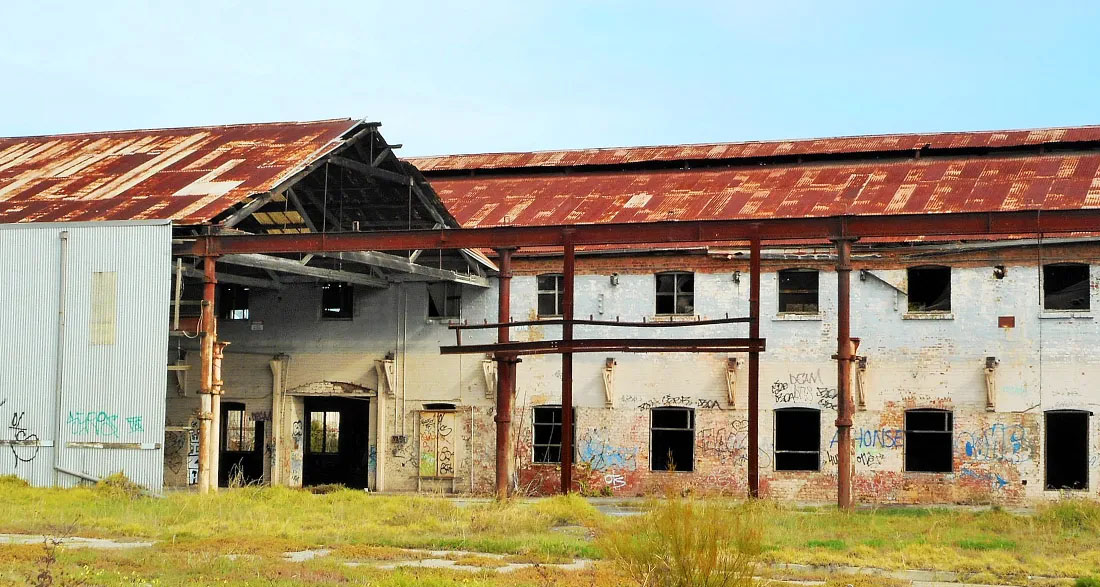
Finally, she stopped in front of a chain-link fence covered in rust and “No Trespassing” signs. Behind it loomed the old Fairview Textile Factory, an enormous building everyone in town whispered about.
Broken windows stared like empty eyes. Graffiti covered the walls. Dead vines clung to the bricks.
Everyone said it was haunted.
And I watched my daughter slip through a gap in the fence.
I followed.
Inside, the air was damp and cold, heavy with mold and rust. Light streamed through shattered windows, making strange shadows. Every step I took echoed. And then I heard it.
Humming.
I froze.
It was Mark’s tune. The soft melody he’d hummed to Lily every night before bed.
My heart slammed in my chest as I followed the sound. I turned a corner… and the world tilted sideways.
Lily sat cross-legged on the floor, her backpack beside her. Across from her, on an overturned crate, sat an older man with a gray beard and worn clothes. He was showing her something in his hands.
“LILY!” I screamed.
The man jumped, the crate toppled, and Lily whipped around, eyes wide.
“Mom!”
I ran to her, grabbed her shoulders, pulled her behind me. “Who the hell are you? What are you doing with my daughter?”
The man raised his hands, panicked. “Please, ma’am, please don’t be scared. I didn’t mean any harm. I swear—”
“Mom, stop!” Lily cried, tugging at me. “You don’t understand! He’s Dad’s friend!”
The room spun. “What?”
Lily’s tears streaked down her cheeks. “His name’s Eddie. His son worked with Dad. He tells me stories about him… about what Dad was like at work, and what they did together. I just wanted to feel close to Dad again.”
I turned on the man, Eddie. His face was desperate, sad.
“Ma’am,” he rasped, “I’m so sorry. I’ve been trying to reach you for months. I didn’t mean for it to happen like this. I lost my home, I’ve been sick. I didn’t know how to approach you.”
“Why?” I demanded. “Why would you need to reach me?”
Eddie’s voice dropped. “Because your husband was my son’s best friend. And because… I think Mark might have been killed.”
The air left my lungs.
“What are you talking about?”
Eddie sat back down heavily and told me everything.
Mark and his son Tommy had been working together, surveying land near this factory.
They discovered trucks sneaking in at night, dumping toxic waste straight into Miller Creek — the same creek that ran past Lily’s school playground.
“They wanted to go to the police,” Eddie said, wringing his hands. “But Mark said they needed proof first. So they gathered evidence. Photos, samples, documents. Mark promised to keep it safe.”
He pulled something from his pocket. A wooden bird, carved just like the ones Mark made for Lily.
“Mark gave this to my son a week before he died. He said it was for Lily’s tenth birthday. And he said if anything happened, Tommy should make sure you both knew the truth.”
My knees buckled.
Eddie’s voice shook. “A month later, Mark was dead. Two weeks after that, my son died in a car accident.
They said he lost control on a dry, clear road. But I know it wasn’t an accident. They silenced him. Just like they silenced your husband.”
And then Eddie handed me a metal box. “This is everything. The proof. My son kept it hidden. Now it’s yours. Maybe together, we can finish what they started.”
That afternoon, we went to the police.
The box contained everything: photos of trucks with doctored plates, falsified waste records, videos Mark had secretly filmed, and even a list of names — company executives and officials who’d been paid off to look the other way.
Detective Morrison, a man who’d been on the force for 20 years, studied every piece. His face darkened.
“We’ll need to verify this. But if it’s legitimate…”
“It is,” Eddie said firmly. “My son and Mark died for it.”
A week later, Morrison called. His voice was grim.
“We’ve arrested the factory’s owners and three local officials. We also confirmed your husband’s car was tampered with.
The brake line was cut. His death wasn’t an accident. Mrs. Carter… I’m sorry. Your husband was murdered.”
It’s been three weeks since that call.
Eddie is staying in a small motel now, thanks to help from neighbors. He comes by for dinner twice a week.
Lily listens to his stories, soaking up every memory of her dad and his best friend. She hasn’t missed a single day of school since.
The wooden bird Eddie gave her sits on her nightstand, alongside the seven others her father carved. At night, I hear her humming Mark’s tune while she does her homework.
And sometimes, I sit in the dark, holding one of the photos Morrison returned to me. Mark and Tommy, standing by the creek, muddy and tired but determined.
I trace my finger over Mark’s face and whisper, “You brave, stupid idiot.”
Part of me wishes he’d chosen us instead of fighting. That he’d stayed safe. But that wasn’t who Mark was. He gave his life for something bigger — to protect this town, to protect the children who play by that creek.
I thought I’d lost him forever. But now I know his courage lives on. He left us with more than grief. He left us with truth.
And somehow… we’re going to be okay.
