
Dawn Over Ashes
She walked in—soaked, ignored, and silently judged. Rainwater dripped from her hair onto the polished floor, and before anyone could say a word, she pointed to a painting and said, her voice trembling but certain,
“That’s mine.”
At that moment, I didn’t realize it—but the truth behind her words would flip my entire gallery upside down and bring someone into my life who would change everything.
My name’s Tyler, I’m 36, and I run a small art gallery in downtown Seattle.
It’s not one of those fancy places with champagne, critics, and fake compliments echoing through the halls. My gallery is quieter. Personal. Real. It’s more than just a business—it’s a piece of my soul.
I got my love for art from my mom. She was a ceramic artist—never sold a single piece, but our tiny apartment was filled with color. She used to say, “Art isn’t about selling. It’s about feeling.”
When I lost her during my last year of art school, everything fell apart. I couldn’t even look at a paintbrush without remembering her smile. So I stopped creating and started curating. Opening a gallery felt like a way to stay close to her… without falling apart.
Most days, it’s just me here—cleaning frames, chatting with regulars, rearranging pieces until they feel “right.” The gallery always smells faintly of wood polish and old paper.
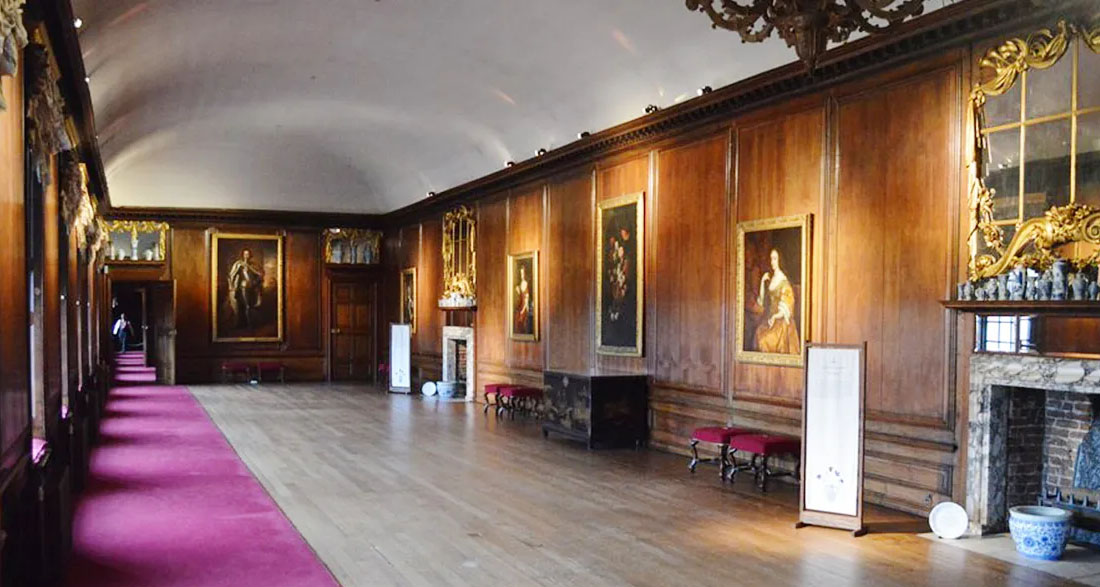
Soft jazz hums from hidden speakers. The oak floors creak just enough to make the quiet feel alive. Golden light falls across framed pieces, each one catching the sun like it’s telling its own secret story.
It’s peaceful. It’s mine.
Until she came in.
It was a typical Seattle Thursday—gray skies, drizzle, and the kind of cold that seeps through your coat. I was straightening a crooked print by the door when I noticed her standing outside under the awning.
She looked about sixty, maybe older. Her coat hung off her like it had given up on keeping anyone warm. Her gray hair clung to her head, flattened by the rain. She stood there like she wanted to blend into the bricks behind her.
I hesitated. Should I go out and ask if she was all right?
Before I could decide, my regulars arrived—three older women who came in every Thursday afternoon, smelling like perfume and gossip. Their heels clicked sharply on the floor, echoing like punctuation marks.
The moment they saw the woman outside, everything changed.
“Oh my God, the smell,” one of them whispered, wrinkling her nose.
“She’s dripping water all over my shoes,” another snapped.
“Sir,” the third said loudly, pointing at the door. “Can you please do something? This is ridiculous!”
I looked at the woman outside again. She hadn’t moved. Just stood there—tired, cold, and quiet.
Then one of the women behind me muttered, “She’s wearing that awful coat again. Looks like it hasn’t been washed since the Reagan era.”
Another chuckled. “And those shoes… tragic.”
“Why would anyone let her in here?” came the final, sharp remark.
Through the glass, I saw her shoulders tighten. Not from shame—no, it looked like she’d heard all this before. Like the world had spent years trying to erase her, one cruel comment at a time.
My assistant, Kelly, glanced at me. She was young, gentle, the kind of person who apologized when she sneezed too loud. “Do you want me to—”
I stopped her with a shake of my head. “No. Let her stay.”
Kelly nodded, quietly stepping aside.
The door opened with a chime that sounded almost hesitant, and the woman stepped in. The air shifted instantly. Her coat dripped on the polished wood, leaving dark circles where she stood. Every whisper in the room sharpened into a blade.
“She doesn’t belong here.”
“She’s ruining the atmosphere.”
“She probably can’t even spell ‘gallery.’”
I clenched my fists behind the counter. I didn’t say a word.
She walked slowly through the space, her steps careful, her eyes focused. Not wandering or confused—focused. Like every painting on the wall held a piece of her memory.
I watched her stop in front of one of my favorite pieces—a small impressionist work of a woman sitting beneath cherry blossoms. She tilted her head as if she was trying to recall something she’d once known.
Then she moved on, all the way to the far wall.
That’s where she froze.
Before her hung one of the most striking paintings in the gallery—a city skyline at sunrise. The colors glowed like emotion itself: orange fading into violet, shadow meeting light. It had always been one of my favorites, though I’d never known who painted it.
The woman stared at it for a long, trembling moment.
Then she whispered, “That’s mine. I painted it.”
The room went dead silent. The only sound was the rain tapping against the windows.
“Sure, honey,” one of the women behind her laughed cruelly. “Maybe you painted the Mona Lisa too.”
“Look at her coat,” another sneered. “She probably hasn’t even had a shower this week.”
“She’s delusional,” someone said flatly.
But the woman didn’t flinch. Her chin lifted slightly as she raised her hand and pointed to the corner of the painting.
“Right there,” she said softly.
I stepped closer. And there it was—barely visible, almost hidden in the glaze.
M. L.
My chest tightened. I had bought this painting two years ago at an estate sale. The seller had thrown it in with a few other pieces, no paperwork, no story. I’d never been able to trace the artist. Just those faint initials.
Now, the woman stood before me, quiet but certain.
“That’s my sunrise,” she said. “I remember every brushstroke.”
The judgmental silence in the room cracked into unease. Even the regulars looked uncertain now.
I stepped closer. “What’s your name?” I asked gently.
She met my eyes. “Marla,” she said. “Marla Lavigne.”
Something deep in me told me—this wasn’t over.
“Marla,” I said softly, “please, come sit.”
She hesitated, glancing around as if waiting for someone to tell her to leave. When no one did, she nodded faintly. Kelly brought a chair without a word.
Marla sat slowly, like she wasn’t sure she was allowed to. The others whispered behind her, pretending to admire other pieces, though every eye was still on her.
I crouched beside her so we were level. “I’m Tyler,” I said. “Tell me about this painting.”
Her hands, rough and speckled with old paint, trembled slightly. “I painted it… years ago. Before the fire.”
“The fire?” I asked.
She nodded, her voice breaking. “Our apartment caught fire. My studio was inside. My husband didn’t make it out.
I lost everything—my home, my art, my name. Someone took my remaining pieces. Sold them. Used my initials. And I… I didn’t know how to fight back. I became invisible.”
The way she said invisible made my heart ache.
“You’re not invisible,” I said softly. “Not anymore.”
Her lips trembled. She looked up at the painting again, her eyes reflecting its light. It was like she was seeing a part of herself she thought was gone forever.
That night, I couldn’t sleep. I spent hours digging through receipts, catalogs, auction records—anything that could connect Marla to that painting. Coffee went cold beside me. The city outside blurred into rain streaks.
By morning, my eyes burned. But I wasn’t stopping.
Kelly joined me in the search. “You really believe her?” she asked quietly.
“I don’t think she’s lying,” I said. “And even if there’s a chance she’s telling the truth—we owe her that.”
After days of searching, we found it: a faded gallery brochure from 1990.
A photo of a younger Marla, smiling proudly in front of the same painting—the plaque beneath it read: “Dawn Over Ashes, by Ms. Lavigne.”
I printed it and rushed to the gallery the next morning. Marla was already there, sipping tea Kelly had made her.
When I showed her the picture, her breath caught. “I thought… it was all gone,” she whispered.
“It’s not,” I told her. “And we’re going to fix this. You’re getting your name back.”
From that day forward, my gallery turned into a mission.
I pulled every piece marked “M.L.” from the walls. Kelly and I worked tirelessly—relabeling, tracking provenance, contacting auction houses, correcting sales records. Slowly, the truth started surfacing.
One name kept reappearing: Charles Ryland—a gallery owner from the ’90s. He had “discovered” Marla’s art and sold it under his name. He’d forged authorship, erased her identity, and built a fortune off her grief.
When I told Marla, her only words were, “I don’t want revenge. I just want to exist again.”
But I knew the truth had a way of finding light.
And it did.
Two weeks later, Charles Ryland stormed into the gallery, red-faced and furious.
“Where is she?” he barked. “You think you can smear my name with these lies?”
I stood firm. “This isn’t lies, Charles. We have photos, records, and witnesses. It’s over.”
He sneered. “You think this will hold up in court? I own those paintings legally.”
“No,” I said calmly. “You own stolen stories.”
He turned to storm out, spitting threats about lawyers. But two weeks later, after we filed everything with the district attorney and a journalist broke the story, Charles was arrested for fraud and forgery.
When I told Marla, she just closed her eyes and whispered, “I don’t want him ruined. I just want to breathe again.”
Months passed. People started to remember her—not as a stranger, but as an artist.
The same women who once mocked her began showing up quietly. One of them, standing beside her daughter, whispered near Dawn Over Ashes, “I misjudged her. I’m sorry.”
Marla began painting again. I gave her the back studio—bright morning windows, warm sunlight, and the smell of coffee drifting from next door. Every day, she arrived early, hair tied back, brush in hand. Hope had returned to her fingers.
She even started teaching neighborhood kids. “Art isn’t just about colors,” she told them. “It’s about turning pain into beauty. It’s about being seen.”
One morning, I saw her helping a shy boy with a charcoal drawing. He barely spoke, but he glowed under her encouragement.
“Art is therapy,” she told me later, smiling. “That boy sees the world differently—like I used to. Like I still do.”
When her exhibition finally came, she named it Dawn Over Ashes—the title of her lost painting, now found again.
On opening night, the gallery was overflowing. People came not just to see her art, but to see her. Every painting told her story—pain, loss, rebirth. Light after darkness.
Marla stood near the center, wrapped in a deep blue shawl. Calm. Proud. Her eyes sparkled under the soft glow of the lights.
I joined her by the painting that started it all. She brushed her fingers along the frame and whispered, “This was the beginning.”
I smiled. “And this is your next chapter.”
She looked at me, eyes full of tears and warmth.
“You gave me my life back.”
I shook my head. “No, Marla. You painted it back yourself.”
The lights dimmed slightly. The crowd clapped—soft, genuine, full of respect. Marla took a small step forward, her hand trembling slightly as she gazed at her work.
“I think,” she whispered, a small smile breaking across her face, “this time… I’ll sign it in gold.”
