
“The Bus Driver’s Gift”
The cold that morning was brutal—so sharp it felt like knives in the air. But it wasn’t the frost that froze me in my tracks. It was a quiet, broken sob from the back of my school bus.
That sound changed more than just my day—it changed everything.
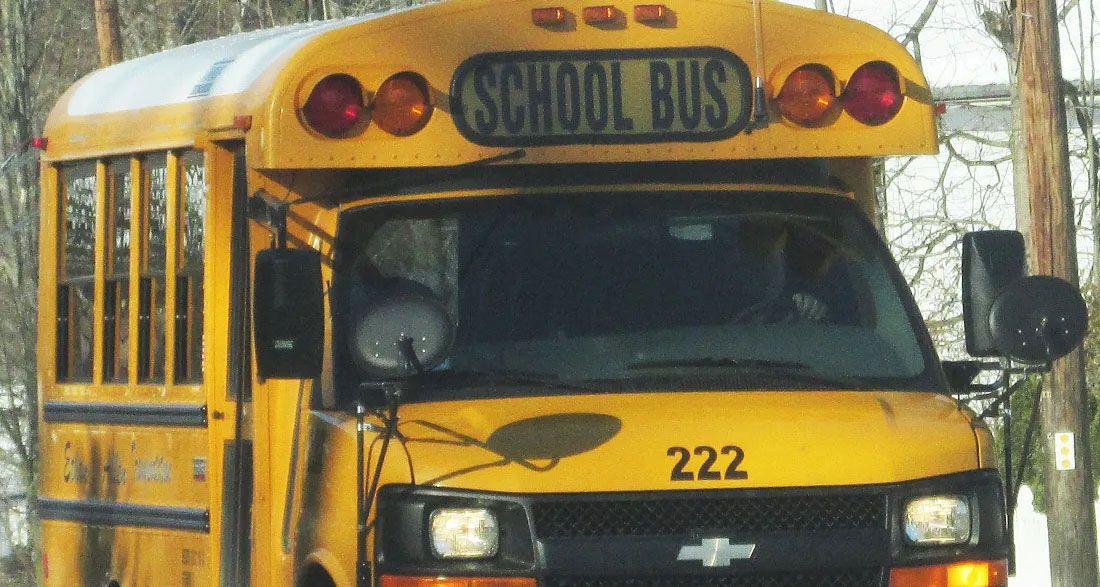
My name’s Gerald, I’m 45, and I’ve been a school bus driver in a small town for over fifteen years. You probably wouldn’t find our town on a map unless you squinted, but it’s home. My bus, that big creaky yellow beast, is my second home.
I’ve seen all kinds of kids—loud, shy, kind, stubborn—and parents who are just the same. But last week… something happened that I’ll never forget.
That Tuesday morning was colder than usual. The kind of cold that slips under your jacket and bites your bones no matter how many layers you wear.
My fingers stung while I fumbled with the bus keys, and I muttered, “Come on, old girl,” as I climbed up the steps, stomping my boots to shake the frost off.
Steam puffed out of my mouth like a train engine as I started the bus. The heater groaned, protesting, but eventually coughed up some warmth.
Soon, kids began running toward the bus stop—tiny soldiers in coats, scarves flapping, backpacks bouncing. The sidewalk was chaos, but happy chaos.
“Alright, hustle up, kids!” I called. “Let’s move before we turn into popsicles! This air’s got teeth this morning—grrr!” I pretended to growl, making a few kids laugh.
Then a little voice shouted, “You’re so silly, Gerald!”
I looked down and saw Marcy, five years old, with bright pink pigtails and a smile that could melt snow. She stood there with her mittened hands on her hips like she ran the whole operation.
“Ask your mommy to get you a new scarf!” she said, squinting at my old fraying one.
I leaned down and whispered, “Oh, sweetie, if my momma were still around, she’d get me one so pretty it’d make yours look like a dishrag! I’m jealous!”
She giggled and skipped inside, humming. Just like that, I forgot the cold.
The parents waved. I nodded at the crossing guard, pulled the lever to close the doors, and rolled down the familiar route.
I love that morning rhythm—the chatter, the laughter, even the sibling squabbles that always end in laughter again. Those moments made me feel alive.
Sure, it didn’t pay much. My wife, Linda, never failed to remind me.
“Gerald, you make peanuts! How are we supposed to pay the bills?” she said last week, shaking her head at the electric bill.
“Peanuts are protein,” I joked.
She did not laugh.
Still, I loved what I did. Helping those kids get safely to school gave me purpose.
After the drop-off, I always do one last check—picking up forgotten mittens, homework, or sometimes mystery snacks squished into the seats.
That morning, halfway down the aisle, I heard it—a small sniffle.
“Hey?” I called softly, glancing around. “Someone still here?”
Then I saw him.
A small boy, maybe seven or eight, sitting in the very back. He was curled up against the window, his thin jacket pulled tight. His backpack sat untouched on the floor.
“Hey there, buddy,” I said gently, walking closer. “You okay? Why aren’t you in class?”
He kept staring out the window. His voice came out small. “I’m just cold.”
Something about that answer made my chest ache.
“Can I see your hands, bud?” I asked.
He hesitated, then slowly brought them forward. My heart nearly stopped. His little fingers were blue—not from just a few minutes of cold, but from being cold for a long time. The skin was tight and red at the joints.
“Oh no…” I breathed. I quickly pulled off my gloves and slipped them onto his hands. They were way too big, but it was something.
“They’re not perfect,” I said, forcing a smile, “but they’ll keep you warm for now.”
He looked up at me with watery eyes. “I don’t have any gloves,” he murmured. “Mommy and Daddy said they’ll get me new ones next month. The old ones ripped. But it’s okay. Daddy’s trying hard.”
That hit me hard.
I knew what that felt like—trying and still coming up short.
“Well,” I said, crouching down, “I know a guy who sells the warmest gloves in town. I’ll grab you some after school. But for now, these will do. Deal?”
His face lit up. “Really?”
“Really,” I said, patting his shoulder.
Then, out of nowhere, he threw his arms around me and hugged me tight. “Thank you, Mr. Gerald.”
That hug warmed me more than any heater ever could.
That day, I skipped my coffee stop and went straight to Janice’s Shop, a tiny store on Main Street. The bell jingled when I walked in.
“Morning, Gerald,” Janice said. “What brings you in looking like you just wrestled a snowstorm?”
“Kid on my bus,” I said, explaining quickly. “He doesn’t have gloves.”
Janice’s eyes softened. “Say no more.”
I picked out a thick pair of kid-sized gloves and a navy-blue scarf with yellow stripes. It looked like something a superhero would wear.
It cost me my last dollar. I didn’t even blink.
Back at the bus, I found a small shoebox, placed the gloves and scarf inside, and wrote a note:
“If you feel cold, take something from here. – Gerald, your bus driver.”
I tucked it behind my seat quietly.
The next morning, I noticed a few kids peeking at the box but saying nothing. Then, I caught sight of a small hand reaching in—it was the boy. He took the scarf and wrapped it around his neck before getting off the bus.
He didn’t look up. But this time, he smiled.
That would’ve been enough for me. But the story didn’t end there.
A few days later, my radio crackled.
“Gerald, the principal’s asking for you,” came the dispatcher’s voice.
My heart thumped. Had someone complained?
I stepped into Mr. Thompson’s office, nervous.
“You called for me?” I asked, standing at the door.
He smiled. “Please, have a seat, Gerald.”
I sat down, bracing myself.
“You didn’t do anything wrong,” he said with a grin. “Actually, it’s the opposite.”
He opened a folder. “That boy you helped—Aiden—his parents told me what happened. His father’s a firefighter who got injured saving someone a few months ago. Things have been tough for them. What you did meant the world.”
I blinked, stunned. “I just didn’t want him freezing.”
“You did more than that,” he said. “You reminded us what community means. And your little box on the bus? It started something. We’re launching a school fund for families who need winter clothes—coats, gloves, scarves, everything. No questions asked.”
I sat there speechless.
I hadn’t meant to start anything big. But sometimes, small acts catch fire.
Word spread fast.
A local bakery dropped off boxes of mittens and hats. Parents donated coats. A retired teacher offered to knit hats. And Janice—the shop owner—called to say she’d donate ten pairs of gloves every week!
By December, my tiny shoebox had become a whole bin. Kids started leaving thank-you notes inside:
- “Thank you, Mr. Gerald. Now I don’t get teased for not having gloves.”
- “I took the red scarf. It’s super warm! I hope that’s okay!”
Each note made my heart feel full to bursting.
Then one afternoon, Aiden came running to the bus, waving something.
“Mr. Gerald!” he yelled, climbing the steps.
“What’s that, buddy?”
He handed me a folded paper. Inside was a crayon drawing of me in front of my bus, surrounded by kids wearing scarves and gloves.
At the bottom, it said in big letters:
“Thank you for keeping us warm. You’re my hero.”
My throat tightened. “This is the best gift I’ve ever gotten,” I told him.
Aiden grinned. “I want to be like you when I grow up.”
That moment? I’ll never forget it. I taped that drawing right by my steering wheel.
Two weeks later, a woman approached me in the parking lot.
“Excuse me, are you Gerald?” she asked.
“Yes, ma’am.”
She smiled. “I’m Claire Sutton, Aiden’s aunt. He talks about you nonstop. You’ve done more for him than you realize.”
She handed me an envelope. Inside was a thank-you card and a gift card.
“This is from our whole family,” she said. “Use it however you want. We just wanted to say thank you—for seeing him.”
I stammered something, too choked up to speak.
Then spring came.
The school held an assembly, and they asked me to attend. I figured it was for the kids’ performances.
But after the last song, Mr. Thompson took the microphone.
“Today,” he said, “we honor someone special—a man whose small act of kindness changed our community. Please welcome Gerald, our district’s bus driver and local hero!”
The whole gym erupted in cheers. Kids waved. Teachers clapped. Parents stood wiping their eyes.
I walked up to the stage, stunned.
Mr. Thompson handed me a certificate. “Your idea grew,” he said. “It’s now called The Warm Ride Project. Every bus in our district has a donation bin now. No child has to walk to class with cold hands again.”
I could barely breathe.
Then he said, “And there’s someone who wants to meet you.”
I turned—and there was Aiden, walking hand-in-hand with a tall man in a firefighter’s uniform.
“Mr. Gerald,” Aiden said proudly, “this is my dad.”
The man stepped forward, his eyes shining. “I’m Evan,” he said quietly. “Thank you. You didn’t just help my boy—you helped all of us.”
He gripped my hand, then leaned in and whispered, “Your kindness… it saved me too.”
The room exploded in applause.
And right there, I realized something. My job wasn’t just about driving kids safely—it was about noticing them, caring, and showing up.
Sometimes the smallest things—one pair of gloves, one kind word, one warm seat on a cold morning—can change lives.
That winter, I gave a boy my gloves.
But what I got back was far greater:
a reminder that kindness never stops at one stop—it travels.
THE END
