
I started noticing one of my students never ate during lunch. No matter how many times I offered to help, she always smiled politely and said she wasn’t hungry.
But the day I followed her after school, I found out the truth — and it broke my heart.
Sometimes I think teachers worry about their students more than some parents do. We spend every day with them.
We see the smallest changes — in their eyes, their tone, even in the way they hold a pencil or stare at the board. After fifteen years of teaching, I’ve learned that when a child stops smiling, stops eating, or grows quieter than usual… something’s wrong.
That’s how it was with Lily.
Lily was the kind of student every teacher dreams of having — quiet, kind, always helpful, with a soft smile that could brighten the hardest day.
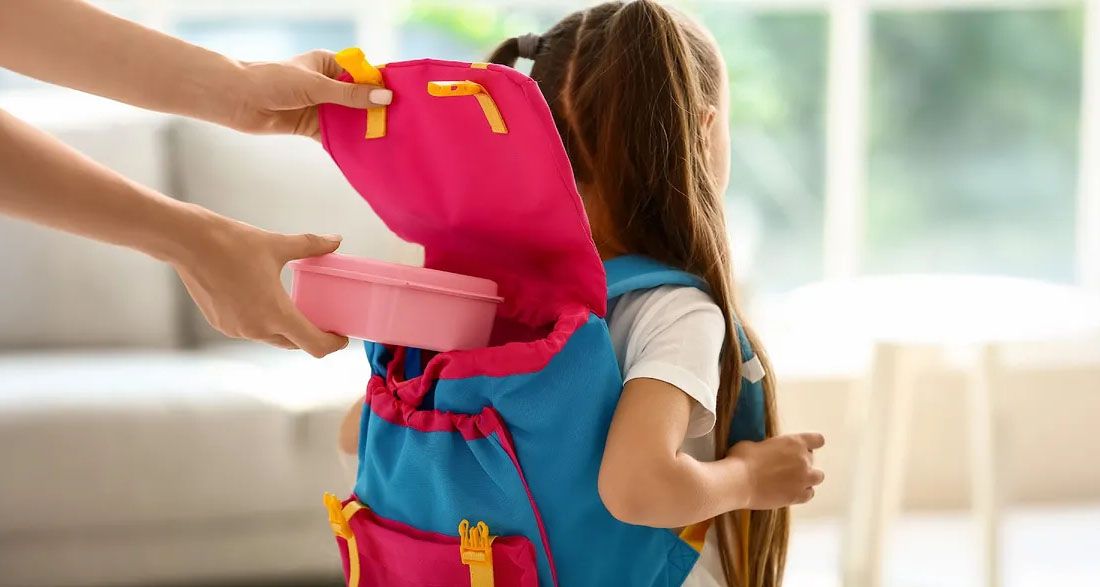
She was never late, never caused trouble, and always carried her pink lunchbox — the one that looked like it had been packed carefully by a loving mom, filled with tiny sandwiches and apple slices cut into hearts.
But then, something changed.
One week, she stopped taking her lunchbox out. The next week, she stopped bringing it at all. And soon, she wasn’t eating anything.
She didn’t buy food from the cafeteria either. While the other kids laughed over trays of spaghetti and fries, she just sat at her desk, watching quietly, her small hands folded in her lap.
One afternoon, I decided to ask. She was tracing little circles on her desk with her finger, lost in thought.
“Lily, sweetheart,” I said softly, crouching beside her, “did you bring your lunch today?”
She looked up at me and shook her head. “No, Miss Sarah.”
“Okay,” I said gently. “Did you buy lunch at school?”
Again, she shook her head. “No.”
I smiled a little, trying to keep my voice light. “How about I grab something for you from the cafeteria? They’re serving chicken nuggets today — your favorite.”
She gave a small, shy smile but whispered, “It’s okay. I’m not hungry.”
Those three words — “I’m not hungry” — stayed with me the rest of the day. Kids don’t usually turn down chicken nuggets unless something’s very wrong.
After school, when the hallways were empty and sunlight fell across the desks, I sat alone at mine, turning over possibilities in my head.
Maybe her family was struggling? I’d seen that before. Some parents couldn’t afford lunch money, and some just forgot to pack it.
I could never stand to see a child go hungry. Sometimes, I’d quietly pay for their lunch or pretend there was a mix-up with their lunch card.
So I looked up Lily’s mother’s number in the school records and called. The phone rang and rang… then stopped. I tried again. No answer. I tried a third time. Still nothing. The silence on the other end felt heavy.
When a child stops eating, there’s always a reason.
So the next day, I did something I rarely do — I decided to visit her home.
After class, I drove to the address in Lily’s file. The neighborhood was neat, the kind of place with trimmed lawns, tidy mailboxes, and freshly painted fences. Not the kind of area where you’d expect a child to be skipping meals.
I parked in front of a blue-shuttered house and sat for a moment, trying to convince myself I wasn’t overstepping. Then I rang the doorbell.
A few seconds later, a woman opened the door. She looked young — maybe early thirties — with tired eyes and her hair tied in a messy bun.
“Hi, Jessica,” I said with a warm smile. “I’m Sarah, Lily’s teacher. I tried calling, but I couldn’t reach you.”
“Oh!” she said quickly, opening the door wider. “I’m so sorry. I probably lost my phone again. I just had a baby, and things have been… chaotic.”
Inside, the house was cozy but cluttered — toys on the floor, a baby blanket on the couch, a monitor blinking softly on the table.
“What did you want to talk about?” she asked, shifting a burp cloth over her shoulder.
“It’s about Lily,” I began carefully. “I’ve noticed she hasn’t been eating lunch lately. She doesn’t bring her lunchbox anymore, and she says she doesn’t buy food at school either.”
Jessica frowned. “That’s strange. I make her lunch every morning. She always takes it.”
“She told me today she didn’t have anything to eat,” I said.
Jessica blinked, confused. “That can’t be right. I’m literally making one for tomorrow right now.”
She pointed toward the kitchen counter, where a pink lunchbox sat open beside a loaf of bread and a jar of peanut butter.
I frowned. “Then I don’t understand. She doesn’t touch her food at school.”
Jessica sighed. “Maybe she’s embarrassed to bring homemade food? I can give her lunch money instead.”
“I offered to buy her something,” I told her. “She refused. She said she wasn’t hungry.”
Jessica bit her lip. “That’s not like her. She loves her lunches. I’ll talk to her tonight, I promise.”
“Thank you,” I said softly. “I’ll keep an eye on her too.”
Jessica smiled wearily. “I appreciate that. She adores you, you know.”
“She’s a wonderful girl,” I said, meaning it.
But as I walked back to my car, something heavy settled in my chest. Everything looked fine from the outside — but I knew from experience, things that look perfect often hide pain.
The next day, I watched Lily more closely. Her pink lunchbox was back on her desk, but she never opened it. When the lunch bell rang and her classmates ran off laughing, she stayed behind, flipping through her notebook.
I crouched beside her again. “Lily,” I said gently, “I talked to your mom yesterday. She told me she packs you lunch every morning. So why aren’t you eating?”
Her hands froze. “I’ll eat later,” she whispered.
“Later when?”
“Just… later,” she murmured, eyes fixed on the page.
I didn’t push her. Kids shut down if they feel cornered. But all day, I couldn’t stop thinking about her.
When the final bell rang, I stood by the window and watched the students head to their buses. Lily was at the end of the line. Then suddenly, she turned and walked the other way — fast.
A chill ran through me. I grabbed my coat and followed.
She walked down a narrow path behind the school, her small figure determined. After about ten minutes, she stopped in front of an old abandoned house. Its windows were boarded up, the paint peeling, the yard wild with weeds.
What on earth was she doing here?
Lily looked around, then slipped through a gap in the gate. I hesitated for only a second before following her.
Inside, it smelled of dust and silence. Then, faintly, I heard a baby crying. My heart started pounding.
I crept closer and peeked through a broken doorway.
There, on a pile of old blankets, sat a woman holding a baby wrapped in a thin towel. Her face was pale, her eyes tired but gentle.
Lily knelt beside her, opened her backpack, and took out her pink lunchbox.
“I brought you food,” Lily said softly. “And some diapers. I took them from home. Mommy won’t notice.”
The woman’s voice trembled. “Sweetheart, you shouldn’t be doing this. It’s not safe for you to come here.”
“But you need to eat,” Lily said, her little voice firm. “My mom says we should always help people when we can.”
I felt my throat tighten.
I stepped forward, my shoes crunching on broken glass. The woman flinched and pulled the baby closer. Lily gasped.
“Miss Sarah, please!” she blurted out. “Don’t tell anyone! She doesn’t have anywhere to go!”
I raised my hands slowly. “It’s okay, sweetheart. I’m not angry. I just want to help.” I turned to the woman. “How long have you been here?”
She looked down. “A few weeks,” she whispered. “I… left home. My husband—” she paused, glancing at Lily, “he wasn’t a good man.”
Lily looked at me with wide eyes. “She’s nice,” she said earnestly. “She always says thank you.”
I smiled sadly and knelt beside her. “You did something very kind, Lily. But you also have to take care of yourself, okay? You need to eat too.”
Lily frowned. “I can eat at home after school. She can’t.”
Her words pierced my heart.
“You have such a big heart,” I said softly. Then I turned to the woman. “You can’t stay here. It’s not safe. Please, let me help you.”
The woman shook her head. “I can’t. You don’t even know me.”
“Maybe not,” I said, “but I know you need help. And that’s enough.”
Her eyes filled with tears. “Are you sure?”
“Completely,” I said. “You and your baby can stay with me until we figure something out.”
She looked down at the baby, then back at me. “Thank you,” she whispered.
Lily’s face lit up with relief. I reached out and brushed a strand of hair from her cheek. “You did the right thing, sweetheart,” I told her. “You reminded me what real kindness looks like.”
And as we walked out of that old house together — a teacher, a little girl, a mother, and her baby — I realized that sometimes, the smallest hearts carry the greatest courage.
