
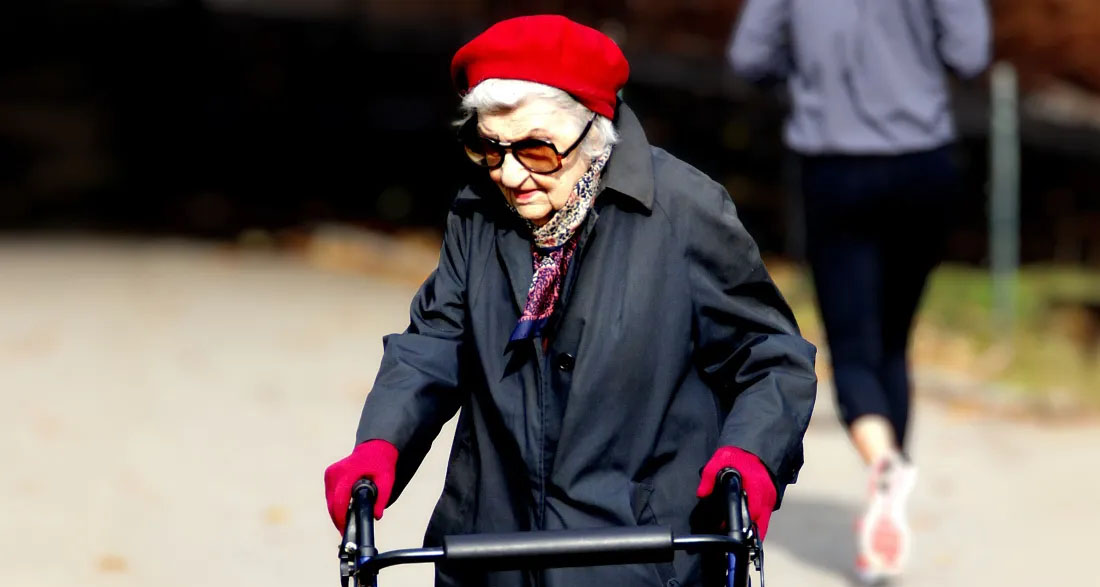
At 102 years old, Rose thought her life had finally quieted down—that she’d earned her peace. But peace vanished the day her entire life savings disappeared without warning. Every dollar, gone.
All that was left was her pride, her promise to her granddaughter, and a fierce refusal to give up. She didn’t know that fate was about to send someone from her past—carrying a briefcase, a plan, and a reminder that karma never forgets.
My name is Rose. And after living through more than a century, I thought I’d seen it all.
Wars ending, babies being born, marriages falling apart, and the world changing faster than I could catch my breath. But nothing—nothing—prepared me for what happened last year.
At my age, you’d think surprises would be over. You’d think life would finally soften around the edges. But life doesn’t care about age. It still hits hard, still cuts deep.
I had spent almost fifty years as a high school English teacher. I was never rich, but I was careful. Every paycheck, I saved a little.
I reused wrapping paper, clipped coupons, and believed in rainy day funds. I married late, had my son Noah even later, and thought I’d built a life sturdy enough to last.
All I wanted in my final years was peace—and enough money to help my granddaughter, Lily, live her dreams.
But peace, as I learned, can be stolen in a heartbeat.
Lily came into my life after tragedy ripped hers apart. My son Noah and his wife Caroline died in a car accident on a dark, twisting road one rainy night. In a single phone call, I lost my boy—and gained a reason to keep living.
From that day, Lily was my everything. I became her grandmother, mother, teacher, and best friend. I braided her hair before school, packed her lunches, and made every Christmas sparkle just for her.
And she became the heartbeat that kept me going.
So when she got accepted into college last year, I cried tears of pure joy. I made myself a cup of tea, sat at my old computer, and smiled as I logged in to transfer her tuition money. I wanted to give her the chance at life she deserved.
The webpage loaded.
Balance: $3.17.
At first, I laughed softly. “Well, that’s not right,” I said aloud, typing my password again. But the number didn’t change. I refreshed the page. Again. Still $3.17.
My savings—over $180,000—was gone.
I stared at the screen, refusing to believe it. Then I opened my transaction history, and the truth hit me like ice water.
$12,000 spent at a luxury car dealership.
Thousands at a resort.
Spa packages, jewelry, designer handbags.
My breath caught in my throat. I gripped the edge of the desk so hard my knuckles turned white. “No… no, this can’t be right,” I whispered.
I picked up the phone and called the bank.
“Hello, this is First City Savings. How may I help you today?” a calm voice answered.
“I need help,” I said, trying not to let my voice shake. “My name is Rose, and my entire savings is gone. I didn’t authorize any of those withdrawals.”
After typing and clicking for what felt like an eternity, the banker said, “Ma’am, according to our records, the withdrawals were made by your financial representative.”
“My what?” I asked, frowning.
“Your financial representative—Nancy. She’s been on your account since last spring.”
My heart stopped. Nancy.
Nancy wasn’t just anyone. She was my ex-daughter-in-law—my son’s first wife before Caroline.
A woman as beautiful as she was cold, always dressed to perfection, always impatient when I spoke. I could still hear her voice saying, “You’ll forget your own money soon enough, Rose.”
And now, she’d taken every cent.
I called her immediately. She answered on the second ring.
“Nancy,” I said, voice trembling, “did you handle my bank account?”
There was a pause. Then her syrupy voice floated through the line. “Oh, Rose, you asked me to handle your bills when you were in the hospital, remember? You signed the forms yourself.”
“I was sedated,” I said sharply. “I had just come out of surgery. Why didn’t you wait?”
“Well,” she replied coolly, “you signed them. And really, what do you need all that money for at your age? Peace is better than stress, isn’t it?”
Then she hung up.
I sat there, staring at the wall, the silence heavier than stone.
Days passed. I ate little, slept less. When I finally went to the grocery store, I picked up only what I could afford—a loaf of bread, a small carton of milk, a tin of soup. My card was declined. Twice.
“Just the bread, please,” I whispered to the young cashier, who didn’t look me in the eye.
I walked outside clutching that loaf like it was gold. The wind stung my face. My pride burned in my chest.
“Ms. Rose?” a voice called gently.
I turned and saw a tall woman in a navy coat. She looked familiar.
“You probably don’t remember me,” she said with a warm smile. “I’m June. You taught me English about thirty years ago.”
“Of course I remember you,” I said softly. “You were the quiet one. Always writing poetry when you thought no one noticed.”
Her smile widened. “You once told me my words had honesty—that they were ‘feelings in letters and hope in punctuation.’ You changed my life.”
She pulled a folded $100 bill from her purse. “Please, let me help.”
I shook my head. “No, dear. I’m not a charity case. Someone just took advantage of me, that’s all.”
Her eyes narrowed with purpose. “Then let me help you get it back.”
It turned out, June was now a lawyer—specializing in estate fraud.
When I said I couldn’t afford her, she just smiled. “You already paid me, Ms. Rose. You believed in me before I believed in myself. Let me do this.”
And she did.
June was relentless. She subpoenaed records, hired a handwriting expert, and tracked every stolen dollar. She even found photos Nancy had posted online—posing by a pool, drink in hand. The caption read: “Finally living the life I deserve!”
“She really thought no one would care enough to dig,” June said one night, sipping tea in my kitchen.
“She underestimated you,” I said.
“No,” June smiled. “She underestimated you.”
When the court day came, Nancy strutted in wearing high heels and arrogance. Her lawyer called me “a sweet old lady who’s confused about modern banking.” I gripped my cane tighter.
Then June stood up, calm as ever, and laid out everything—the fake signatures, the luxury purchases, the bank forms signed while I was under anesthesia.
When it was my turn to testify, I walked to the stand slowly, cane tapping on the tile. I looked right at Nancy.
“I may be old,” I said, voice steady, “but I’m not confused. I know what trust looks like. I know what theft looks like. And I know the difference.”
Nancy’s smirk faded.
The judge ruled in our favor. Nancy was found guilty of elder fraud. She was ordered to repay every cent, with interest. Her car was repossessed. Her job fired her. And her name? Let’s just say no one wanted to be seen with her anymore.
A few days later, June picked me up.
“Put on something nice, Ms. Rose,” she said, grinning. “We’re going out.”
She drove me to the community center. When we walked in, I stopped dead in my tracks.
Dozens of people turned to look at me—faces I hadn’t seen in decades. Former students.
There were banners, photos, laughter. Some of them were teachers now, some ran charities, one even owned a restaurant.
One woman stepped forward and said, “You once told me my voice mattered. I never forgot that.”
Tears blurred my vision. “All I ever wanted was to help you believe in yourselves,” I said.
“And you did,” she whispered, hugging me.
Then I heard a familiar voice.
“Grandma!” Lily shouted, running into my arms. “June helped me apply for a scholarship—and I got it! Full tuition!”
I gasped. “Oh, Lily! You deserve this, sweetheart. You deserve everything!”
June smiled. “Karma’s got a long memory, Ms. Rose. And this time, it remembered the right person.”
That night, Lily and I sat on the porch, wrapped in a quilt, sharing ice cream. The air smelled of peaches and summer.
“Grandma,” she asked quietly, “did you really cry when I got into college?”
“Oh, honey,” I said, laughing softly. “I cried like a baby.”
She giggled. “You’re definitely older than a baby.”
“I am,” I said, smiling. “But I’d sell every book I own if it meant giving you a chance.”
I turned to her, holding her hand. “You’re my greatest joy, Lily. When my story ends, don’t be afraid. Live loudly. Chase joy like it owes you something.”
Tears filled her eyes. “Promise you’ll stick around until I graduate?”
“I’ll try,” I whispered. “But remember—this home, this love, it’s all yours.”
She nodded, smiling through her tears. “I know, Grandma. I know.”
And in that quiet moment, under a sky full of stars, I realized something—after a century of living, karma had finally come full circle.
