
I thought it was just going to be another bitter Wisconsin night — quiet, dark, and cold enough to make your teeth chatter. But then, out of nowhere, there was a frantic knock at my door that changed everything.
What started as a simple act of kindness ended up becoming the most unexpected, most beautiful chapter of my quiet life.
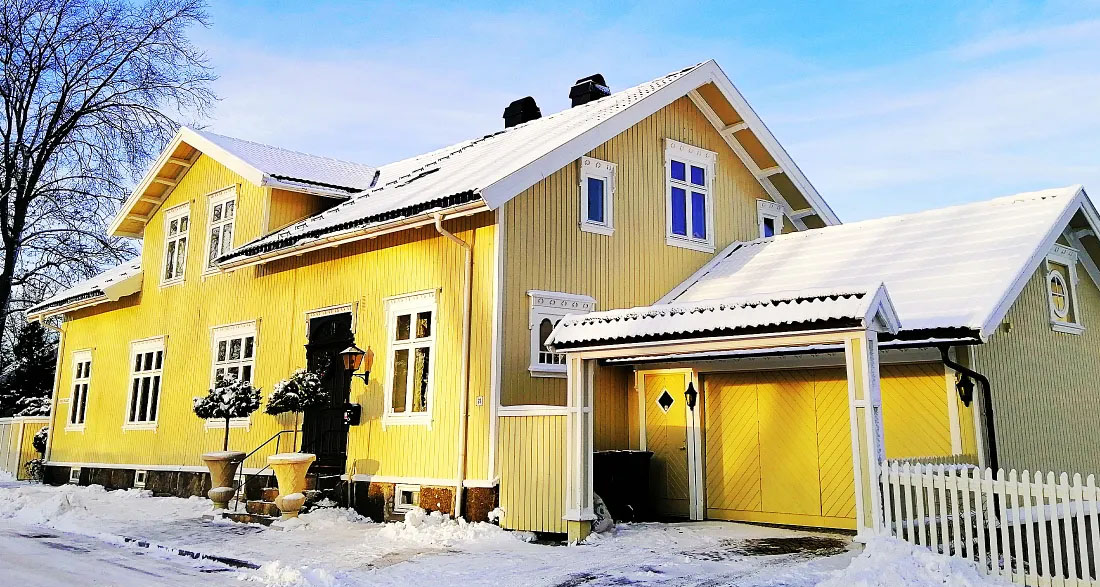
I’m 65 years old, and I live alone in a small northern Wisconsin town. We don’t have much — three diners, one grocery store, and winters that could humble even a buffalo. I’ve been here all my life.
Three years ago, my husband Daniel passed away. He was out in the garage, cursing at the snowblower like he always did, when his heart suddenly gave out. Just like that, after 41 years of marriage, he was gone.
My kids are grown now, scattered into lives far away. Michael works in tech out in Denver, and Rebecca teaches elementary school down in Florida.
They call when they can, but mostly, it’s just me, this little house, and my old heater that squeals whenever I kick it to keep it running.
That night, the storm outside was one of the worst of the year. Snow was coming down sideways, the wind howling like a freight train, rattling my windows so hard I wondered if they’d hold.
I sat in my living room, knitting with a cup of chamomile tea at my side, when it happened.
A knock.
Not a gentle one, either. It was frantic. Loud. Desperate.
Out here, nobody knocks on your door at 10 p.m. in the middle of a storm unless something is very wrong. My heart leapt into my throat. Slowly, I shuffled across the wood floor in my slippers and peeked through the peephole.
What I saw made me forget all my fear.
A young woman, no more than 25, stood there clutching a tiny baby wrapped in nothing more than a thin fleece blanket. Her hair was tangled and full of snow, her cheeks were red from the cold, and her lips trembled as she gasped for breath.
When I opened the door, she blurted out in a shaky voice, “I’m sorry. My car broke down. I just need to warm up for a bit. Please.”
She wasn’t just cold. She looked frightened, too — her eyes kept darting behind her, as if she thought someone might be following her.
“I’m not dangerous,” she added quickly. “I swear.”
She explained that her car had stalled about half a mile back on the county road. Her phone was dead, the storm was getting worse, and the nearest gas station was ten miles away.
I didn’t need convincing. My eyes went straight to that baby’s little hands poking out of the blanket, red as cherries. That was all it took.
“Come in,” I told her firmly, stepping aside. “Let’s get that little one warmed up.”
She hesitated, just for a heartbeat, then hurried inside. The baby made a soft squeak — not quite a cry — as I shut the door against the screaming wind.
I helped her shake off her snow-covered coat, and the smell hit me: cold sweat, stale formula, and raw fear. She looked exhausted. I guided her to the fireplace, wrapped her in an old wool blanket, and spread a quilt across the couch.
I plugged in her phone while she gently rocked the baby in her arms.
“What’s your name?” I asked as I filled a mug with hot water.
“Penelope,” she said quietly. “But everyone calls me Penny.”
“Well, Penny,” I said, handing her the steaming tea, “you’re safe now. I’m Margaret — Maggie, if you’d like.”
That was the first time she smiled, and it broke my heart a little. It was the kind of smile that looked like it hadn’t seen daylight in weeks.
She didn’t tell me much else that night, and I didn’t press. Something about her voice told me there were shadows in her story, wounds not ready to be touched.
“You’ve got a name for the little one?” I asked gently, nodding toward the baby.
“Ava,” she whispered, eyes softening.
“She’s beautiful,” I said, swallowing the lump in my throat. “Strong name, too.”
Penny fed Ava from a half-empty bottle and then, too tired to fight it, drifted off to sleep with the baby against her chest. I sat nearby, listening to the crackle of the fire while the storm raged outside.
Three generations of women sat in that little living room that night — me, Penny, and baby Ava — tied together by fate. I tucked a quilt around them and let them rest.
By morning, the storm had passed, leaving everything blanketed in white. Penny called a friend named Kelsey, who drove an hour to pick her up.
Before leaving, Penny turned to me, tears brimming. “I don’t know what would’ve happened if you hadn’t opened the door,” she said softly.
“You don’t owe me anything,” I told her. “Just get home safe.”
She nodded, promised to send a card, and left.
I figured that was the end. But it wasn’t.
A month later, I was pulling banana bread from the oven when a white limousine rolled up outside my house. In our town, limousines are reserved for prom night or funerals, so I nearly dropped the loaf.
A man in a tailored gray suit stepped out, his shoes silent on the snow. He handed me a cream-colored envelope. “Mrs. Henderson?” he asked politely.
When I nodded, he bowed his head slightly and left without another word.
Inside the envelope was a pale blue dress, folded carefully in tissue paper, and a handwritten letter.
It was from Penny.
She thanked me again, writing that she’d made it home safely, that Ava was thriving. Then came the part that left me frozen in my kitchen:
“The limousine is at your service, Mrs. Henderson. Please come to my wedding. I want you there. You saved my life, and I want to make yours a little more interesting.”
My heart pounded like I was sixteen again. I hadn’t been anywhere fancy in years, but I ironed that dress, polished my pearl earrings, and even put on lipstick.
The next morning, the limousine carried me to Minnesota, to a lakefront inn dressed in fairy lights and pine boughs. Penny was radiant in satin, and baby Ava, plump and smiling, wore a lace dress.
When she saw me, Penny rushed forward, hugged me tight, and whispered, “You came. You really came.”
“Of course I did,” I said. “I wouldn’t miss this for the world.”
The wedding was beautiful. Her father raised a glass during the toast and said, “We want to thank the woman who opened her door on a freezing night. Maggie, you are part of our family now.”
Later, Penny took me aside by the fire. Her parents sat with us, their eyes full of gratitude. And then Penny told me the truth.
The night she came to my door, she wasn’t just stranded. She had escaped kidnappers.
Two men had forced her off the road, taken control of her car with Ava inside, and held them in a cabin.
After three days, terrified they’d take Ava away, she broke free. Her car died in the snow, and the only light she saw was mine.
She looked at me with tears running down her cheeks. “If you hadn’t opened that door, I don’t know what would’ve happened.”
Her parents squeezed my hands. “You gave her a chance,” her father said firmly. “That’s more than anyone else did.”
I sat there stunned, tears blurring my eyes, realizing that a simple choice — answering a knock, offering tea, laying out a quilt — had changed the course of her life.
And, in many ways, it changed mine, too.
Since then, Penny has kept her promise. She sends me pictures of Ava, now toddling around with curls bouncing.
Her mother Claudia and I share recipes and book recommendations. They’ve even invited me to spend the holidays with them.
And every winter night, when the wind howls outside and I sip my tea, I think of that knock on the door — the knock that brought warmth, family, and new life into my quiet home.
Two lives changed that night.
Hers.
And mine.
