
After a long shift at the hospital, all I wanted was food and silence. But instead, I ended up in the middle of something I’ll never forget—something that started with cruelty, turned into kindness, and ended up changing my life forever.
It was Tuesday. On Tuesdays, the hospital cafeteria closed early.
That’s why I stopped at the little supermarket near my apartment. I was still in my scrubs, my braid messy, and my sneakers sticky with something I didn’t want to identify.
The place was almost empty, humming under harsh fluorescent lights. I tossed chicken thighs, frozen broccoli, and jasmine rice into my cart, already dreaming of a hot meal and my couch.
But then I heard it.
The sharp splash of liquid hitting the floor. A cruel laugh that sliced through the silence.
I froze, then turned the corner.
A woman in a sleek black coat and heels stood there, glaring at a mop bucket filled with murky water.
She looked like the type who believed the world revolved around her. Beside her was Ruth—the janitor I’d seen in this store for years.
Ruth’s hands trembled as she clutched the mop. Her faded blue uniform hung loosely, and wisps of white hair peeked from under her cap. She moved slowly, like someone who’d been blamed for things her whole life.
I knew her. I’d once stopped her outside when I noticed her holding her elbow like it hurt. She’d smiled shyly when I told her to ice it, whispering a soft, “God bless you.”
From then on, every time I saw her wiping carts or catching the early bus, I noticed her quiet strength.
But now, she looked small.
“You should watch where you put that filthy mop,” the woman snapped, her voice dripping with disgust. “You nearly ruined my bag.”
“I-I’m so sorry, ma’am,” Ruth stammered. “I didn’t—”
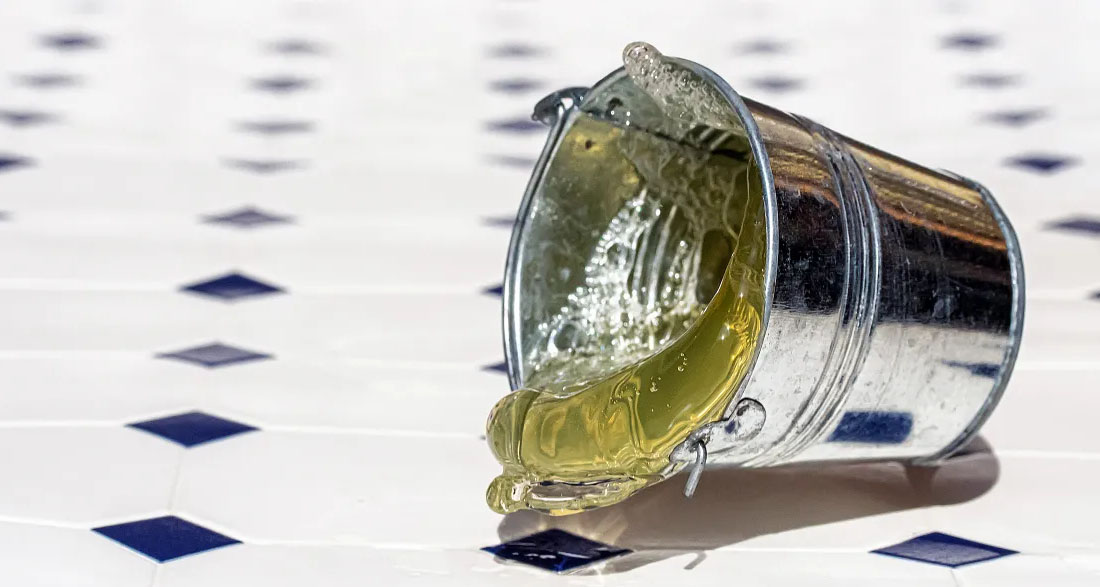
Before she could finish, the woman shoved her heel against the mop bucket. Water sloshed out in a grimy wave across the floor.
Ruth gasped, stepping back as though she’d been struck. The shame on her face made my stomach twist.
That was it.
I abandoned my cart and marched toward them.
“Hey!” My voice was louder than I expected. “That was completely uncalled for.”
The woman turned slowly, her eyes sweeping over me like I was dirt.
“Excuse me?” she spat.
“You heard me,” I said firmly. “You just kicked over a mop bucket and humiliated someone who’s working.”
Her lips curled. “Do you have any idea who I am?”
“No,” I shot back. “But I only care about important people—kind, compassionate people. And you’re not one of them.”
Ruth tugged at my sleeve. “Please, miss,” she whispered. “It’s not worth it.”
“Oh, it is,” I said softly, keeping my eyes on the woman. “Because you deserve better than this, Ruth. And someone needed to say it.”
The woman scoffed. “You think I’m apologizing to that? That old woman is lucky she still has a job.”
My blood boiled. I’d just come off a shift where I lost a patient. My patience was gone.
“No,” I said, calm but sharp. “She’s lucky she has dignity and self-respect. Which is more than I can say for you.”
Gasps echoed down the aisle. A man stopped his cart. A mother held her toddler close.
The woman’s face turned beet red. She hissed something about “calling corporate” and stormed out, her heels clicking furiously against the tiles.
When I turned to Ruth, she hadn’t moved. She stood there with the mop in one hand, paper towels in the other, her eyes glistening.
“You didn’t have to do that,” she whispered.
“I did,” I replied gently. “You shouldn’t have to clean up after people like her.”
Her shoulders dropped. “God bless you, dear,” she said softly.
We cleaned up the mess together. She hummed a low, soothing tune while wringing out the mop. Then she sighed.
“Funny thing is,” she said, “today’s my birthday.”
My heart jolted. “Wait—seriously?”
She nodded. “Seventy-one. I was hoping to make it through this shift without crying.”
I gripped her arm gently. “Don’t move, okay?”
I rushed to the bakery aisle, abandoned half my cart, and grabbed a cupcake with the tallest swirl of pink frosting. I snatched candles and a lighter near checkout. It felt silly—but also perfect.
When I found her again, she was wiping cart handles.
“Happy birthday, Ruth,” I said, holding out the cupcake.
Her hands flew to her mouth. “Oh, sweetheart…”
“It’s not much,” I said awkwardly, “but everyone deserves a wish on their birthday.”
I lit the candle. “Make a wish. Before someone says we’re breaking store policy.”
She laughed, shaking her head. “You’re trouble.”
“So I’ve been told,” I grinned.
She blew out the candle, her eyes glowing softer, lighter.
That night, I left the store with no memory of the chicken or broccoli—just a strange humming in my chest.
The next day, life went back to normal. IV drips. Custard bribes. Singing a little girl to sleep so her mom could rest.
That evening, I returned to the store for grapes. But as I picked between red and green, the loudspeaker crackled:
“Attention shoppers. Nurse Emily, please report to the manager’s office immediately.”
My stomach dropped. Everyone stared. Someone whispered, “Ooh, someone’s in trouble.”
Hands sweaty, I walked to the back.
Inside the office sat the manager, George. Beside him, a tall man in a dark suit. And in the middle—Ruth.
She beamed when she saw me. “Emily with the gorgeous brown hair! I’m so glad you came.”
George gestured to a chair. “Sorry for the dramatic announcement. Ruth insisted we find you. We had Sam watching the cameras in case you came in.”
Ruth pulled a plain white envelope from her bag, hands trembling as she held it out.
“This is for you,” she said.
I opened it. My breath caught. A letter. And a check. For $15,000.
“What? No way—$15,000?!”
The man in the suit stepped forward. “I’m Theodore. I represent the Henderson Foundation. We support local healthcare education.”
Ruth nodded. “My husband and I built this grocery chain in the ’60s. After he passed, I stepped back, but I still come here.
Keeps me close to him. That woman last night? She was a supplier. Cruel, arrogant. But tolerated—until now.”
Theodore added, “That contract has been terminated.”
Ruth looked at me with warm, steady eyes. “What mattered wasn’t that you stood up for me. It’s that you did it without knowing who I was. That’s rare, sweetheart.”
“This… I can’t accept this,” I stammered.
“Yes, you can,” Ruth said. “It’s not a reward—it’s an investment. You said you’re working toward becoming a nurse practitioner?”
“Yes,” I admitted. “But it’s been slow. Expensive.”
Theodore smiled. “This scholarship covers the rest. No strings attached. Just keep being who you are.”
Ruth squeezed my hand. “No strings. Just keep being you.”
Tears burned my eyes. “I… I don’t know what to say.”
“You’ve already said it,” Ruth replied softly. “By not looking away.”
I didn’t cry there. But later, at home, I clutched the envelope to my chest and sobbed the kind of sobs that come after years of being stretched too thin.
That check didn’t just pay for school. It bought me time, rest, and pride.
Now, a year later, I’m a full-time nurse practitioner. My life is steadier. And every week, I stop by that store.
Ruth is always there, humming softly as she pushes her mop.
“You know,” she said once, “people are much nicer when they think you’re invisible.”
“I don’t think you’re invisible anymore,” I said, handing her a tea.
“Good,” she smiled. “Then maybe we’ll both keep proving people wrong.”
I still think about that night—the splash of water, Ruth’s face, the cupcake, and my name called over the intercom.
Because in that breathless second, I thought I was in trouble for doing the right thing.
But it wasn’t trouble at all.
It was the universe whispering: It’s your turn to be seen.
