
When my daughter, Sam, brought home a quiet, hungry classmate for dinner, I thought I was just stretching another meal. I didn’t know that one small backpack would force me to confront the truth about “enough”—what it meant for our family and for me.
I always believed that if you worked hard enough, “enough” would just take care of itself. Enough food on the table, enough warmth in the house, and more than enough love. But in reality, in our house, enough was a constant battle.
It was the argument I had with the grocery store over prices, the battle with the weather when heating bills rose, and the quiet tension with myself, trying to make everything add up.
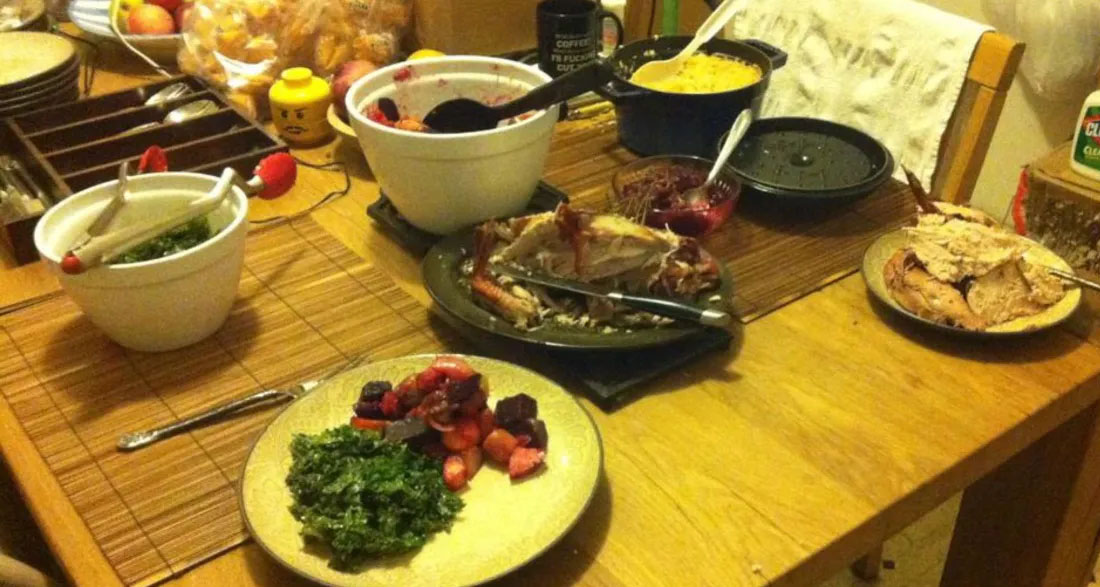
According to my carefully planned schedule, Tuesday was rice night—plain rice, a pack of chicken thighs, a few carrots, and half an onion to stretch the meal.
I was slicing the chicken while already calculating tomorrow’s lunch and figuring out which bill could be delayed one more week.
Dan came in from the garage, his hands rough from work, his face streaked with sweat and exhaustion.
“Dinner soon, hon?” he asked, dropping his keys into the bowl on the counter.
“Ten minutes,” I replied, doing the mental math. Three plates for us, maybe a lunch for tomorrow.
He glanced at the kitchen clock, his worry lines deepening. “Sam’s done with her homework?”
“I haven’t checked. She’s been quiet, so I’m assuming algebra is winning,” I said.
“Or TikTok,” he grinned, shaking his head.
I was just about to call everyone to the table when Sam burst in, a girl trailing behind her—a girl I didn’t know. Her hair was in a messy ponytail, and her hoodie sleeves hung past her fingers, even though it was late spring.
“Mom, Lizie’s eating with us,” Sam said, like it wasn’t a request at all.
I blinked, knife still in hand. Dan looked from me to the stranger and back.
The girl’s gaze stayed on the floor. Her sneakers were scuffed, and she clutched a faded purple backpack like it was a lifeline. Her shirt was thin, showing ribs beneath it. She looked small, like she wanted to disappear right into the linoleum.
“Uh, hi there,” I said, trying to sound warm, but my voice came out thin. “Grab a plate, sweetheart.”
“Thank you,” she whispered. Her voice barely traveled the few steps to the table.
I watched her carefully. She didn’t just eat—she measured. One careful spoon of rice, a single piece of chicken, two carrots. Every clatter of a fork or scrape of a chair made her tense like a startled cat.
Dan cleared his throat, always the peacemaker. “So, Lizie, right? How long have you known Sam?”
She shrugged, eyes still down. “Since last year.”
Sam jumped in, proud. “We have gym together. Lizie’s the only one who can run the mile without complaining.”
Her lips twitched into the tiniest smile, and she reached for water, hands trembling as she drank, refilled the glass, and drank again.
I looked at my daughter. Her cheeks were pink, and her eyes dared me to say something. I glanced at the food and did the math again—less chicken, more rice—and silently hoped nobody would notice.
Dinner was quiet. Dan tried to make small talk. “How’s algebra treating you both?”
Sam rolled her eyes. “Dad. Nobody likes algebra. And nobody talks about algebra at the dinner table.”
Lizie’s voice was soft, almost hidden. “I like it,” she said quietly. “I like patterns.”
Sam smirked. “Yeah, you’re the only one in our class.”
Dan chuckled. “I could’ve used you for my taxes last month, Lizie. Sam nearly cost us our refund.”
“Dad!” Sam groaned, rolling her eyes.
After dinner, Lizie lingered by the sink. Sam waved a banana at her. “You forgot dessert, Liz.”
“Really? Are you sure?” Lizie asked, blinking.
“House rule,” Sam said. “Nobody leaves here hungry. Ask my mom.”
Lizie held the banana tightly, clutching her backpack like a shield. “Thank you,” she whispered, like she wasn’t sure she deserved it.
Dan nodded at her. “Come back anytime, hon.”
Her cheeks flushed pink. “Okay. If it’s not too much trouble.”
“Never,” Dan said. “We always have room at our table.”
As soon as the door shut, my voice sharpened. “Sam, you can’t just bring people home. We’re barely managing.”
Sam didn’t move. “She didn’t eat all day, Mom. How could I ignore that?”
I stared at my daughter. “That doesn’t—”
“She almost fainted, Mom!” Sam shot back. “Her dad’s working nonstop. Their power was shut off last week. Yes, we’re not rich, but we can afford to eat.”
Dan leaned in, hand on Sam’s shoulder. “Are you serious, Sammie?”
“Yes!” Sam said, cheeks red. “Today at school, she passed out in gym. Teachers told her to eat better. But she only eats lunch—and not even every day.”
I felt my anger shrink into something else—shock, shame, and a deep ache. I sat at the kitchen table, trying to breathe. “I… I was worried about dinner stretching. And this sweet girl is just trying to get through the day… I’m sorry, Sam. I shouldn’t have shouted.”
Sam’s gaze was steady, stubborn and soft. “I told her to come back tomorrow.”
I exhaled. Defeated but proud. “Okay. Bring her back for some food.”
The next day, I cooked extra pasta, nerves prickling as I seasoned the mince. Lizie returned, clutching her bag like a lifeline. She cleaned her plate and carefully wiped her spot at the table.
Dan asked, “You doing okay, Lizie?”
She nodded, avoiding his eyes.
By Friday, she was part of the rhythm of our house—homework, dinner, and goodbye. She helped Sam wash dishes, humming softly. One evening, she dozed at the counter, woke with a start, and apologized three times.
Dan caught my arm. “Should we call someone? She needs… help, right?”
“And say what?” I whispered. “That her dad’s broke and she’s tired? We just have to do our best.”
Over the weekend, I tried to learn more.
Sam shrugged. “She doesn’t talk about home, Mom. She just says her dad works a lot. Sometimes the power gets cut for days. She pretends it’s fine, but she’s always hungry… and tired.”
Monday came. Lizie arrived, paler than ever. As she pulled out her homework, her backpack tumbled. Papers fluttered everywhere—crumpled bills, coins, and a bright red “FINAL WARNING” shutoff notice.
I knelt to help. One notebook stood out, scrawled in neat letters: “EVICTION. What we take first if we get evicted.”
“Lizie…” I couldn’t get the words out. “What is this?”
She froze, lips tight, fingers twisting her hoodie. Sam gasped behind me. “Lizie, you didn’t say it was this bad!”
Dan walked in, eyebrows furrowed. “What’s going on?”
I held up the envelope. “Are you… you and your dad being put out of your home?”
She hugged her backpack. “My dad said not to tell anyone. He said it’s nobody’s business.”
“Sweetheart, that’s not true,” I said gently. “We care. But we can’t help if we don’t know.”
Tears welled in her eyes. “He says if people know, they’ll look at us differently. Like we’re begging.”
Dan crouched beside her. “Is there anywhere else you can stay? An aunt or a friend?”
She shook her head. “We tried my aunt… she has four kids in a tiny house. No room.”
Sam squeezed her hand. “You don’t have to hide this. We’ll figure it out together.”
I nodded. “You’re not alone, Lizie. We’re in this now.”
She hesitated, glancing at her cracked phone. “Should I… call my dad? But he’ll be mad I told.”
“Let me talk to him,” I said softly. “We just want to help, that’s all.”
The doorbell rang. Her father, exhausted, stepped inside. Oil stains on his jeans, dark circles under his eyes. He forced a tired smile.
“Thanks for feeding my daughter,” he said, shaking Dan’s hand. “I’m Paul. Sorry for the trouble.”
“Not at all,” I said. “Lizie’s carrying too much. She’s just a child.”
He glanced at the papers, jaw tightening. “She had no right to bring that here.” Then his face crumpled. “I thought I could fix it. If I worked more…”
Dan put a hand on his shoulder. “She brought it here because she’s scared. No kid should carry this alone.”
Paul ran a hand through his hair. “After her mom died, I promised I’d keep her safe. I didn’t want her to see me fail.”
“She needs more than promises, Paul,” Dan said. “She needs food, sleep, and the chance to be a kid.”
He nodded, finally letting himself break.
I made calls—school counselor, neighbor at the food pantry, even the landlord. Dan went out to pick up groceries. Sam baked banana bread with Lizie. Slowly, laughter returned to our kitchen.
A social worker visited, asking questions. The landlord agreed to delay eviction if Paul could pay part of the rent and do small repairs.
At school, the counselor admitted they should’ve asked sooner. Lizie got free lunch and proper support. Not a miracle—but hope.
She stayed with us a few nights a week. Sam taught her messy space buns, math, and small joys. Dan guided her dad to food assistance. Pride made him resist, but when Lizie whispered, “Please, Dad. I’m tired,” he finally listened.
Weeks passed. The fridge was never full, but there was always enough for one more. I stopped counting meat slices. I started counting smiles. Sam’s grades improved with Lizie’s help. Lizie made honor roll and began laughing freely at our kitchen table.
One evening, Lizie lingered by the counter, sleeves down to her knuckles.
“Something on your mind, sweetheart?” I asked.
She looked shy but braver. “I used to be scared to come here. But now… it feels safe.”
Sam grinned. “That’s because you haven’t seen Mom on laundry day disasters yet.”
Dan threw his hands up. “Whoa! Let’s not bring up the laundry disaster!”
Lizie laughed, the sound warm and unguarded. I packed a lunch for her tomorrow.
“Here. Take this,” I said.
She hugged me tight. “Thank you, Aunt Helena. For everything.”
“Anytime, sweetheart. You’re family here.”
The next day, Sam and Lizie burst in, laughing.
“Mom, what’s for dinner?” Sam asked.
“Rice,” I said. “And whatever I can stretch.”
This time, I set out four plates without a second thought.
“You’d have done the same, Mom,” Sam said, smiling.
And I had.
