
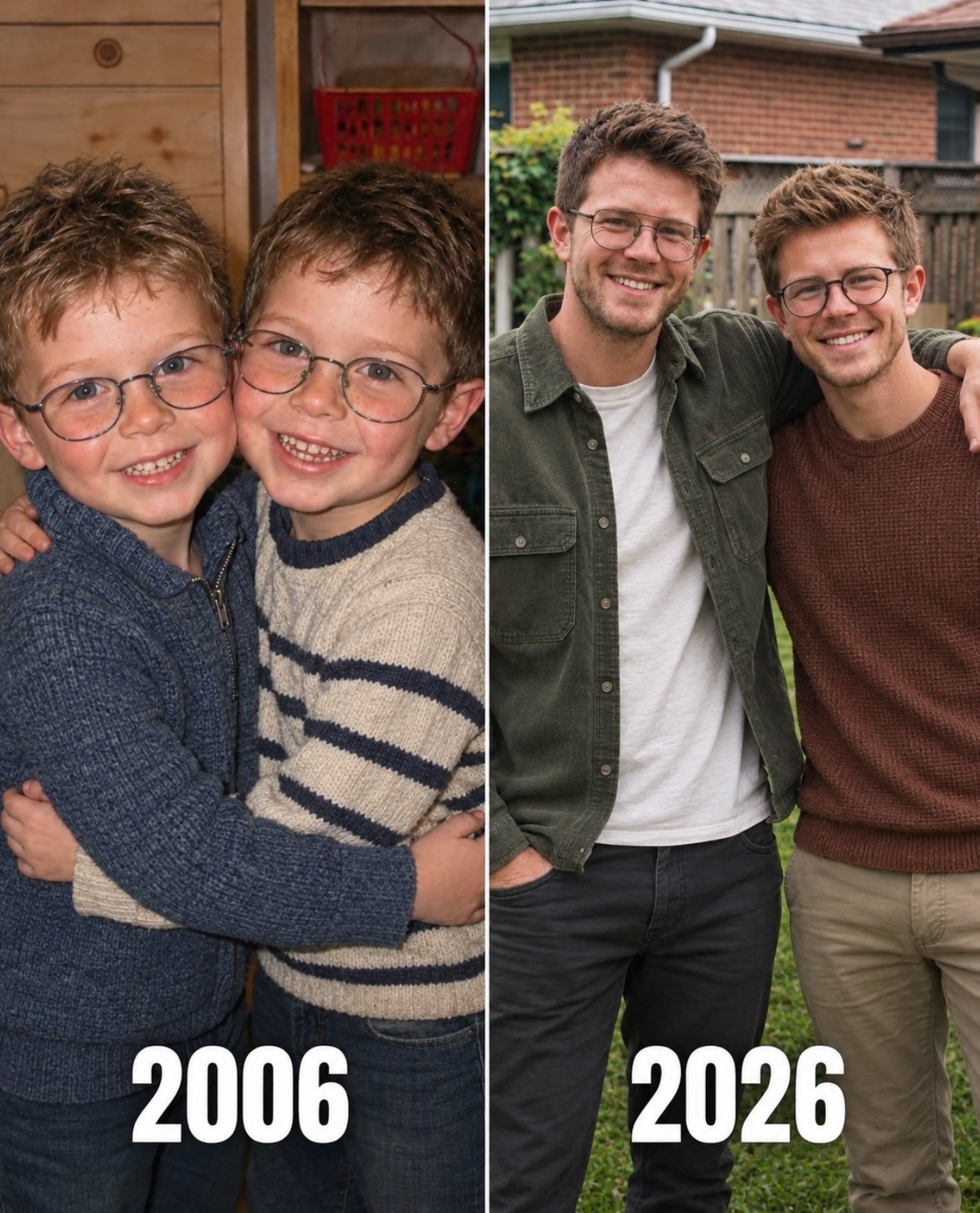
Part 1: The Unwelcome Birthday
The winding road leading to Aunt Beatrice’s cottage seemed much longer than I remembered. Morning fog covered the countryside, making the trees on both sides of the road look like dark shadows.
On the passenger seat beside me lay a beautiful bouquet of fresh white lilies. I had carefully arranged them that morning, hoping they might somehow serve as a silent apology for all the years we had spent apart. Even as I drove, however, I wondered whether I owed her an apology at all.
My hands tightened around the steering wheel as I imagined Beatrice opening her front door. Would she smile when she saw me? Would she finally soften her expression and welcome me inside?
Twenty years of painful memories told me not to expect too much.
Still, I kept driving. Some habits were difficult to break, especially when they had been forced upon you during childhood.
Earlier that morning, I had called my twin brother, Simon, to tell him about my plans. His reaction had been exactly what I expected.
“Are you seriously going to her house today, Mason?” Simon had asked with a dry, sarcastic laugh. “After everything she put us through, you’re still taking her flowers for her birthday?”
I stared at the gray highway ahead of me.
“She raised us after our world fell apart, Simon,” I replied. “No matter how cold she can be, I still feel that we owe her something.”
“There is a huge difference between owing someone something and loving them, brother,” Simon had answered softly.
He did not argue any further. He knew how stubborn I could be, especially when I had already made up my mind.
The truth was that neither of us had ever completely escaped the influence of our childhood.
We were only three years old when Aunt Beatrice and her husband, Uncle Kenneth, took us into their home in the quiet suburbs of Maplewood. From the very beginning, they told us the same heartbreaking story about our biological mother.
According to Beatrice, our mother had abandoned us at a crowded bus station and disappeared without looking back.
She repeated that story so often that, eventually, we stopped questioning it. For years, the thought of our mother walking away from us haunted me like a heavy stone lodged deep inside my chest.
Why hadn’t she wanted us?
Why hadn’t she come back?
What could two three-year-old boys possibly have done to deserve being abandoned?
Uncle Kenneth always tried his best to ease our pain. Unlike Beatrice, he seemed to understand how deeply her words hurt us.
He attended every school play, proudly sitting in the front row and clapping louder than anyone else in the auditorium. Whenever we performed on stage, I would search the crowd for his familiar face. No matter how nervous I felt, seeing him there always gave me courage.
He filled our shared bedroom with bright red toy trucks and bought us matching bicycles one unforgettable Christmas morning.
I could still remember the excitement of running downstairs and finding those bicycles waiting beneath the Christmas tree.
Uncle Kenneth had stood beside them with a huge smile on his face.
“Do you boys like them?” he had asked.
We had practically shouted our answer.
“They’re the best presents ever!”
He had laughed, pulled us both into his arms, and hugged us tightly.
“You boys are my whole world,” he often whispered when he tucked us into bed. “Never forget that you belong here with me. No matter what happens, you are loved.”
For a long time, his kindness made our house feel like a real home.
But Aunt Beatrice was different.
She seemed to carry a storm inside her, and we never knew when it would break.
If we accidentally left a dirty plate in the kitchen sink, she would raise her voice until the entire house seemed to shake.
“You boys should be on your hands and knees thanking me every single day!” she would shout. “Do you understand that? If it weren’t for my generosity, you would be rotting away in some cold state orphanage right now!”
Simon quickly learned to become silent whenever her temper flared. He would lower his eyes, keep his hands still, and wait for the storm to pass.
I took a different approach. I apologized constantly, even when I had done nothing wrong.
“I’m sorry, Aunt Beatrice.”
“I’ll clean it up.”
“It won’t happen again.”
Those were the words I learned to say whenever I wanted to keep the peace.
I thought that if I behaved well enough, perhaps one day she would finally love us the way Uncle Kenneth did.
But that day never came.
When Simon and I were ten years old, Uncle Kenneth suddenly died of a heart attack.
His death changed everything.
Almost overnight, our home lost the little warmth it had left. The cheerful birthday cakes disappeared from the kitchen counter. Christmas became a quiet, uncomfortable day with no exciting presents waiting beneath the tree.
The man who had always encouraged us was gone, and the front-row seat he used to occupy at our school events remained empty for the rest of our childhood.
Without Kenneth there to soften her behavior, Beatrice became even colder.
We learned to make ourselves as small and unnoticeable as possible. We studied, did our chores, and tried not to give her another reason to remind us how much she believed we owed her.
By the time we reached high school, I had stopped expecting her to become the loving aunt I desperately wanted.
Still, when Simon and I prepared to graduate, a small part of me hoped she might surprise us.
One afternoon, I approached her while she sat in the living room watching television.
“Aunt Beatrice, Simon and I graduate next week,” I said carefully. “Would you come and watch us walk across the stage?”
She did not even turn her head.
“You two are grown men now, Mason,” she replied coldly. “It is no longer my legal or moral responsibility to celebrate every little milestone in your lives.”
I stood there, struggling to find the right words.
“It’s just one afternoon, Beatrice. It would mean a lot to us.”
She waved her hand dismissively.
“I have better things to do. Stop bothering me.”
That was the end of the conversation.
The following morning, Simon and I packed our battered bags and left her house. We had little money and no one waiting to help us, but we were determined to build lives of our own.
We put ourselves through college, worked whatever jobs we could find, and slowly created careers from nothing.
Simon eventually became a structural engineer in Minneapolis. I moved to Columbus and built a career in commercial graphic design.
We called each other regularly, celebrated our successes together, and supported one another whenever life became difficult.
Beatrice, meanwhile, contacted us perhaps twice a year. Her calls usually followed the same pattern. She reminded us how much money she had spent raising us, how much energy we had taken from her, and how little gratitude she believed we had shown.
Every conversation left me feeling guilty, even though I could never explain exactly what I had done wrong.
Simon eventually stopped answering most of her calls.
I never quite managed to do the same.
Perhaps I was still that little boy who believed that, if he tried hard enough, he might finally earn his aunt’s affection.
That was why, yesterday morning, I found myself driving toward her house with a bouquet of lilies and a wrapped birthday present.
It was her sixtieth birthday, and I had convinced myself that perhaps age had softened her heart.
“Maybe people finally change when they get older,” I muttered as I turned into her gravel driveway.
I switched off the engine and sat there for a moment, looking at the familiar house.
Then I picked up the flowers, took the gift, and climbed the wooden steps to the porch.
The front door was unlocked.
I hesitated before stepping inside. I had not visited in a long time, but the old habits remained. I removed my muddy shoes and placed them neatly beside the doormat, exactly as Beatrice had taught us to do when we were children.
Holding the lilies in one hand and the gift in the other, I prepared to call out her name.
I wanted to surprise her.
I wanted, just once, to see her face light up when she saw me.
Instead, I heard voices coming from the kitchen.
I stopped in the hallway.
One voice belonged to Aunt Beatrice. The other belonged to our grandmother, Grandma Rose.
At first, I thought they were discussing the birthday preparations. Then Beatrice laughed, and the sound sent a strange chill through my body.
“They still don’t suspect a single thing, Mom,” she said. “Twenty years have passed, and those two idiots still believe every lie I fed them.”
The bouquet suddenly felt heavy in my hand.
I stood motionless, staring toward the kitchen doorway.
I had no idea that the next sixty seconds would destroy everything I thought I knew about my life.
Part 2: The Secret in the Kitchen
I pressed my back against the hallway wall beside the kitchen doorway and held my breath.
I was afraid that even the smallest sound might alert them to my presence.
“They were innocent little children, Beatrice,” Grandma Rose replied. Her voice trembled with age and guilt. “You really shouldn’t speak about your own nephews with such contempt.”
“Children grow up, Mom,” Beatrice answered carelessly. “And those two grew into remarkably naive men. Neither of them ever bothered to ask the right questions, so everything went exactly according to plan.”
I could hear the metallic scrape of a knife cutting through a cake. A moment later, a teacup clinked against a saucer.
The ordinary sounds of a birthday celebration seemed horribly out of place beside her words.
“Beatrice, you promised me years ago that you would stop playing these wicked games,” Grandma Rose pleaded.
“Stop what, exactly?” Beatrice snapped. “Am I not allowed to enjoy my own sixtieth birthday in my own home?”
She gave another short, dismissive laugh.
“Laura’s boys turned out perfectly fine. In fact, they turned out far better than that woman ever deserved.”
The name struck me like a physical blow.
Laura.
I had never heard that name spoken in connection with our family. Not once in my entire life.
My heart began to pound so violently that I could feel it in my throat.
Who was Laura?
And why was Beatrice talking about her as if Simon and I belonged to her?
I leaned closer to the doorway.
“Laura was nothing but an exhausting burden to this family, Mom,” Beatrice continued. “She showed up at my front door carrying twin toddlers and begged me to look after them for a few months while she went through her treatments. What did she think I was running? A free daycare service?”
My fingers tightened around the bouquet until one of the stems bent.
Twin toddlers.
A few months.
Treatments.
The pieces did not fit together, but I could already feel the terrible shape of the truth beginning to emerge.
“And then that convenient storm happened,” Beatrice continued, her voice almost cheerful as she recalled the past. “Her car slid off that slippery bridge and went straight into the river. Nobody ever recovered her body, so it was easy to tell everyone she had abandoned her children and disappeared.”
I felt the blood drain from my face.
“She was sick, she had two children she could barely afford, and suddenly she was gone. People believed exactly what they wanted to believe. Even Kenneth believed it at first.”
“Please stop talking like that, Beatrice,” Grandma Rose begged. I heard her voice break into quiet sobs.
“What was I supposed to do instead?” Beatrice demanded. “Tell those boys that their pathetic mother was dying in a hospice facility? Tell them she died before the cancer finished destroying her body?”
She paused, and when she spoke again, her voice was filled with bitterness.
“Or should I have handed over all the insurance money she left behind?”
My knees nearly gave way.
Insurance money?
Beatrice continued as though she were discussing nothing more important than the weather.
“That money paid off the mortgage on this house. It bought my new car and financed the comfortable life I deserved after years of being the ignored sister.”
I clamped a hand over my mouth to keep myself from gasping.
Every word seemed to tear away another piece of the life I had believed in.
Our mother had not abandoned us.
She had been sick.
She had asked her sister to care for us temporarily.
And Beatrice had used her disappearance to steal the money meant for her own children.
“Laura trusted you with her precious boys,” Grandma Rose whispered through her tears.
“And I fed them, housed them, and put up with their miserable presence for years!” Beatrice retorted. “Do you have any idea how much effort that took?”
She gave a contemptuous laugh.
“That is worth far more than any emotional letter Laura scribbled from a hospital bed before she died. She always got everything in life. The good looks, the handsome husband, the twin babies everyone adored. People couldn’t stop praising her.”
Her voice hardened.
“For once in my life, I took something that belonged to her. And those stupid boys never knew the difference.”
I could no longer feel my fingers.
The flowers slipped slightly in my grasp, and I had to hold them against my chest to keep them from falling.
I wanted to storm into the kitchen. I wanted to demand answers. I wanted to look Beatrice in the eyes and ask how she could have done something so cruel to two children who had trusted her.
But I could not move.
I was too shocked even to think clearly.
Then Grandma Rose spoke again.
“Those boys deserved to know that their mother loved them.”
“They had a roof over their heads,” Beatrice replied sharply. “They had food, clothes, and an education. What more did they need?”
“The truth!” Grandma Rose cried.
For a brief moment, the kitchen fell silent.
Then Beatrice answered in a voice so cold that I barely recognized it.
“The truth would have ruined everything.”
That was when I understood.
She had not simply lied to us because she was embarrassed or afraid.
She had deliberately built our entire childhood around a lie because the truth threatened the life she had taken for herself.
I do not remember turning around.
I do not remember walking down the hallway or opening the front door.
Somehow, I made it back to my car.
I dropped into the driver’s seat, shut the door, and sat there staring at the steering wheel. My hands shook so badly that I could barely hold the keys.
For several minutes, I could not bring myself to start the engine.
Our mother had a name.
Laura.
She had not abandoned us at a bus station like unwanted objects. She had been desperately ill, frightened, and facing a future she might not survive.
She had trusted her own sister to care for her children while she received treatment.
And that sister had stolen her money, destroyed her memory, and allowed two little boys to grow up believing they had never been loved.
I started the car and drove home.
I rolled down the windows because the air inside felt suffocating. Every red traffic light blurred across the windshield, and I barely noticed the turns I made along the familiar streets.
By the time I reached my apartment in Columbus, I felt as though I had lived through an entire lifetime in a single morning.
I walked into the living room and dropped the bouquet onto the floor.
The white lilies scattered across the carpet.
I stared at them for a moment before reaching for my phone.
Then I called Simon.
He answered on the second ring, sounding relaxed. I could hear a television playing in the background and a faint laugh escaping him.
“Hey, Mason!” he said. “Did you make it over there all right? Did Beatrice actually appreciate those expensive flowers you bought her?”
I tried to speak, but my throat felt painfully tight.
“Simon…”
My voice sounded so strange that I barely recognized it myself.
“What happened?” he asked. The amusement disappeared from his voice immediately. “Mason, what’s wrong? You sound like you’ve seen a ghost.”
“I need you to take the earliest flight you can get and meet me outside Grandma Rose’s house tomorrow morning.”
There was a pause.
“What? Why?”
“Don’t call Beatrice. Don’t tell her anything. And don’t ask questions until you get here.”
“Mason, you’re scaring me. Tell me what happened!”
I closed my eyes.
I could still hear Beatrice’s voice in my mind, laughing about our mother as if her death had been nothing more than a convenient opportunity.
“Simon, everything we believed about Mom is a lie.”
Silence.
For several seconds, he said nothing at all.
Then I heard him take a slow, unsteady breath.
“What do you mean, a lie?”
“I can’t explain everything over the phone. I need you here. Please.”
Another long silence followed.
Then my brother’s voice changed. The relaxed man who had answered my call was gone. In his place was the frightened little boy who had spent years wondering why his mother never came back.
“Was she really…?”
He could not finish the question.
“I think so,” I whispered. “And there’s a lot more.”
I heard him move away from the television.
“I’ll book the first flight out tonight,” he said firmly. “I’ll be there at sunrise.”
After he hung up, I remained on the couch with my phone resting in my hand.
I had spent my entire life believing our mother had thrown us away.
Now I knew someone else had thrown away the truth.
And tomorrow, Simon and I would finally discover what had happened to the woman who had loved us before we were old enough to remember her.
Part 3: Uncovering the Truth
The following morning, I waited outside Grandma Rose’s modest brick house in the quiet town of Oakridge.
The sky was pale gray, and the air carried the chill of early morning. I had barely slept. Every time I closed my eyes, I heard Beatrice’s voice again, repeating the same cruel words.
Twenty years of lies.
Twenty years of believing we were unwanted.
Twenty years that we could never get back.
A car pulled up near the sidewalk, and Simon stepped out.
He looked exhausted. Dark circles surrounded his eyes, and his hair was disheveled from the overnight journey. He had barely slept during the flight, and the moment he saw me, he hurried toward me.
“Mason,” he said quietly. “Tell me you found out something that can be explained.”
I shook my head.
“I wish I could.”
His face tightened.
For a moment, neither of us spoke. Then Simon placed a hand on my shoulder.
“Whatever happened, we’ll deal with it together.”
That was what he had always done for me, even when we were children.
Grandma Rose was already sitting on the front porch, wrapped in a thick wool coat. A set of wooden rosary beads rested between her trembling fingers.
When she saw us approaching, her face crumpled with sorrow.
“Mason? Simon?” she whispered.
“Grandma, we need you to look us in the eyes and tell us the absolute truth,” I said as we climbed the porch steps. “We need to know everything about our real mother.”
Simon stepped closer.
“We know her name was Laura,” he added. “We heard what Beatrice said.”
Grandma Rose’s hands began to shake more violently. Tears filled her eyes, and she covered her face.
“So you finally heard it,” she whispered.
“Yes,” I replied. “We heard enough to know that our entire childhood was built on a lie.”
She lowered her hands and looked at us with deep shame.
“I am so sorry.”
“Sorry won’t tell us what happened,” Simon said. His voice was firm, but I could hear the pain beneath it. “We need the truth, Grandma. All of it.”
Grandma Rose nodded slowly.
She unlocked the front door and led us into her warm living room. We sat across from her while she placed the rosary beads on the coffee table and reached for a box of tissues.
For a moment, she seemed unable to begin.
Then she took a shaky breath.
“Your mother, Laura, was diagnosed with aggressive cancer,” she explained. “By the time you were three years old, she was already very sick. She needed intensive treatment, including radiation, and she knew she might not be able to care for you properly while she was going through it.”
She wiped her cheeks.
“She asked Beatrice to look after you boys for a few months. She believed her sister would protect you until she was strong enough to come home.”
Simon leaned forward.
“What happened to her?”
Grandma Rose closed her eyes briefly.
“During a severe thunderstorm, Laura was driving home from a hospital appointment. Her car hydroplaned on the wet road and went off the old county bridge into the swollen river.”
I felt my stomach twist.
“The authorities searched for days,” she continued. “They searched the riverbanks and the surrounding area, but they never found her body. Everyone feared the worst, but there was no way to know exactly what had happened to her in those first days.”
“Then Beatrice told everyone that Mom had abandoned us,” Simon said.
Grandma Rose nodded.
“She claimed Laura had deliberately staged the accident and used the confusion to disappear. She told people your mother wanted to escape her responsibilities and begin a new life somewhere else.”
“That is insane,” Simon whispered. “Why would anyone believe something like that?”
“Because Laura had been sick, and she had been struggling financially. Beatrice used those facts to make her story sound believable. People accepted it because they thought it explained why Laura had vanished.”
Grandma Rose looked down at her hands.
“And I let them believe it.”
Her voice became smaller.
“I knew Beatrice was lying. I knew Laura would never have willingly abandoned you. But I was afraid. Beatrice threatened to cut me out of her life, and I was terrified of losing what little family I had left.”
Simon stared at her in disbelief.
“So you let us grow up thinking our mother didn’t love us?”
“I know,” Grandma Rose whispered. “There is no excuse for what I did. I should have protected you. I should have told someone the truth. I should have fought for you and for Laura’s memory.”
I could see how deeply she regretted her silence, but the hurt was still there.
We had lost twenty years with our mother, and no apology could give those years back.
“What about the insurance money?” I asked.
Grandma Rose nodded slowly.
“Laura had a life insurance policy, and Beatrice received money intended to help care for you. She also received financial support connected to your guardianship. She used that money for herself instead of keeping it for your future.”
Simon stood up and began pacing the room.
“She stole from us, too?”
“Yes,” Grandma Rose replied.
He stopped beside the window and looked outside.
“I spent years working through college because I thought we had nobody. I took extra shifts, worried about every bill, and wondered why we weren’t worth staying for.”
His voice cracked.
“All this time, she had taken the money that was supposed to help us?”
Grandma Rose began to cry again.
“I am sorry, Simon.”
He turned away from her, unable to answer.
I sat quietly, trying to understand how the people who were supposed to protect us had allowed so much pain to become part of our lives.
But another question remained.
“What about Uncle Kenneth?” I asked. “Did he know?”
Grandma Rose hesitated.
“Not at first. He believed Beatrice’s story for a while. But eventually, he discovered that something was wrong. I believe he found out the truth about Laura and the money before he died.”
I looked at Simon.
We had both remembered Kenneth as the kindest person in our childhood. If he had discovered the truth, perhaps he had left something behind that could help us understand what happened.
“Grandma, we need to go to Beatrice’s house,” I said.
She looked alarmed.
“What are you planning to do?”
“Find the evidence Uncle Kenneth left behind and confront Beatrice.”
Simon nodded.
“We aren’t children anymore. She can’t control us with threats or guilt.”
Grandma Rose studied our faces for a long moment before slowly agreeing.
“I will come with you,” she said. “I should have stood beside you twenty years ago. At least let me do it now.”
An hour later, we arrived at Beatrice’s house.
Her car was not in the driveway, and the garage door was closed. I wondered whether she had already left for the day.
Grandma Rose called her on her cell phone.
Beatrice answered almost immediately.
“Mom? Is everything all right?”
“I’m fine,” Grandma Rose replied, keeping her voice steady. “I’m at your house with Mason and Simon. We came to see you, but it looks as though you’ve gone out.”
“Oh, I’m at the grocery store down the road,” Beatrice said. “I should be back soon. You can let yourselves in. The spare key is under the flowerpot beside the porch window.”
Grandma Rose thanked her and ended the call.
Simon looked at me.
“She has no idea what we’re about to find.”
“Let’s hope Uncle Kenneth left us something useful,” I replied.
We found the spare key exactly where Beatrice had said it would be. After unlocking the front door, we stepped into the quiet house.
I headed straight down the hallway toward Uncle Kenneth’s old home office.
During our childhood, Beatrice had enforced one particularly strict rule: Simon and I were never allowed inside that room without permission. She had always claimed it contained private papers and worthless old belongings that children had no business touching.
At the time, I had never questioned her.
Now, I wondered whether she had been trying to keep us away from something far more important.
Simon followed me into the study.
The room was dusty and quiet. Although Uncle Kenneth had been gone for years, the air still carried a faint trace of his old pipe tobacco. The familiar scent brought back memories of sitting beside him while he worked at his desk, listening to him tell us stories about the world beyond our neighborhood.
I walked toward the heavy wooden desk and pulled open the bottom drawer.
Beatrice had always called it a drawer full of useless junk. She had never allowed us to touch anything inside it.
At the very back sat a sturdy wooden box.
I remembered seeing it when I was a child. Once, I had asked Uncle Kenneth what was inside, but he had simply smiled and told me it was something I would understand when I was older.
I had never seen it opened.
“Can you get it out?” Simon asked.
I pulled the box toward me. It was locked, but there was no sign that anyone had forced it open.
Simon began searching the desk and nearby shelves.
A moment later, he spotted an old coffee mug sitting behind a stack of books. Inside it lay a small brass key.
“Mason, look at this.”
He handed me the key.
I inserted it into the lock and slowly turned it.
The lock clicked.
For the first time in twenty years, the contents of that box were finally within our reach.
Part 4: The Letters Our Mother Left Behind
Inside the wooden box were several carefully arranged folders, a bundle of old envelopes, and a number of financial documents held together with faded elastic bands.
Simon reached for the thick manila folder lying on top.
“Mason, you need to see this.”
He opened it and began examining the papers. The first few pages contained official legal documents bearing our full names.
They were trust documents.
Beneath them were bank statements showing regular deposits that went back many years, including the period before Uncle Kenneth’s death.
Simon stared at the figures, then looked at me.
“This can’t be right.”
“What is it?”
He turned the pages toward me.
“These accounts were set up for us. Look at the names. They’re ours.”
I leaned closer and began reading the documents.
The records showed that money had been set aside for our future. The account history suggested that Uncle Kenneth had been protecting funds connected to our mother’s estate rather than allowing everything to disappear into Beatrice’s personal finances.
I could hardly believe what I was seeing.
“Uncle Kenneth was saving the money for us,” I whispered. “He knew we were supposed to have it.”
Simon slowly lowered himself into the leather chair behind the desk.
“All those years, we thought we had nothing.”
His voice trembled.
“We struggled through college. We worried about money. We thought we had to do everything ourselves because nobody had left us anything.”
I continued reading the documents, trying to understand how much money remained and what legal rights we might have to it.
The paperwork was old, and we would need a lawyer to establish exactly what had happened to the funds and what we could legally claim. But one thing was clear: Kenneth had made an effort to protect our future.
Beneath the financial documents lay a stack of yellowed letters.
Some were written in Uncle Kenneth’s familiar blocky handwriting. Others were written in a delicate, elegant script I had never seen before.
I picked up one of Kenneth’s letters.
The date at the top placed it several years after our childhood had begun.
As I read the first few lines, my eyes filled with tears.
“He knew,” I whispered.
Simon looked up.
“Knew what?”
“He found out the truth about Mom. He knew she hadn’t abandoned us.”
I handed him the letter.
Kenneth had written about overhearing Beatrice speaking to Grandma Rose. He had gradually realized that the story we had been told did not match what had really happened. He had also discovered that money meant for our future had not been handled as it should have been.
But the letter revealed something else.
Kenneth had been afraid.
He feared that if he confronted Beatrice openly, she might use her control over our daily lives to punish us. We were still children, and he worried that revealing the truth without a safe plan would make our situation even worse.
His intention, according to the letter, had been to wait until we turned eighteen. He planned to give us the trust documents, explain everything about our mother, and help us leave Beatrice’s home with the resources we needed to begin independent lives.
Simon finished reading and stared at the page.
“Then why didn’t he tell us before he died?”
I pointed to the final paragraph.
“He planned to do it when we were old enough to leave. But he died before he could finish putting everything in place.”
Simon rubbed his forehead with both hands.
“He was the only person in that house who ever made us feel safe,” he murmured. “And even he couldn’t save us from what she did.”
I reached over and squeezed his shoulder.
“He tried, Simon. He really did.”
For a while, we sat in silence, surrounded by the papers Kenneth had left behind.
Then I noticed the remaining letters.
They were arranged in chronological order, with several bearing the official letterhead of a hospital or hospice facility. The handwriting was delicate but uneven, as though the person who had written them had struggled to hold a pen.
I carefully picked one up.
“Simon, these letters are from Mom.”
He stood immediately and came to my side.
I unfolded the first letter and began reading.
Laura had written to Beatrice from her hospital room. She described her treatments, her fear, and her longing to return to her children.
She repeatedly asked Beatrice to keep us safe and remind us that our mother loved us.
The letters were heartbreaking.
In one, Laura described how she imagined us playing together in the garden while she lay in her hospital bed. In another, she apologized for being away and promised that she was doing everything she could to get better.
She had believed she would eventually return to us.
She had not known that the person she trusted most in her family would turn her death into a weapon against her children.
I could barely continue reading.
Then I reached the final letter.
The envelope was smaller than the others. Its paper had faded with age, and the edges were soft and worn, as though someone had held it many times before hiding it away.
There was no address to Beatrice on the front.
Instead, written in faint, shaky handwriting, were the words:
My beautiful baby boys.
My heart seemed to stop.
Simon stared at the envelope.
“That’s for us,” he whispered.
I nodded, but I could not make my hands work properly. They trembled so badly that the paper shook between my fingers.
Simon gently placed his hands over my wrists to steady them.
“Take your time, Mason.”
I drew a slow breath and opened the envelope.
Inside was a single letter.
I unfolded it carefully, afraid that the fragile paper might tear. Then I began to read aloud.
“My beautiful boys,
“If you are reading this letter someday, I am so deeply sorry that I could not stay to watch you grow up.
“I never wanted to leave you. Not for a single moment.
“I know you are too young to understand why I have to be away right now, but I need you to be brave for me. Aunt Beatrice is going to take care of you while I receive my treatments, and I am so grateful that you will have a home and someone to look after you.
“I am fighting as hard as I can to get better. The treatments are painful, and sometimes I feel so tired that I can barely keep my eyes open. But whenever I think about you two, I find the strength to keep going.
“I imagine the day I will come home, wrap my arms around you, and never let you go again.
“I dream about watching you take your first steps into school, hearing about your adventures, and seeing the wonderful men you will become.
“I want you to know that you are the greatest gifts I have ever received. Nothing in this world could ever make me stop loving you.
“If I cannot be with you right now, please remember that my absence does not mean I have forgotten you. You are in my heart every second of every day.
“I love you more than anything else in this entire world.
“All my love,
“Mom.”
By the time I finished, tears were running down my face.
Simon had turned away, but I could see his shoulders shaking.
For years, we had wondered whether our mother had ever thought about us after leaving that bus station. We had imagined her living somewhere without a care in the world, never once looking back at the children she had abandoned.
But the truth was sitting in my hands.
She had thought about us constantly.
She had been fighting to survive, believing that her children were safe with family.
She had loved us until the end.
I pressed the letter against my chest and closed my eyes.
“I’m sorry, Mom,” I whispered. “I’m so sorry we believed them.”
Simon wiped his face and reached for the remaining papers.
“We need to take these to a lawyer,” he said. “We need to know exactly what happened to the money, and we need to make sure nobody can destroy these letters.”
I nodded.
We carefully placed the documents and letters back into the wooden box. Then we carried the most important papers into the dining room, where Grandma Rose was waiting.
She looked at our faces and immediately understood that we had found something.
“Were they hers?” she asked.
I held up the letter.
“Yes, Grandma. We found her letters.”
Grandma Rose began to cry again.
Before she could say anything else, we heard a sharp jingle of keys from the front hallway.
The front door opened.
Beatrice had returned.
Part 5: The Confrontation
Beatrice stepped into the house carrying two grocery bags.
She was talking to herself about something she had bought when she suddenly looked toward the dining room.
Then she froze.
Grandma Rose sat quietly at the table. Simon and I stood near the doorway to Kenneth’s old office, holding the letters and legal documents.
For a few seconds, nobody moved.
Beatrice’s eyes shifted from the papers in my hands to the wooden box resting on the table.
Her leather purse slipped off her shoulder and struck her hip.
“Mason? Simon?” she stammered. “What on earth are you two doing in my house?”
I stepped into the dining room.
“We know everything about our mother, Laura.”
The color drained from her face.
“Laura?” she repeated.
“Yes. Our mother. The woman you told us had abandoned us at a bus station.”
Beatrice opened her mouth, but no words came out.
I continued.
“Grandma Rose finally told us the truth. We know about the cancer, the accident, and the money. We know you lied to us for twenty years.”
For one long moment, Beatrice stood motionless near the entrance.
Then her expression changed. The shock disappeared, replaced by the familiar glare we had known since childhood.
“I have no idea what ridiculous stories your grandmother has been filling your heads with,” she said quickly. “She is getting old, and her memory is clearly failing.”
“Stop lying!” Simon shouted.
He took a step toward her, his hands clenched at his sides.
“The lies end today, Beatrice!”
For a moment, I saw the old fear flash across his face. It was the same fear we had carried as children whenever Beatrice raised her voice.
Even now, after all these years, part of him seemed to expect her to order him to leave the room, threaten to punish him, or remind him how much he owed her.
But we were no longer helpless children.
I raised one of the letters.
“This is Mom’s handwriting. She wrote to you from the hospice facility. She asked you to love us and protect us until she could come home.”
Beatrice stared at the paper.
I began reading a passage from another letter.
“Beatrice, please love my boys with all your heart until I am strong enough to hold them again. These treatments are so painful, but I promise I will fight to come back to them. Tell them their mother never wanted to leave them behind.”
My voice broke as I reached the final sentence.
Beatrice’s fingers slowly loosened around the straps of her purse.
She walked toward the table and lowered herself into a chair. For the first time in my life, she looked small and uncertain rather than powerful and cruel.
“You boys had no right to go through Kenneth’s private belongings,” she whispered.
I stared at her.
“Our mother trusted you with us.”
Beatrice pressed her trembling knuckles against her lips.
For several seconds, she said nothing.
Then, in a hollow voice, she admitted, “I know she did.”
Simon picked up the trust documents and slid them across the table.
“And she trusted you with the money she left behind for us.”
Beatrice looked down at the papers.
Her eyes filled with tears, and her shoulders began to shake.
For the first time in twenty years, I saw her without the hard expression she had used to keep everyone at a distance.
But I felt no satisfaction at seeing her cry.
The damage she had done was too great for that.
“Why?” I asked quietly. “Why would you do this to us?”
Beatrice looked up at me, and for a moment, I thought she might finally tell us the truth without trying to defend herself.
Instead, she gave a bitter laugh.
“Laura was always the bright star everyone in this town worshipped,” she said. “She was beautiful, charming, and loved by everyone. People praised her constantly. Even our own family treated her as if she could do no wrong.”
She wiped her cheeks.
“And then there was me. The ordinary sister. The one nobody noticed unless they needed something.”
Grandma Rose lowered her head.
Beatrice continued, her voice growing weaker.
“Even Kenneth loved you boys more than he ever loved me. He was always proud of you. He always wanted to do things for you. Everything in that house revolved around Laura and her children.”
Simon stared at her.
“So you punished us because you were jealous of our mother?”
Beatrice looked away.
“I was tired of always coming second.”
“That doesn’t explain anything,” I replied. “You were an adult. We were three years old.”
“I know.”
“No, I don’t think you do.”
My voice remained quiet, but every word carried the weight of years of hurt.
“You knew we were innocent. You knew our mother was sick and that she had trusted you. Yet you deliberately made us believe she had thrown us away. You let us grow up feeling unwanted, and you watched us struggle while you kept money that was supposed to help us.”
Beatrice’s eyes filled with fresh tears.
“I never thought it would go this far.”
Simon gave a short, disbelieving laugh.
“Twenty years, Beatrice. You had twenty years to tell us the truth.”
She covered her face.
“I was afraid.”
“Afraid of what?” Simon demanded. “That we would stop loving you? That we would discover what kind of person you really were?”
Beatrice did not answer.
Grandma Rose finally spoke.
“You knew what you were doing was wrong. I begged you to stop. I begged you to tell them the truth.”
Beatrice lowered her hands.
“And I refused,” she admitted.
The room fell silent.
For the first time, she was no longer pretending that someone else had invented the story or misunderstood her intentions.
She was admitting what she had done.
I placed our mother’s final letter on the table between us.
“This is the woman you told us had abandoned us,” I said. “She was lying in a hospital bed, fighting cancer, and thinking about her children. She believed she would come home to us.”
I swallowed hard.
“She never got that chance. And you made sure that even after she died, we would never know how much she loved us.”
Beatrice stared at the letter.
A single tear rolled down her weathered cheek. She did not wipe it away.
“I know,” she whispered.
I wanted to scream at her. I wanted to ask her every question that had haunted me since childhood. I wanted her to feel even a fraction of the pain she had caused us.
But looking at her, I realized that no argument could restore our childhood. No punishment could bring Laura back.
And no apology would ever erase the years we had spent believing we were unwanted.
I folded my hands over the letter.
“I forgive you for what you did, Beatrice,” I said quietly.
She looked up at me in surprise.
“But forgiveness doesn’t mean you get to remain part of our lives.”
Her expression crumpled.
“From today onward, Simon and I will no longer visit this house or call you. We will not pretend that everything is fine just because you finally admitted the truth.”
Simon stepped beside me.
“We are done living according to your rules,” he said. “You no longer get to make us feel guilty for things we never did.”
Beatrice lowered her head.
“You can’t mean that,” she whispered.
“I do,” I replied.
For once, she had no argument ready.
Grandma Rose reached across the table and placed one trembling hand over her daughter’s wrist.
Beatrice did not pull away.
She simply sat there, staring at the letters that had exposed the truth she had hidden for two decades.
Simon and I gathered the documents carefully. We made sure the original letters were protected, and we took the papers that would be needed for our meeting with a lawyer.
Then we walked toward the front door.
Neither of us looked back until we reached the porch.
Beatrice remained seated at the dining table, silent and motionless.
I thought about the little boy I had once been, the child who had spent years apologizing because he believed he was a burden.
I wished I could go back and tell him the truth.
You were never unwanted.
You were never abandoned.
Your mother loved you.
And none of this was your fault.
Part 6: The Truth Gives Us a Future
In the days that followed, Simon and I struggled to make sense of everything we had discovered.
We called each other more often than usual. Sometimes we talked about the letters and the money. Other times, we simply sat on the phone together, neither of us knowing what to say.
We found ourselves remembering small moments from childhood that had once seemed unimportant.
The way Uncle Kenneth used to hug us before bed.
The Christmas morning when he gave us matching bicycles.
The times he sat beside us and promised that we belonged in his home.
Now those memories carried a different meaning.
Kenneth had not been perfect. He had believed Beatrice’s lies at first, and he had not managed to tell us the truth before he died. But he had eventually discovered what had happened, and he had tried to protect our future.
The documents in the wooden box showed that he had taken steps to preserve the money meant for us. We would need professional legal help to determine the full history of the accounts, establish what remained, and understand exactly what we were entitled to recover.
We were determined to follow that process carefully.
The following week, Simon and I arranged to meet with a lawyer in Columbus. We planned to bring every trust document, bank statement, and letter we had found.
We wanted answers about the money, but we also wanted to make sure that Laura’s story was finally recorded truthfully.
For the first time in our lives, we had evidence that our mother had never willingly abandoned us.
That knowledge meant more to me than I could explain.
Simon and I also made a decision about whatever money we might legally recover.
We agreed that if we could recover the funds, we would donate half to the hospice center where our mother had spent her final days. We wanted to help other families facing the same kind of frightening and painful experience she had endured.
We would keep and invest the remaining half wisely, following the plan Uncle Kenneth had intended for our future.
It would not bring back the childhood we had lost, but it would allow us to honor the two people who had mattered most to us in different ways: Laura, who had loved us until the end, and Kenneth, who had tried to protect us when we were too young to protect ourselves.
Grandma Rose continued to contact us occasionally.
We were still hurt by her silence, and we had not decided how much of a relationship we could have with her going forward. But we understood that she was carrying her own regret.
We told her that we needed time.
She accepted that without arguing.
As for Beatrice, we kept our promise. We did not call her, and we did not visit her house again.
For the first time, I stopped feeling responsible for her happiness.
I stopped asking myself whether I had done enough to earn her affection.
And I stopped believing that family loyalty meant accepting cruelty without question.
For years, I had confused forgiveness with permission. I had thought that because Beatrice had raised us, we were required to tolerate whatever she did.
Now I understood that we could acknowledge the role she had played in our lives without allowing her to control the rest of them.
We could forgive her without trusting her again.
We could remember the past without allowing it to decide our future.
Most importantly, we could finally mourn our mother without carrying the shame Beatrice had placed on us.
Sometimes, late at night, I still take Laura’s final letter out of the drawer where I keep it safely stored.
I read her words slowly, imagining her sitting in that hospital room, exhausted from treatment but still finding the strength to write to two little boys she hoped to see again.
I imagine her wondering whether we were sleeping peacefully, whether we had enough to eat, and whether Beatrice was keeping her promise to look after us.
I wonder whether she was frightened during those final days.
I wonder whether she knew how much we would miss her.
And I wish, more than anything, that she could have seen the men we became.
I wish she could have watched Simon graduate from college and begin his career as a structural engineer.
I wish she could have seen the life I built in Columbus.
I wish she could have sat between us at a family dinner, laughed at our arguments, and reminded us that no matter how old we grew, we would always be her boys.
But life did not give us that chance.
We cannot change the past, and we cannot recover the years we lost believing a lie.
What we can do is carry the truth forward.
Our mother did not abandon us.
She was a woman who became terribly ill, who fought for her life, and who trusted her own sister to protect the children she loved more than anything in the world.
She never stopped loving us.
And now, at last, we know that.
If Laura is watching us from somewhere peaceful, I hope she knows that we love her deeply. I hope she knows that we are sorry we ever believed the cruel story we were told. And I hope she knows that the truth she left behind has finally reached the two people she wanted most to protect.
For twenty years, we believed our mother had walked away from us.
Now we understand that she never wanted to leave.
She simply ran out of time.
And although we will always grieve the life we could have had with her, we will no longer grieve under the shadow of a lie.
Because the most important thing we discovered in that old wooden box was not the money, the trust documents, or even the evidence of Beatrice’s betrayal.
It was proof that we had been loved all along.
THE END.
