
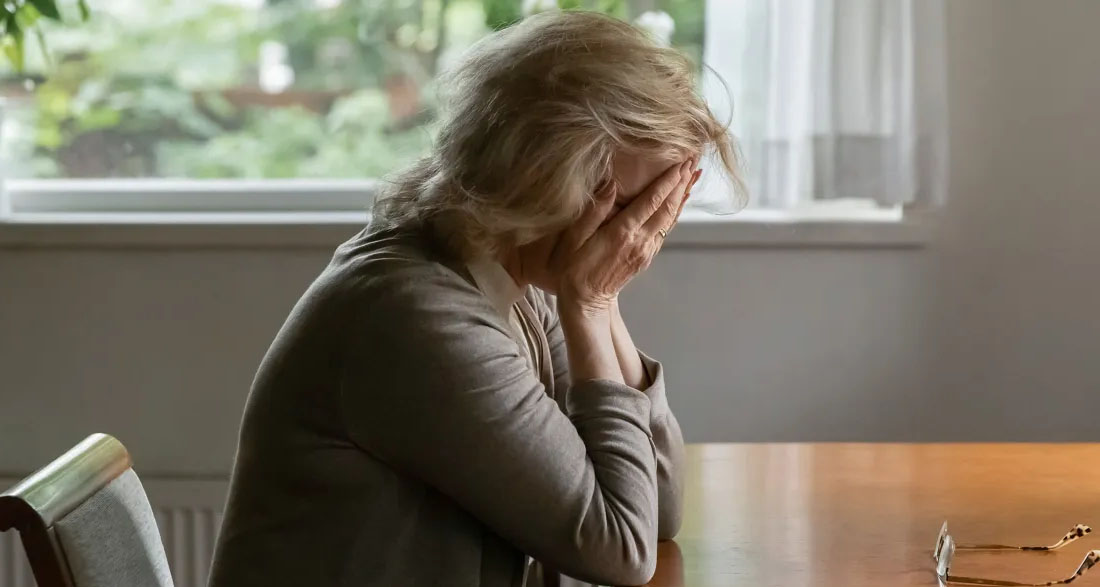
I never imagined that my own son and his wife would be the ones to turn me out of the home I had shared with my husband for decades.
Every corner of that house held memories, every smell, every creak reminded me of Harold. But what happened next proved that betrayal, no matter how close it comes, never goes unanswered.
My name is Linda, I’m 65, and fifteen years ago, my whole world fell apart when Harold, my husband, died suddenly of a heart attack.
We’d built that little house with our own hands—piece by piece, nail by nail, and dream by dream. Every corner whispered his name.
His tools hung neatly in the shed, untouched. The porch swing he surprised me with one summer still creaked in the morning breeze. And the lilac bush by the fence? He planted it on our twenty-fifth anniversary.
Losing him left a hollow ache in my bones. Still, I wasn’t completely alone. My son, Thomas, had moved back in shortly after Harold died.
We didn’t always agree on things, but we had each other. We laughed, argued, and made up over shared meals. He kept the lights on, and I kept the house warm.
By then, my health was slowly declining. Arthritis had taken hold of my hips, and COPD made every breath feel like pulling air through a straw.
The doctors had me on a strict routine—therapy, breathing treatments, medications. I could still manage most of my daily tasks—cooking, cleaning, taking care of myself—but I needed someone close by in case a bad spell hit.
Thomas always reassured me. “Mom, I’ll never leave you,” he would say.
He drove me to every appointment, waited patiently in the lobby with a coffee, and made sure I got home safely. I truly believed we had found a rhythm that would last.
Then came Vanessa.
He met her at a work seminar—or so I thought. Things moved fast. Too fast. Within months, he was talking about engagement rings, wedding dates, and dreams that didn’t include me. His eyes lit up every time he heard from her.
He had the same excitement a young boy gets when he finds something shiny and new. That was Thomas around Vanessa.
At first, Vanessa seemed perfect. She smiled often, asked me how I was doing, even brought me chamomile tea during one of my coughing fits. Her voice was soft, her tone measured and sweet.
When they announced their marriage plans, I supported them. My son deserved happiness.
“Live somewhere else,” I said more than once. “You two need your space. Don’t worry about me—I’ll be fine.”
I even called my older daughter, Rebecca, in Oregon to see if she could help find part-time caregivers.
But Vanessa wouldn’t hear of it.
“It’s better if we stay here,” she said one evening at the dinner table, her hand resting lightly on Thomas’s arm. Her voice was warm, persuasive. “Your mom shouldn’t be alone. We’ll take care of her together. It’s the right thing to do.”
I believed her. “Well,” I thought, “maybe I’m lucky. A daughter-in-law who wants to care for me—how rare is that?”
But that feeling didn’t last.
At first, it was small things, the kind you convince yourself aren’t worth noticing.
She started “reorganizing” the house.
One morning, I opened the kitchen cabinets and found all my pots and pans stacked impossibly high. My joints screamed as I climbed onto a chair to reach a skillet.
“Vanessa,” I said gently, “I can’t reach these. They’re too high up.”
She smiled, though her eyes didn’t match the curve of her lips. “Oh, Linda, it just looks cleaner this way. You don’t need to worry about cooking—I’ll take care of it.”
But she didn’t. Most evenings, when Thomas worked late, it still fell on me to cook dinner. I would stand at the stove, breathless and aching, trying not to show the pain.
Then came the laundry. She moved the basket to the basement.
“It makes more sense,” she said, “since the washer is down there.”
“But I can’t manage stairs like I used to,” I reminded her.
“I’ll help,” she promised.
But the basket sat untouched for days until I finally gave in, gripping the handrail and taking each step slowly, praying not to fall.
She got rid of my recliner too—the one Harold had saved for and surprised me with after my first big hip flare-up—and replaced it with a stiff, modern chair.
“Doesn’t the room look so much nicer now?” she asked brightly.
I forced a tight smile and left the room. That night, I cried into my pillow, aching for my chair, aching for Harold.
Vanessa didn’t stop. My teacups were moved to the top cabinet. My favorite blanket vanished from the couch, only to appear folded neatly in a storage bin. New rugs—slippery, fancy-looking, dangerous—appeared where old ones had been.
Whenever I asked about these changes, she had the same answers:
“It looks nicer.”
“This makes more sense.”
“You’ll get used to it.”
None of it made sense to me. It felt like she was erasing me from my own home.
Then came the final breaking point: my therapy sessions.
Before Vanessa moved in, Thomas always took me. Once she moved in, it was her responsibility whenever he was at work. And every single time, she had an excuse.
“Vanessa, my appointment’s at ten tomorrow. Can you drive me?” I asked one evening.
She didn’t look up from her phone. “I can’t. I’ve got plans with a friend.”
Another time: “Vanessa, I need to be at the clinic at noon—”
“No, I’m busy. Laundry and errands,” she said, rolling her eyes. “Call a taxi. You’re perfectly capable.”
After repeated refusals, I stopped asking. Tuesdays and Thursdays, I bundled up, grabbed my cane, and braved the cold, waiting for taxis that left my lungs burning. Vanessa? Curled up on the couch, scrolling her phone, wrapped in my very own blanket.
When Thomas asked, she smiled sweetly. “Oh, she likes going on her own. She wants to be independent.”
Independent. That word cut deeper than she could know. I wasn’t independent—I was being abandoned, ignored, and erased. And Thomas believed her.
Everything came to a head one evening at dinner.
I was cutting a piece of roast chicken, my hands stiff and painful. Vanessa, sipping her wine, said casually, “Linda, maybe it’s time you considered assisted living.”
My fork froze mid-air. “What?”
Her voice softened, syrupy with faux concern. “You’re struggling. You can’t reach shelves, climb stairs, take taxis alone. In a nursing home, you’d have professionals. Isn’t that better?”
I felt my face flush but kept my voice steady. “I’m managing. And the only reason I can’t reach half my things is because you moved them.”
She smiled knowingly. “Exactly. You shouldn’t have to manage like that.”
I looked at Thomas. “Son, please. Don’t let her twist this. I can still live here. I want to stay.”
She leaned on him, whispering sweetly, “I just want what’s best for your mom. You know I care about her.”
Thomas nodded. My heart broke. That night, I clutched Harold’s sweater, crying quietly.
Vanessa wasn’t helping me—she was pushing me out, one chair, one shelf, one step at a time.
A few weeks later, the final blow came. I woke to the sound of zippers and footsteps.
I opened my bedroom door. Thomas stood stiffly, holding my suitcase. His eyes wouldn’t meet mine.
“Mom,” he said quietly, “this is for the best. They’ll take better care of you in the nursing home.”
My body froze. “Thomas, no,” I whispered. “This is my house. Your father built this home. Don’t let her do this. Please.”
He didn’t respond. Behind him, Vanessa leaned against the doorframe, arms crossed, lips curling into the practiced pout I had come to dread.
“We’ll visit, Linda,” she said softly, as if offering a favor.
My knees buckled. I grabbed Thomas’s arm. “Please, son. Don’t do this.”
He pulled away gently but firmly. Minutes later, I was standing on the porch, bags at my feet, tears streaming. The door shut behind me without a word.
That house—our house—was gone. And so was my son.
Thomas drove me to the nursing home in silence. The next day, Rebecca found out when the facility called her. She got in her car immediately, spare key in hand, and drove straight to the house.
Vanessa was in the kitchen, leaning against the counter, coffee in hand, silk robe flowing, pretending to own the place.
“Rebecca! You came! I know this looks bad, but your mother—”
Rebecca cut her off with a raised hand. “Save it. I’ve heard enough. You manipulated my brother into betraying our mother. That ends now.”
Thomas entered, pale as a ghost. “Becca, please, don’t—”
“No, Thomas,” she snapped. “Listen. This house is in Mom’s name. Legally, it’s hers. Not yours. Not Vanessa’s. You let her poison you. She’s not helpless. She’s strong. And you threw her out like she was nothing.”
I stepped inside quietly. Hands trembling, chin high. Thomas’s face shifted.
Rebecca called a lawyer the same week. She found the deed and shoved it into Thomas’s hands.
“Read it. Whose name is on it? Not yours. Not Vanessa’s. Mom’s. She owns this house.”
Vanessa’s expression changed instantly. The soft mask disappeared. Her eyes grew cold.
“You’re all ungrateful!” she screamed. “I gave up everything! I took care of you, Thomas! And this is how you repay me?”
Her voice rattled through the kitchen as she accused me of manipulation. But Thomas finally saw her clearly—the woman who had made me feel small, who had erased me from my own home.
Rebecca stepped between us, calm but firm. “No, Vanessa. Mom didn’t manipulate anyone. You did. Every moved dish, every missed appointment, every lie to Thomas—you twisted everything. And now he sees it.”
Thomas’s eyes filled with tears. “Mom… is that true?”
Tears welled up. “I never wanted to be a burden. I just needed help. She made me feel like a stranger in my own home.”
“God… what have I done?” Thomas muttered, shoulders trembling.
Vanessa stormed out a week later, screaming about revenge, slamming the door. Thomas didn’t follow. He didn’t even move. He just stared.
Her plan—to get me out, take over the house, erase me—had failed. Rebecca had shattered it.
Thomas apologized every day. He offered to move out. I refused. “You’re still my son. We can heal, but only with honesty. No more silence.”
Now, Rebecca visits often. Thomas takes me to every appointment. He even bought me a new recliner—soft, comforting—with a card tucked into the seat:
“For you, Mom. I’m sorry I forgot who you were.”
I smiled. I remembered who he was too. My son, the one I raised, had come back to me. All thanks to my wise older daughter.
