
“The Barn Behind the Apple Trees”
I always thought heartbreak would be the hardest thing I’d ever face—until I was forced to sleep on a moldy yoga mat in a freezing barn while my daughter-in-law threw parties inside the house my husband and I built from scratch.
I’m seventy-five years old, and I’ve learned that real evil doesn’t come with horns or claws. No. It walks into your life wearing designer lipstick, carrying a shiny handbag, and crying fake tears that dry the moment no one’s watching.
My name is Dahlia Hayworth, and for over fifty years, I’ve lived in the same old farmhouse just outside Lancaster, Ohio. My late husband, George, and I built this home with our bare hands. It wasn’t grand, but it was ours—strong, warm, and built with love, like us.
I can still see George in the summer sun, shirtless and tanned, mixing cement by hand while sweat ran down his neck.
I wore one of his old flannel shirts, hammering nails until my fingers throbbed. We laughed through exhaustion, arguing over crooked beams and singing along to the radio while the wind carried our voices across the field.
Every board, every nail in that house held a piece of our hearts.
We weren’t rich, but we had everything that mattered—each other, our dreams, and our son, Adam. He was our pride and joy.
He had George’s quiet steadiness and my spark. Always the first to help a neighbor shovel snow or fix a flat tire, Adam had the kind of heart you don’t see much anymore.
Then came Tara.
When Adam first brought her home, I wanted to like her. I really did. She was pretty, polished, and confident—too confident.
Her nails looked like they cost more than my weekly groceries, and she called me Mom within the first ten minutes of meeting me.
Her hugs were too tight, her smiles too perfect. There was something about her eyes—pretty, yes, but cold, like she was watching herself perform.
At dinner that night, she showed her true colors. When the waitress forgot her lemon, she snapped,
“Sweetheart, I asked for lemon in my water. It’s not that hard.”
George looked at me across the table with that look only a husband gives after decades of understanding—no words needed.
Later, when I offered her another slice of my homemade cherry pie, she laughed, flicking her hair.
“I don’t eat dessert,” she said with a smirk. “Some of us have to watch our figures.”
That night, while we washed dishes, George leaned close and whispered,
“That girl likes herself more than she’ll ever love our boy.”
Lord help me, he was right.
But Adam was in love, so we smiled and stayed quiet.
They married two years later. Adam bought a cozy house near Columbus—most of it paid for with his savings, though you’d never know that by how Tara bragged.
“Finally,” she said one night, swirling her wine, “we have a home big enough for my standards.”
Adam just smiled at her like she’d hung the moon, and my heart ached with worry.
Then came the call that shattered my world.
Adam had collapsed at work—massive heart attack. Gone before the ambulance even arrived. He was only forty-one.
I don’t remember the drive to the hospital, only the sound of my heartbeat roaring in my ears and George’s trembling hand gripping mine.
Tara arrived late, wearing oversized sunglasses and carrying a handbag that could’ve paid a month’s mortgage. She sobbed loudly at first, then started scrolling on her phone.
At the funeral, while I stood numb beside Adam’s casket, she leaned toward the funeral director and asked,
“Are these the premium flowers or just the basic package?”
George’s jaw tightened, but he said nothing. We both knew—it wasn’t grief. It was vanity.
Two months later, George’s heart gave out too. The doctor called it heart failure, but I knew the truth—he died of a broken heart. The light in his eyes went out the day we buried our son.
After that, I barely spoke. I’d sit on the porch for hours, whispering to the wind,
“I’m still here, honey. I’m trying.”
Then one November evening, I heard the crunch of tires on gravel. I thought it was a neighbor checking in.
But when I opened the door, there she was—Tara—looking like she’d walked out of a fashion magazine, suitcase in one hand and wine in the other.
“Hey, Mom,” she said with a grin that didn’t reach her eyes. “Rough year, huh? I sold the house. Too many memories.”
My stomach dropped. “You sold Adam’s house?”
“Well, technically it was mine after he died,” she said breezily. “And memories don’t pay bills.”
Without waiting for an invitation, she walked right in, sat on George’s old couch, and poured herself wine.
“You don’t mind if I stay a while, right? Just until I get back on my feet. Men are such trash lately.”
And just like that, she made herself at home.
Within a week, she’d changed everything. My living room? Rearranged. Family photos? Packed away—“too gloomy,” she said. When I came home from the market one afternoon, I noticed George’s recliner was missing.
“What happened to his chair?” I asked.
“Oh, that ugly thing?” she laughed. “I had the trash guys take it. It smelled like the ’70s.”
I couldn’t even speak.
She threw loud “girls’ nights,” with music so loud it rattled the windows. I’d wake to find beer cans in my rose bed.
When I asked her to keep it down, she rolled her eyes and said,
“You’re being dramatic. Maybe get your hearing checked?”
The final straw came one morning when I caught her crouched at George’s old desk, trying to pry open his metal lockbox.
“What are you doing?” I snapped.
She jumped, then smiled sweetly. “Just organizing your paperwork, Mom. You’re not getting any younger, you know. Someone’s gotta handle things when you… fade out.”
Something inside me cracked.
That night, she poured two glasses of wine and sat across from me at the table. Her tone was sickly sweet.
“We need to talk,” she said. “This house is huge, and you seem overwhelmed. I think you’d be more comfortable in the guest space.”
I frowned. “What guest space?”
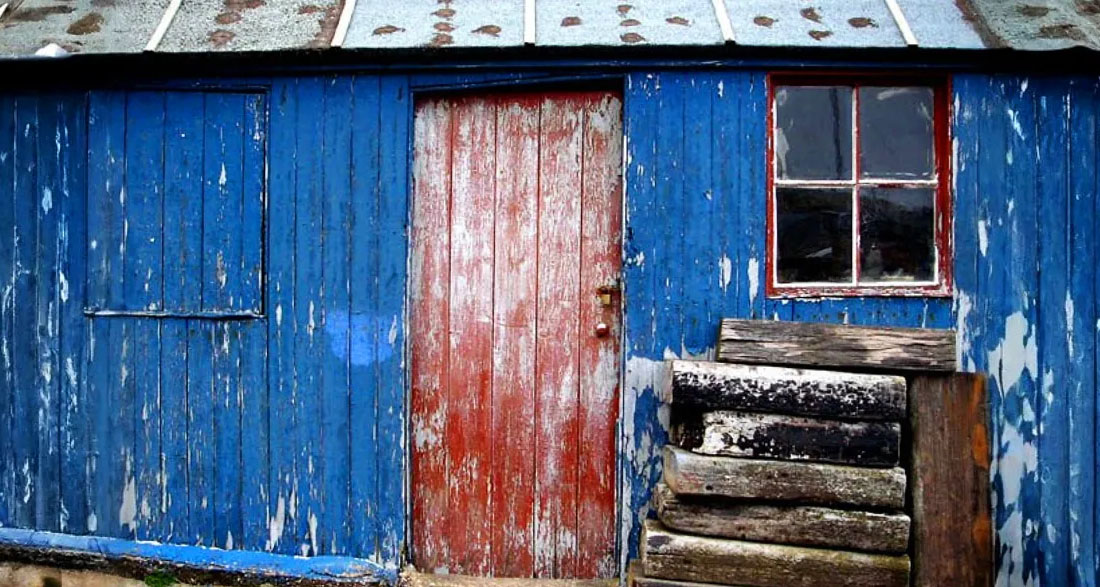
She pointed out the window toward the old cow barn.
“That thing hasn’t been touched in twenty years,” I said. “It doesn’t even have insulation!”
She shrugged. “Then figure something out. Because I’m done living like your roommate. This is my home now.”
My hands trembled, but I forced my voice to stay steady.
“It’s my home,” I said quietly. “George and I built it. The deed’s in my name.”
Tara leaned back, swirling her wine.
“Yeah, about that,” she said casually. “You might want to check your mail sometime.”
My stomach turned cold. “What do you mean?”
“I’ve been helping,” she said, tapping her phone. “Redirecting your mail, paying bills with your account—just the usual family stuff.”
I stared at her, realizing the horror.
“That’s fraud,” I whispered.
She smiled. “Only if someone finds out.”
The next morning, my bedroom door wouldn’t open. She’d locked it from the outside.
When I finally got out, all my belongings were packed in boxes on the porch. Tara stood there smirking, tossing me an old yoga mat.
“Congrats, Mom. You’re the new queen of the barn. Enjoy your country retreat.”
That night, I lay on that moldy mat, wrapped in an old blanket, listening to her laughter echo through the windows of my house. I wanted to scream, but I stayed quiet. I wouldn’t give her the satisfaction.
The barn was freezing, damp, and smelled like rot. My joints ached from the cold, but every night, I prayed. Sometimes I whispered to George, “Just a little longer, honey. I’ll fix this.”
Weeks passed. Tara turned the farmhouse into her personal playground. Music. Parties. Strangers coming and going. The neighbors started avoiding me, whispering that poor Tara was “taking care of her senile mother-in-law.”
I was the crazy old woman in the barn. She made sure of it.
But then—karma came knocking.
One evening, I saw police lights flashing in the driveway. Tara stood there, hair a mess, mascara running. They arrested her for drunk driving.
A few days later, I saw her screaming at a young man in a leather jacket.
“You’ll regret this!” she yelled as he drove away, not even glancing back.
Then came her comeback party.
She called it that, actually—“my comeback.”
Cars packed the yard. Music boomed. Fireworks exploded at midnight. I curled up in the barn, covering my ears. Then I smelled something—sharp, burning.
Smoke.
I ran outside barefoot. Flames clawed up the side of the house.
“TARA!” I screamed. “FIRE!”
People stumbled out, coughing, some laughing. Tara burst through the door, wild-eyed and clutching a bottle.
“My house!” she shrieked. “My house is gone!”
The firefighters came fast, but it was too late. The home George and I built was swallowed by fire.
When the chief asked who owned the property, Tara stepped forward quickly.
“I do,” she said. “She’s just a guest.”
But her lie didn’t last. The records showed the deed was still in my name. She had forged mail, yes—but she couldn’t change the title.
The insurance company called me days later.
“Mrs. Hayworth,” the adjuster said, “you’re entitled to full coverage for the fire damage. You’re the legal owner.”
I didn’t cry. I just looked toward the barn, whispering, “We did it, George. We got it back.”
When Tara found out, she lost control.
“You can’t do this!” she screamed. “You’re old! You don’t even need it!”
I stood firm. “You took everything from me,” I said quietly. “But God has a way of evening the score.”
Two days later, the sheriff came with the eviction order. Neighbors watched as Tara packed her car. No one helped. She slammed the door, cursed under her breath, and drove off without looking back.
Silence settled over the property like a blessing.
Over the next months, the house was rebuilt. New walls, new roof, new life. They even restored George’s old porch swing.
The first time I stepped inside again, the smell of fresh wood and paint filled the air—and for the first time in years, I felt safe.
A few weeks later, a letter arrived. No return address. Just shaky handwriting:
“I’m sorry. I was angry and stupid. And I lost everything. Please forgive me.”
No name—but I knew.
I folded the letter and placed it behind the photo of George and Adam on the mantle. Forgiveness, I’ve learned, isn’t for the one who wronged you. It’s for the one who survived.
Now, every morning, I sit on the porch with my coffee. The apple trees bloom again, and the barn stands quiet, no longer cruel—just a memory.
Sometimes, before I sleep, I walk through the house, check the windows, and whisper to the walls,
“You’re safe now. She’s gone.”
