
Part 1:
My grandfather passed away alone in a small hospital in Indiana. For most of my life, people had mistaken his quiet nature for emptiness. They saw an old man living alone in a weather-beaten house on the edge of a forgotten Indiana town and assumed there could not possibly be much to his story.
They noticed his old jackets, his cheap coffee, and his habit of repairing broken tools instead of replacing them. They saw the porch that leaned just enough to warn careless visitors to watch their step. Then they decided he had lived a small, unimportant life simply because he did not display his achievements in the ways they expected.
“Abner, why don’t you ever put up those old photographs from your younger days?” Mrs. Dooley, his neighbor, once asked while handing him a peach cobbler.
My grandfather accepted the dish without looking particularly interested.
“The memories stay where they belong, Agnes,” he replied.
That was the kind of man he was. He never tried to impress anyone. He did not fill every silence with unnecessary words just to make other people feel comfortable.
My mother, Rhonda, often complained about him after our Sunday visits.
“Your grandfather is a difficult man to talk to,” she would say as we drove home.
She liked things to be clearly explained. She wanted feelings discussed, photographs displayed, and family stories shared openly. She believed that if someone had lived an interesting life, they should make sure everyone knew about it.
My grandfather never seemed to believe he owed anyone a dramatic explanation for the person he had become. That made people uncomfortable. There was something unsettling about a man who could sit quietly without appearing embarrassed by his own silence.
My father, Patrick, had his own complaints.
“He just sits there like a statue while I try to tell him about the neighborhood association,” he once said with a shrug.
To my father, Abner was simply an aging man who had never turned his past into anything profitable or prestigious. He measured success by money, status, and the kind of stories people enjoyed telling at social gatherings.
Grandpa measured it differently.
The town where he lived was the sort of place travelers passed through without remembering. It was a small Indiana community with a diner that still sold pie for less than a bottle of water. There seemed to be a church on every corner, and the downtown area looked as though it had stopped negotiating with modern life sometime in the late 1980s.
Yet to me, my grandfather’s house was the safest place in the world.
It was not cozy in the way people describe homes in sentimental stories. The furniture was old, the floorboards creaked, and the kitchen always smelled faintly of coffee and whatever soup he had prepared. But nothing in that house ever lied to me.
When I was six, Grandpa taught me how to use his old mailbox.
“You have to lift the metal door before you pull the handle, or the mailbox will jam on you,” he explained.
He watched as I struggled with it, waiting patiently for me to understand how the old mechanism worked. He never rushed to do things for me simply because I was young.
When I asked him why the kitchen clock was always three minutes fast, he explained it as though he were sharing an important secret.
“Three minutes can save you from looking foolish at a meeting,” he said.
There was always soup in the pantry, something useful in the toolbox, and a quiet sense that if something in your world broke, you could bring the pieces to his house and find a way to put them back together.
My parents hated visiting him because they believed he was stubborn on purpose.
“He could make an effort to be warmer,” my mother complained after one particularly quiet dinner.
My brother, Shane, had learned to see the world through our parents’ eyes. He simply absorbed the family’s attitude toward Grandpa and repeated it as though it were his own opinion.
“Grandpa has a special talent for making a room uncomfortable without moving a single muscle,” Shane joked during a holiday dinner.
Everyone laughed except me.
I never found my grandfather difficult. I found him exact.
He never promised something he did not intend to deliver. He never flattered people just to be polite. And when he taught me something, he expected me to pay attention.
When I was ten, I wanted to climb the large oak tree in his yard. My mother had already warned me that I would tear my dress, but Grandpa simply walked outside with me.
“If you’re going to climb that oak tree, you had better learn where your weight belongs,” he said.
He stood beneath the lowest branch and spent the next hour teaching me how to recognize healthy bark and how to test a branch before trusting it with my weight.
“Don’t trust something just because it looks strong,” he whispered as I reached for a limb.
Then he added, “Trust it because you’ve tested it.”
His hand hovered near my ankle, ready to help if I slipped, but he never grabbed me or made me feel incapable.
That was how he taught me everything. He gave me a sentence, showed me what it meant, and then trusted me to learn.
When I was twelve, I asked him whether he had ever witnessed a real battle during his military service.
He looked at me. His mouth barely moved, but something changed in his face. I had spent enough time with him to recognize when a question had touched something deep inside him.
“I saw enough to know that peace is worth the silence, Cassidy,” he replied quietly.
Then he took me into the kitchen and showed me how to sharpen a knife using a whetstone.
“Focus on the angle of the blade instead of the speed of your hand,” he instructed as the metal moved across the stone.
He did not answer my curiosity with a long story about the war. Instead, he gave me a useful skill, something solid I could carry with me until I was ready to ask my next question.
My mother often complained that Grandpa had never learned how to be affectionate.
She never seemed to notice that he kept a box of my favorite orange popsicles in the back of his freezer, even in the middle of January.
One winter day, I visited him during a snowstorm. I was shivering when I entered the kitchen, and he opened the freezer.
“I kept these in case you got a fever, but you can have one now,” he said.
He handed me a popsicle as though it were the most ordinary thing in the world.
That was how my grandfather loved people. His affection was often invisible to anyone waiting for the wrong kind of proof.
When I turned nineteen, I joined the Army.
I wanted to escape the life my parents had planned for me and discover whether the restlessness inside me was pointing toward something meaningful or was simply another form of rebellion.
My father was not impressed when I told him.
“The military is what people do when they don’t have better options,” he said, leaning back in his chair.
He looked at me as though I had just announced that I intended to throw away my future.
My mother was equally unimpressed.
“Is this because you’re upset about your grades?” she asked, peering at me over her wineglass.
She seemed convinced that my decision was an emotional outburst rather than something I had considered carefully.
The next day, I went to Grandpa’s house to tell him the truth.
He was sitting at the kitchen table with his newspaper open. Afternoon sunlight filtered through the lace curtains, falling across the table where he kept his coffee mug.
He folded the newspaper carefully before looking at me.
“Why the Army, Cassidy?” he asked.
He did not ask whether I was sure. He did not ask whether my parents approved. To him, other people’s approval had never been a reliable compass.
“Because if I’m going to do something hard, I want it to mean something,” I told him, holding a mug of his bitter coffee between my hands.
He studied me for a long moment. Then he nodded once.
“That’s a good reason,” he said softly. “Just make sure you’re running toward something instead of just running away.”
I carried those words with me through basic training and every difficult moment that followed.
When the day came for me to leave, my parents drove me to the bus station. I suspected they came partly because it would have looked bad if they had stayed home.
“Call me when you can, and try to stay safe,” my mother said in the same tone she might have used to remind me to buy groceries.
My father warned me not to sign anything foolish, while Shane told me not to come back brainwashed.
Grandpa did not come to the station.
At the time, I wondered whether he was simply unwilling to make the effort. Later, I understood that he knew exactly what it felt like to leave home and face an uncertain future. Perhaps he did not want my last memory of him to be a performance for strangers.
Whatever his reason, I knew he was thinking of me.
When I returned home on leave for the first time, he was waiting on his porch.
He looked at me in my uniform, taking in the way basic training had changed my posture and turned my once-awkward movements into something more deliberate.
He held the screen door open.
“How are your feet, Sergeant?” he asked.
I laughed. No one else in my family had thought to ask me anything so practical, and somehow that made his question more meaningful than all their carefully prepared greetings.
“They’re terrible, Grandpa,” I admitted as I stepped into the kitchen.
“That’s good,” he replied. “It means you actually used them for something.”
Every time I came home after that, he asked about the things that mattered.
“Are you sleeping enough?” he would ask as we sat on the porch.
Then came the question he never forgot.
“Is there anybody in your unit worth trusting?”
My parents never seemed to understand that I had built a real career in the Army. To them, it was almost as though I were wearing an extended costume that I would eventually take off and replace with a more familiar life.
Whenever I mentioned a promotion, my father wanted to know whether it meant more paperwork or better pay.
My mother sighed during our phone calls.
“It must be so stressful to be away from home so much.”
They listened just enough to tell their friends at the country club that they were interested in my life. They rarely listened long enough to understand it.
Eventually, I stopped trying to translate my experiences into language they might appreciate.
I never had to do that with Grandpa. He listened as though every detail mattered, even when he had no intention of offering an opinion.
One evening, I told him about a difficult situation at work.
“I had a leader who made a bad decision today, and I can’t stop thinking about it,” I admitted.
Grandpa nodded slowly.
“A leader who never second-guesses himself is a dangerous man to follow,” he replied.
I remembered that sentence long after our conversation ended.
Then, without warning, everything changed.
My grandfather became seriously ill.
And the call that brought the news did not come from my mother or my father.
It came from Mrs. Dooley.
Part 2:
“He collapsed in the kitchen, honey, and the ambulance took him to Hopewell County General,” she told me over the phone.
Her voice was trembling with fear.
For a moment, I could not speak. I had spent years watching my grandfather grow older, but I had never allowed myself to imagine a world in which he might no longer be there.
I requested emergency leave within the hour and began the long drive back to Indiana.
As I drove, I called my mother to ask whether she knew anything more about his condition.
“The doctors are still running tests,” she said, sounding distracted. “Call me when you know something final.”
It was as though she needed a completed report before deciding how she should feel about her own father’s illness.
By the time I reached the hospital, it was just after dawn. The parking lot was wet from the old snow, and the building smelled of bleach and overheated air.
I hurried to the third floor, where they had placed him.
Illness had made my grandfather look smaller than I remembered. The man who had always seemed so steady and capable was lying in a hospital bed, surrounded by machines that blinked and beeped without showing the slightest concern for the person connected to them.
The sight broke something inside me.
I walked to his bedside and took his hand.
His eyes slowly opened.
“Guess you’re the one who didn’t forget me,” he whispered.
I tried to smile, but my throat tightened. I had driven through the night to get there, and suddenly I wished I could have done something more. I wished I could have arrived earlier. I wished I could have somehow prevented him from becoming so sick.
“I’m here, Grandpa,” I told him. “I’m not going anywhere.”
Then I made a promise I wasn’t sure I could keep.
“I called Mom and Dad. They said they’d be here soon.”
It was a lie, and he knew it.
He gave a slight shake of his head.
“They won’t come,” he said simply.
There was no anger in his voice. He did not sound surprised or even particularly disappointed. He said it with the quiet certainty of someone who had stopped expecting anything different a long time ago.
I stayed beside him for the next two days.
My mother said hospitals made her anxious. My father claimed work was too busy for him to leave. Shane sent me a thumbs-up emoji after I told him that Grandpa’s condition was serious.
I stared at that little symbol on my phone, wondering how someone could respond to the possible loss of a family member as though I had simply told him I had finished a difficult task.
But I had no time to argue with them. My grandfather needed me, and I refused to waste the time I had left on people who had already made their choice.
A nurse named Loretta noticed that I had barely eaten since arriving.
She brought me a packet of crackers from the vending machine and placed it beside my chair.
“You can love someone without making yourself collapse too,” she said firmly but kindly.
I thanked her, though I was not sure I knew how to follow her advice.
On the second morning, Grandpa squeezed my hand.
His eyes were open, and for a moment, his gaze was as clear and focused as it had been when he taught me to climb the oak tree.
He seemed to be gathering his strength to tell me something important.
“In the bedroom drawer, top right,” he whispered. “Keep the handkerchief.”
I leaned closer.
“What is inside it, Grandpa?”
His breathing was shallow, and I had to strain to hear his answer.
“The ring knows better than the papers do.”
Before I could ask what he meant, he slipped into a deep sleep.
I sat beside him, repeating his words in my head.
The ring knows better than the papers do.
I had no idea what that meant, but something about the way he had said it made me believe I would eventually understand.
That afternoon, just after four o’clock, my grandfather died.
There was no dramatic final speech. No sudden revelation. No final moment in which he opened his eyes and gave me one last piece of wisdom.
One breath simply lasted longer than the others.
Then it ended, and he did not breathe again.
I held his hand for several minutes, waiting for something inside me to accept what had happened.
But the hospital room remained exactly as it had been. The machines continued their work. People walked past the open doorway. Somewhere down the hall, someone laughed.
The world did not stop, even though mine had just changed forever.
Eventually, I walked to the family alcove and called my mother.
“At least he’s not suffering anymore,” she said.
It was the kind of clean, sensible sentence people use when they want to sound mature in the face of death. I knew she had lost her father, but I could not understand how she could speak about him as though his death were an unpleasant situation that had finally been resolved.
My father said he had known this day would come eventually.
Neither of them asked whether I needed help.
Neither offered to make the funeral arrangements.
So I did everything myself.
The funeral took place on a Thursday. The church boiler rattled throughout the hymns, and the sound seemed painfully loud in the otherwise quiet building.
Mrs. Dooley sat in the front pew, holding a tissue in her hand. Loretta, the nurse who had cared for Grandpa, came during her lunch break and stood quietly against the back wall.
My parents did not come.
Neither did Shane.
I stood alone beside the casket and listened to the priest speak about peace, service, and the quiet ways a person could change the lives of others.
I wondered whether any of the people who had known my grandfather understood what kind of man he had really been.
It felt almost obscene that someone so strong could leave this world with less attention than a broken furnace.
After the burial, I returned to his house alone.
I needed to pack his belongings, but I could hardly bring myself to walk through the front door.
The house felt different without him. It was no longer a safe place waiting for me. It was an accusation against time, a collection of ordinary objects that had somehow become precious simply because the man who had used them was gone.
His jacket still hung on the hook by the door.
His coffee mug sat beside the sink, with a dried ring of coffee at the bottom.
The kitchen clock was still three minutes fast.
For the first time, I wished he had left it that way forever.
I walked into his bedroom and opened the top-right drawer.
Beneath the neatly folded shirts, I found the white handkerchief tied into a small bundle.
I recognized it immediately. I had seen it in his hands for almost my entire life.
I carefully untied the knot.
Inside lay a heavy silver ring.
It was thick and plain, with edges that had been worn smooth by decades of use. It did not look like something a man would wear to impress people. It looked like something he had carried because it meant something to him.
I turned it over in my hands.
On the inside, a compass rose had been engraved deep into the metal. One point of the compass was blackened, and beside it were three letters that I could finally read.
I remembered something Grandpa had once told me when I was a child.
“It reminds me who I am,” he had said.
Back then, I had not thought to ask what he meant.
Now, standing alone in his bedroom, I slipped the ring onto my finger.
It was a little loose, but I did not take it off.
The weight of the silver felt grounding in the empty house. For a moment, I could almost imagine him sitting at the kitchen table, reading his newspaper and waiting for me to come downstairs.
I had no idea that the ring would eventually reveal a truth powerful enough to change everything I thought I knew about my grandfather.
At the time, I believed it was simply the last thing he had entrusted to me.
I was wrong.
Three weeks later, my parents sold the house.
They handled the sale with the efficiency of people clearing away an inconvenience rather than dealing with the final traces of someone’s life.
When I called my mother in anger, she sounded irritated that I was making such a fuss.
“It’s just an old house, Cassidy,” she said.
I wanted to scream at her. I wanted to explain that it was not just a house. It was the place where I had learned to climb trees, sharpen knives, and trust myself. It was the place where someone had listened to me without asking what he would gain from the conversation.
But as I listened to her voice, I realized that some arguments are too heavy to carry into conversations with shallow people.
I could not force her to understand what she had never cared enough to see.
So I returned to my base and tried to focus on my duties.
A few months passed.
Then I received an invitation to attend a formal veterans recognition ceremony at a large hall filled with military officers, flags, and carefully arranged rows of chairs.
I put on my dress uniform and polished my boots until they reflected the dim light.
The silver ring remained on my finger.
I had grown used to wearing it every day. Sometimes I rubbed my thumb across the worn metal when I was thinking. It reminded me of Grandpa’s steady hands and the lessons he had given me without ever demanding that I thank him for them.
At the ceremony, I was speaking with a lieutenant colonel about repairs to the housing facilities on base when a voice behind me interrupted the conversation.
“Where did you get that ring, Sergeant?”
I turned around.
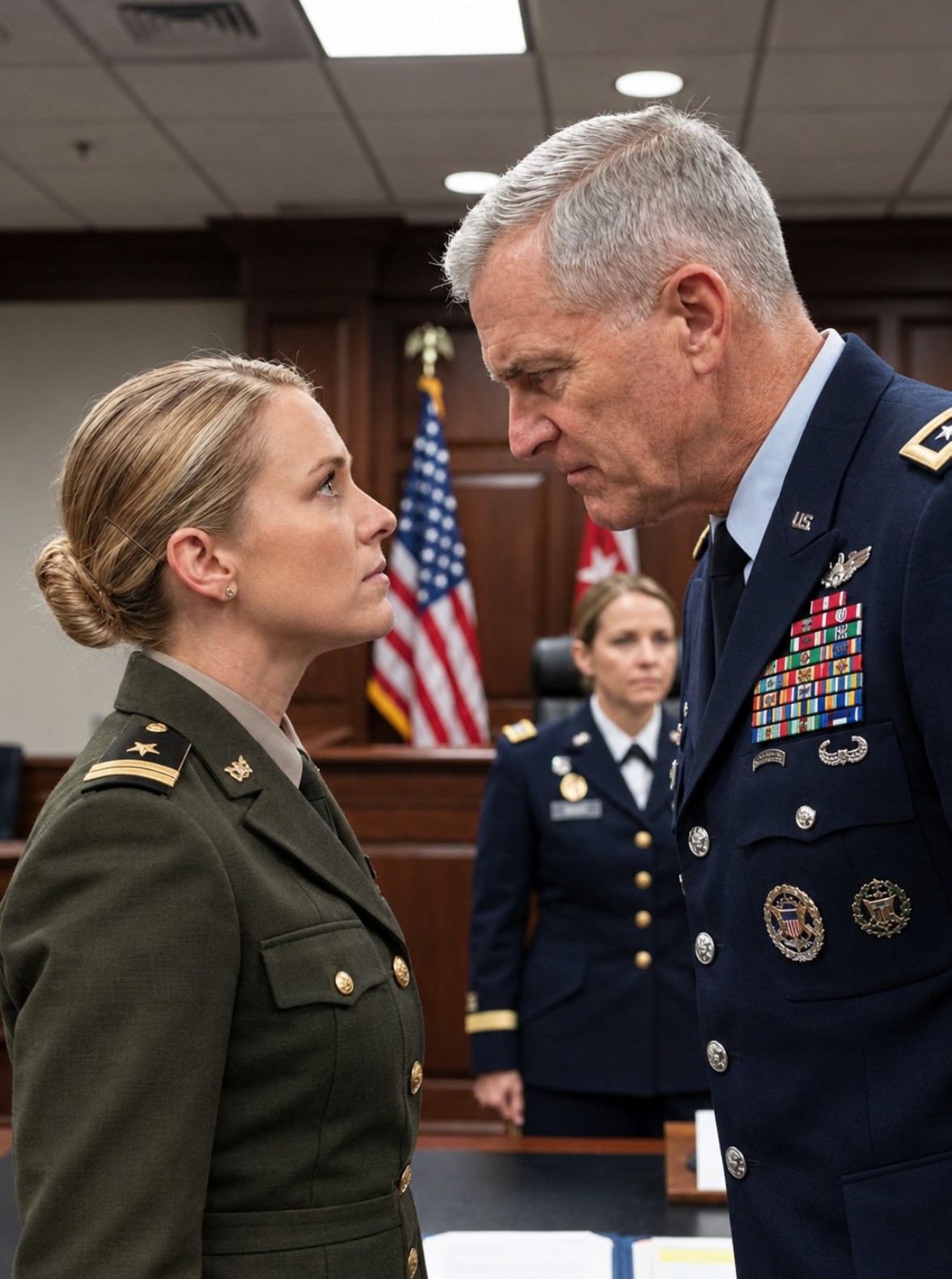
A general stood behind me, his four stars catching the light. His name tag read RIGGS.
He was staring at my hand.
At first, I thought I had somehow violated a uniform regulation. But then I saw his expression.
The color had drained from his face.
He looked as though he had just seen a ghost.
I straightened instinctively.
“It belonged to my grandfather, Abner Pickett,” I answered.
The general stared at the ring for another moment.
Then he looked directly into my eyes.
“We need to talk in private right now,” he said.
There was something in his voice that made me stop asking questions.
He led me into a small side room and closed the door behind us.
For several seconds, he said nothing. He simply looked at the ring again, as though he were trying to confirm something he had spent decades believing he would never see.
Then he asked the question that changed my life.
“Did your grandfather ever tell you why he refused the Medal of Honor?”
I felt the world tilt beneath my feet.
I lowered myself into a folding chair, trying to understand what I had just heard.
“My grandfather never mentioned any medal to me,” I said breathlessly. “Not to me or anyone else in my family.”
The general sat down across from me.
His eyes were suddenly wet with tears.
“My name is Orson Riggs,” he said. “Your grandfather saved my life in the jungle forty years ago.”
I stared at him.
The quiet old man I remembered had never spoken about being a hero. He had never shown me medals or photographs of himself standing beside important people. He had never even hinted that his military service involved anything extraordinary.
And now a four-star general was sitting across from me, struggling to speak about him.
General Riggs took a breath.
“There is a story about a mission that the official paperwork tried to keep secret for a very long time,” he began.
He explained that the mission had taken place during a dangerous operation in the jungle, where bad intelligence had led the team into a situation far more dangerous than anyone had anticipated.
The extraction plan had been compromised.
Men were wounded, the route out was no longer safe, and the team was in danger of being overwhelmed.
My grandfather had been one of the men caught in the middle of it.
“He went back into the line of fire three times,” Riggs told me. “Three times, Cassidy. He went back to rescue his team and the local scouts who had been working with us.”
I could barely breathe.
“He was hit while doing it, but he refused to leave anyone behind,” the general continued.
I thought about the man who had taught me to test a tree branch before trusting it. The man who had asked whether my feet hurt after basic training. The man who believed that a person should never make a promise he was unwilling to keep.
Suddenly, his lessons seemed to carry a meaning I had never fully understood.
General Riggs continued.
“The government wanted to give him the Medal of Honor. But they wanted to change the story first.”
I frowned.
“What do you mean?”
“They wanted a clean citation. Something simple that could be presented to the public without raising uncomfortable questions. They wanted to leave out the local scouts. They wanted to leave out the mistakes made by the people in command.”
He paused before adding, “They were willing to honor your grandfather, but only if he agreed to accept a lie.”
I remembered the words Grandpa had spoken to me in the hospital.
The ring knows better than the papers do.
For the first time, I began to understand.
“He refused?” I asked.
General Riggs nodded.
“He told them he would not stand under the lights for a medal built on missing names.”
The general’s voice grew quieter.
“He said that if his country needed a hero more than it needed the truth, it could look somewhere else.”
I sat completely still.
My grandfather had spent his life refusing to turn himself into a story that made other people comfortable. I had always thought his silence was simply a part of his personality.
Now I wondered how much pain, anger, and disappointment he had carried without ever asking anyone to help him bear it.
General Riggs glanced at the ring again.
“When I saw that compass, I knew it had to be his,” he said. “I remember it from the mission. I also remember the other men who wore similar rings.”
He explained that the military had recently begun declassifying the records connected to the operation. Letters had been sent to my grandfather’s next of kin as part of the process.
My stomach tightened.
My parents must have received those letters.
If the letters had arrived recently, they might have known more about Grandpa’s past than they had ever admitted.
Yet they had allowed him to be buried without even attending his funeral.
“There is more information in the archives,” General Riggs said. “If you want to understand what really happened, I can help you get access to it.”
I looked down at the ring on my finger.
For the first time since my grandfather’s death, I felt as though I had been given a purpose beyond grieving.
I had spent my life trying to understand the man everyone else had dismissed.
Now I had a chance to discover the truth.
And I intended to follow it wherever it led.
Part 3:
Two days later, I arrived at a military archival facility outside the city.
General Riggs had helped arrange access to the records, and an archivist met us when we arrived. After checking our authorization, he led us into a secure storage area.
I had expected a few folders, perhaps some old reports and photographs.
Instead, the archivist wheeled out a metal footlocker.
My grandfather’s name was stenciled across its side.
ABNER PICKETT.
I stared at it for a long moment.
The box looked ordinary, but seeing his name on it made the years between his military service and his quiet life in Indiana feel strangely small. It was as though the man I had known and the soldier General Riggs remembered were finally standing in the same room.
The archivist opened the footlocker.
Inside were grainy photographs of young men wearing mud-streaked uniforms. Their faces were tired, but many of them were smiling. Some stood together beside military vehicles, while others appeared to have been photographed during brief moments of rest.
There were maps marked in pencil, reports, and a field notebook wrapped in waxed cloth.
General Riggs lifted the notebook carefully and placed it on the table.
Then he reached into the locker again and removed another handkerchief bundle.
He unfolded it.
Inside were six silver rings.
They looked almost exactly like the one I was wearing.
Each was thick and plain, with a compass rose engraved into the metal. The edges had been worn smooth, and each ring carried a name on the inside.
Cooper.
Diaz.
Sutton.
Three of the names belonged to men whose stories I would later learn more about.
“These were made after the war,” General Riggs explained. “One for each man who made it home.”
I looked at the rings.
“Why did they all have the same design?”
“The compass was their reminder that they had survived together,” he said. “They had made a promise to remember the men who didn’t come home, too.”
He turned one of the rings so that I could see the blackened point on the compass.
“The blackened point meant that north no longer guaranteed a home,” he explained softly.
I ran my thumb over the silver ring on my own finger.
My grandfather had worn this reminder for decades. He had carried it through an entire lifetime without ever explaining its meaning to me.
Perhaps he had wanted me to discover it when I was old enough to understand.
Perhaps he had simply been waiting for someone to ask the right question.
I picked up the field notebook and opened it.
My grandfather’s handwriting filled the pages. It was tight, neat, and familiar. I had seen the same handwriting on birthday cards and small notes he left beside things he wanted me to remember.
But these entries were different.
They described the mission, the confusion that followed the failed extraction plan, and the decisions that had left men fighting for their lives.
Some entries were short. Others contained details about the men who had been wounded, the routes they had taken, and the people who had helped them survive.
Then I found one sentence that made my hands go still.
Do not let them vanish because someone needs clean paperwork.
I read it again.
And again.
The words blurred as tears filled my eyes.
For forty years, my grandfather had carried the memory of that mission. He had refused to let an official story erase the people who had suffered because of mistakes made by others.
He had not wanted a medal if accepting it meant allowing those men to be forgotten.
He had not wanted praise built on an incomplete truth.
He had simply wanted their names remembered.
As I continued reading, the documents revealed another part of his life that I had never known about.
For decades, Grandpa had quietly sent money to the families of the local scouts who had died during the operation.
The payments were not large enough to make him a wealthy man, but he had continued sending them year after year. He had never mentioned them to me, and he had never used them as evidence of his goodness.
He had also chosen his quiet life in that small Indiana town deliberately.
He had wanted to become ordinary.
He did not want to be a monument, a public figure, or a man whose identity depended on being praised for something he had done in the past.
He wanted to live, work, help the people around him, and be left alone with his memories.
For the first time, I understood that my grandfather had never been two different men.
The soldier who had risked his life for others and the old man who kept orange popsicles in his freezer were the same person.
The man who taught me to test a branch before trusting it was also the man who had refused to accept an honor that required him to betray his principles.
The world had simply been too impatient to see him clearly.
That evening, I called my mother.
“I know who Grandpa really was,” I told her. “And I know about the letters from the military.”
There was a brief silence.
Then she answered too quickly.
“We didn’t know what those were, Cassidy.”
I closed my eyes.
I had expected denial, but hearing it still hurt.
“You didn’t know what they were?” I repeated.
“No. We never really understood them.”
Her voice had changed. She sounded defensive now, as though she knew that her first answer had not convinced me.
I could almost picture her standing in the kitchen, searching for a way to make the conversation disappear.
“You didn’t open them?” I asked.
She hesitated.
Then she insisted that they had not.
I knew she was lying.
I could hear the guilt in her voice, the same guilt she had tried to hide whenever I asked why she had not visited Grandpa in the hospital.
“You turned his moral refusal into simple shyness because that was easier for you to live with,” I said.
My father took the phone from her.
“What exactly do you want from us now?” he demanded.
I thought about the funeral. I thought about standing alone beside the casket while Mrs. Dooley and a nurse were the only people who had bothered to show up for a man who had given so much of himself to others.
I thought about the letters, the footlocker, and the six silver rings.
Then I answered him.
“I want the truth. And I don’t need your help to find it anymore.”
I ended the call.
For the first time in my life, I did not feel the need to explain myself to my parents or convince them that my feelings were justified.
I had spent years trying to make them understand my grandfather.
Now I understood him well enough to stop asking them for permission to remember him properly.
The military began the process of officially correcting the record of the mission.
It was not a simple matter of changing a few lines in a document. The case involved review boards, legal assessments, interviews, and a careful examination of old records.
The goal was to make sure the official account accurately reflected what had happened, including the role of the local scouts and the mistakes made during the operation.
My mother was still listed as my grandfather’s legal next of kin. Because of that, she had to sign the necessary documents delegating authority to me so I could help move the process forward.
She did not do it willingly.
She finally signed after local newspapers began contacting the family for comments about the newly discovered records.
Afterward, she called me.
“You got what you wanted,” she snapped.
I looked at the papers in front of me.
“No, Mother,” I replied. “Grandpa finally got what he deserved.”
Then I hung up.
The review lasted nine months.
During that time, I participated in interviews, answered questions, and examined old maps with people who had spent years studying the mission.
Some details were difficult to establish after so many decades, but the field notebook, the photographs, and the surviving records helped build a clearer picture of what had happened.
Every discovery made me prouder of my grandfather.
But it also made me sadder.
I kept thinking about how much he had carried alone. He had spent years protecting the memories of men who could no longer speak for themselves, yet the people closest to him had dismissed him as a difficult old man.
He had never asked to be treated as a hero.
He had only wanted the truth to survive.
By the end of the review, the military had determined that the record should be corrected and that my grandfather’s actions deserved formal recognition.
The ceremony was scheduled for the following spring at a military museum.
It would not be a posthumous Medal of Honor. Instead, the military would award him the Navy Cross under a citation that accurately described his actions and acknowledged the people who had been left out of the original account.
For me, the distinction mattered.
This time, the honor would not depend on a lie.
This time, the story would include the truth.
Part 4:
The day of the ceremony arrived, and I stood outside the military museum wearing my dress uniform.
My boots were polished, my uniform was immaculate, and the silver ring remained on my finger.
I had spent months preparing for this moment, yet I still found it difficult to believe that it was happening.
The man who had once sat quietly at his kitchen table, drinking bitter coffee and reading the newspaper, was about to be recognized for something he had done decades earlier.
And I was the person who had helped bring his story back into the light.
Inside the museum, officers, veterans, military families, and members of the press filled the hall. Flags stood along the walls, and a presentation area had been arranged at the front.
My parents arrived wearing their best clothes.
My mother carried a silk handkerchief and dabbed at her eyes whenever someone looked in her direction. My father moved through the crowd, greeting people and behaving as though he had always been proud of his father-in-law.
I watched them from a distance.
Part of me wanted to confront them. I wanted to ask why they had ignored Grandpa when he was alive, why they had stayed away from his hospital bed, and why they had failed to attend his funeral.
But another part of me knew that this day was not about them.
I had not fought for nine months to correct the record so that my parents could feel better about themselves.
I had done it because my grandfather deserved to have the truth told.
General Riggs stepped up to the podium.
The room gradually fell silent.
He began by explaining the mission, describing the failed intelligence, the compromised extraction plan, and the dangerous conditions that had left the team struggling to survive.
He spoke about the men who had been wounded and the local scouts who had risked their lives to help the soldiers.
Then he told the story of Abner Pickett.
He explained how my grandfather had returned to the line of fire three times, refusing to leave the wounded behind. He described the injuries Grandpa had suffered and the risks he had taken to bring his fellow soldiers and the local scouts to safety.
He also explained why the original recognition had never taken place.
My grandfather had refused to accept an honor that required him to remain silent about the truth.
General Riggs paused before delivering the sentence that seemed to settle over the entire room.
“He refused a version of honor that required a lie,” he said.
No one moved.
“He understood that the names left out of an official report were not unimportant names. They belonged to real people, with families who deserved to know what had happened.”
I felt my eyes fill with tears.
For decades, my grandfather had carried that conviction without seeking recognition for himself.
He had lived in an ordinary house, repaired old tools, and kept his favorite soup in the pantry. He had answered my questions with practical lessons rather than grand speeches.
And yet, beneath that quiet life, he had remained faithful to the same principle.
Truth mattered more than praise.
General Riggs continued.
“His granddaughter is the reason this correction became possible,” he said, looking directly at me.
I stood as the corrected citation was read.
I did not look at my parents.
I did not need to see their reactions. I did not need them to approve of what was happening or acknowledge that they had been wrong.
For once, I was able to stand in a room full of people and think only about my grandfather.
When the ceremony reached its conclusion, General Riggs handed me the presentation case containing the Navy Cross and the corrected citation.
He leaned toward me.
“Your grandfather would have been proud,” he whispered.
I held the case carefully.
For a moment, I felt something stronger than the memories I had carried since his death. It was not that I believed he was somehow standing in the room. It was that I could finally see the full shape of the life he had lived.
His actions had mattered.
His refusal had mattered.
And his silence had not meant that his life was empty.
Outside, on the museum terrace, my father approached me.
He looked different from the man who had dismissed Grandpa as an aging man who had never accomplished anything important.
For once, he seemed unsure of himself.
“I really didn’t know it mattered that much,” he admitted quietly.
I studied his face.
For years, I had wanted my father to understand what I saw in Grandpa. I had hoped that one day he would recognize the strength behind the quietness and the love hidden inside the practical little things.
But standing there, I realized that understanding was not something I could force him to feel.
“It mattered,” I said.
I spoke calmly, looking at him as an equal for the first time.
He nodded.
Then he walked away, looking smaller than I had ever remembered him.
My mother never apologized for leaving Grandpa alone in the hospital.
She eventually apologized for how complicated everything had become, but she never truly acknowledged the hurt she had caused or the choices she had made.
I stopped waiting for something more.
Waiting for an apology from her had become another way of allowing her to control a part of my life.
I could love my grandfather, honor his memory, and live by the lessons he had taught me without needing my mother to agree with me.
A few months later, Shane visited me.
We sat at my kitchen table, and for a while, neither of us knew what to say.
Eventually, he looked down at his hands.
“I realized something,” he said.
I waited.
“I was just borrowing Mom and Dad’s laziness and calling it my own opinion.”
The honesty of his admission surprised me.
For most of our lives, Shane had repeated our parents’ judgments about Grandpa without questioning them. Now, at least, he was willing to admit that he had never really formed an opinion of his own.
I did not tell him that everything was forgiven. Some things take time, and some wounds do not disappear simply because someone finally recognizes them.
But I listened.
That was one of the things Grandpa had taught me: people should be given the chance to speak honestly, even when the truth comes late.
A few months after Shane’s visit, another piece of my grandfather’s past found its way to me.
The last item arrived in a box recovered from the crawl space of his old house. It had been discovered during work connected to the property’s renovation, and someone had recognized the family name on the contents.
Inside were ordinary things: spare buttons, an old pocketknife, and a final envelope.
My name was written across the front.
The message was simple.
For my granddaughter, if she ever asks the right question.
I sat down before opening it.
For a moment, I was afraid of what I might find. I had already discovered so much about the man I thought I knew that I wondered whether there could possibly be anything left to learn.
But the letter was not another military report or an explanation of the past.
It was a message from my grandfather to me.
He wrote that he was proud of me for learning to ask why before learning to obey.
He had seen something in me when I was young, something I had not yet recognized in myself. He had understood that I wanted to do meaningful things, but he had also known that I would need the courage to question the people who told me what was right.
He reminded me that obedience was not the same as goodness, and that a person could follow orders while still refusing to abandon their principles.
Then I reached the final lines.
“I did what I could, then I came home and tried to be decent.”
I read the sentence several times.
There was no attempt to make himself sound extraordinary. No claim that he deserved praise. No request that I remember him as a hero.
He had done what he believed was right, and then he had come home and tried to live an honest life.
That was enough for him.
I folded the letter carefully and held it against my chest.
He had understood the shape of the person I might become before I knew who I was myself.
And even after his death, he was still teaching me.
Part 5:
I still wear the silver ring every day.
Sometimes people notice it and ask where I got it. I tell them that it belonged to my grandfather, Abner Pickett.
Occasionally, someone asks whether it has any special meaning.
When that happens, I think about telling them the whole story: the dangerous mission, the men who survived, the scouts whose names were nearly erased, and the general who recognized the ring across a crowded room.
But I do not always explain.
Sometimes I simply turn the ring on my finger and smile.
Most people never notice it at all, and that feels right.
My grandfather never wanted his entire identity to be reduced to one extraordinary event. He had been a soldier, but he had also been a man who drank strong coffee, repaired broken tools, and kept orange popsicles in his freezer for his granddaughter.
He had been brave in the jungle, but he had also been brave in the quiet years that followed, when he refused to let other people rewrite the truth for their own convenience.
He had been a man who understood that recognition was not the same as honor.
And he had been the person who taught me to ask questions instead of blindly accepting the answers other people offered.
I miss him more than I can explain.
I miss the ordinary version of him the most.
I miss the sound of his screen door opening when I arrived at his house. I miss the smell of his strong coffee drifting out of the kitchen. I miss the way he folded his newspaper before answering a question, as though he wanted to give the conversation his full attention.
I miss the man who dried his hands on a perfectly folded towel and who could make an entire afternoon feel safe without saying more than a handful of words.
I miss the kitchen clock that was always three minutes fast.
And I miss knowing that, no matter what happened in the world outside, there was a place where I could sit down, tell the truth, and be heard.
For a long time, I thought the greatest tragedy was that my grandfather had died alone in a small Indiana hospital.
I still wish I could have changed that.
I wish my parents had visited him. I wish Shane had understood how much his presence would have mattered. I wish my grandfather had not spent his final days waiting for people who never came.
But I have come to understand that his life cannot be measured by the people who failed him at the end.
It must be measured by the lives he saved, the families he helped, the truth he protected, and the lessons he passed on to me.
He did not need a room full of people to tell him he had lived a meaningful life.
He knew what he had done.
He knew which promises he had kept and which principles he had refused to abandon.
And he knew that a person’s worth could not be measured by how loudly the world applauded.
My grandfather was the quietest man I ever knew, but he was also the bravest.
He taught me that silence is not surrender when you know who you are inside it.
He taught me that doing the right thing does not always bring recognition, and that refusing to accept a lie can sometimes cost you more than accepting an award.
Most importantly, he taught me that I do not have to make myself smaller to keep other people comfortable.
I no longer let anyone convince me that my choices are foolish simply because they do not understand them. I no longer feel obligated to explain every part of myself to people who have already decided what they want to believe.
When I face a difficult decision, I sometimes hear his voice in my mind.
Just make sure you’re running toward something instead of just running away.
And when I am tempted to follow the crowd simply because it is easier than standing alone, I remember the sentence he wrote in his field notebook.
Do not let them vanish because someone needs clean paperwork.
I think about the men whose names were nearly forgotten. I think about the families who deserved the truth. I think about a quiet man who chose to protect their memories even when doing so meant giving up the recognition he had earned.
Then I remember that I have a responsibility to live by the same principles.
I cannot change the fact that my grandfather died alone in that hospital.
But I can make sure his life is remembered for what it truly was.
I can tell his story without polishing away the difficult parts. I can honor his courage without pretending that he was perfect. And I can carry forward the values he taught me, even when doing so is uncomfortable.
That is how I keep his memory true.
Not by turning him into a legend, but by remembering the man behind the ring.
The man who came home, lived quietly, helped others when he could, and never asked the world to reward him for it.
My grandfather’s final inheritance to me was not the silver ring, the corrected military record, or the Navy Cross.
It was the understanding that a meaningful life does not need to be loudly celebrated to be extraordinary.
And it was the courage to stand by the truth, even when standing alone is the price.
That inheritance is worth more than any medal.
THE END.
