
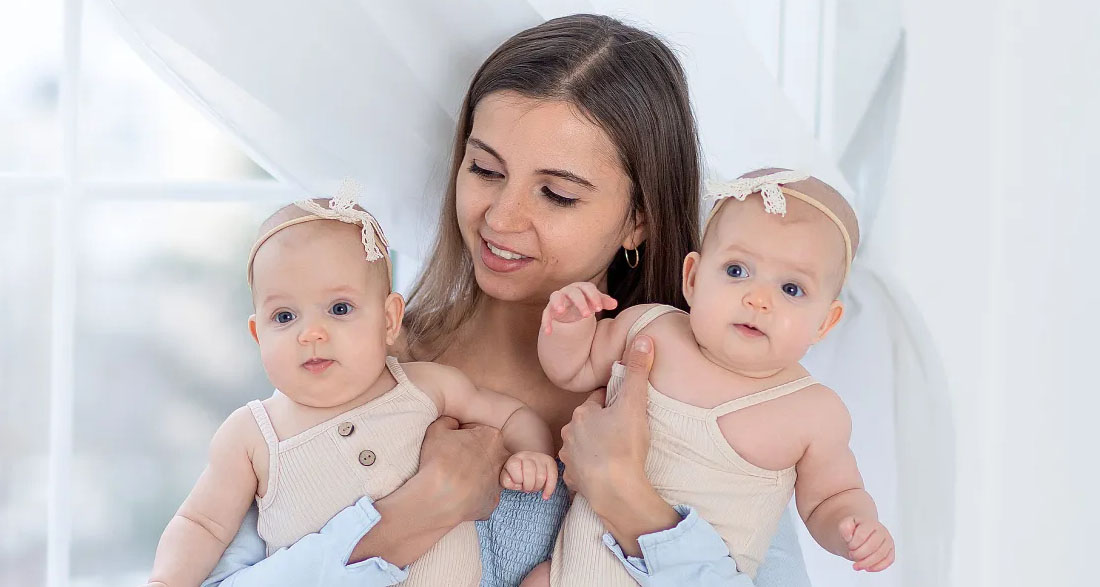
My husband once swore he’d take care of everything if I gave him a baby. He said I wouldn’t have to give up my career—that I could have both: the life I worked so hard for and the family we dreamed about.
But then the twins came, and suddenly I was “unrealistic” for wanting to keep the job that paid our bills and built our home. He wanted me to quit my job, and in the end, I agreed… but not before adding one very important condition.
My name’s Ava, and I’m a family doctor.
I spent ten long years building this life—ten years of sleepless nights in medical school, endless hours during residency, and learning how to hold a stranger’s hand while giving them the kind of news that breaks your heart.
I’ve stitched up bar fights at 3 a.m., comforted scared parents during their baby’s first fever, and sat beside dying patients who just needed someone to listen.
It was never easy, but I loved every part of it. Medicine wasn’t just my job—it was me.
Nick, my husband, had a different dream. He wanted to be a dad more than anything else in the world.
“Picture it, Ava,” he’d say, his eyes lighting up like a kid’s. “Teaching him to throw a curveball in the backyard. Rebuilding an old Chevy together on weekends. That’s what life’s supposed to be about.”
I wanted kids too—but I also wanted to keep the career I’d fought for.
My work schedule was brutal: 12-hour shifts, surprise emergencies, no real breaks. My patients needed me. And, let’s be honest, our mortgage needed me too.
I made nearly double what Nick earned from his sales job—not that I ever bragged about it. It was just a fact, like the sky being blue or coffee being necessary for survival.
So when I finally got pregnant, I was both thrilled and terrified.
At the first ultrasound, the technician frowned at the screen, then grinned.
“Well,” she said, “looks like you’ve got two heartbeats in there.”
Nick jumped up. “Twins?” He grabbed my hand, eyes shining. “Oh God, Ava. Double the dream. This is perfect!”
I smiled, but deep down, a nervous feeling started growing in my stomach.
“Nick,” I said gently. “You know I can’t just stop working, right? We’ve talked about this…”
He squeezed my hand. “Baby, I’ve got this. I’ll handle everything—the diapers, the feedings, all of it. You’ve worked too hard to give up your career now. I mean it.”
And he did mean it—at least then. He said it at the grocery store when we ran into his cousin.
He said it at my baby shower, loud enough for everyone to hear. He even said it when he brought me Thai food at work, smiling proudly like a man who had everything under control.
Everyone adored him for it.
“Most men wouldn’t even change a diaper,” my nurse practitioner told me. “You’ve got a good one.”
And I believed her. I believed him.
Our baby boys, Liam and Noah, arrived one beautiful Tuesday morning in March. Each six pounds, red-faced and squirming, smelling like heaven.
The first month was chaos—but beautiful chaos. I’d sit in the nursery at 4 a.m., one twin asleep, the other in my arms, feeling like my heart might burst.
Nick was amazing at first. He posted photos online with captions like “Best Dad Life” and “My Boys.” I thought we had it figured out.
Then came my first day back at work. I only took two shifts a week to stay licensed and keep my patients.
“I’ve got this,” Nick promised the night before. “Seriously, Ava, don’t worry. The nanny’s coming in the morning, and I’ll be home by three. We can handle this.”
When I came home twelve hours later, I smelled chaos before I saw it. Both babies were crying so hard the walls seemed to vibrate.
Inside looked like a disaster zone. Bottles stacked in the sink. Laundry spilling everywhere. Burp cloths thrown like confetti.
And Nick? He was sitting on the couch scrolling through his phone.
“Oh thank God,” he said without even looking up. “They’ve been crying for two hours straight. I think they’re broken.”
“Did you feed them?” I asked.
“I tried. They didn’t want the bottles.”
“Did you change them?”
He waved a hand. “Probably? I don’t know, Ava. They just want you. I didn’t even get to take a nap.”
I stared at him, still in my scrubs, keys in my hand.
“You didn’t get to nap?” I repeated, my voice shaking.
“Yeah,” he sighed. “It was brutal.”
That night, I fed, changed, and soothed both boys until midnight while Nick snored peacefully. And that became our new routine.
I’d work all day, come home to chaos, clean, feed, and still somehow get told, “You’re not as fun anymore,” or “The house is always a mess.”
One night, exhausted and nursing Liam while typing patient notes with one hand, Nick stood by the door rubbing his temples.
“You know what would fix all this?” he said.
“What?” I muttered, barely looking up.
“If you just stayed home. This is too much for you. I was wrong about this whole career thing.”
I laughed—a sharp, humorless sound. “That’s not happening. You promised I wouldn’t have to quit.”
He scoffed. “Come on, Ava. Stop being unrealistic. Every mom stays home. This ‘career woman’ thing had a good run, but it’s over now. I’ll work, you stay home. That’s how it’s supposed to work.”
I looked at him, the man who’d sworn he’d support me. “So all those promises? About how you’d handle everything? About how I wouldn’t have to give up my career?”
He shrugged. “Things change. You’re a mom now.”
“I was a doctor first.”
“Well, you can’t be both. Not really,” he said, as if stating a simple fact. “Come on, babe, where have you ever seen a dad stay home while the mom works? That’s not how the world works.”
Something cold settled inside me.
“Fine,” I said.
The next morning, I made coffee and set the twins in their bouncers. Nick sat at the table, halfway through his toast.
“Okay,” I said casually. “I’ll consider quitting.”
His head snapped up. “Really?”
“On one condition.”
He frowned. “What condition?”
I folded my arms. “If you want me to quit, you’ll need to earn what I make. Enough to cover everything—the mortgage, utilities, groceries, insurance, childcare. All of it.”
The color drained from his face. He knew exactly what that meant.
“You’re saying I’m not enough?” he snapped.
“I’m saying you can’t ask me to give up my career when you can’t afford to replace it. That’s not emotion, Nick—that’s math.”
He slammed his mug down. “So it’s all about money now?”
“No,” I said softly. “It’s about responsibility. You wanted this family. You got your sons. Now step up—or stop asking me to give up everything.”
He stared at me, speechless, then muttered, “You’re being impossible,” and stormed out.
The house fell silent. I stood in the kitchen, listening to our babies coo softly in the next room.
This wasn’t about pride anymore. It was about survival. Because love doesn’t pay the bills. Promises don’t buy diapers.
The next week was icy. Nick barely spoke to me. He’d mutter, “Where are the burp cloths?” or “Did you buy more formula?” and that was it.
But then, something shifted.
One night, at 2 a.m., Liam’s sharp cry echoed through the room. I was about to get up when Nick moved first.
He picked up Liam, humming a broken lullaby. When Noah started crying too, Nick sighed but smiled. “Guess we’re both up, huh, buddy?”
For the first time in weeks, he wasn’t posing—he was trying.
The next morning, he made breakfast. The eggs were overdone, the coffee could melt steel—but it was effort.
He pushed a mug toward me. “You were right,” he said quietly.
“About what?” I asked, cautious.
“Everything,” he admitted, rubbing his neck. “I thought you worked just because you liked it. I didn’t get what it meant to you. But now I see it. You keep us all together. And I don’t want you to quit.”
He paused. “I talked to my boss. Asked if I can work remotely a couple days a week—so I can be here when you’re at the clinic. I want to be a real partner.”
I stared at him, stunned. After all the anger and distance, it felt like fresh air.
I reached for his hand. “That’s all I ever wanted, Nick. For us to be a team.”
He squeezed my fingers. “We will be. I promise. And this time I mean it.”
That night, I sat in the nursery, watching the twins sleep. Nick stood by the doorway.
“You okay?” he asked.
“Yeah,” I said, smiling. “Just thinking.”
“About what?”
“About how this was never about winning an argument,” I said softly. “It was about being seen. About both of us being seen.”
He came and sat beside me. “I’m sorry it took me so long to get it.”
“You got there. That’s what matters.”
He wasn’t perfect overnight—still put diapers on backwards, still burned the toast—but when Liam cried at 3 a.m. the next week, Nick whispered, “I got this,” and I finally believed him.
Because here’s what I learned: real partnership isn’t about keeping score. It’s not about who earns more or who works harder. It’s about understanding that both people deserve to keep the things that make them whole.
I didn’t give up being a doctor to be a mother—I became both. And Nick didn’t just become a provider—he became a father.
Our twins deserved parents who showed up for every part of life, not just the happy photos.
They deserved to see that love doesn’t mean sacrifice—it means support.
So no, I didn’t quit my job. And Nick didn’t suddenly double his salary. But he started showing up—for real.
And that made all the difference.
Because at the end of the day, if someone promises you the world, pay attention to who’s still holding the ribbon when things start to unravel. That’s the one who’s truly on your side.
