
I’m 91, and for years, I had basically accepted that my life would end quietly—no visitors, no phone calls, just me and the ticking of the clock. My husband had been gone for decades.
My children had moved away, started families of their own, and slowly drifted out of my life. At first, they called. Then texts. Then nothing.
Birthdays were just me, a lonely cupcake, and the TV. Holidays were frozen dinners and reruns.
Most days, it was just the creaking house and the hallway clock ticking, like it was trying to remind me I still existed. That’s the kind of loneliness that makes you feel see-through, like you’re almost a ghost already.
No one ever called for Jack.
Then Jack moved in next door.
He was twelve, skinny and lanky, with a backwards cap and a skateboard practically glued to his hand.
Every evening, I’d see him outside, skating up and down the sidewalk, trying tricks, falling, and getting back up again. Other kids would get called inside. “Dinner!” or “Homework!” But his house stayed dark most nights. No cars. No lights. Nothing.
I told myself I wasn’t being nosy—just observant. That lie held up until the night I heard him crying.
It was late. I woke to a sound that wasn’t TV, or the pipes, or a baby crying. It was muffled, broken sobs. I held my breath and listened.
I pulled on my robe and slippers and shuffled to the window. I peeked through the curtain.
There he was. Jack, sitting on the porch, knees pulled to his chest, arms wrapped around them, shoulders shaking. His T-shirt was thin against the cold, his cap lying beside him, and no light glowed from inside the house.
Before I could talk myself out of it, I opened my door and stepped outside.
“Jack?” I called softly. “Honey, are you okay? Are you cold? Is your mom home?”
He jerked his head up. Tears streaked his face. He looked terrified, like I’d caught him doing something wrong instead of just crying.
“I’m fine,” he blurted. His voice cracked. “I’m fine.”
“Are you cold? Is your mom home?” I took one small step closer.
He stared at me for a long moment, then grabbed his hat, ran inside, and slammed the door. The sound echoed down the street. I shuffled back inside, heart pounding. I didn’t sleep much that night.
The next day, I watched his house like it was my job. By seven, my stomach was a tight knot. Usually, he’d come out after school with his skateboard, practicing tricks, but that day, nothing. Four o’clock. Five. Six. Porch dark. Curtains unmoved.
“Just say something so I know you’re okay,” I muttered under my breath.
I baked a pie to keep my hands busy—apple, the one thing I could make without a recipe. When it cooled, I carried it next door and knocked.
“Jack? It’s Mrs. Doyle. I brought pie.”
Silence.
I knocked again.
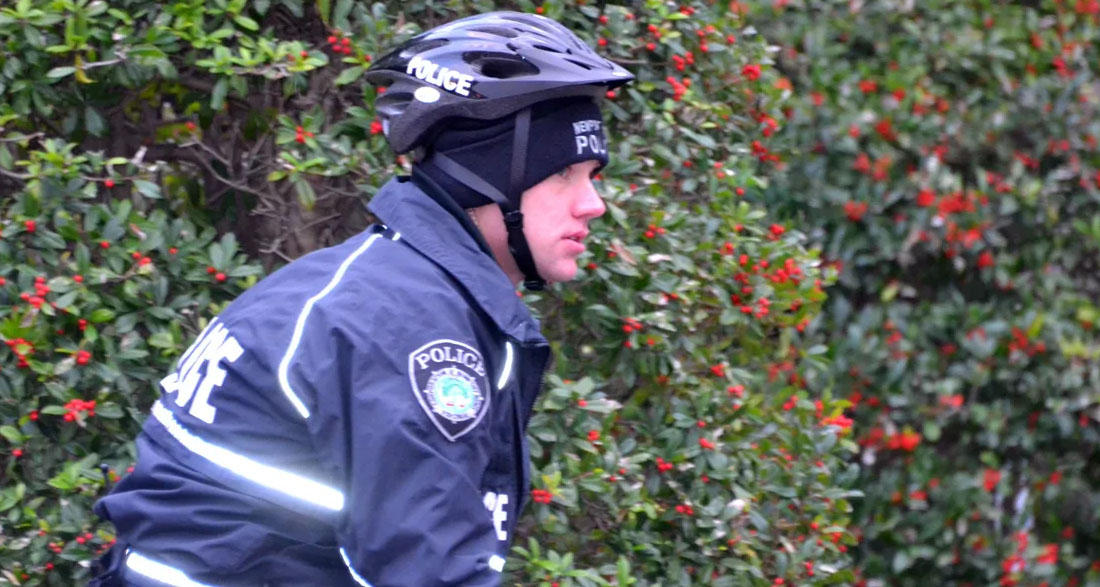
By morning, I’d made up my mind. I couldn’t wait any longer. I called a taxi and went to the police station, because I don’t drive anymore and, honestly, at ninety-one, I shouldn’t.
The officer at the front desk looked barely older than Jack.
“Ma’am, can I help you?” he asked, standing up.
“I hope so,” I said. “I’m worried about a boy on my street. I might be wrong, but if I’m right and say nothing…”
“I don’t see any adults there much,” he said. He nodded and grabbed a clipboard.
“Your name?”
“Helen. I live on Maple.”
“The boy?”
“Jack. He’s twelve. Lives next door. I rarely see any adults there.”
“You did the right thing coming in,” he said. “Let me get Officer Murray. He handles welfare checks.”
A few minutes later, an older, calm officer appeared. He shook my hand firmly.
“Helen,” he said, “tell me about Jack.”
So I did. Again. About the crying, the dark house, the unanswered door. He listened, jotted notes, didn’t interrupt.
“I know I’m just the old lady next door,” I said. “But if something happens to that boy and I sat on my hands…”
“You’re not ‘just’ anything,” he said. “You noticed. That matters. I’ll stop by this afternoon. Would you like to be there?”
“Yes,” I said without hesitation.
That afternoon, Murray and I walked to Jack’s house together. He knocked firmly, then waited. A crack appeared in the door.
“Hi, Jack. I’m Officer Murray. Your neighbor was worried,” he said gently.
Jack’s gaze darted to me, then back to Murray.
“Is your mom home?” Murray asked.
“She’s working,” Jack said.
“Okay,” Murray said. “Mind if I step in and talk for a minute? You’re not in trouble. I just want to make sure you’re okay.”
“Do you have a warrant?” Jack asked suspiciously. Twelve going on forty.
“No warrant,” Murray said. “Just want to check you’re alright.”
A loud crack came from somewhere inside the house, like something heavy had fallen. My heart jumped. Murray stiffened.
“The house is old,” Jack said quickly.
We stepped inside. The place felt wrong. Dirty dishes piled in the sink, trash overflowing, a burnt pot on the stove, one mattress on the floor. No pictures, no lamps, no sign of grown-up life.
“How long has your mom been gone?” Murray asked.
“A while,” Jack mumbled.
“How long is ‘a while’?”
“A week… or nine days. Mom sends money when she can. She had to help my grandparents. There wasn’t room for me to go. She said I’d be okay.”
I couldn’t stop my hand from flying to my mouth.
“You shouldn’t be handling this by yourself,” Murray said softly.
“I’m almost thirteen,” Jack added proudly, like that made it okay.
“You’re still a kid,” Murray said. “You shouldn’t be alone.”
“Please don’t take me away,” Jack whispered. “I don’t want to go live with strangers. I’m doing fine. Just… don’t get my mom in trouble. Please.”
He looked at me, pleading.
“I think you’re brave,” I said, stepping closer. “But no, sweetheart. You’re scared and alone, pretending you’re not. That isn’t okay.”
Murray looked at me. “Helen, you live alone?”
“Yes, just me.”
“If we get his mom’s permission and clear it with CPS,” he said, “would you be willing to have Jack stay with you for now?”
“You’d want me there?” Jack asked. “I’m loud. I fall a lot. I forget stuff.”
“I’ve had too much quiet and not enough falling,” I said. “We’ll manage.”
That week was paperwork, calls, inspections. His mom cried over the speakerphone. “I thought it would be three days… then Dad got worse… then Mom fell again…”
In the end, CPS agreed. Jack could stay with me.
He moved into my guest room with his backpack, game console, and skateboard.
“So… what do I call you?” he asked.
“Whatever feels right,” I said.
“Grandma Helen?” he suggested shyly.
“Perfect,” I said.
We fell into a routine. Breakfast together, school, homework, movies, baking pies, tablet lessons, superhero debates. The house stopped sounding like a tomb.
When his mom returned in person, she cried. “I’m so sorry, baby. I thought I was doing what I had to.”
“You can’t disappear like that again,” Jack said into her shoulder.
We talked about mistakes, desperation, responsibility. Life wasn’t perfect, but it was better. Jack stayed with me most afternoons anyway.
Years passed. He grew taller. His voice dropped. He carried my groceries and scolded me for climbing stools.
Then came the doctor’s words: cancer. “At your age, we focus on comfort, not cure.”
I made my will. Everything went to Jack and his mom.
“You don’t have to do that,” his mom cried.
“But why us?”
“My family is whoever knocks on my door,” I said. “That’s you two.”
Jack hugged me tight. “You’re stuck with me.”
“Yes,” I said. “Somebody has to be.”
I don’t know how much time I have left. But I know this: I won’t leave as a ghost in an empty house. This home will stay full of life, laughter, skateboards, pencil marks on the wall, long after I’m gone.
All because one cold night, I heard a kid crying and decided not to look away.
