
“The Day My Mother-in-Law Tried to Ruin My Wedding — and My Husband Took the Mic”
I always thought planning a wedding with the man I loved would be the happiest time of my life.
I never imagined that his mother would turn it into a battlefield, humiliate my parents in front of hundreds of guests, and force me into a choice I never saw coming.
But when my husband grabbed the mic that night… everything changed.
I’m Hannah, I’m 31, and I should’ve known what kind of storm was coming the second my future mother-in-law, Patricia, heard about our “small and simple” wedding plans.
Ethan and I had been together for five years. We always dreamed of something warm and personal — an outdoor wedding at a cozy vineyard in Oakberry.
Nothing over-the-top. Just handwritten vows, good food, string lights, and my mom’s homemade jam jars as wedding favors.
It wasn’t about impressing people. It was about us.
But to Patricia, “simple” was the same as “shameful.”
One Sunday, during brunch at her favorite café, she stirred her tea with that stiff, dramatic motion she did whenever she was about to say something cutting.
She looked at me over the rim of her cup.
“A backyard wedding?” she asked, her tone already sharp. “Hannah, that’s embarrassing. You’re marrying into a respected family. People will talk.”
It wasn’t a question — it was a warning.
I smiled tightly, trying to stay calm. “We just want something simple, Patricia. Our budget’s a little tight, and my parents can’t—”
Before I could finish, she cut me off.
“Don’t worry about your parents,” she said, already reaching for her phone. “I’ll handle everything.”
And from that moment on, she did. Completely.
Once Patricia got control, she didn’t let go — not for a second.
Suddenly, we weren’t looking at vineyards anymore. We were touring ballrooms. The guest list doubled, then tripled.
She swapped our favorite local band for a string quartet and “upgraded” the menu to something that cost more than my car.
Every time we tried to protest, she’d wave us off with the same line:
“You’ll thank me later.”
When Ethan and I pushed back, she hit us with her favorite trump card:
“It’s already paid for!”
And that meant, “You’ve lost your say.”
My parents, Charles and Linda, tried to stay positive. My dad was a retired mechanic; my mom worked part-time at the library.
Money had never been easy for them. They’d told us early on that they couldn’t help much financially, but they gave us their hearts in every other way.
My mom spent weeks folding hundreds of paper cranes for the guest tables — one for every wish of happiness she had for us. My dad wrote a speech that made me cry when he practiced it at the kitchen table.
They were proud. They were kind. And they didn’t care if the venue had chandeliers or folding chairs.
The night before the wedding, I sat beside Ethan while lacing up my dress. I whispered, “No matter what the day looks like, as long as we have them there, I’ll be okay.”
He smiled. “Your parents must be so proud of you, Han.”
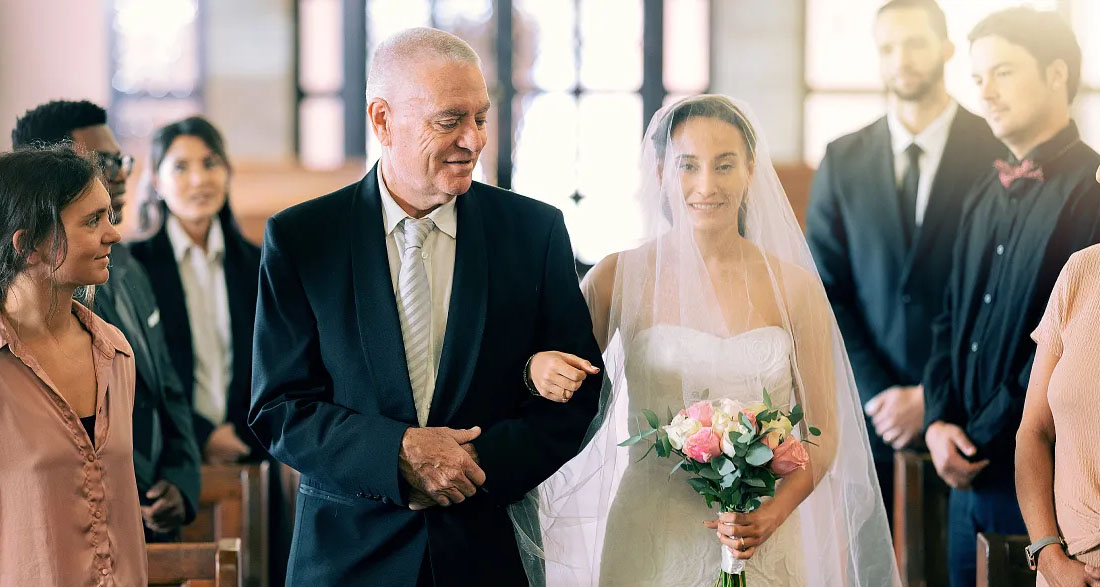
The next day, the wedding was grand — chandeliers, champagne towers, a string quartet softly playing Coldplay. It was beautiful, yes, but it didn’t feel like ours.
Still, when I walked down the aisle and saw Ethan’s face light up, the rest of it melted away.
“You’re my forever,” he whispered when we met at the altar.
And for that moment, I believed that was all that mattered.
The ceremony ended, and the reception began. The ballroom buzzed with laughter and expensive perfume. Waiters carried trays of truffle appetizers, and I barely recognized half the guests.
Patricia’s side was full of investors, golf buddies, and distant cousins of her husband. My parents sat quietly at a corner table with my siblings — smiling, watching, trying to blend in even though they didn’t belong in that glittering room.
I caught my mom’s eye and mouthed, “You okay?”
She nodded and smiled, but I saw her swallow hard.
Then Patricia stood up. She tapped her wine glass with a spoon, that sharp ting-ting echoing through the room.
“I’d like to say a few words,” she announced.
Ethan tensed beside me. The DJ stopped the music.
She started with something sweet — a toast to family and love — but her tone shifted, slow and cold.
“You know,” she said, eyes sweeping the room, “it’s a shame when people think they can just show up at a wedding they didn’t pay a dime for!”
The room went silent. Forks froze midair. I felt my stomach drop.
Ethan whispered, “Mom, don’t.”
But Patricia ignored him.
“No, really,” she continued. “Since our side covered the venue, the food, even the dress… I think it’s only right to acknowledge who made this day possible.”
Then, she looked directly at my parents.
“Maybe next time, offer to contribute something — instead of just showing up for the free wine!”
The words hit like a slap.
My dad went pale. My mom leaned over and whispered something to him, her lips trembling. Then he stood, slow and steady.
“If we’re not welcome,” he said softly, “we’ll go.”
He didn’t yell. He didn’t argue. He just spoke the truth — calm, broken, and proud.
And before I could move, they turned and began walking toward the door.
I stood frozen. My own parents — walking out of my wedding.
That’s when Ethan stood. He didn’t hesitate.
He strode to the mic, yanked it from the stand, and said, loud enough for everyone to hear:
“If they’re leaving, then so are we.”
Gasps filled the room. Patricia’s face drained of color.
“Ethan, don’t be ridiculous,” she said, forcing a laugh.
But he didn’t back down.
“No,” he said firmly. “You embarrassed the people who raised my wife. The people who made her who she is. And if that’s what this night has become, we’re done here.”
He turned to the crowd.
“If you’re here for love, not money — come with us.”
He reached for my hand. I took it. Together, we walked out.
Behind us, Patricia hissed, “Stop! You’re making a scene!”
Ethan didn’t even look back.
“You made it first,” he said.
Then, a chair scraped back. It was my sister Ava, standing up. She grabbed her husband’s hand. Then my brothers followed.
My college roommate stood. Even one of Patricia’s longtime friends hesitated, then joined us quietly.
By the time we reached the door, a handful of people had followed. Patricia stood frozen, still holding her glass, her face blank — as if someone had just taken away her spotlight.
We ended up at Tony’s Trattoria, a tiny Italian restaurant three blocks away. The owner, Tony, blinked in surprise when he saw me still in my wedding dress.
“Wedding?” he asked.
“Change of venue,” Ethan grinned.
We laughed — the kind of laughter that comes from finally being free.
Tony sat us down, brought out tiramisu and sparkling cider “on the house.” My mom wiped her tears, my dad held my hand, and for the first time that day, I felt married.
It wasn’t fancy. But it was real.
Dad gave his speech right there, his voice trembling as he said, “All that matters is love, not the chandeliers.”
Everyone clapped. Even Tony got teary.
For three months, we didn’t hear a word from Patricia. No apology. No message. Nothing.
And honestly? That silence was peaceful.
Then one January afternoon, there was a knock on our door. I opened it to see her standing there — pearls, silk scarf, and a pink pastry box like it was a peace offering.
“Hello, Hannah,” she said smoothly. “I thought it was time we talked.”
I let her in, though my chest tightened.
She sat stiffly, then finally said, “I suppose I owe you an apology. Things got… out of hand at the wedding.”
Out of hand. That’s what she called it.
“My parents were devastated, Patricia,” I said, keeping my voice calm.
She shifted. “I didn’t mean to upset anyone. I just thought certain traditions should be honored.”
I stared at her, realizing she still didn’t get it.
She tried again. “Anyway, I’d like to move forward. Ethan hasn’t been taking my calls. Maybe we can reset?”
But she wasn’t there to apologize — she was there to regain control.
When Ethan walked in and saw her on our couch, he paused. “We can take it slow,” he said carefully.
And we did. With boundaries this time.
Patricia never truly apologized. Not once. But she changed — in small ways.
She called before visiting. She stopped mentioning money. She didn’t bring up the wedding. She’d lost the power she once held.
And that was enough for me.
After that day, Ethan and I built something stronger. Every Sunday, my parents came over for dinner. My dad would bring puzzles; my mom taught me how to make her famous blueberry cobbler.
Sometimes, we’d just sit in the backyard, sipping coffee, watching the sunset. No chandeliers, no fancy clothes — just peace.
One evening, I caught Ethan folding one of the leftover paper cranes my mom had made.
“She made hundreds of these,” he said softly.
“Each one by hand,” I smiled.
He looked at me. “That’s your family.”
“And you stood up for them,” I said.
He shook his head gently. “I stood up for you.”
I leaned against him. “You didn’t have to make a scene that night.”
He smiled. “I didn’t make a scene. I made a decision.”
He was right.
Not every story ends with a perfect apology. But ours ended with something better — truth, love, and boundaries that finally held strong.
Patricia still visits sometimes, bringing store-bought pastries and forced smiles. She asks before inviting herself. And she knows — without us saying a word — that we haven’t forgotten.
Maybe she’s learned something. Maybe not. But I’ve learned this:
You don’t have to make yourself small to keep someone else comfortable.
You don’t owe silence just because they’re louder.
Your love story doesn’t need a perfect stage to be real — it just needs two people willing to stand up for each other, even when it’s messy.
So to anyone out there planning a wedding and dealing with family drama — trust me.
Protect your peace. Honor the people who raised you with love, not money. And if anyone tries to humiliate them, make sure your partner’s the one holding the mic.
