
My name is Jimmy. I’m 36 years old now, but for most of my life, I carried a quiet shame that followed me everywhere. It wasn’t about my school, my friends, or even the small town where I grew up.
It was about my mother’s coat.
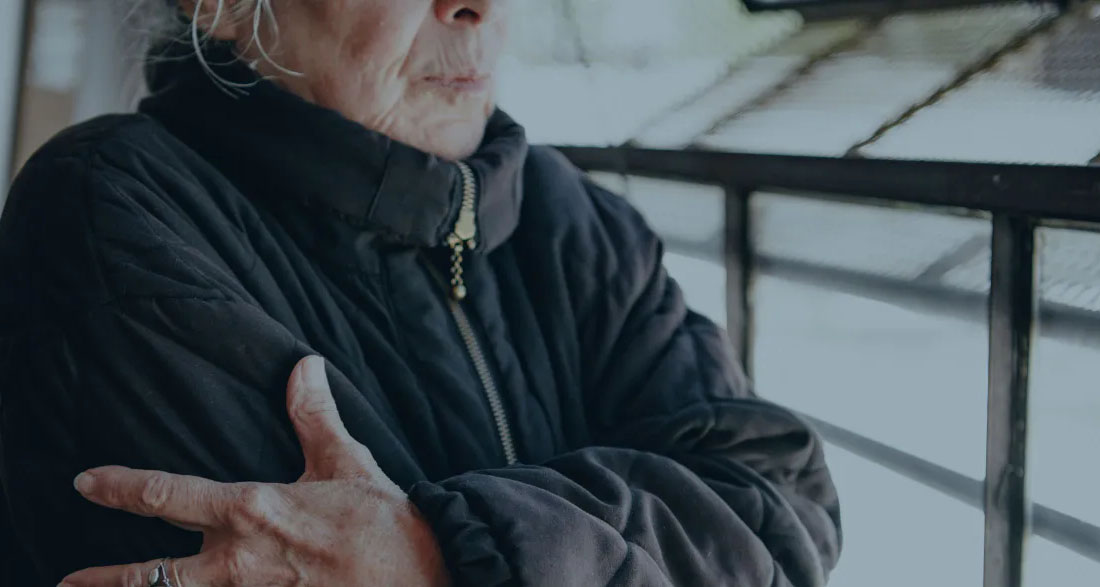
My mom wore the same coat for 30 long winters. It was a charcoal gray wool coat that had clearly seen better days.
The elbows were thinning, the cuffs were covered with little fuzzy pills, and two of the buttons didn’t even match anymore. Mom had sewn those buttons on herself over the years when the originals fell off.
To me, it looked old, tired, and embarrassing.
And when I was a kid, that mattered more to me than it should have.
I remember being 14 years old, standing in the passenger seat of Mom’s old car as we drove toward my high school. The coat was wrapped tightly around her shoulders while she gripped the steering wheel.
My stomach twisted with embarrassment.
Finally, I said, “Mom… can you drop me off a block away from school today?”
She glanced at me. “Why, baby?”
I looked down at my shoes and muttered, “I just… don’t want my friends to see the coat.”
For a moment, she didn’t say anything. Then she smiled that soft, tired smile she always had when she didn’t want to make a problem out of something.
“It keeps the cold out, baby,” she said gently. “That’s all that matters.”
At the time, I rolled my eyes and climbed out of the car a block away from school. I never looked back to see if she was hurt.
I told myself that one day, when I grew up and had money, I’d buy her something better.
And eventually… I did.
Years passed. I studied hard, went to college, and worked my way through long nights of drafting tables and architecture projects. When I finally landed my first real job as an architect, the first thing I did with my paycheck was buy my mom a coat.
Not just any coat.
A beautiful cashmere trench coat.
It was elegant, smooth, and expensive. The kind of coat that told the world you had finally made it.
When I handed it to her, she gasped.
“Oh Jimmy,” she said, running her hands over the fabric. “This is beautiful.”
“I want you to wear it,” I told her proudly. “No more of that old coat, okay?”
She smiled warmly and hugged me.
“Thank you, baby.”
She hung the new coat carefully in her closet.
The next morning…
She wore the old one to work.
When I saw her walking out the door in that same ragged coat, I felt my face heat up.
“Mom!” I said, frustrated. “Why are you still wearing that thing?”
She adjusted the collar calmly.
“It keeps the cold out, baby.”
That answer again.
Mom worked at a flower shop in the mall. She had always loved flowers. Ever since I was little, she would bring home small bouquets that the shop couldn’t sell anymore.
“Flowers are the only things in the world that are beautiful without trying,” she used to say.
But the coat?
That coat drove me crazy.
We argued about it many times.
“Mom, we’re not that poor family anymore,” I insisted one evening. “Please… just throw it away.”
She looked at me then with a strange expression. Not angry. Not defensive.
Just… sad.
“I know, baby,” she said quietly. “I know. But I can’t throw it away.”
“Why not?” I asked.
She didn’t answer.
She just smiled that same quiet smile… and kept wearing the coat.
And she wore it until her very last breath.
Mom died at 60 years old, unexpectedly, on a Tuesday morning in February. It was the coldest week of the year.
The doctors later said regular checkups might have caught what was wrong with her.
That sentence still echoes in my mind.
Regular checkups might have caught it.
I lived in the city by then, but I visited every weekend. I called her every evening.
I told myself I was doing enough.
Looking back… I think I just liked believing that.
After the funeral, I drove to my mom’s tiny apartment alone.
The silence inside felt heavy.
I needed to pack up her things. Needed something to keep my hands busy because my chest felt hollow.
And there it was.
The coat.
Still hanging by the door.
Same hook. Same place it had always been. It looked like she had just stepped out to check the mail and would come back any minute.
Something inside me shifted when I saw it.
Grief felt too big to hold. But anger? Anger was easier.
We could have afforded better clothes for years. She had chosen to keep wearing that old thing.
And now she was gone.
I walked over, grabbed the coat off the hook, and muttered, “I’m done with this.”
Done with the embarrassment. Done with the stubbornness.
I was ready to throw it away.
But when I lifted it…
It felt heavier than it should.
Wool shouldn’t weigh that much.
Confused, I ran my hand along the lining.
That’s when I remembered something.
Mom had sewn hidden pockets inside the coat years ago. Deep ones.
And they were bulging.
My heart started beating faster.
I slipped my hand inside one pocket, expecting old tissues or candy wrappers she had forgotten over the years.
Instead…
My fingers touched a thick bundle of envelopes.
They were held together with a dry, brittle rubber band that looked almost as old as the coat.
There were 30 envelopes.
Each one carefully numbered in Mom’s familiar handwriting.
None of them had stamps.
None had addresses.
My legs felt weak.
I sat down right there on the floor by the door, the coat draped over my lap, and opened the envelope marked “1.”
The very first line made my vision blur.
“Dear Jimmy,” the letter began. “When you find these, I’ll be gone. Please don’t judge me until you’ve read them all.”
My hands trembled as I continued.
That first letter explained everything.
My father’s name was Robin.
Mom wrote that he was the love of her life when she was 22 years old.
They met in the town square of our little city on a cold November afternoon. She had been struggling to carry several bags of groceries when one of them tore open and spilled everything onto the sidewalk.
Apples rolled across the pavement.
Bread slid into the street.
And suddenly a young man knelt beside her, helping gather everything up.
That man was Robin.
“He helped me pick up the groceries,” Mom wrote, “and somehow… he never really left after that.”
For two years, they were inseparable.
Then Robin was offered a job abroad. A job that paid more money than either of them had ever imagined.
He promised he would go, save money, and come back.
They would build a life together.
The day he left was freezing cold.
Mom wrote that she was shivering at the bus station when Robin suddenly removed the coat from his own shoulders and wrapped it around her.
“Just to keep you warm while I’m gone,” he told her.
She laughed and said, “You’ll freeze without it!”
He smiled and replied, “I’ll be fine.”
He promised he would come back.
But weeks after he left, Mom discovered something that changed everything.
She was pregnant.
She wrote letters to his forwarding address overseas.
But none were answered.
For years, she believed he had abandoned her.
She believed the coat was the last thing he left behind.
So she raised me alone.
She worked two jobs.
And every winter, she wore that coat because it was the only thing she had left of him.
Mom was angry for a long time.
I remember asking her once, when I was six years old, “Mom, why don’t I have a dad?”
She knelt beside me and said softly, “Some dads have to go away.”
But in her letter, she admitted that my question broke something inside her.
That night, on the anniversary of the day Robin left, she sat at the kitchen table and wrote him a letter.
She told him he had a son.
She wrote, “The boy has your eyes.”
Then she sealed the letter and tucked it into the coat pocket.
The next year, she wrote another.
And another.
Thirty years.
Thirty letters.
I sat on the floor for hours reading them.
The early ones described everything my father had missed—my first steps, my first words, the way I cried every morning during my first week of kindergarten.
But around the tenth letter, something changed.
Mom wrote that she had found an old newspaper clipping while cleaning a box.
It was a small obituary from the region where Robin had gone to work.
He had died in a worksite accident six months after he left.
Six months.
Before he ever knew she was pregnant.
Before he ever knew I existed.
He never came back… because he never could.
Mom had spent half her life hating a ghost.
The letters after that were different.
She wrote to him apologizing.
“I’m sorry I was angry for so long,” she wrote.
She told him about every milestone in my life.
In one letter she wrote:
“He became an architect. He builds things that last. You would have been so proud of him, Rob.”
I read that line three times.
Then I opened the final envelope.
Inside was a photograph.
Mom and a young man stood side by side, laughing. Both of them looked so young it almost hurt to look at.
Then I read her last letter.
“Son,” she wrote, “I discovered Robin had a sister. Her name is Jane. She still lives not far from where you grew up. I never reached out. I was afraid she would think I was lying. Afraid she wouldn’t believe me. Afraid you would get hurt.”
Then she wrote the words that stayed with me.
“But you deserve to know you’re not alone in this world.”
She left me an address.
And she wrote one last message:
“Take the coat. Take the photo. Go find her. Tell her Robin had a son. Tell her that son became an architect who builds things that last.”
Three days later, I drove to the address.
A small cottage stood at the edge of town.
Snow fell steadily as I knocked.
An elderly woman opened the door.
“Can I help you?” she asked.
“I think you might be Robin’s sister… Jane.”
Her face hardened.
“My brother died decades ago.”
“I know,” I said quietly. “I’m his son. My name is Jimmy.”
She stared at me.
Then she stepped aside.
“Come in.”
Inside, I laid the photograph and letters on the kitchen table.
She looked at the photo for a long time.
Then she shrugged.
“Anyone could find a photograph.”
“My mother kept that coat because he put it on her shoulders the day he left,” I said.
“My brother wasn’t married.”
“No,” I replied. “But he loved her.”
She pushed the photo back toward me.
“People have shown up before making claims about my brother. It never ends well.”
“He didn’t know she was pregnant,” I said firmly. “He died before she could tell him.”
Her voice grew sharp.
“I said leave.”
So I did.
I stepped out into the snow.
But I didn’t leave.
I stood there on the porch wearing the coat.
Five minutes passed.
Then ten.
The cold seeped through my shoes and fingers.
But I stayed.
Finally, the door opened.
Jane stood there watching me.
“You’re going to freeze,” she said.
“I know.”
“Then why are you still standing there?”
I looked at her and said quietly, “Because my mother waited thirty years for answers she never got. I can wait a little longer.”
Her eyes dropped to the coat.
She stepped forward and touched the collar.
Her fingers paused at a small stitched repair along the seam.
Then she closed her eyes.
“Robin fixed this,” she whispered. “The summer before he left. He was terrible at sewing.”
Tears filled her eyes.
“Get inside,” she said. “Before you catch your death.”
Inside, she made tea and placed two cups on the table.
We sat quietly for a long time.
Then she picked up the photograph again and looked at me.
“He has your eyes,” she said softly.
She placed the photo between us.
“It will take time,” she added.
“I know.”
She nodded.
“But I suppose you’d better start from the beginning.”
When I left that night, I hung the coat on a hook by her door.
She didn’t tell me to take it.
And I didn’t.
Because some things finally find the place they belong.
My mother didn’t wear that coat because she was poor.
She wore it because it was the last thing that ever wrapped around her from the man she loved.
For half my life, I was ashamed of that coat.
Now I understand the truth.
Some things aren’t rags.
Sometimes… they’re proof.
