
I truly believed the hardest part would be standing beside my mother’s hospital bed, watching machines breathe and blink for her while she fought for her life.
I never imagined that while she lay unconscious, another battle was happening quietly behind our backs — a test of character that would change our family forever.
My mom, Shirley, is 82 years old. But don’t let that number fool you.
She is the backbone of our family.
She plants her own tomatoes every summer. She fixes her own fence when the wood loosens. And just last year, she chased a raccoon off her porch with a broom while laughing and shouting, “Not today, you little thief!”
That’s my mother. Strong. Sharp. Independent.
So when the stroke came out of nowhere, it didn’t feel real.
One minute she was outside pruning her roses, carefully trimming the pink blooms she loved.
The next minute, she was face down in the dirt.
Mrs. Patterson from next door saw her collapse. Thank God she did. She called 911 immediately.
“The ambulance came so fast,” Mrs. Patterson told me later. “I kept talking to her, honey. I told her, ‘Shirley, stay with me.’”
By the time my brother Dave and I reached the hospital, Mom was already in the intensive care unit — the ICU — hooked up to machines. Tubes. Wires. Beeping monitors.
She looked small in that bed.
Smaller than I had ever seen her.
When Dave called his wife, Brenda, to tell her what happened, she refused to come.
He stepped into the hallway to make the call. When he returned, his face was tight.
“She says she can’t go in there,” he told me quietly. “She said, ‘I can’t go in there. I’m too emotional. I won’t be able to handle seeing Mom in the ICU.’”
That should have been my first warning.
The doctor didn’t soften the truth.
“Prepare yourselves,” he said gently. “She suffered a massive stroke.”
Dave gripped the back of a chair so hard his knuckles turned white.
I felt like the floor shifted beneath me.
Massive.
That word echoed in my head.
Inside the ICU, Mom lay completely still. Machines breathed with a steady rhythm. I stared at her chest rising and falling.
As long as she’s breathing, I told myself. As long as her heart is beating, that means something.
A nurse approached us quietly.
“She was admitted in muddy jeans and sneakers,” the nurse explained. “When she stabilizes, it would help if you could bring comfortable clothing.”
“I’ll go,” I said immediately. “Dave, you stay here.”
He nodded. “Call me if you need me.”
“I will,” I promised.
Mom’s house is exactly twenty minutes from the hospital.
I counted red lights on the way there because I needed something to control. Something predictable.
When I turned into her driveway, I noticed deep tire tracks cutting across the lawn.
At first, I thought maybe the ambulance had pulled in too far.
But then I saw the front door slightly open.
My stomach dropped.
I stepped out of the car slowly.
The air felt wrong.
I pushed the door open. “Hello?”
The house answered with silence.
An echo.
I walked into the living room — and stopped.
Something was wrong.
The Victorian settee that had sat under the window since I was a child was gone.
The Persian rug Mom vacuumed every single Sunday? Gone.
I moved further inside.
The walnut dining table my late father restored by hand — gone.
The silver tea set passed down through three generations — gone.
The glass-fronted cabinet stood open.
Empty.
I stood in the center of the room, trying to breathe.
This wasn’t random.
This wasn’t a break-in.
Whoever did this knew exactly what to take.
I ran across the yard and knocked on Mrs. Patterson’s door.
She opened it before I could knock twice.
“Oh, honey,” she said softly. “I was going to call you.”
“Did you see who was here?” I asked.
She hesitated.
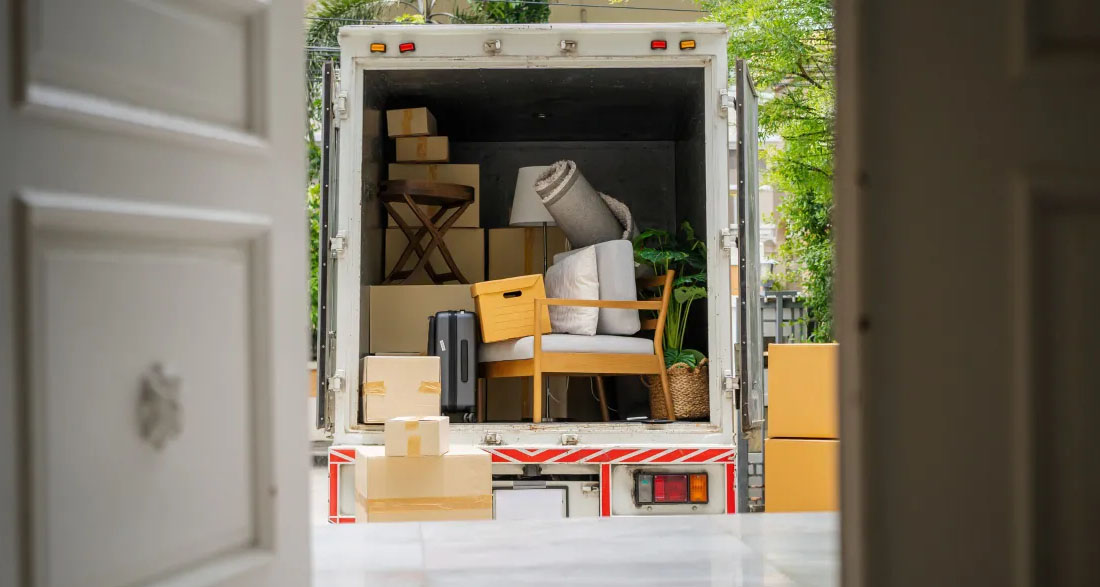
“It was your sister-in-law. Brenda. She said she was moving things for safekeeping. She had a U-Haul truck. Two men were helping load everything.”
My ears started ringing.
“When?”
“About two hours ago.”
Two hours.
While Mom lay unconscious in the ICU.
I walked back to my car and called Brenda.
She answered casually. “Hello?”
“Where is Mom’s furniture?”
Silence.
Then she sighed. “Emily, don’t start.”
“Don’t start?” My voice shook.
“I’m protecting the family assets,” she said flatly. “Your mom isn’t coming back. At her age, she won’t survive this. I’m preventing chaos before the vultures circle.”
“She’s still alive!” I shouted.
A pause.
“It’s basically over,” she said coldly.
Something inside me snapped.
“Your mom isn’t coming back,” she repeated.
“Where is the furniture?” I demanded.
“It’s already sold,” she replied. “It’s what I’m owed for tolerating her all these years.”
“Owed?” I could barely speak. “Owed for what? Sunday dinners?”
“For being treated like an outsider!” she shot back. “You and Dave always had your private talks. She never trusted me.”
“Maybe because you’re the same person who just cleared out her house while she’s fighting for her life!”
She hung up.
I sat there shaking.
I didn’t call Dave.
Not yet.
Ten minutes later, just before I drove off, my phone rang.
Brenda.
I almost ignored it.
I answered. “What?!”
She was sobbing.
“Emily, there’s a voicemail!”
“What are you talking about?”
“Your mom left it five minutes before she collapsed. I just noticed the notification.”
My heart pounded. “And?”
“Oh my God,” Brenda choked. “I can’t believe this. It was her vicious plan all along! Only you can save me now.”
“What plan?”
“Please,” she whispered. “Meet me at Shirley’s house. You need to hear it.”
She didn’t sound confident anymore.
She sounded scared.
When she arrived, I was pacing the empty living room.
She looked pale. Her hands were trembling.
“You came,” she said weakly.
“Play it,” I said. “Now.”
She held up her phone.
“She called me directly,” Brenda whispered.
The voicemail began.
Mom’s voice was steady. Clear. Calm.
“Brenda, a month ago, I created a revocable trust naming you as the temporary acting executor. I did that because I wanted to test something.”
Brenda whimpered.
Mom continued, “The trust contains a strict clause. If you attempt to sell, remove, or transfer any of my property before my official time of death, you automatically forfeit all authority and any inheritance.”
Brenda’s breathing became shaky.
Mom’s voice didn’t change.
“Greed has consequences. I hope you make the right choice.”
The message ended.
Silence filled the room.
“She trapped me,” Brenda whispered.
“No,” I said slowly. “She gave you a choice.”
“You don’t understand!” Brenda cried. “The buyers already paid! If the lawyer finds out, I lose everything!”
“Maybe you shouldn’t have stolen from your family.”
Tears streamed down her face. “Emily, please. I need help!”
“You need to buy it back,” I said. “All of it. Before Mom’s attorney reviews anything. That’s your only chance.”
She nodded wildly. “Yes. I’ll call them. I’ll offer more. I’ll return everything using Dave’s key.”
“You’d better move fast.”
She rushed out.
And I stood there realizing something.
Mom knew.
She knew exactly what Brenda would do.
That night at the hospital, Mom’s condition stabilized.
“She’s stronger than most 82-year-olds I see,” the doctor told us.
The swelling in her brain stopped getting worse.
By the next day, Brenda called me.
“I got it back,” she said quickly. “Almost all of it!”
“Almost?”
“The tea set cost me an extra $4,000. And the settee has a small tear from transport, but it’s repairable.”
“You paid out of pocket?”
“Yes,” she whispered. “I’m not losing everything over this.”
Not remorse.
Not regret.
Fear of losing money.
She even rented another truck and hauled the furniture back herself.
“Can I see Shirley?” she asked suddenly. “Please. I want to talk to her.”
Days earlier, she was “too emotional” to enter the ICU.
Now she wanted access.
“I’ll ask,” I said.
That afternoon, Mom opened her eyes.
Then she squeezed my hand.
“Mom?” I leaned closer. “Can you hear me?”
Her lips moved.
“Water,” she whispered.
I almost cried.
“You scared us,” I told her softly.
Her eyes focused slowly. She understood.
Later, when she was stable and aware, Dave and I told her everything.
She listened quietly.
Then she said, “Call Brenda.”
Brenda arrived within thirty minutes.
Red eyes. Shaky hands.
“Shirley,” she whispered. “I’m glad you’re okay.”
Mom studied her carefully.
“I heard you were very busy,” Mom said slowly.
Brenda shot me a look that said, You told them?
Then she burst into tears.
“I panicked! I thought you weren’t going to make it. I was trying to protect things. But I brought everything back!”
Mom’s eyes didn’t soften.
“That wasn’t the point.”
“Please,” Brenda said, looking at Dave. “Tell her.”
“Tell her what?” Dave asked calmly.
“That I fixed it. That it shouldn’t count.”
Mom shifted slightly.
“Brenda,” she said, “when I created that trust, I informed my children about the clause. I told them not to interfere. Your own actions would expose your intentions.”
Brenda froze. “You told them?”
“Of course,” Mom replied. “Did you think I would hand control of my estate to someone without safeguards?”
“You set me up!” Brenda snapped.
“No,” Mom said calmly. “I gave you responsibility. You chose greed.”
Dave stepped forward.
“You’ve been pushing for control for years,” he said. “You told Mom you were the only one responsible enough to manage the ‘family assets.’ You said Emily and I were too emotional.”
“I was trying to help!” Brenda cried.
“You demanded account access last spring,” I added. “You asked about property values the month before that. You weren’t helping. You were positioning yourself.”
“So you’ve all been watching me?” she gasped.
Mom nodded slightly. “I was protecting what your late father-in-law built with his hands. And what I maintained for decades.”
“This is betrayal!” Brenda shouted. “I’m family!”
I took a breath.
“You won’t be for long.”
She stared at me. “What does that mean?”
Dave’s voice was steady.
“I filed for divorce.”
The words hit like a slap.
“You what?” she whispered.
“I couldn’t ignore what you did,” he said. “You emptied my mother’s home while she was unconscious. That isn’t panic. That’s character.”
“You’d throw away our marriage over furniture?”
“It’s not about furniture,” Dave replied. “It’s about trust. And you broke it.”
“I brought everything back! That has to count for something!”
“The clause was triggered the moment you signed those sales agreements while Mom was still alive,” I said quietly. “Returning the items doesn’t undo that.”
Her breathing became uneven.
“You knew that?”
I held her gaze.
She turned away first.
Dave spoke one final time.
“You’ll be served papers soon. The attorney documented everything.”
There was nothing left to say.
Brenda walked out of the room alone.
A week later, Mom left the ICU.
Two weeks after that, she came home.
The house looked exactly the same as before — except cleaner. Dave and I supervised every delivery.
Mom insisted on walking through every room herself.
She ran her fingers along the walnut table.
“Your father would be pleased,” she said softly.
“Don’t leave us yet,” I whispered.
She gave me a faint smile.
“I’m not done yet.”
That evening, the three of us sat at the dining table.
No tension.
No manipulation.
Just family.
We talked about the garden. The neighbors. The tomatoes she planned to plant next season.
As sunlight filtered through the windows, I realized something powerful.
Mom hadn’t just protected her furniture.
She protected us.
She showed us that strength doesn’t always shout.
Sometimes it waits quietly.
Sometimes it sets boundaries.
And when the moment comes —
It stands firm.
