
When my thirteen-year-old son fell into a coma after a walk with his father, I felt like my world had shattered. Every sound, every light, every heartbeat in that hospital room pressed on me like a weight I couldn’t lift.
But a hidden note and a video message I almost missed forced me to face the one secret that could destroy his father — and make a decision about just how far I would go to keep my son alive.
I’ll never forget the smell of antiseptic or the blinding lights of the ER at three in the morning.
Yesterday, Andrew left for a walk with his dad, his sneakers worn from running, his backpack bouncing against his small frame.
He was the kind of thirteen-year-old who lived loudly — leaving water bottles in every room, talking nonstop, always needing a snack. I sent him off with my usual reminder, my voice catching slightly:
“Take your inhaler, just in case.”
He rolled his eyes and gave me that half-smile that melted my heart.
“I got it, Mom,” he said, already halfway down the porch.
And that was the last time I heard him speak. The only sound after that was the phone call that turned my son into a tangle of wires and monitors.
When I burst into the ER, Andrew was already unresponsive. I ran through the double doors, clutching my bag so tightly my fingers hurt.
Brendon, my ex-husband, was slumped in a chair, his face pale and eyes rimmed red. When he looked at me, he seemed like a stranger.
“I don’t know what happened,” he kept repeating. “We were just walking. One second he was fine, the next he just… collapsed. I called 911. They sent an ambulance. I rode with him the whole way.”
I wanted to believe him. I truly did. But Brendon had brushed off Andrew’s health concerns before. Skipped follow-ups. Told Andrew not to “baby himself.” My gut twisted into that familiar knot of suspicion I tried not to acknowledge.
A doctor with tired eyes and a gentle voice appeared at Andrew’s bedside.
“He was fine and then he collapsed,” she said softly. “We’re running tests. His heart did stop briefly, but we revived him. He’s in a coma, but we’re still figuring out why. Every hour counts.”
I swallowed hard. “You have his files? His history?”
She nodded.
I gripped the bed rail, listening to the relentless beep of the monitors, watching my son’s chest rise and fall. The world had shrunk to this one moment.
Brendon’s weeping was loud and raw, but something about it felt off — too practiced, like an alibi made out of tears. I knelt by Andrew, brushing his damp hair from his forehead.
“Early signs point to cardiac arrest,” the doctor added.
“I’m right here, baby,” I whispered. “You don’t have to be brave alone. Not anymore.”
In the quiet, I remembered the last text Andrew had sent me:
“Love you, Mom. I’ll see you at dinner.”
Brendon leaned toward me.
“He was fine, Olivia. We just walked around the block. He didn’t say anything was wrong.”
I kept my voice calm but firm. “Brendon, did he mention feeling dizzy or chest pain before he collapsed?”
He shook his head too quickly. “No. Nothing. He was happy. We even talked about baseball. He wanted to practice pitching after dinner. He tripped, that’s all. Not my fault.”
When he finally met my eyes, I saw something flicker — fear? guilt? Maybe both.
“You know I have to tell the doctors everything, right?”
He opened his mouth, then closed it. Jaw tight. “Liv… I swear. He didn’t say anything.”
The nurse appeared quietly. “I’m sorry, but visiting hours are over. You both need rest.”
Brendon sighed, tugging his jacket tight. “I’ll go home. Call me if anything changes.”
I turned back to Andrew. The room was quiet now, almost unbearably so. I sat by his side, stroking his arm, looking for any sign of warmth beneath the tubes and wires.
Then I noticed his fist, clenched tightly against the sheet. At first, I thought it was just tension, but then I saw he was holding something. A crumpled, damp piece of paper.
The nurse hovered, giving me space.
I gently pried his fingers open, heart pounding.
The handwriting was unmistakable.
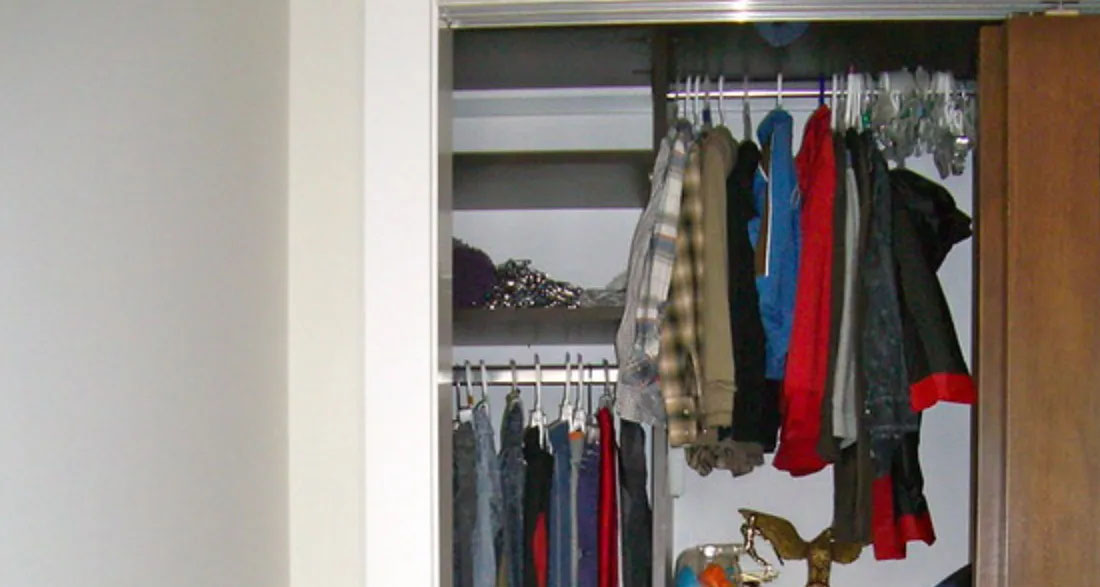
“Mom, open my closet for the answers. BUT DON’T TELL DAD!”
My chest constricted. Why wouldn’t he want Brendon to know? I smoothed the paper flat and bent close to his ear.
“Okay, sweetheart. I promise I won’t,” I whispered. “I’ll find out what you need me to know.”
The nurse checked his vitals. “He’s stable for now. Go get some rest. We’ll call if anything changes.”
I squeezed Andrew’s hand. “I’ll be back in the morning. I love you, bud.”
Outside, rain slicked the parking lot, streetlights reflecting off the wet pavement. I drove home with the note pressed in my hand, heart racing.
Inside the house, it was cold and quiet. I paused at Andrew’s bedroom door, smelling his faint scent of shampoo and deodorant. The closet door was cracked open — just slightly, like someone had been in a hurry.
“I love you, bud,” I whispered again.
Everything looked normal, but I knew better. I ran my hand over the clothes, scanning for clues. My phone buzzed — another text from Brendon. I ignored it.
Andrew and Brendon had left after four. If there were clues, they’d be here. Had Andrew left anything else for me? Was he already feeling bad? Or did something happen during that walk?
On the highest shelf, behind old comics, I found a blue shoebox. I brought it down, sitting on Andrew’s bed.
“Okay, Andrew,” I whispered. “Show me what I need to know.”
Inside, the top item was his cardiology appointment for next week. Beneath it, a printout from the patient portal. Andrew’s heart was mostly healthy, but check-ups were crucial.
And then I saw it: “Appointment canceled by parent — Brendon.”
A sticky note in Andrew’s handwriting was tucked nearby:
“Dad said I don’t need it. Mom is going to freak out.”
I felt my stomach drop.
My phone buzzed. Brendon called.
“Why did you leave the hospital?” he asked.
“I needed a shower… and some things.”
“Are you in his room?”
“Why would that matter?”
Silence stretched.
“But I found Andrew’s appointment card. Brendon, why did you cancel it?”
“I didn’t think he needed it. You always overreact. Insurance wouldn’t cover it. I’d have to pay cash.”
I gripped the phone tight. “He trusted you! And you canceled it! I would’ve paid — you should have told me!”
“You always make everything a crisis,” he said, defensive.
“Maybe that’s what kept him alive,” I shot back. “You should have told me.”
He hung up. I looked down at the blue box. Then I saw it — a notification I hadn’t noticed in the chaos: a new video message from Andrew, timestamped fifteen minutes before Brendon called from the ER.
His face filled the screen, pale and worried.
“Hey, Mom. I don’t feel good. My chest hurts, and I feel dizzy. Dad says it’s nothing. If he finds out I told you, he’ll get mad. But I’m scared. You said always to tell you if something was wrong… so I’m telling you.”
From the background, I heard Brendon’s voice:
“Put that away, Andrew! You’re fine! Stop making a scene! Don’t worry your mom. Just sit down.”
The video cut off.
I sat frozen, guilt crushing me. How many times had I missed these signs? My son reached out, and I wasn’t there.
I called the hospital. “This is Olivia, Andrew’s mother. I found something you need to hear. Please call me back immediately.”
I barely slept. Brendon’s texts kept coming:
“Where are you?”
“Stop digging, Olivia.”
“We need to look united.”
But I had no choice.
By sunrise, the nurse called back. I explained everything — the appointment, the note, the video. She promised to inform the doctor immediately.
At noon, I returned to the hospital. Brendon paced the waiting area. When he saw me, he hurried over.
“Did you find something else?”
I looked him in the eye. “You canceled his follow-up. You told him not to call me, even when he was scared.”
He slumped. “I thought he was fine. He said he was just tired.”
“You told him not to call me.”
“I… I need to speak with the doctor. Andrew deserves better from both of us.”
Brendon’s sister, Hannah, arrived. She slipped her arm through mine. “Do you want me with you?”
I nodded. I handed her the phone. She watched Andrew’s video twice, tears in her eyes.
“He told you he was scared,” she said firmly. “You can’t ignore that now.”
Brendon’s shoulders slumped. “I thought he’d bounce back.”
I squeezed Hannah’s hand, then walked to the consult room. I handed the doctor Andrew’s appointment card, note, and video. The social worker took notes, pen poised.
“You can’t ignore this now,” I said.
The doctor nodded. “We’ll update his chart immediately. You’ll be his primary medical decision-maker. No more changes without your approval. We’ll keep you informed every step.”
The social worker handed me a card. “Here’s the patient advocate. You’re not alone.”
I exhaled, relief and exhaustion mingling. “Thank you. I want every safeguard. No more misunderstandings.”
Brendon stayed silent.
Later, the doctor quietly said, “Olivia, there’s reason to hope. We’re adjusting Andrew’s treatment plan.”
Back in his room, I held Andrew’s hand. The monitors traced hope and fear in blue and green.
“I found your answers, honey,” I whispered.
By sunset, Brendon appeared at the door.
“I’m sorry, Olivia. For all of it.”
I looked up, honest and exhausted. “There’s reason to hope. We were both scared, but Andrew comes first.”
He nodded and left.
I curled into the chair beside my son. He was still fighting — and so was I. When he wakes, he’ll know I chose him. Someone tried to teach him that fear was a nuisance. I won’t let that lesson stick.
My son was still fighting.
