
Part 1:
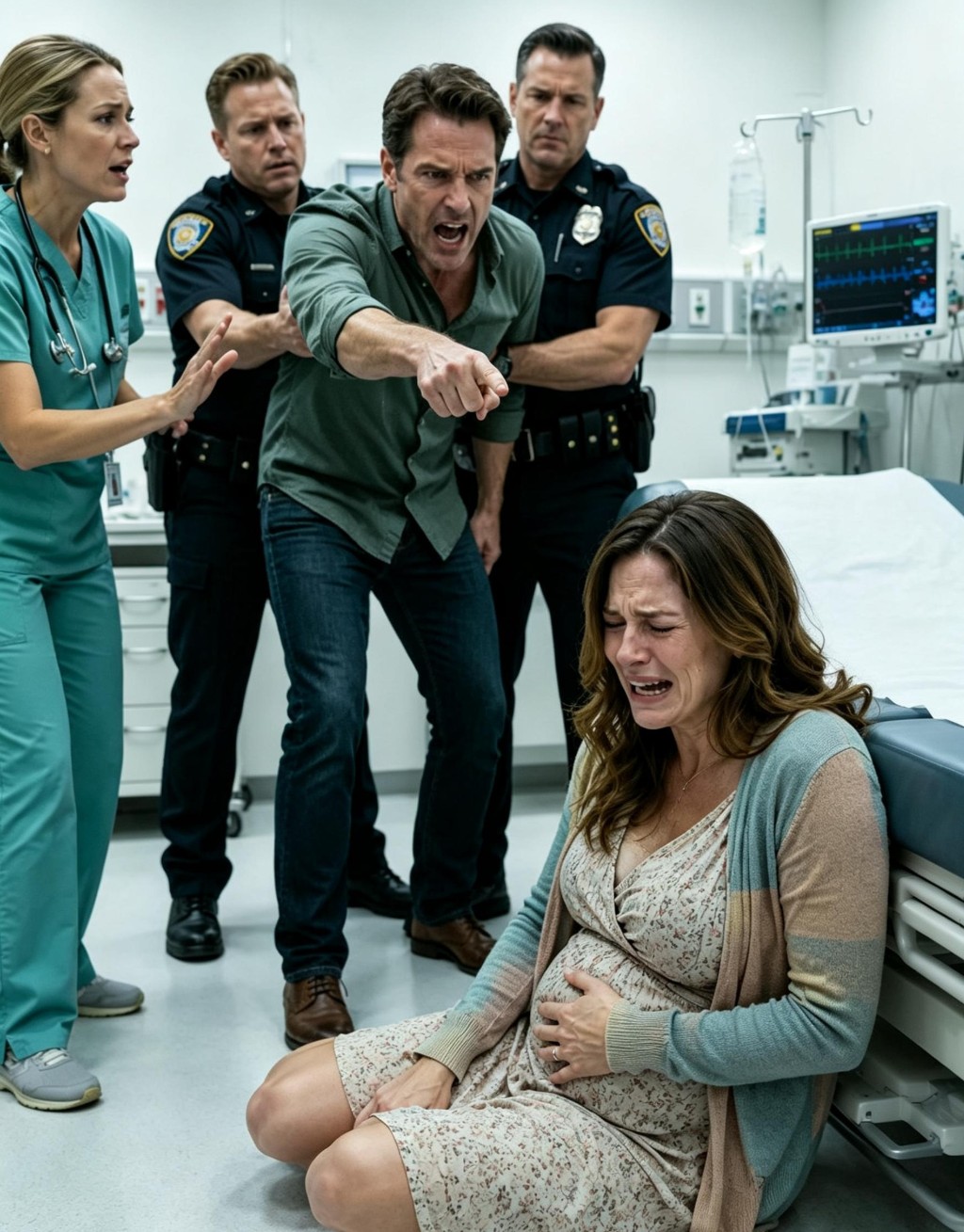
“Pay up now, or get out for good!” my stepbrother shouted while I sat in the gynecologist’s office, my stitches still fresh and burning.
The room went completely silent.
So silent that I could hear the medical paper crinkling beneath my thighs.
I sat on the edge of the examination table, pressing one hand against my lower stomach while my other hand held the paper gown tightly over my knees.
The bright fluorescent lights made the room feel painfully clean. It was the worst possible place for another attack, especially after the private violation I had already endured.
“No,” I managed to say.
My voice sounded weak and fragile.
But that single word meant more than Irving knew.
It was the first time I had ever spoken a full sentence to him without adding a desperate apology at the end.
Irving Smith’s smug expression changed for a moment.
He looked toward the door, then back at me. His jaw tightened as if he were grinding his teeth.
“You really think you’re better than this?” he sneered.
His eyes narrowed into cold slits.
Before I could answer, Dr. Fiona Gallagher stepped firmly between us.
She was a woman in her late fifties, with graying hair pulled into a tight bun. Her white coat made her look calm and professional, but there was nothing uncertain about the way she stood between Irving and me.
“Sir, you need to leave this examination room immediately,” she ordered.
Irving gave a short, ugly laugh.
“This is family business,” he snapped. “Keep your nose out of it.”
“I said leave. Now.”
Dr. Gallagher did not move.
Neither did I.
Then Irving suddenly stepped toward me.
I barely had time to react.
His hand swung across the room and struck my face with such force that everything seemed to spin.
My shoulder slammed into the metal step beside the examination table.
Then my ribs hit the hard linoleum floor.
Pain shot through my entire body.
I tasted blood inside my mouth.
From the hallway, a nurse screamed.
Irving stood over me, breathing heavily.
“She’s lying!” he shouted. “She always lies!”
I curled around my aching ribs and fought back tears.
For years, I had learned that crying only made Irving angrier.
But this was not our house.
This was a medical clinic in Scranton, Pennsylvania.
There were security cameras.
There were nurses.
There were doctors.
And Dr. Gallagher had already documented bruises I had tried for months to hide.
She grabbed the wall phone.
“Security, get in here immediately,” she said, her voice shaking but controlled. “And call the police.”
Irving turned toward her, his eyes wild.
“You have no idea what she did to deserve this!”
“I know exactly what I saw with my own eyes,” Dr. Gallagher answered.
The door suddenly burst open.
Two large security guards rushed into the room, followed closely by Nurse Chloe Stanton.
Chloe dropped beside me and carefully placed a hand near my shoulder.
“Erica, stay right here with me,” she whispered. “Don’t try to move.”
Irving backed toward the corner while continuing to shout.
“She owes me plenty!” he yelled. “Especially after living under my mother’s roof for free all these years!”
I stared at the ceiling, barely able to breathe.
A few minutes later, flashing red and blue lights appeared through the narrow window.
The police had arrived.
Two officers entered the room.
The moment they saw me lying on the floor with blood on my lip and a dark bruise forming across my face, their expressions became serious.
Officer David Foster pointed directly at Irving.
“Keep your hands where I can see them.”
For the first time in years, Irving looked unsure.
And for the first time, I realized something important.
Someone had finally seen the truth.
Officer Foster did not need to scream.
“I said keep your hands where I can see them,” he repeated calmly.
Irving slowly raised his hands, his palms facing forward.
But even then, he could not stop talking.
“This is completely ridiculous,” he complained. “She’s just being dramatic. She makes things up because she wants attention.”
Officer Foster stepped closer.
His partner, Officer Ciara Hart, moved toward Dr. Gallagher and me.
Suddenly the small room felt even smaller.
There were police uniforms, medical equipment, security guards, and the sharp smell of antiseptic everywhere.
I wanted to disappear.
I wanted the floor to open and swallow me.
But Chloe kept her hand gently on my shoulder.
“Erica,” Officer Hart said softly.
She crouched down until we were at eye level.
“Do you feel safe with him standing in this room?”
My throat closed.
I could not get the words out.
Irving laughed.
“She can’t even answer because she knows I’m telling the truth!”
“Sir,” Officer Foster said sharply, “do not speak to her again.”
Irving immediately fell silent.
But he continued staring at me.
Those were the same eyes that had trained me for years to say the right lies before anyone could come to my rescue.
Dr. Gallagher finally answered.
“She clearly does not feel safe,” she said. “I documented her injuries today, and I personally heard him threaten her.”
Irving’s face turned bright red.
“You’re violating my privacy rights by talking about this!”
“No,” Dr. Gallagher said calmly. “I am reporting an act of violence.”
Officer Foster turned Irving around.
A second later, metal handcuffs closed around his wrists.
The click was quiet.
But to me, it sounded louder than anything else in the room.
That sound divided my life into two parts.
Before.
And after.
Irving twisted around and looked at me one last time.
“You’re dead to my mother after this.”
I flinched.
Officer Hart noticed immediately.
She looked at her partner.
“Get him out of here.”
The officers led Irving through the doorway.
Patients and staff watched from the hallway, their eyes wide with shock.
Irving tried to keep his usual proud posture.
But with his wrists locked behind his back, he had no choice but to follow someone else’s orders for once.
The moment he disappeared, my body began shaking.
I was not crying.
I was not screaming.
I was simply trembling so badly that my teeth started clicking together.
Dr. Gallagher ordered X-rays to make sure I had not broken any ribs.
Chloe helped me into a wheelchair because every attempt to stand made white sparks dance in front of my eyes.
Even the smallest movement pulled at my fresh stitches.
The physical pain was terrible.
But the shame felt even worse.
“I’m sorry,” I kept whispering.
“I’m so sorry.”
Nobody had blamed me.
Nobody had accused me.
Still, apologizing had become a habit.
It was how I had survived Irving Smith for the last four years.
Irving was thirty-two, eight years older than me. He was the son of my mother’s late husband, which made him my stepbrother.
After his father died three years earlier, Irving had stayed in our house.
He had claimed it would only be temporary.
Somehow, temporary had turned into an endless nightmare.
My mother, Irene, worked graveyard shifts as a dispatcher.
She acted as though she could not see what Irving was doing.
He controlled the grocery money.
My car keys.
My phone.
Even which friends I was allowed to see.
He called it discipline.
I called it trying to breathe while trapped behind a locked door.
But now, for the first time, someone else had seen what was happening.
And Irving was no longer standing over me.
When Officer Hart returned, she carried a small notepad.
“Erica, we can take your statement here or at the hospital,” she said. “But Dr. Gallagher recommends that you receive further medical care.”
“Take her to the hospital,” Dr. Gallagher said firmly.
I nodded.
For some reason, I felt a strange sense of relief.
Officer Hart lowered her voice.
“There may also be an emergency protection order available for you. We can explain the process whenever you’re ready.”
I looked toward the hallway where Irving had been taken away.
For the first time, being ready did not matter.
He was gone.
And I was still alive.
Part 2:
At Riverside Medical Center, they placed me in a small room where the curtain did not close completely.
At first, that frightened me.
I wanted solid walls.
I wanted real locks.
I wanted a ceiling that did not hum under fluorescent lights.
Most of all, I wanted somewhere Irving could not suddenly burst through the door wearing his heavy boots and carrying the same familiar fury.
But something felt different here.
A nurse walked past my room every few minutes.
Officer Hart remained near the entrance with her arms crossed.
She was not hovering over me.
She was simply there.
She felt like a wall between me and the outside world.
I had spent years learning that another person’s presence could be used to frighten me.
Now I was learning that someone’s presence could also make me feel safe.
The X-rays showed two badly bruised ribs, but thankfully nothing was broken.
Dr. Leo Shelton explained the results carefully.
He spoke to me as if I were a person who had the right to make decisions about her own body.
He examined the swelling on my cheek and the cut inside my lip.
He asked questions without judgment.
I told him what had happened.
I told him when it had happened.
And then I said something I had never been brave enough to say before.
“I want to speak to someone from the victim assistance program.”
I said yes before fear could answer for me.
About forty minutes later, an advocate arrived.
Her name was Hannah Terry.
She was fifty years old, spoke softly, and carried a canvas bag filled with folders.
She pulled a chair beside my bed.
Then she paused.
“Is it okay if I sit here?”
That simple question nearly broke me.
Nobody had asked my permission for things like that in years.
“Erica,” Hannah said gently, “you’re twenty-three years old, correct?”
“Yes.”
“And Irving is your stepbrother?”
“He’s my late stepfather’s son,” I explained. “My stepfather died three years ago.”
“Does Irving live with you and your mother?”
“Yes.”
Hannah wrote something down.
Then she looked up.
“Has he threatened you before today?”
My eyes moved toward Officer Hart.
Then I looked back down at the blanket.
Hannah noticed.
“You can speak freely,” she assured me. “Officer Hart is here because Irving was arrested for what he did at the clinic.”
Those words still sounded unreal.
Irving had actually been arrested.
I stared at my trembling hands.
“He controls everything,” I whispered. “The money, the car, my phone. He tells my mother I’m unstable, lazy, and ungrateful.”
Hannah looked concerned.
“What does he mean when he says you owe the house?”
My stomach tightened.
“He makes me pay for everything in ways he chooses,” I said. “Sometimes he makes me run errands for him. Other times he takes my entire paycheck.”
“And what happens if you refuse?”
“He locks me out of the house. Or he tells my mother I stole from him. Sometimes he breaks my things until I agree to do what he wants.”
Hannah’s pen stopped for a moment.
“Did your mother know about this?”
I wanted to say no.
I wanted to protect her.
But I could not lie anymore.
“She knew enough,” I whispered.
Then I told them about the cameras Irving had installed around the house.
He claimed they were for security.
But one of them pointed directly at my bedroom door.
I told them about the day he took my debit card and said he was teaching me responsibility.
I told them about February, when he locked me out of the house.
I had slept in my friend Audrey’s car for two nights.
I had eventually returned because my mother called me crying and begged me not to embarrass the family.
I did not tell them every single thing Irving had done.
But I told them enough.
Hannah helped me request an emergency protection order from the hospital.
Officer Hart photographed my injuries with my permission.
Dr. Leo added his medical notes.
Dr. Gallagher sent over her report from the clinic, including the exact words Irving had shouted.
“Pay up or get out.”
Written on paper, those words looked different.
They no longer sounded like a private threat.
They looked like evidence.
At 6:17 p.m., my mother called.
Her name appeared on my screen.
I watched it ring until it stopped.
Then she called again.
Hannah looked at me.
“You do not have to answer that.”
Those words felt strange.
Most of my life had been built around things I was told I had to do.
On the third call, I answered.
I put it on speaker because Officer Hart gave me a small nod, silently letting me know it was a good idea.
“Erica?” my mother said.
She sounded breathless.
“What did you do?”
She did not ask whether I was okay.
She did not ask where I was.
She did not ask how badly I was hurt.
I closed my eyes.
“Irving hit me in a doctor’s office.”
“He told me you provoked him,” my mother replied.
My chest tightened.
“There were witnesses, Mom.”
“He’s in jail, Erica. Do you understand what this is going to do to his life?”
Officer Hart’s expression became completely still.
I looked at Hannah.
She gave me a small nod.
She was not telling me what to say.
She was simply reminding me that I had the right to speak for myself.
“He did that to himself,” I said.
Silence.
Then my mother lowered her voice.
“You need to come home and fix this before it gets worse.”
For a second, I almost laughed.
Instead, a broken breath escaped me.
“I’m not coming home.”
“Don’t be ridiculous,” she snapped. “Where on earth are you going to go?”
I had no answer.
The old fear came rushing back.
I pictured our house on Terry Avenue.
The beige siding.
The cracked porch step.
Irving’s truck sitting in the driveway like a guard dog.
I pictured my bedroom with its hollow door that never locked.
I remembered my mother’s tired face as she turned away from everything she did not want to see.
Then Hannah placed a pamphlet on my blanket.
It listed emergency shelters and legal aid services.
It was not a perfect solution.
But it was a path.
“I’ll figure it out,” I said.
“You’re making a huge mistake.”
“No,” I replied.
The word came out easier than I expected.
“I made a mistake by staying quiet for so long.”
I ended the call before she could answer.
That night, I did not go home.
Hannah found me a place at a confidential shelter outside the city.
Officer Hart followed the shelter van for the first few miles before turning away.
I watched the patrol car disappear through the rear window.
Then I silently cried.
The shelter was not dramatic.
It was simply a two-story house with warm lamps, donated furniture, and laminated rules posted on the walls.
A woman named Tessa gave me sweatpants, a toothbrush, and a small room.
The room had one thing my bedroom at home had never truly given me.
A lock that worked.
When the door clicked shut behind me, I sat on the bed and listened.
There were no heavy footsteps outside.
No yelling.
No angry voice.
No one turning the doorknob.
Only women talking quietly in the kitchen and rain tapping against the window.
For the first time in years, silence did not frighten me.
It comforted me.
Part 3:
The next morning, the court approved a temporary protection order.
Irving was forbidden from contacting me or coming near my workplace, the clinic, the shelter, or my mother’s house if I was there.
Hannah warned me not to treat the order like a magical shield.
“Paper cannot stop a fist,” she explained. “But if he violates it, the police have a reason to act quickly.”
Two days later, Irving had his first hearing.
I appeared by video from a private room at the shelter.
My cheek was still swollen, the bruise now changing from deep purple to yellow and green.
On the screen, Irving wore an orange jail uniform.
Yet somehow, he still wore the same arrogant expression.
The expression he always used when something inconvenienced him.
His public defender asked the court for low bail.
The prosecutor presented the evidence.
The witnesses from the clinic.
The medical records.
The 911 call.
And Irving’s own words.
She also mentioned earlier calls to my mother’s address, including reports from neighbors who had heard loud and aggressive shouting.
The judge set conditions Irving clearly hated.
He was ordered to have no contact with me.
He was prohibited from possessing weapons.
And he could not return to the house to collect his belongings unless he was accompanied by police.
Irving stared into the courtroom camera.
His eyes were filled with the same anger I had known for years.
It looked as if he wanted to reach through the screen and hurt me.
I did not look away.
Three weeks later, I returned to the house.
Officer Hart came with me, along with another officer.
My mother stood on the porch wearing a cardigan.
Her arms were folded tightly across her chest.
“You brought the police to my home,” she said.
“I brought the police to protect me.”
She looked older than I remembered.
But she did not look any kinder.
“Irving’s lawyer says you exaggerated everything.”
“Irving’s lawyer wasn’t there to see what happened,” I replied.
Her lips trembled.
For one irrational second, I thought she might finally apologize.
Instead, she whispered, “I don’t even know who you are anymore.”
I stepped past her.
“Neither did I.”
Inside, my bedroom looked smaller than I remembered.
Irving had searched through it after his arrest.
Drawers hung open.
Clothes were scattered around.
A framed picture from my high school graduation lay cracked on the floor.
I packed my clothes.
Then I gathered my important documents.
My birth certificate.
My Social Security card.
Other personal papers.
And a shoebox filled with letters from my grandmother.
From the hallway, my mother called out.
“He is family, Erica.”
I folded a sweater slowly.
“So was I.”
She had nothing to say after that.
The case did not end quickly.
Real life rarely gives people neat endings.
Irving’s lawyer tried to make the assault sound like nothing more than a family disagreement.
He blamed stress.
He blamed grief.
He blamed provocation.
But the evidence told a different story.
Dr. Gallagher testified.
Nurse Chloe testified.
The security footage showed Irving forcing his way into the examination room.
Then it was my turn.
I gave my statement in person.
My hands shook so badly that the paper rattled between my fingers.
The prosecutor offered to read the statement for me.
I refused.
I had spent years allowing other people to speak for me.
I was not going to do it anymore.
Not that day.
I told the judge about the kind of control that did not always leave bruises.
I told her about fear becoming normal.
I told her what it felt like to live in a house where you were always thinking about what might make someone angry.
And I told her about the strange relief I felt when police officers looked horrified instead of doubtful.
Irving never apologized.
He simply stared down at the table.
Months later, he pleaded guilty to reduced charges of assault and menacing.
His sentence included jail time he had already served, probation, mandatory counseling, fines, and a long-term protection order.
It was not the dramatic ending people imagine in movies.
The earth did not open beneath him.
He did not collapse in tears.
He did not suddenly admit everything he had done.
But something else happened.
The court record carried his name.
And for the first time, my name was no longer buried underneath the version of events he had created.
Part 4:
I moved into a tiny studio apartment above a bakery in a quiet suburb.
The walls were thin.
The radiator hissed loudly.
The kitchen had only two drawers, and both of them jammed unless I pulled them at exactly the right angle.
I loved that apartment so much it almost embarrassed me.
Every bill belonged to me.
Every key belonged to me.
Every decision belonged to me.
Even the silence belonged to me.
My friend Audrey helped me move in a secondhand couch.
Hannah connected me with a therapist.
And Dr. Gallagher sent a card through the victim advocate’s office.
It contained only a few words.
“You were very brave.”
Nurse Chloe added a smiley face and three exclamation points.
I put the card on my refrigerator.
I kept it there.
My mother continued sending messages for months.
Some were angry.
Others were tearful.
Then, one night in November, at 2:03 a.m., she sent me a message.
“I should have protected you.”
I read it twelve times.
Then I turned my phone face down.
I waited until morning before answering.
When I finally did, I wrote only:
“Yes, you should have.”
Nothing else.
One year after the attack, I returned to Dr. Gallagher for a routine appointment.
It was the same building.
The same parking lot.
The same sliding glass doors.
But as soon as I reached the entrance, my hands turned cold.
Nurse Chloe noticed me first.
Her eyes widened.
Then her expression softened.
“Erica Harper?”
I gave her a small smile.
“Hi, Chloe.”
She came around the desk and hugged me.
The examination room was not the same room where Irving had attacked me.
Even so, I stared at the floor and remembered everything.
The slap.
The fall.
The pain in my ribs.
The blood in my mouth.
And Irving’s voice filled with contempt.
“You think you’re too good for this?”
Back then, I had never believed I was too good for anything.
I had only known that I was exhausted.
Dr. Gallagher walked into the room carrying my chart.
She stopped when she saw me standing near the window instead of sitting on the examination table.
“No rush,” she said gently.
I laughed quietly.
“You always say exactly the right thing.”
She smiled.
“No,” she replied. “I just try not to say the wrong thing.”
The appointment was completely ordinary.
And that was its own kind of victory.
There was no emergency.
No police.
No shouting.
No one trying to hurt me.
When I finished, I walked into the lobby.
Then I stopped.
A young woman was sitting near the entrance.
She wore sunglasses even though she was indoors.
Her foot tapped rapidly against the floor.
Beside her sat a man scrolling through his phone.
His knee was angled toward her, almost like a barrier.
I did not know their story.
Maybe I was completely wrong about what I was seeing.
But then the woman glanced toward me.
Our eyes met.
I held her gaze for one second longer than strangers normally do.
It was not pity.
It was recognition.
I walked outside.
The air was cold and bright.
I reached my car, unlocked the door, and sat behind the steering wheel.
For a moment, I rested both hands on the wheel.
Then I remembered the sound of those handcuffs closing around Irving’s wrists.
That quiet metallic click.
The sound that had divided my life into two parts.
Before.
And after.
I took a slow breath.
Then I started the engine.
And I drove away.
Not because the past had disappeared.
It hadn’t.
Not because everything was suddenly perfect.
It wasn’t.
I drove away because the past no longer controlled where I was going.
For the first time in my life, that choice belonged entirely to me.
THE END.
