
The Frame That Never Broke
When her stepmother threw away the one photo that kept her mother’s memory alive, Selena didn’t scream or cry.
She just stood still, looked Linda right in the eyes, and whispered a quiet warning that would soon tear through the house like a storm.
It all started with a picture — one simple frame on a mantel.
When my mom, Samantha — or “Sam,” as everyone lovingly called her — passed away, I was ten. She had been sick for two years, and by the end, the only thing that made sense in that quiet, aching house was the framed photo in the living room.
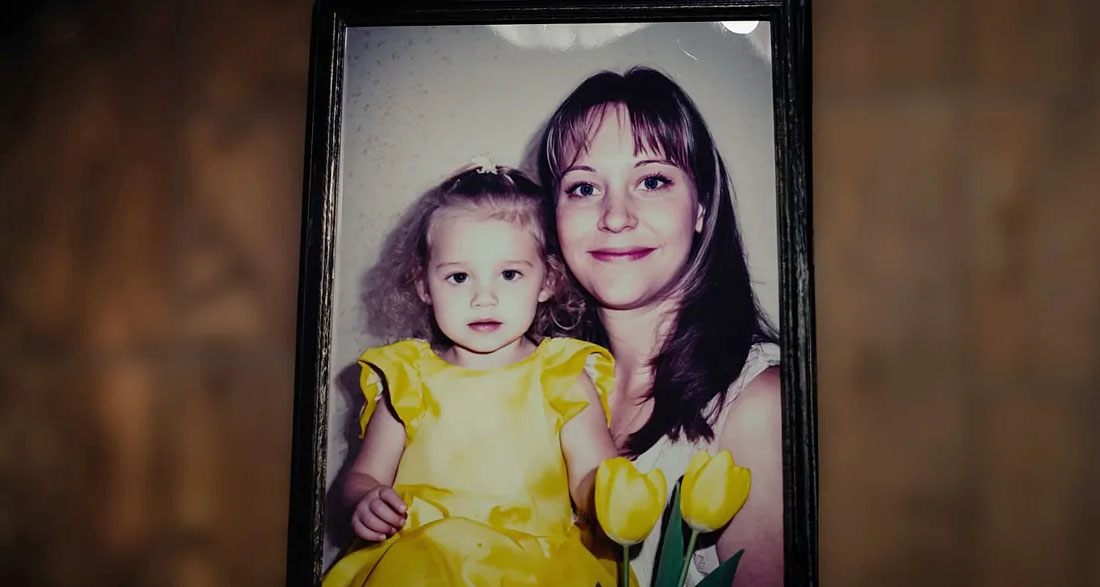
In it, I was about six years old, my little arms wrapped tight around her waist as we both laughed so hard that the photo caught us mid-motion.
Mom wore her favorite summer dress, the yellow one with tiny white buttons and sunflowers stitched along the hem.
That dress always smelled like sunshine and fabric softener. Sometimes, even after she was gone, I swore I could still smell her perfume — vanilla and lavender — drifting through the hallway at night.
It was like she was checking on me, just one more time.
The photo sat in the center of our living room like a heartbeat.
Dad, Matthew, never said much about it, but he dusted the frame often, his hand gentle, his face soft. Once, I caught him staring at it, his fingertips brushing the wood.
“She’d like knowing she’s still with us, Selena,” he said quietly.
That frame became our altar. We didn’t light candles or hang rosaries. We had that picture — that single frozen moment that carried us through birthdays, graduations, and lonely nights.
And it stayed right where it belonged.
Until Linda moved in.
The day that frame disappeared was the day everything started to fall apart.
Dad met Linda four years after Mom’s death. I was fourteen, old enough to understand what “moving on” meant but still young enough to believe no one could ever replace Mom.
Linda wasn’t cruel at first. Just… cold. Perfect hair, perfect clothes, perfect smile — the kind that didn’t quite reach her eyes. She wore silk like it was her skin and spoke in polite tones that made the air feel heavy.
Still, she tried. She complimented my hair once, and I thanked her. She made gluten-free lasagna, and I ate it without complaint. I told myself that maybe she wasn’t so bad — especially when I saw Dad smiling again for the first time in years.
But Linda hated that photo.
The first time she saw it, her lips curved in a little twitch of annoyance.
“That old thing doesn’t match the color scheme,” she said with a laugh. “Maybe a lighter frame?”
Another time, she suggested, “Wouldn’t it be better in your room, Selena? You know… something more personal?”
“It stays,” Dad said flatly, and that was the end of it.
At least, that’s what I thought.
She couldn’t stop looking at it — sometimes when she passed by, she’d pause and frown, like it offended her. Once, during one of her decorating sprees, she picked it up and turned it over in her hands.
“The colors are all faded,” she said, her nose wrinkling.
“That’s what happens with memories, Linda,” I replied. “They don’t come with filters.”
She rolled her eyes and muttered, “People really should learn to let go.”
But I never thought she’d actually touch it.
Then one afternoon, I came home from class and felt it immediately — the house was too quiet. Too clean. The air felt… wrong.
The mantel was empty.
My heart dropped into my stomach.
“Linda?” I called, my voice trembling.
She was in the kitchen, sipping Earl Grey tea, flipping through a magazine like she didn’t just rip out the last thread holding our family together.
“Where’s the photo that was here?” I asked.
Without looking up, she said casually, “Oh, that old thing? I threw it out. You’re grown now. It’s time to move on from the past, my girl.”
The words hit me like a slap.
“You… threw it out? You threw my mother’s frame out?!”
She finally looked up, her tone sharp. “Don’t be dramatic. It was just an old, faded photo that wasn’t even cute. Tell you what — I’ll buy you a new one. We can take a picture together!”
My throat burned. My hands shook.
“You have no idea what you’ve just done,” I said softly. My voice was steady, but inside I was burning. “You’re going to regret this, Linda.”
She smirked. “Oh really? What, did I throw away a holy relic or something?”
“In a way,” I said, staring her dead in the eyes. “Dad hid an envelope behind that photo. He told me it was a surprise for you — something that would change your life. He hid it there because he said it was the one place you’d never look.”
Her eyes widened. “You’re lying.”
“Am I?” I asked. “Go check the trash.”
Her fingers twitched. I could see the panic start to creep up her face.
“Where… where did the trash go?” she muttered.
“Probably the dump by now,” I said, turning away. “Maybe you’ll get lucky.”
Ten minutes later, I heard the door slam. Then her car engine roared to life. I peeked out the window and saw her speeding down the road, hair flying loose, face twisted in panic.
Linda was going to the dump.
When Dad came home, he immediately noticed the missing frame.
“Where’s the photo of Mom, honey?” he asked, his voice tense.
“Ask your wife,” I said.
“What did she do?”
“She left two hours ago. You’ll find out when she gets back.”
He frowned, confused, but said nothing.
It was nearly dark when the door creaked open. The smell hit first — wet garbage, rot, and mud.
Linda stood there, filthy, her blouse torn, her hair sticking to her face. She looked wild — desperate.
“There was nothing in it!” she screamed, throwing the broken, muddy frame onto the floor. “No envelope! Nothing!”
Dad’s eyes darkened. “I didn’t tell Selena about the envelope,” he said slowly. “How did she know?”
Linda froze, realizing what she’d done.
“I did move something from behind the photo,” Dad said quietly. “It was supposed to be a surprise for your birthday.”
Linda blinked. “What… what was it?”
“There were two tickets to Miami,” he said. “A two-week all-inclusive resort stay. And I was going to tell you about the woodland cabin I found — a place you could write, relax. It was meant for you.”
Linda just stood there, mouth open, her face pale.
“I thought you respected what mattered to us,” Dad continued, disappointment heavy in his voice. “But now I see you never understood this family at all.”
He turned to me. “I think I’ll take my daughter instead.”
Linda gasped. “You can’t be serious, Matthew!”
“I am,” he said firmly. “Pack your things, Selena. We’re leaving tonight.”
We didn’t say goodbye.
As we pulled out of the driveway, I looked back through the rearview mirror. Linda stood on the porch, her designer clothes ruined, her eyes wide with disbelief.
Dad reached over and squeezed my hand. “I’m sorry you had to go through that, my girl.”
“It’s okay,” I said softly. “Mom would’ve handled it her own way.”
He chuckled. “I think she just did.”
The suite in Miami overlooked the ocean. The air smelled like salt and freedom. The next morning, Dad handed me a small package.
Inside was the same photo — cleaned, restored, and beautiful again.
“I grabbed it before we left,” he said with a smile. “She’s still here, Sel.”
We placed it on the table by the window, sunlight washing over it. For the first time in years, it felt like Mom was with us again.
When we came home two weeks later, Linda was gone. The house was quiet, her things packed, and on the kitchen counter was a single note.
“I was jealous of a dead woman. And now I’ve lost everything. —L”
Dad sighed and dropped the note into the trash.
“Let’s put her back where she belongs,” he said.
Together, we placed the photo back on the mantel. The space felt lighter. The air finally breathed again.
“It feels like home now,” I said. “Let’s bake Mom’s favorite chocolate cake.”
We did — laughing, remembering, and finally healing.
Dad looked at me over his slice and said softly, “This is how it should’ve always been, my darling. Just you, me, and her memory — right where it belongs.”
