
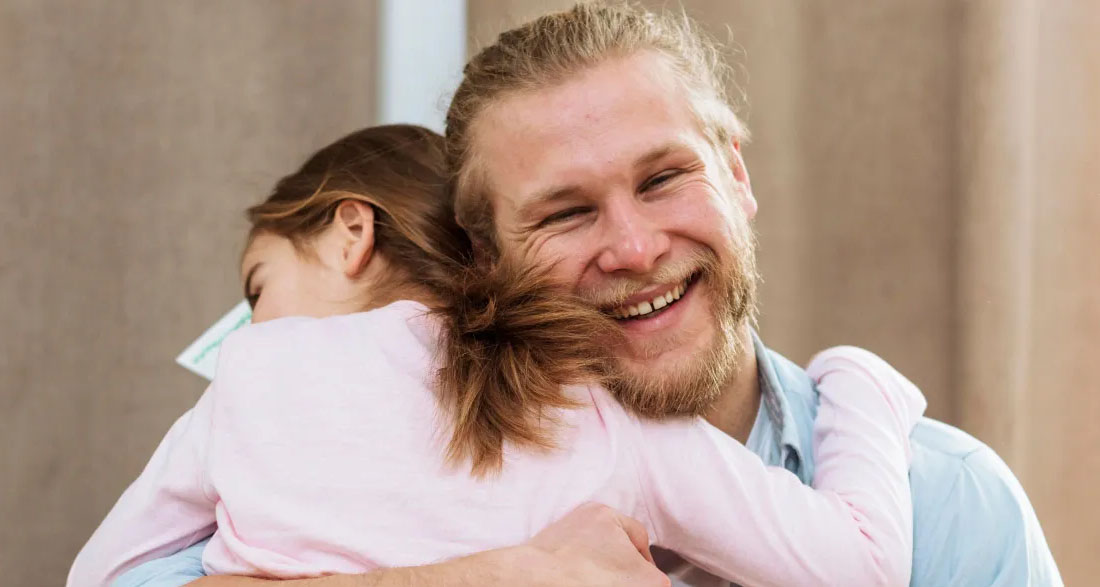
My uncle raised me after my parents died. After his funeral, I got a letter in his handwriting that started with the words, “I’ve been lying to you your whole life.”
I was 26, and I hadn’t walked since I was four.
Most people assumed my life began in a hospital bed, that the accident defined everything about me. But I had a before.
I don’t remember the crash.
I remember my mom, Lena, singing too loudly in the kitchen. I remember my dad, Mark, smelling like motor oil and peppermint gum.
I remember my purple sippy cup, my light-up sneakers, and the endless number of opinions I had about everything. I remember being alive in a house full of love and noise.
But I don’t remember the crash.
All my life, the story was simple: there was an accident, my parents died, I survived, and my spine didn’t.
The state started talking about “appropriate placements.”
Then my mom’s brother walked in.
“We’ll find a loving home,” the social worker said.
Ray looked like he’d been carved out of concrete and bad weather. Broad shoulders, big hands, permanent frown lines like they were etched in stone.
The social worker, Karen, stood by my hospital bed, clipboard in hand.
“We have families experienced with—”
“No,” Ray said, cutting her off.
She blinked. “Sir—”
“I’m taking her,” he said. “I’m not handing her to strangers. She’s mine.”
And just like that, he brought me home. His small house smelled like coffee and old wood. He shuffled into my room, hair sticking up in every direction, like the world hadn’t slowed him down yet. He had no kids. No partner. No clue what he was doing.
So he learned.
He watched the nurses, then copied everything they did. He wrote notes in a beat-up notebook: how to roll me without hurting me, how to check my skin, how to lift me so I felt safe but not smothered.
The first night home, his alarm went off every two hours. He shuffled into my room, hair sticking up, muttering, “Pancake time.” And he gently rolled me onto my side, even in the dark.
He fought with insurance companies on speakerphone, pacing the kitchen. I whimpered once.
“I know,” he whispered. “I got you, kiddo.”
He built a plywood ramp so my wheelchair could clear the front door. It wasn’t pretty, but it worked. He argued fiercely for every bit of equipment I needed.
“No, she can’t ‘make do’ without a shower chair,” he yelled once. “You want to tell her that yourself?”
They didn’t.
He took me to the park. The first time, kids stared, parents glanced away. But my first real friend appeared: a girl my age walked up and asked, “Why can’t you walk?”
I froze.
Ray crouched beside me. “Her legs don’t listen to her brain,” he said. “But she can beat you at cards.”
The girl grinned. “No, she can’t.”
Her name was Zoe. My first real friend.
Ray did that a lot—putting himself in front of the awkward moments, smoothing over the edges of life with blunt, rough love.
When I was ten, I found a chair in the garage with yarn taped to the back, half-braided.
“What’s this?” I asked.
“Nothing. Don’t touch it,” he said.
That night, he sat behind me on my bed, hands shaking.
“Hold still,” he muttered, trying to braid my hair. It looked terrible, but I didn’t care.
“They talk very fast,” he said, eyes tight on the strands of yarn.
When puberty hit, he came into my room holding a plastic bag, red-faced.
“I bought… stuff,” he said, staring at the ceiling. Pads, deodorant, cheap mascara.
“You watched YouTube,” I said.
He grimaced. “Those girls talk very fast.”
“You hear me? You’re not less.”
He washed my hair in the kitchen sink, one hand under my neck, the other pouring water, whispering, “It’s okay. I got you.”
When I cried because I’d never dance or just stand in a crowd, he sat on my bed, jaw tight, repeating, “You’re not less. You hear me? You’re not less.”
By my teens, it was clear there would be no miracle. My body wouldn’t cooperate. I burst into tears often. My wheelchair became my world.
But Ray made my room into a universe: shelves at my reach, a janky tablet stand he welded himself, a planter box for my twenty-first birthday.
“So you can grow that basil you yell at on the cooking shows,” he said.
I burst into tears.
At first, he just moved slower. Sat halfway up the stairs to catch his breath. Forgot his keys. Burned dinner twice in a week.
“I’m fine,” he said. “Getting old.” He was only 53.
Mrs. Patel cornered him in the driveway.
“You see a doctor,” she ordered. “Don’t be stupid.”
Between her nagging and my begging, he finally went. After the tests, he sat at the kitchen table, papers under his hand.
“What did they say?” I asked.
He stared past me.
“Stage four,” he said quietly. “It’s everywhere.”
“How long?” I whispered.
“They said numbers,” he shrugged. “I stopped listening.”
Hospice came. He still brushed my hair, though he often had to stop and lean on the dresser, breathing hard. At night, I heard him retching in the bathroom, then running the faucet.
The night before he died, he told everyone to leave.
“Even me?” the nurse, Jamie, asked.
He took my hand. “Yeah. Even you.”
He shuffled into my room, eased into the chair by my bed.
“Hey, kiddo,” he said.
“Hey,” I whispered, already crying.
“You know you’re the best thing that ever happened to me, right?”
“That’s kind of sad,” I joked weakly.
“You’re gonna live.”
“I don’t know what to do without you,” I whispered.
His eyes got shiny.
“You’re gonna live. You hear me? You’re gonna live.”
“I’m scared.”
“I know,” he said. “Me too. Get some sleep, Hannah.”
He shook his head. “I’m sorry… for things I should’ve told you. Get some sleep.”
He died the next morning.
The funeral was black clothes, bad coffee, and people saying, “He was a good man,” like that covered everything.
Then Mrs. Patel brought me a letter.
“Your uncle asked me to give you this,” she said. “And to tell you he’s sorry. And that… I am too.”
I opened it. His handwriting, blunt and familiar, said:
“Hannah, I’ve been lying to you your whole life. I can’t take this with me.”
He wrote about the night of the crash—not the version I’d been told. He wrote that my parents had brought my overnight bag, that they were moving, and that they told him, “You’ll be better off with him.”
“They were abandoning me,” he wrote. “I lost it. I could’ve stopped them. I didn’t. I let them drive away angry because I wanted to win.”
Twenty minutes later, the cops called.
“You know the rest,” he wrote.
He admitted why he hadn’t told me.
“At first, when I saw you in that bed, I saw punishment. For my pride. For my temper. I’m ashamed, but you need the truth: sometimes, in the beginning, I resented you.
Not for anything you did. You were innocent. The only thing you ever did was survive. Taking you home was the only right choice I had left. Everything after that was me trying to pay a debt I can’t pay.”
Then he wrote about money. Life insurance, overtime, storm shifts. The rest was in a trust. It was always meant for you.
“I sold the house,” he wrote. “I wanted you to have enough for real rehab, real equipment, real help. Your life doesn’t have to stay the size of that room.”
He asked for forgiveness, but didn’t demand it.
“If you can forgive me, do it for you,” he wrote. “So you don’t spend your life carrying my ghost. If you can’t, I understand. I will love you either way. I always have. Even when I failed. Love, Ray.”
I cried until my face hurt.
A month later, I rolled into a rehab center. A physical therapist named Miguel strapped me into a harness over a treadmill.
“You okay?” he asked.
“I’m just doing something my uncle wanted me to do,” I said.
The machine started. My legs buckled. My muscles screamed. My heart hammered.
“Again,” I said.
And last week, for the first time since I was four, I stood, most of my weight on my own legs, for a few seconds. I shook. I cried.
Do I forgive him? Some days, no. But other days, I remember his rough hands under my shoulders, his terrible braids, his “you’re not less” speeches. I think I’ve been forgiving him in pieces for years.
What I know is this: he didn’t run from what he did. He spent his life walking into it, one night alarm, one phone call, one sink-hair-wash at a time. He couldn’t undo the crash—but he gave me love, stability, and now a door.
Maybe I’ll roll through it. Maybe one day I’ll walk.
Either way, he carried me as far as he could.
The rest is mine.
