
Part 1:
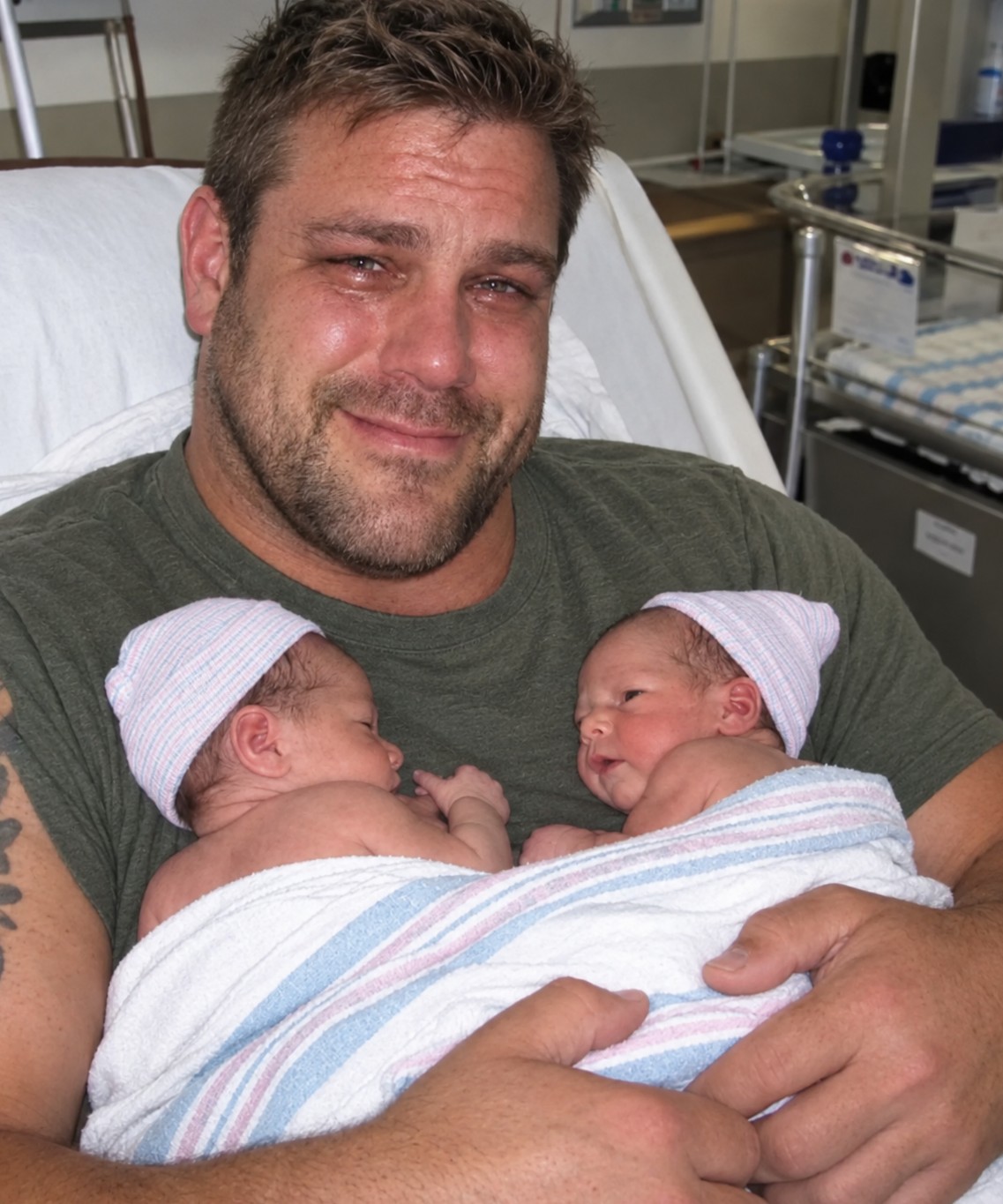
Elena was born eleven minutes after Chloe.
She was tiny, with dark hair and a little crease beside her left eye.
For a short time, we had both of our girls.
Then our lives changed forever.
After Elena died, I couldn’t stand looking at the second crib.
While my husband, Arthur, handled everything outside the house, I took the crib apart and leaned the pieces against the garage wall.
When Arthur came home, he stopped and stared at it.
“You took it down?” he asked.
“I couldn’t look at it anymore,” I whispered.
He nodded.
Neither of us knew what to say.
We were broken, exhausted, and trying to take care of a baby while grieving the daughter we had just lost.
Eventually, we made a decision that seemed reasonable at the time.
Chloe was too young to understand.
We would tell her later.
But later kept moving further away.
When Chloe was five, I told myself she was still too little.
At twelve, she was already struggling at school.
At fifteen, she was anxious about her grades and her future.
Then came college applications.
There was always another reason to wait.
My mother quietly removed the old hospital photograph from her hallway before Chloe was old enough to notice that there had been two babies in it.
My sister stopped saying Elena’s name at family gatherings.
Everyone knew.
And everyone helped us keep the secret.
Sometimes, when Arthur and I were alone in the car, he would bring it up.
“She deserves to know,” he would say.
And I would stare through the windshield.
“Know what?” I would answer. “That she had a sister she never even got the chance to remember?”
Arthur would go quiet.
He never argued after that.
Every year on September 9, Chloe celebrated her birthday.
There was cake.
Presents.
Friends.
Laughter.
But inside my head, I was always remembering two birthdays.
One we celebrated openly.
One we carried quietly.
Every year after Chloe’s birthday dinner, Arthur disappeared into the garage for about an hour.
I never asked where he went or what he was doing.
I assumed he needed some time alone.
I had my own ways of surviving those days.
Then Chloe turned eighteen.
We invited around thirty people.
There were folding tables in the backyard, relatives gathered around the grill, friends laughing everywhere, and a grocery-store cake with Chloe’s name written across it in blue icing.
She was especially excited because we had surprised her with a used car.
When Arthur handed her the keys, she screamed and threw her arms around him.
I watched them together and thought, She looks so happy.
For eighteen years, that happiness had been my excuse for staying silent.
But apparently, Arthur had finally decided we could not wait anymore.
After the gifts had been opened, he stood up.
“Can everyone give us a minute?” he asked.
My stomach dropped.
I looked at him.
“No,” I whispered.
He finally met my eyes.
“Today.”
Slowly, everyone carried their plates inside.
Soon, only the three of us were left in the backyard.
Then Arthur walked toward the garage.
A minute later, he returned carrying a handmade wooden chest.
I had never seen it before.
Not once.
Eighteen years in that house, and somehow I had never known it existed.
Arthur placed the chest carefully on the table in front of Chloe.
She ran her fingers across the smooth lid.
“Dad, what is this?”
Arthur sat across from her.
He took a slow breath.
“There’s something we should have told you a long time ago.”
Chloe looked from him to me.
“What?”
Arthur swallowed.
“You weren’t born alone.”
Her expression changed.
“You had a twin sister.”
Chloe froze.
Arthur continued softly.
“Her name was Elena.”
Silence filled the backyard.
“She was born eleven minutes after you,” he said. “We only had a short time with both of you.”
Chloe stared at the wooden chest.
She didn’t cry.
She didn’t yell.
She simply placed both hands on the lid.
Then Arthur spoke again.
“I started this the night we lost her.”
For the first time in eighteen years, I realized that my husband had never truly erased Elena from our family.
He had been remembering her all along.
Part 2:
The chest was made of cherrywood.
It had been polished so carefully that the surface reflected the string lights hanging above the patio.
Its brass hinges were custom-made, shaped like tiny oak leaves intertwined with two delicate vines.
Arthur reached toward a small brass key resting on top.
His hands were shaking.
“I took the crib down from the garage wall eighteen years ago,” he said softly.
Then he looked at me.
“You couldn’t look at it, Sarah. But I couldn’t throw it away.”
My eyes filled with tears.
Arthur continued.
“So every year on your birthday, Chloe, I went into the workshop. I took the pine rails from that crib and worked on them piece by piece.”
Chloe stared at him.
“I planed the wood down and used it to build this chest.”
She looked at the chest again.
“You made this out of her crib?”
“Out of both your cribs,” Arthur corrected gently.
A tear slipped down his cheek.
“It took eighteen years to carve, polish, and assemble. Every layer of wax, every brass leaf on the lid… I worked on it every year while you were downstairs eating birthday cake.”
Chloe slowly pulled her hands away from the wood.
Her face was filled with confusion, grief, and disbelief.
She looked at me.
“Mom?”
I couldn’t answer.
“Why?” she asked. “Why didn’t you ever say her name?”
Her question felt like a weight pressing down on my chest.
All the excuses I had carried for eighteen years suddenly seemed meaningless.
School.
Stress.
College.
Protecting her childhood.
None of them mattered when I saw the tears in my daughter’s eyes.
“I was terrified, Chloe,” I finally said.
I reached across the table and touched her fingers.
“I thought that if I told you, you would carry this sadness with you for the rest of your life. I wanted you to be happy. I thought keeping it from you was protecting you.”
Chloe shook her head.
“I was living half a story,” she whispered.
Her voice cracked.
“All these years, whenever I looked in the mirror, whenever I had this strange feeling that something was missing… I thought I was just being dramatic.”
She turned toward the chest.
“What’s inside?”
Arthur picked up the small brass key.
He inserted it into the lock and turned it.
A soft metallic click echoed across the quiet backyard.
Slowly, Chloe lifted the lid.
Inside were eighteen small linen packages.
Each one was carefully wrapped and tied with a faded pink ribbon.
Beside them lay a preserved hospital blanket and a silver baby rattle.
The rattle was engraved with two sets of initials:
C.M. & E.M.
Chloe stared at it.
Arthur spoke quietly.
“Every year, I wrote a letter to both of you.”
Chloe looked at him.
“One for the daughter who grew up,” he continued, “and one for the daughter we lost.”
He pointed toward the carefully wrapped packages.
“I saved her baby clothes, her hospital bracelet, and the one photograph the nurses took of both of you sleeping beside each other before she passed.”
Chloe reached inside.
Her fingers trembled as she picked up the photograph.
In the dim backyard light, she stared at it.
Two tiny babies were wrapped in the same blanket, their faces pressed close together.
One of them had a tiny crease beside her left eye.
The same little crease Chloe had whenever she smiled.
A broken sob escaped Chloe.
She pulled the photograph against her chest and leaned her forehead against the edge of the cherrywood chest.
Arthur and I said nothing.
There was nothing we could say.
We simply moved around the table and wrapped our arms around her.
She cried for the sister she had never known.
She cried for eighteen years of silence.
And she cried for the father who had spent eighteen years quietly building a monument to a daughter we had all been afraid to remember.
Part 3:
The next morning, the backyard was silent.
The folding tables were gone.
The grocery-store cake box sat in the recycling.
Morning sunlight warmed the wooden patio.
I walked into the living room and found Chloe sitting on the rug near the fireplace.
The wooden chest was open in front of her.
Letters were spread around her knees.
Eighteen years of Arthur’s handwriting.
Each letter described something Chloe had done while growing up, while also carrying a quiet message to the daughter who had never been there to see it.
One letter read:
“Year 7: Chloe learned to ride her bike today without training wheels. I wonder if you would have been the brave one, Elena, or if you would have held my hand like she did.”
Another said:
“Year 14: Chloe started high school today. She looked so grown up in her jacket. I kept an extra place in my heart for you at the front door when she walked out.”
Arthur came in from the kitchen carrying three mugs of coffee.
He placed them on the coffee table and sat beside me.
Chloe looked up from the letter in her hands.
The redness around her eyes had faded.
She looked exhausted, but calmer than she had the night before.
“Dad?” she asked softly.
“Yeah, sweetie?”
“Where is she?”
Arthur and I exchanged a long look.
“She’s at Pine Ridge Cemetery,” I answered gently.
I moved from the couch and sat beside Chloe on the floor.
“Under the old willow tree. We visit her every year on the morning of September tenth.”
Chloe looked down at the letter.
She carefully folded it back into its linen wrapping and placed it inside the chest.
Then she closed the heavy lid.
She locked it with the brass key.
“Take me there,” she said.
Twenty minutes later, our used car pulled onto the quiet, tree-lined path of Pine Ridge Cemetery.
The morning air was cold and crisp.
The smell of pine and damp earth filled the air.
We walked together along the winding gravel path until we reached a small marble headstone beneath the sweeping branches of a huge willow tree.
The name was carved clearly into the stone:
ELENA MAY MASON
SEPTEMBER 9, 2008
ALWAYS IN OUR HEARTS, NEVER FORGOTTEN
Chloe slowly knelt in the grass.
She took the little silver rattle from her pocket.
The one engraved with both of their initials.
She placed it gently on the marble.
Then she whispered,
“Hi, Elena.”
Her voice was steady.
“I’m sorry it took me so long to get here.”
I reached for Arthur’s hand.
For eighteen years, I had believed silence was protection.
I had convinced myself that hiding Elena’s memory would save Chloe from pain.
But watching my daughter trace the letters of her sister’s name, I finally understood the truth.
Grief was not something that needed to be hidden.
Grief was proof that someone had been loved.
Arthur had not built a box of sorrow in our garage.
He had built a bridge.
He had simply waited until Chloe was old enough and strong enough to cross it.
Chloe stood and wiped a tear from her cheek.
Then she turned toward us with a warm, genuine smile.
She took my hand with one of hers and Arthur’s with the other.
“Thank you, Dad,” she said softly.
She glanced toward the cherrywood chest resting in the backseat of our car.
“Thank you for keeping her with us.”
We stood beneath the willow tree together.
For the first time in eighteen years, the secret no longer felt like a wall between us.
The cold shadow of our silence began to disappear beneath the morning sun.
We were no longer a family living half a story.
We were whole.
We carried the memory of two daughters.
One had lived in our arms.
The other lived in our hearts.
And both would always belong to our family.
Part 4:
Five years after that autumn morning at Pine Ridge Cemetery, the sun rose over a quiet workshop behind a small house in upstate New York.
The smell of freshly shaved cedar and boiled linseed oil filled the room.
Sunlight came through the high windows, lighting up the tiny pieces of dust floating above a long oak workbench.
I stood in the doorway with two warm mugs of coffee.
My daughter was already working.
Chloe was twenty-three now.
She stood at a wood lathe wearing protective goggles and an apron stained with wood finish.
Her hair was pulled into a messy bun.
The tiny crease beside her left eye was visible as she concentrated.
Under her hands, a small block of dark walnut was slowly becoming a smooth, curved keepsake bowl.
Arthur sat nearby on a wooden stool.
His hair was completely silver now.
His weathered hands rested on his knees as he watched Chloe work.
“Keep your left hand steady, sweetheart,” he told her.
“Let the grain tell you where it wants to go. Don’t force the edge.”
Chloe eased the pressure.
A thin ribbon of dark wood peeled away and fell into the pile of sawdust at her feet.
She switched off the lathe and removed her goggles.
“How’s that, Dad?” she asked.
She wiped a spot of dust from her cheek.
Arthur leaned forward.
He adjusted his reading glasses and ran his thumb along the bowl’s polished inner rim.
Then he nodded.
“Perfect. Smooth as glass.”
I walked into the workshop and handed them their coffee.
“You two have been out here since six this morning,” I said. “The coffee’s getting cold.”
“Thanks, Mom.”
Chloe smiled and took a sip.
Then she picked up a small brass engraving plate from the table beside her.
The words had been carefully carved into it:
THE ELENA MASON FOUNDATION
After college, Chloe had earned a degree in fine arts and woodworking.
She could have taken a job at a corporate design firm.
Instead, she chose something completely different.
She and Arthur opened a small nonprofit community workshop.
They taught grieving families and young adults how to make memory boxes, art pieces, and keepsakes for people they had lost.
What had started as Arthur’s secret eighteen-year project in our garage had become a place of healing for hundreds of people across our state.
“The three custom cherrywood urns for the children’s hospital project are ready for delivery this afternoon,” Chloe said.
She looked toward the row of finished boxes lined up above her workbench.
Every box made in the workshop carried a tiny hand-carved leaf underneath its lid.
It was a small, permanent reminder of the original cherrywood chest Arthur had built from the wood of the two cribs.
“I talked to the floor director at the hospital this morning,” I said.
I placed a hand on Chloe’s shoulder.
“They’re holding a dedication ceremony next month for the new pediatric palliative wing. They want you and your father to give the opening remarks.”
Chloe looked at Arthur.
He gave her a soft smile.
“I’d be honored,” he said quietly.
Suddenly, the workshop bell rang near the front entrance.
A young couple stepped inside.
They were holding hands tightly.
Both looked nervous and overwhelmed by the rows of wood, tools, and finished keepsakes around them.
The woman was carrying a small hospital blanket wrapped around a framed photograph.
Chloe immediately put down what she was holding.
She wiped her hands on her apron and walked toward them.
Her expression was gentle.
“Welcome,” she said softly. “Take your time. We’re here whenever you’re ready.”
I stood beside Arthur near the workbench.
We watched as the young couple slowly began telling Chloe their story.
Tears rolled quietly down the mother’s face.
Chloe listened without interrupting.
Her eyes were filled with deep understanding.
She knew what it meant to carry a memory that needed a home.
Arthur wrapped an arm around my waist.
He watched our daughter sitting with the young couple.
“Look at her, Sarah,” he whispered, his voice thick with emotion.
“Look at what she’s built out of something we tried so hard to hide.”
I rested my head against his shoulder.
A deep warmth filled my chest.
For eighteen years, I had lived in fear of the day Chloe would discover the truth.
I believed sorrow would poison her happiness.
I thought Elena’s memory would become a shadow that followed Chloe for the rest of her life.
I had been wrong.
The truth had not destroyed Chloe.
It had given her a purpose.
It had given her direction.
It had given her an anchor and an enormous capacity for love.
She was no longer living half a story.
She was living a full life filled with meaning.
And she was carrying Elena’s memory in every piece of wood she carved and every person she helped.
Part 5:
That evening, as the sun began to disappear beyond the horizon, the three of us drove to Pine Ridge Cemetery.
The old willow tree moved gently in the autumn breeze.
Golden leaves floated down onto the grass surrounding Elena’s headstone.
Chloe carried the newly polished walnut bowl.
She placed it at the base of the marble stone and filled it with fresh white lilies.
Then the three of us stood together.
We held hands.
For a while, none of us spoke.
We simply listened to the leaves moving softly above us.
There were no more secrets.
No more silent drives.
No more hidden tears in the garage.
No more names that could not be spoken at the dinner table.
We were a family that had finally become whole.
Not because we had forgotten what happened.
Not because the loss had disappeared.
But because we had learned how to remember.
Our family was no longer defined only by the tragedy of what we had lost.
It was defined by the love that remained.
As the first stars appeared in the darkening sky, I looked at Chloe.
She stood beneath the willow tree, one hand resting gently on Elena’s headstone.
I thought about the little girl we had lost eighteen years earlier.
I thought about the daughter standing beside us now.
And I knew that wherever Elena was, her memory was no longer hidden away.
It was alive.
It was helping people.
It was giving grieving families somewhere to place their love.
And it had brought our own family back together.
Epilogue:
Years earlier, I had believed that keeping Elena’s name hidden would protect Chloe.
Instead, it had only taught all of us to carry grief alone.
Arthur had understood something I had not.
Memories do not disappear because we hide them.
They wait.
Sometimes, they wait for years.
Sometimes, they wait for someone strong enough to open the box.
For Chloe, that moment came on her eighteenth birthday.
The cherrywood chest had been more than a collection of old belongings.
It had been a bridge between the past and the future.
It had carried Elena’s memory through eighteen years of silence and placed it safely into Chloe’s hands.
And Chloe had done something beautiful with it.
She had not allowed grief to consume her.
She had turned it into compassion.
She had turned loss into purpose.
She had turned two forgotten cribs into a place where other families could remember the people they loved.
That was the lesson I carried with me every time we visited Pine Ridge Cemetery.
Love does not end when someone dies.
Sometimes, love simply changes shape.
Sometimes it becomes a photograph.
A letter.
A wooden box.
A small brass leaf.
A bowl filled with white lilies.
Or a daughter who grows up carrying the memory of the sister she never had the chance to know.
For eighteen years, I had feared that Elena’s story would destroy the happiness of our family.
Instead, telling the truth finally made our family whole.
And I would never again mistake silence for protection.
The end.
