
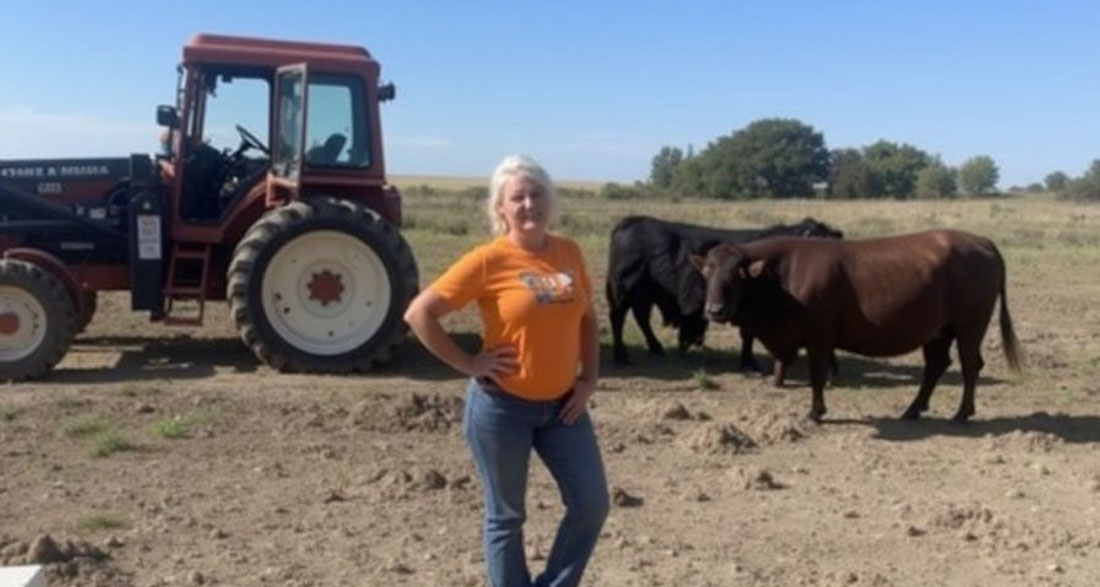
Mud squelched in the grooves of my boots, dry dust clung stubbornly to the hems of my jeans, and the brim of my old, faded ball cap shaded my face as I pushed open the door to the feed store that morning.
It should’ve been a normal trip—grab a bag of feed if needed, stock up on mineral blocks and fencing wire—but from the instant I stepped inside, everything twisted sideways.
The man at the counter gave me a look. Not just a glance, but that look—the one that says, you don’t belong here.
Like I’d wandered into a place where I wasn’t welcome. Then, as if to make sure I got it, he said, “Need directions to the gift shop?”
I froze a second, the sharp reply dancing on my tongue. I swallowed it down. “No,” I said, steady. “I’m just here for the same things I’ve bought every week for ten years.”
He laughed. Loud. Like I’d told some joke he loved. Then he grinned—one of those smug, irritating grins—and asked, “Your husband loading the truck for you?”
I felt heat rise in my chest. My husband had been gone five years. And honestly? Life ran smoother without him.
The cows didn’t notice when he left, the fences still needed fixing, calves still came at 2 a.m., and hay still had to be hauled. I did it all myself.
I fixed him with a look and said, “No husband here. I handle it myself.” I watched the smirk fade.
Still, the way people underestimate me sticks. Neighbors like Roy, across the creek, treat my ranch like it’s a dollhouse and I’m just pretending to run it.
He’d wander my fence lines, shaking his head, tossing over a “Don’t overwork yourself, sweetheart,” like I hadn’t crawled through a blizzard last winter to repair his busted water line.
It gets old—being treated like half-capable while you carry twice the weight.
By the time I left the store, I thought I could shrug it off, like always. But back home, nailed to my barn door, was a letter. No stamp, no name, just one line in blocky black ink:
“I know what you did with the west pasture.”
I read it over and over. The words rang in my head like a gate banging in the wind. The west pasture was my pride—thirty acres I had rescued from ruin.
When my ex left, that land was my first project. I reseeded, fertilized, repaired water lines, nursed it back to life. Now the grass was thick, green, strong enough to shine in a magazine spread. So what did this note mean?
Maybe a prank. Maybe Roy, though he wasn’t that kind. No one else nearby cared much about my land. Still, the words stabbed. By late afternoon, I drove across the creek to confront Roy.
He was outside his shop, wiping his hands on a rag. I handed him the note without a word. He squinted, shook his head.
“Not me,” he said. “Maybe old man Garrison, but he’s not sneaky. He yells in your face if he’s got something to say.”
Then Roy added something that made me pause. “People’ve been whispering you’re looking for a new buyer for your heifers.”
I admitted I had, just trying for a better price. “Still doesn’t mean it’s their business,” I muttered.
Roy shook his head firmly. “Not me,” he said. Then he added, almost like a challenge, “Do you want some help?” I shook my head. Not ready to admit I might need it.
The next morning, I walked the fence line with Pepper, my Australian Shepherd mix who never leaves my side. The dew hung on the grass, the air crisp.
Near the pond, I spotted footprints—small, light, too different from Roy’s heavy stride, too fresh to ignore. Pepper sniffed, growled low, warning me something wasn’t right.
Back at the barn, I found scratches near the door latch—someone had tried to pry it open. This wasn’t kids messing around. This was deliberate. My hands curled into fists.
That night, I went into town for dinner and new locks.
At the diner, I ran into Lucia, who runs a dairy farm a few miles up. Sharp, no-nonsense, one of the few people I trusted. I told her about the note and the footprints. She frowned.
“Could it be your ex’s people?” she asked.
“Doubt it,” I said. “He never cared about this land. Not then, not now.”
“I can camp out at the pasture if you need backup,” she offered. I almost laughed, but her words settled the tight knot in my chest. Knowing someone would stand with me… it helped.
Stars lit the way home. I turned down the gravel drive, and then I saw it—movement by the barn. Someone crouched at the side door, messing with the lock. My headlights caught them.
“Hey!” I shouted.
They bolted. Fast. Slender.
Vaulted over the fence like it was nothing and vanished into the night. My lock was half undone, metal scratched raw. My hands shook as I latched it shut, leaning heavily against the barn.
This wasn’t random. Someone was targeting me. And all I had was that damned note about the west pasture.
The next day, I stopped staying quiet. I called Roy, Lucia, even Garrison.
I called the sheriff. Deputy Longstreet came out—calm, steady, notebook in hand. He looked at the footprints, nodded. “We’ll keep an eye on things. Trail cameras might help.”
Days later, Roy called, voice buzzing with excitement. He’d seen a hooded figure near my property, taking pictures of the fence line.
He followed them long enough to catch their truck, out-of-county plates, and wrote the number down. I handed the info to the sheriff.
Deputy Longstreet called back. Plates traced to a consultant named Lillian Black, working for a company hunting ranchland for development.
They’d been sneaking onto properties, trying to scare ranchers into selling.
Everything clicked. The letter. The footprints. The scratches. Not personal—it was business. Cold, ruthless business. They thought they could scare me off my land.
They were wrong.
I spread the word through the local ranch association, told every neighbor what I’d found. Lucia, Roy, even Garrison stood with me.
Stories surfaced of the same company doing this elsewhere. With the sheriff pressing and complaints filed, the company backed off within weeks.
The first deep breath I took after that felt like dropping a weight I’d carried forever. Relief, yes, but also pride—not for facing it alone, but for standing tall and letting others stand with me.
When I went back to the feed store, the man at the counter looked at me differently. No smirk, no questions about a husband. Just a quiet nod, like he finally saw me.
Didn’t matter why—what mattered was that when I loaded my truck—fencing wire, mineral blocks, everything—no one asked if I needed help.
Gravel crunched under my tires as I drove out, the sun spilling over the ridge.
For years, I let people’s opinions gnaw at me. Now I understood—it wasn’t their judgment that built this life. It was my sweat, grit, and stubborn refusal to quit.
The west pasture stood green and strong, proof of what I could do when I refused to back down.
Folks might see a woman with a blonde braid and muddy boots. But what I see is the one who keeps the herd fed, the fences strong, and the land alive.
And no one—not one person—can take that from me.
