
I never planned for my life to fall apart in a single night. But it did.
Two months ago, my parents were killed in a head‑on crash on Route 47. One drunk driver. Two coffins.
And suddenly, I became the legal guardian of my 16‑year‑old sister Abby. She was already in an early college program, already dreaming of being the first person in our family to get a degree.
Then the tuition bill showed up three days after the funeral.
$12,000. Due in two weeks.
I had been working as a nurse, but that fell apart too. My supervisor cornered me in a supply room and said, “We could take a nice personal weekend together… just you and me.”
When I refused, he turned my life into a nightmare. Then he fired me for “performance issues.”
So there I was: broken, jobless, grieving, raising a teenager who needed me to be strong, even when I wasn’t. The bill sat on our kitchen table like a brick I couldn’t lift.
That’s when I saw the online ad.
“Live‑in caregiver needed. Private residence. Excellent pay. Room and board included. Start immediately.”
I didn’t hesitate. I dialed the number within five minutes.
Arriving at the Estate
Two days later, I was standing in front of a giant estate in Thornhill. Iron gates. Fancy hedges. The kind of place where you whisper because it looks expensive.
A man about 28 opened the door. Dark hair. Kind eyes. A tired smile.
“You must be Rachel. I’m Ethan.”
He shook my hand and sighed heavily.
“Listen… before you meet him, I should warn you. My brother can be… challenging.”
“Challenging how?”
“He’s angry. All the time. At everything. Especially caregivers. We’ve had 11 in the last year. Most didn’t last a week.”
He led me inside. And then I heard it.
The soft whir of wheels on hardwood.
A wheelchair rolled into the room.
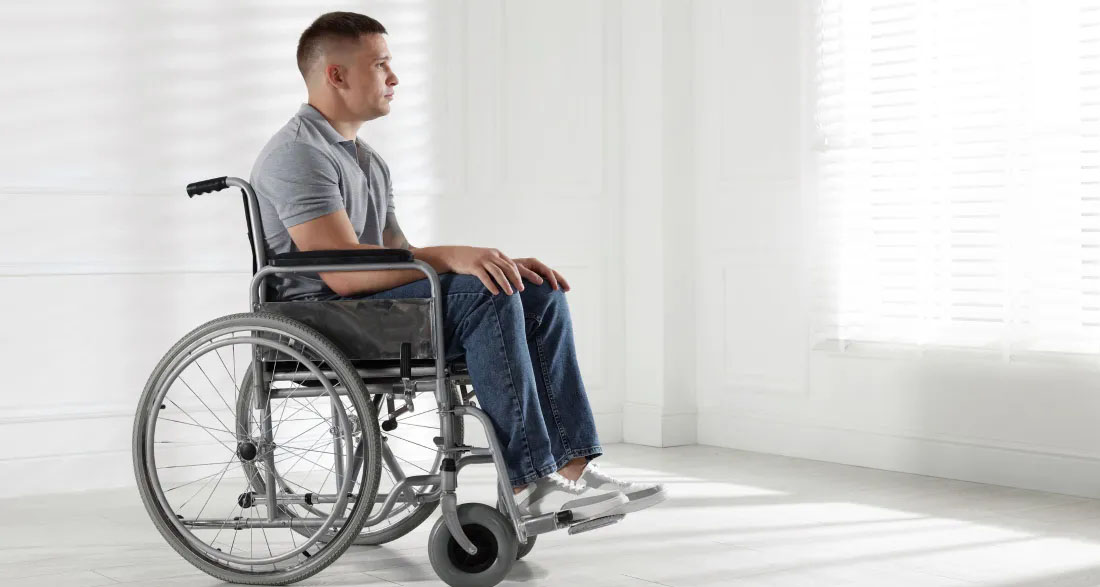
And in it sat a man about my age. He had strong shoulders, powerful arms, and a face that would’ve been handsome if it weren’t twisted into a scowl.
“Ethan, who’s this?” he asked, voice cold.
“This is Rachel. She’s here for the caregiver job.”
He looked me up and down, unimpressed.
“She’s a kid. What are you, 20?”
“25.”
“Right. And you think you can handle this?”
He wheeled closer. “Let me guess. You saw the pay and decided to try it out. Pretty girls like you always do. Then you realize it’s real work and you’re gone in three days.”
My cheeks burned.
“I need this job. And I don’t quit.”
He snorted.
“Sure you don’t.”
Then to Ethan: “Fine. One‑month trial. When she fails, don’t say I didn’t warn you.”
His name was Noah. A former competitive swimmer — almost Olympic level — until two years ago, when he dove during a race, hit his head, fractured his vertebrae, and ended up paralyzed from the waist down.
Ethan told me everything while showing me my room.
“He wasn’t always like this,” Ethan whispered.
“What changed?”
He hesitated. “After… the accident… things just fell apart.”
He tried to smile. “If you need anything, call me. Good luck.”
I didn’t know how much I would need that luck.
Four Weeks of Misery
For four weeks, Noah made my life hell.
During morning exercises:
“You’re doing it wrong.”
During meals:
“I’m not eating that.”
During conversation attempts:
A cold stare. Silence sharp enough to cut.
One afternoon, while doing therapy stretches, he grumbled,
“Why are you still here? You must have better options than babysitting a cripple.”
“Don’t call yourself that.”
“Why not? It’s what I am.”
“It’s not all you are.”
He laughed bitterly.
“You don’t know anything about me.”
“I know you’re trying really hard to make me hate you. And it’s not working.”
He didn’t answer. But something flickered in his eyes.
Still, every day felt like an exam I wasn’t sure I’d pass.
But I stayed because Abby needed me. The bill. The responsibility. The grief. All of it kept me fighting.
And maybe I understood his pain more than he realized.
I knew what losing everything felt like.
Day 29 — The Midnight Call
It was nearly midnight when my phone buzzed.
A text from Noah:
“My room. Now.”
My heart pounded. Had he fallen? Was he hurt?
I sprinted down the hall and opened his door—
Then froze.
Clothes were all over the floor. His shirt. His sweatpants. The room dimly lit by a lamp. And Noah sat in his wheelchair, staring straight at me.
“Come here,” he said softly. “Take off your clothes.”
My stomach dropped.
No. No. No.
He thought he could order me around—
I stepped back. “I’m leaving.”
“Wait!”
He lifted his hand, eyes wide.
“That came out wrong. God, that was—just hold on.”
Then he reached behind him… and pulled out a dress.
A beautiful silk dress. Deep color. Elegant.
“I meant put this on,” he said, face red. “Not… not what you thought. I’m sorry.”
I blinked at the dress. The clothes on his floor weren’t some awful plan — they were his clothes. He had been trying to dress himself.
That’s when I saw the small table in the corner. Two chairs. Candles. Flowers. Dinner set carefully.
“What… is this?”
He swallowed hard.
“An apology. A real one. I wanted to do something good for once. For you.”
“Noah…?”
“Please. Let me talk.”
His voice wavered.
“My fiancée left two weeks after the accident. She said she couldn’t sacrifice her life for someone who’d never be whole again.”
He looked away.
“So I assumed everyone else would leave too. I figured if I pushed people away first… it’d hurt less.”
My chest tightened.
“You’re the first person who didn’t quit,” he said.
“You treated me like a person. Not a job. Not a burden.”
He nodded toward the dress.
“I wanted… one normal dinner. Before the trial ends. Before you decide if you’re staying or going.”
“You think I’m going to leave?”
“Everyone does.”
“I’m not everyone.”
His breath caught.
“So… will you stay? For dinner?”
I looked at the dress again. At the candlelit table. At his nervous hands.
“Yeah,” I whispered. “I’ll stay.”
Dinner & Secrets
The dress fit perfectly.
We talked for hours.
About Abby.
About my parents.
About the tuition bill that kept me awake at night.
He listened so carefully and whispered, “I’m sorry.”
Then he told me everything — the accident, the surgeries, the months in rehab… and the fiancée who cried once, removed her engagement ring, and walked away forever.
“I was supposed to get married last October,” he said quietly.
“Instead, I was learning how to move from my bed to my wheelchair.”
“She didn’t deserve you,” I said.
He stared at me like he’d never heard those words before.
“You really believe that?”
“Yeah. I do.”
We talked until nearly three in the morning. And something between us shifted — like two broken pieces finding where they fit.
Steps Toward Hope
After that night, Noah changed.
He stopped fighting therapy.
He worked harder.
He smiled sometimes. Real smiles.
Three weeks later, during an assisted walking session, I stood beside him—
And he took a step.
Then another.
“I’m doing it!” he shouted. “Rachel, I’m actually doing it!”
I cried.
“You are. Keep going.”
He managed two more shaky steps before falling forward into my arms, laughing breathlessly.
“Did you see that? I walked.”
“You were amazing.”
He looked at me with a new light.
“For the first time in two years… I think I’m going to be okay.”
Love Grows
Months passed.
He grew stronger.
He walked short distances with a cane.
He cooked breakfast on Sundays — badly, but proudly.
And somewhere along the way…
I fell in love with him.
Then one morning, I got an email:
“Account Balance: $0.00. Paid in full.”
The tuition bill… gone.
I burst into Noah’s room.
“Did you do this?!”
He didn’t deny it.
“Yes.”
“Noah, that was $12,000!”
“I know. And I don’t care.”
He wheeled closer.
“You saved my life, Rachel. Let me help your sister the way you helped me.”
My eyes filled with tears as he held me close.
A New Future
Last week, Noah walked from his room to the kitchen without his cane.
When he reached the counter, he turned and grinned at me.
“I think I’m going to be okay.”
“You’ll be more than okay,” I said.
“Only because of you.”
He walked toward me, slow but steady.
“You made me believe I was worth fighting for.”
“You always were.”
Then he said the words I didn’t expect:
“I love you.”
My heart soared.
“I love you too.”
He kissed me in the kitchen while Ethan pretended to read the cereal box like it was Shakespeare.
What Happened After
People ask how a caregiver and a patient became something more.
But the truth is simple:
I didn’t fix Noah.
He fixed himself.
I just reminded him he was worth fixing.
Now he swims again — not for medals, just for peace. And every time he dips under the water, I hold my breath until he rises.
Some days are hard. Some days his body doesn’t listen.
But he doesn’t face it alone anymore.
And neither do I.
So if you’re reading this, thinking you’re too broken to be loved, remember this:
Even shattered lives can create something beautiful.
Sometimes the person you save is the one who ends up saving you too.
I didn’t give up on Noah.
And he gave me a reason to never give up on myself.
