
When everyone else walked away from an orphaned little girl battling cancer, I chose to stay — and adopt her. What I didn’t know then was that love has a strange way of finding its way back to you, sometimes in the most unexpected and beautiful ways.
For years, people asked me the same question over and over again — at family dinners, office parties, even in grocery store lines when strangers felt bold enough to pry:
“So… are you married? Do you have kids?”
And every time, I forced a smile and said lightly, “No. Just me.”
But that little answer carried a weight I never told anyone about. They never saw the nights I cried myself to sleep, or how I stood in the shower trying to muffle the sound of my sobs.
They didn’t see me at baby showers, smiling for the cameras while my heart cracked a little more every time someone said, “You’ll be next!”
At 48, I told myself I’d made peace with being alone.
Maybe I even believed it sometimes. But on quiet nights, when I turned off the lights and the house fell silent, the question still whispered through my mind:
“If I’m really okay being alone… why does it still hurt so much?”
When I was younger, I had a clear picture of what my future would look like — noisy Saturday mornings with pancakes burning on the stove, tiny socks disappearing in the laundry, the fridge covered in crayon drawings. A home full of laughter, chaos, and love.
Then came the day the doctor looked me in the eyes and said softly, “I’m sorry… but you won’t be able to carry a child.”
Those words shattered me.
I tried everything after that — expensive fertility treatments that drained my savings, hormone shots that left me dizzy and sick, prayers whispered in sterile clinic rooms that smelled of disinfectant and disappointment.
But every test, every call, every visit ended the same. Negative. Empty.
And slowly, I learned to live with the ache.
Dating after that was like walking through a minefield. Some men said it didn’t matter. They’d smile and hold my hand and promise, “We’ll figure it out.” But sooner or later, I’d see the look in their eyes — first pity, then disappointment, and finally… distance.
One by one, they all left.
So I stopped waiting to be chosen. I decided to choose myself.
I bought a little house at the edge of town — two bedrooms, a swing on the porch, and just enough garden to keep my hands busy.
I filled it with books, plants, and every cozy thing I could think of to fight the loneliness. But no matter how many flowers I planted or how many walls I painted, silence always crept back in like a shadow.
Some nights, I’d sit by the window with a cup of tea and imagine the sound of small feet running down the hallway. I didn’t dream of a perfect child anymore — just laughter. Someone to love. Someone to care for.
The thought of adoption had whispered to me for years. But I always pushed it away.
You’re too old, I’d tell myself. You’ve built your life already. It’s too late.
But the truth was, I wasn’t too old — I was scared. Scared to hope again. Scared to love and lose.
Still, the idea never left me. It grew louder every lonely morning, every silent weekend, every empty holiday.
Then one gray Tuesday, while staring at the second empty coffee mug across my kitchen table, I finally whispered, “Maybe it’s time.”
That same afternoon, I drove to the children’s shelter outside town. My hands shook on the steering wheel the whole way.
The building was old but cheerful, painted bright yellow like someone was trying to convince sadness not to stay.
Inside, the air smelled of crayons and soap. Children’s laughter echoed down the halls — light and musical, but beneath it, I could sense something fragile.
A woman with kind eyes greeted me at the desk. “I’m Mrs. Patterson,” she said warmly. “You’re here to visit the kids?”
I nodded, my throat too tight to speak.
“Take your time,” she said. “They’re in the common room.”
I walked in slowly. The room buzzed with energy — kids building towers from blocks, drawing pictures, chasing each other in circles. Their laughter filled the room, but I could feel it — every smile had a story.
And then… I saw her.
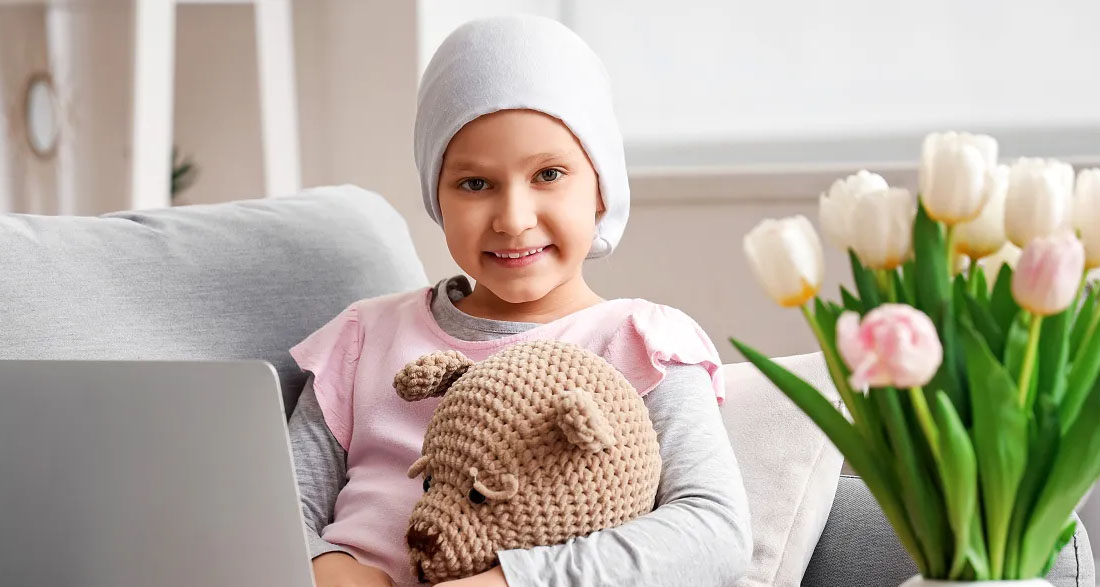
A small girl sat alone by the window, drawing quietly. She wore a knitted hat pulled low over her head, her thin shoulders hunched as if she were trying to take up as little space as possible.
She looked up when she felt my gaze. Her eyes were wide and brown — old eyes in a little girl’s face. Sad, but curious. When I smiled, she hesitated, then gave a tiny one back.
I knelt beside her. “That’s a beautiful drawing,” I said gently. “What are you making?”
She spoke so softly I almost missed it. “A house.”
“Is it your house?”
She shook her head. “No. It’s the one I want someday. With big windows so I can see the stars.”
My heart clenched. “That sounds perfect,” I whispered.
She studied me for a moment. “What’s your name?”
I smiled. “You can call me whatever you like.”
“I’m Lila,” she said shyly.
Mrs. Patterson walked over, her tone quiet. “She’s been here a while,” she said softly. “Moved through a few foster homes. But when her illness came back… the families couldn’t handle it.”
My stomach dropped. “Illness?”
Mrs. Patterson nodded sadly. “Leukemia. She was in remission for a while, but it returned last spring. She’s stable now, but she needs regular treatments. It’s a lot to take on.”
I turned back to Lila, who was still coloring. Her little hand trembled slightly as she drew.
Then she whispered, without looking up, “Do you think anyone would ever want me? Even if I get sick again?”
That one sentence broke something deep inside me.
I reached out and brushed a loose strand of hair from her cheek. “Sweetheart,” I said softly, “I think someone already does.”
The adoption process was long — background checks, home visits, endless paperwork. But on a sunny Thursday morning, I finally signed the papers that made Lila mine.
That night, she stood in the doorway of her new pink-and-white bedroom, clutching a tiny backpack. “This is really mine?” she whispered.
“All yours,” I said, my voice thick. “For as long as you want it to be.”
That first night, she couldn’t sleep alone. I sat beside her bed, holding her hand until her breathing slowed.
A few nights later, I woke up to quiet sobbing. I ran to her room and found her tangled in the blankets, tears running down her cheeks.
“Hey, what’s wrong?” I whispered, brushing her hair back.
She looked up, trembling. “Mom?”
My heart stopped. She’d never called me that before.
“Yes, sweetheart?” I said softly.
“Don’t leave, okay?”
“Never,” I whispered. “I’m not going anywhere.”
That was the night I realized — love had finally found me.
The first month was a blur of hospital visits, medications, and learning each other’s quirks. I discovered Lila loved strawberry pancakes and hated oatmeal.
She discovered I couldn’t sing to save my life — but she begged me to sing anyway.
Some days she was too weak to get up, so we watched movies on the couch. Other days, she’d dance around the kitchen while we baked cookies, spilling flour everywhere.
We were finding our rhythm, one messy, beautiful moment at a time.
Then one morning, everything changed.
I was making tea when I heard the sound of multiple engines outside — deep, rumbling, powerful. I looked out the window and froze.
A sleek black limousine and five dark sedans were parked in front of my little house. Men in suits stepped out in perfect sync. My heart pounded.
A tall man with silver hair and a briefcase walked up my porch.
I opened the door before he could knock. “Can I help you?” I asked cautiously.
“Are you Lila’s guardian?” he asked politely.
“Yes,” I said slowly. “Who are you?”
“My name is Mr. Caldwell. I’m an attorney representing an estate. May I come in?”
I hesitated, then nodded.
He sat at my kitchen table, opened his briefcase, and said, “Lila’s biological parents, Robert and Emily, passed away in a car accident when she was a baby.
Before their deaths, they set up a trust in her name. Their instructions were clear — once Lila was adopted by someone who truly loved her, the estate would be released to that guardian to manage on her behalf.”
I blinked, stunned. “I… I don’t understand.”
“They wanted to make sure love found her again,” he explained kindly. “Not through money, but through someone who chose her for love alone.”
He handed me a folder filled with documents — bank statements, property deeds, legal papers. Then he took out a small cream envelope sealed with wax.
“This letter,” he said, “was left for Lila and whoever would one day become her family.”
My hands trembled as I broke the seal. The handwriting was soft and delicate:
To our dearest Lila,
If you’re reading this, it means we’re watching over you from somewhere better.We wanted to make sure love would find you again — real love, not bought but given freely. To the person who becomes her family: thank you. Please take care of our little girl. She was our whole world.
With all our love,
Mom and Dad.
Tears filled my eyes. I pressed the letter to my heart.
“Mom?” Lila’s sleepy voice came from behind me. She stood in her pajamas, her favorite blue scarf wrapped around her head.
I knelt and opened my arms. She ran into them, hugging me tight.
“Your parents,” I whispered, “they loved you so much. They made sure you’d always be safe.”
A week later, Mr. Caldwell took us to see the house from the trust.
It sat an hour outside the city, surrounded by oak trees. White shutters, a wraparound porch, wildflowers spilling from the garden.
Lila’s eyes widened. “Mom, it looks just like the house I always draw!”
I smiled through tears. “Maybe you were remembering it all along.”
Inside, sunlight streamed through the windows. On the fireplace mantle sat a photo of a young couple holding a baby wrapped in yellow.
Lila touched it softly. “They look nice.”
“They were,” I said. “And they’d be so proud of you.”
She looked at me, smiling. “Do you think they’re happy I found you?”
I hugged her tight. “I think they’re celebrating.”
With the inheritance, I finally got her the best treatment. Slowly, her color came back. Her laughter grew louder. The doctors used words I never thought I’d hear — improvement, remission.
One day, while we sat on the porch coloring, she said, “Mom, maybe my first parents picked you.”
I laughed softly. “Why do you say that?”
“Because you came when I needed you most. Maybe they told God, ‘Give her to that lady — she looks lonely.’”
I wiped my eyes and hugged her. “Then I owe them everything.”
By autumn, the doctors said the words I’d prayed for: remission.
I cried so hard the nurse had to hand me tissues. Lila just grinned and said, “Told you we’d win, Mom.”
We moved into her parents’ house that winter. Lila planted tulips in the front yard — pink and white. “For both my moms,” she said proudly.
Every night, we’d sit on the porch wrapped in blankets, staring at the stars.
“Do you think they can see us?” she’d ask.
“I know they can,” I’d whisper. “And they’re smiling.”
It’s been three years now.
Lila is thirteen, healthy, full of laughter. The letter from her parents hangs framed in the living room. Every morning, she touches it before school.
Sometimes I pass her room and see her asleep under the glow-in-the-dark stars we stuck on her ceiling. Her blue scarf hangs untouched on the chair — she doesn’t need it anymore.
I used to believe I’d missed my chance at motherhood. But maybe I was just waiting for her.
Because Lila wasn’t just born once.
She was born twice — once into this world, and once into my heart.
And both times, she was absolutely perfect.
