
Still Waters, Strong Heart
When my stepmother decided to throw a party at my late mother’s sacred lake house using stolen keys, I thought I’d have to be the one to teach her a lesson. Turns out, karma had already prepared something far more satisfying than anything I could’ve done myself.
When my mom passed away, she left me one precious thing—her lake house.
It wasn’t just a house. It was her peace, her dream, her safe place in the world. She had bought it on her own before meeting my dad.
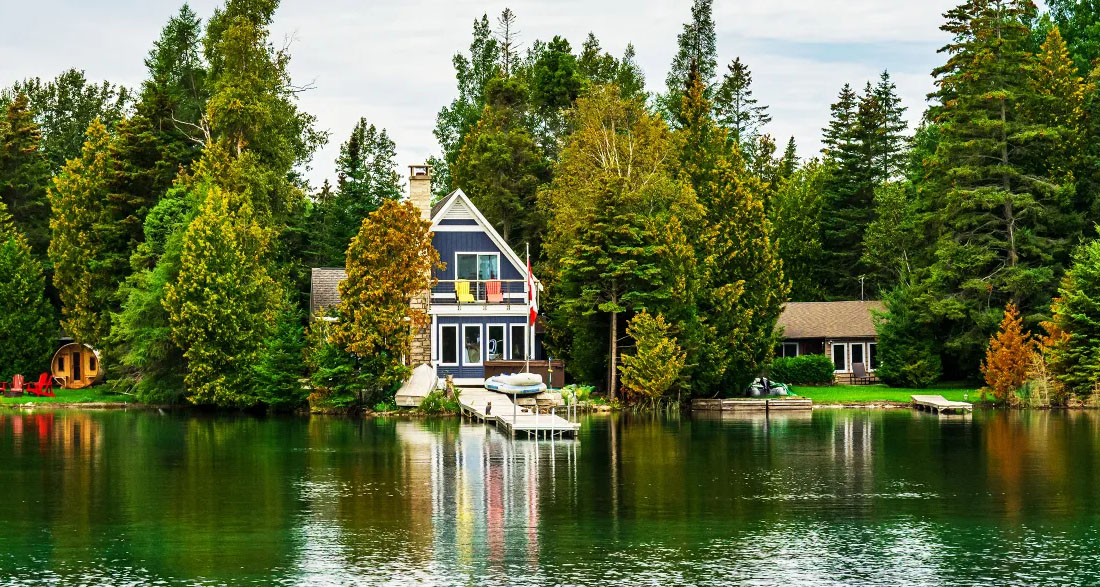
I grew up spending summers there. I still remember those warm afternoons when Mom would load our old car with a picnic basket and her paints, humming as she drove us down the hour-long road that led to the quiet lake surrounded by pine trees.
She’d set up her easel by the water, the soft sound of brushes swishing mixing with the ripple of waves. Meanwhile, I’d build crooked sandcastles and skip stones across the glittering water.
“Lana, baby,” she’d say gently as the wind lifted her hair, “this place holds all my best thoughts. Someday, it’ll hold yours too.”
On rainy days, we’d curl up by the big window, wrapped in blankets with steaming mugs of cocoa. The rain would drum against the roof, and she’d read stories about brave girls who faced storms and found light again.
Sometimes, she’d let me play with her paints, and I’d make messy little finger paintings that she’d proudly hang on the fridge as if I were some kind of artist.
But the memory I treasure most is from the summer I turned fifteen.
We spent an entire week there—just Mom and me.
Every morning, we made blueberry pancakes on the old gas stove. The smell filled the air as sunlight poured through the windows. We’d sit on the porch eating, watching the sunrise turn the lake into liquid gold.
That week, she told me something I never forgot.
“This house saved me, you know,” she said one evening while we roasted marshmallows over the firepit. “When life got hard, I’d come here and remember who I really was.”
After she died when I was sixteen, the lake house became sacred ground.
I didn’t rent it out or let anyone else stay there. I just visited a few times a year, cleaned it, and kept everything exactly the way she left it—even down to the embroidered pillow she’d made that read “Still waters, strong heart.”
That place was her soul. And now it was mine too.
Dad, on the other hand, didn’t see it that way.
He remarried less than a year later. Her name was Carla.
Carla was… well, plastic. Not just in looks, but in spirit. Her smile was fake, her sympathy was fake, and her love for Dad felt just as fake. She had perfect white veneers, hair that never moved, and that sugary voice that always came before something mean.
“Oh, sweetie,” she’d say in a tone that made me want to scream, “I just think you’d look so much prettier if you smiled more.”
But what really made me hate her wasn’t her fake kindness. It was how she erased my mom.
The day she moved in, she started “redecorating.” Within a week, Mom’s handmade quilts were in the trash, her paintings gone, replaced with cold, gray furniture that looked like it belonged in a magazine, not a home.
Carla called it “modernizing.” I called it erasing.
And she never missed a chance to make fun of Mom. She did it so sweetly that Dad didn’t even notice.
“Oh, I could never pull off boho like she did,” she’d say with a fake laugh. “Takes a special kind of confidence to wear patchwork skirts every day!”
Or, “She was so… whimsical. Almost like she lived in a dream world instead of the real one.”
Her friends joined in too. They’d sip wine in the living room and giggle about “the hippie Earth-mom” who “probably charged her crystals under the moon.”
I remember one night when I was seventeen, I came downstairs to get water and heard Carla laughing in the kitchen.
“Well, she did make excellent bread,” Carla said, swirling her glass of wine. “That’s something, I guess. Very domestic.”
Her friend Janet snorted. “Did she really grow her own herbs? Like, in the backyard?”
“Oh, yes,” Carla said dramatically. “The whole yard was a jungle. Honestly, I don’t know how she kept track of it all. But then again, she always had her head in the clouds.”
Their laughter echoed through the house like poison.
I wanted to scream at them—to defend Mom—but I didn’t. I was just a grieving kid trying to survive in a home that no longer felt like mine.
Years later, when I turned twenty-one, I finally inherited the lake house. And I made it very clear to everyone: it was off-limits.
“Dad,” I told him over dinner one night, “that place is sacred to me. It’s where I go to feel close to Mom. Nobody goes there. Ever.”
Dad nodded, serious. “Of course, sweetheart. Whatever you need.”
But then Carla chimed in, flashing her fake smile.
“Of course, honey,” she said sweetly. “Your mother’s little fairy cottage deserves to stay just as it was.”
Fairy cottage. As if it were some dollhouse instead of my mother’s heart.
Five years after Mom’s death, I was preparing for my yearly visit. I always went alone to spend the anniversary at the lake house—bringing flowers, lighting a candle, remembering her.
That day is sacred to me. It’s my way of saying, I still remember you, Mom.
But that year… something felt off the moment I arrived.
As I turned into the gravel driveway, I froze.
There were four cars parked in front of the house. Loud music thumped from inside. Laughter spilled out through the open windows.
And then I heard it—Carla’s voice.
My heart pounded. What the hell is she doing here?
I stepped out of my car and walked to the porch. Through the window, I saw her—Carla—wearing a swimsuit, pouring drinks from expensive bottles while her friends lounged around laughing.
One woman was even resting her feet on my mom’s embroidered pillow. The one that said “Still waters, strong heart.”
I felt sick. I wanted to burst in and throw them all out. But I stopped myself and backed away.
The door wasn’t broken, the windows were fine… so how had she gotten in?
Then it hit me. She had stolen my key.
Later, I found out exactly how.
While I was on a work trip three weeks earlier, Carla had convinced Dad to give her my spare apartment key—said she needed to “water my plants.” Instead, she went through my things and stole the lake house key from my desk drawer.
When I confronted her, she didn’t even deny it.
“Lana, sweetheart, you’re being so dramatic,” she said, staring at her nails. “It was just a little gathering. That house was collecting dust. You weren’t even using it.”
“You stole from me!” I shouted. “You broke into my mother’s house on the anniversary of her death!”
Carla rolled her eyes. “And wallowing in grief isn’t healthy, honey. Your mother wouldn’t want you stuck in the past.”
That was it. I didn’t yell. I didn’t cry. I just smiled.
“Okay, Carla,” I said calmly. “You’re right. I see your point.”
She looked smug, thinking she’d won.
But what she didn’t know was that I had something she didn’t—proof.
The lake house had a full security system with cloud-stored cameras inside and out. I’d installed it the previous year after a break-in scare.
When I showed the footage to my lawyer, Jennifer, her face turned pale.
“Oh, honey,” she said softly. “Your mother was an angel. I knew her from our art classes. Don’t you worry—we’ll handle this properly.”
The footage was damning. Carla unlocking the door with my stolen key. Her friends drinking, mocking my mother’s art, even breaking one of Mom’s stained-glass pieces she’d made by hand.
Then came the text messages—discovered legally through the case:
“Bring the good wine, we’re partying at the hippie hut 😏”
“She’ll never know, she does her grief thing after the weekend LOL”
“Time to see how the other half lived… or should I say HALF-BAKED 😂”
Yeah. Those didn’t sound so funny in court.
The cherry on top?
Carla’s lawyer turned out to be married to a woman named Susan—someone my mother had once helped through deep depression years ago. When Susan found out who the case was about, she told her husband everything my mom had done for her.
He dropped Carla as a client three days later.
“I can’t in good conscience represent someone who would desecrate the memory of the woman who saved my wife’s life,” he told her coldly.
In the end, Carla was charged with trespassing and theft. She also got a civil judgment for property damage and a restraining order keeping her 500 feet away from me and the lake house.
I changed all the locks and sent her a bill for the broken stained-glass piece—$1,800, appraised by a local artist—with a note attached:
“Still waters, strong heart. But even strong hearts demand justice.”
She never replied.
Two months later, she moved out of Dad’s house.
Dad never said much about it, but I could see the regret in his eyes. I think he finally realized the truth—that Carla didn’t just disrespect my mom. She tried to destroy what little of her was left.
Now, the lake house is safer than ever. I replaced the locks, added more cameras, and keep it just as Mom left it.
When I sit on the porch and watch the sun rise over the calm water, I can almost hear her voice again:
“Still waters, strong heart.”
I whisper back, “I love you, Mom. And I’ll always protect your place.”
Because this house doesn’t just hold her best thoughts anymore—it holds mine too.
