
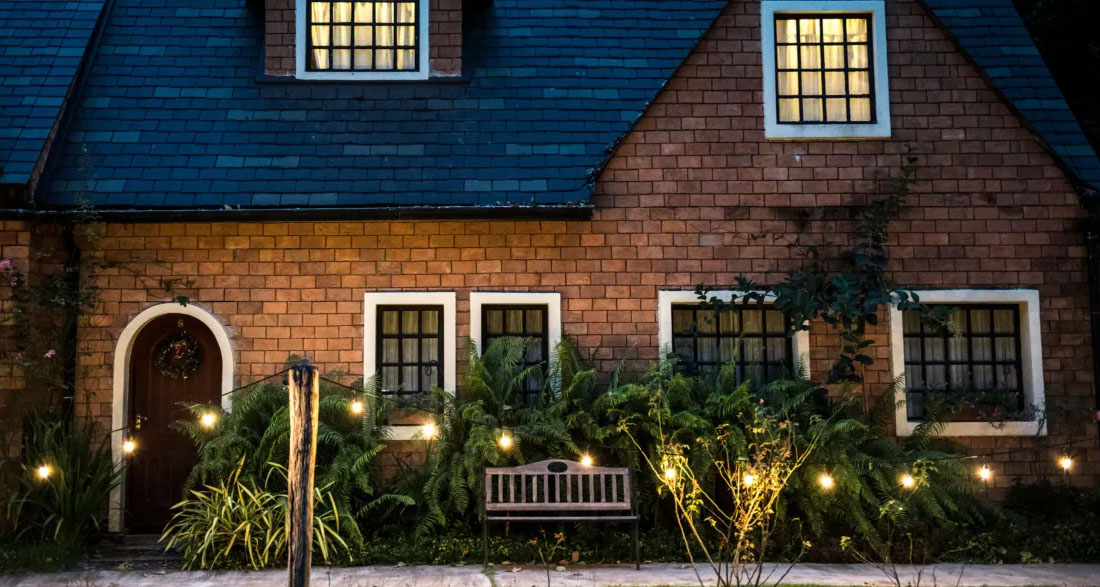
My name is Harold. I’m a former Marine. These days, though, the toughest fights I deal with are the ones my old knees give me every morning.
I’ve lived alone in my small house for years. Life had become quiet and predictable.
I spent most afternoons sitting on my front porch, watching cars pass by and the neighborhood kids ride their bikes. Sometimes a neighbor would wave, and I’d wave back. That was usually the most exciting part of my day.
But everything changed when a new family moved into the house across the street.
It was a warm Saturday morning in June when the moving truck arrived. I watched from my porch as a couple in their 40s unloaded boxes.
They had two kids with them—a teenage boy and a younger girl. From the outside, they looked like a perfect family. Smiles, laughter, polite waves to the neighbors.
But I’ve lived long enough to know something important.
Looks can be deceiving.
The very next day, the whole family walked across the street to introduce themselves.
I was in my living room when I heard the knock on the door. When I opened it, the father stepped forward immediately and held out his hand.
“Good afternoon!” he said with a friendly smile. “We’re new in town and wanted to introduce ourselves. I’m David, this is my wife Sarah, and our kids are Leo and Mia.”
I shook his hand firmly. “Harold,” I said.
Sarah stepped forward with a warm smile and held out a cherry pie.
“It’s very nice to meet you,” she said.
Behind them, the young girl, Mia, smiled brightly and waved at me like we were already friends. The teenage boy, Leo, stood a few steps back.
His chin was tucked down, and his hands were shoved deep into his pockets like he wished he could disappear.
Still, the whole thing felt friendly enough. We talked for a few minutes, and then they headed back across the street.
I watched them go, wondering what kind of neighbors they’d turn out to be.
A week passed quietly.
Every afternoon, I sat on my porch like always. One day I noticed David and Leo outside in their yard tossing a football back and forth.
At first, I thought they were just having fun.
But after watching for a few minutes, I realized something else was going on.
David wasn’t playing for fun.
He was coaching.
“Again!” David called out sharply. “Level it out. You’re letting the nose dip. Focus, Leo.”
Leo jogged over to grab the ball. His movements looked slow and tired, like he’d already done this a hundred times that day.
He threw the ball again.
It sailed a little off target.
When one throw went wide and landed in the bushes, David rubbed the bridge of his nose and checked his watch like he was losing patience.
“You’re not focused,” David said firmly. “Go throw at the wall until you get it right.”
He turned and started walking back toward the house.
Leo stood there watching him leave. His shoulders slowly slumped.
Then he threw the ball straight down at the ground in frustration. It bounced high, rolled across the sidewalk, and ended up in the street.
Leo walked out to retrieve it.
I couldn’t help myself.
“Keep your elbow up,” I called out from my porch. “And step into your throws.”
Leo looked over at me like I had just spoken another language.
“You’ve got the arm, son,” I said. “You just need to work on the mechanics.”
He stared at me for a moment, unsure what to say. Then he nodded.
“Uh… thanks,” he called back quietly.
He returned to the yard and tried again.
This time, the throw was cleaner.
He glanced across the street at me. I gave him a thumbs-up.
For a second, I thought I saw a small smile.
Less than a week later, things started getting strange.
One night I was sitting in my dark living room when I noticed a light flashing from Leo’s bedroom window across the street.
At first, I thought it was just a flashlight.
But then I noticed the pattern.
Three short flashes.
Three long flashes.
Three short flashes.
My pulse jumped instantly.
I knew that pattern like the back of my hand.
Morse code.
S.O.S.
My heart started pounding harder than it had in years.
I stood up slowly, my joints popping like dry sticks, and moved closer to the window. The neighborhood was silent. The street was empty.
Nothing looked wrong.
Except for that flashing light.
The next morning everything looked completely normal.
Sarah was outside watering the petunias. David left for work wearing a crisp, pressed shirt. Leo climbed into the car with his backpack without saying a word.
Everything looked like a perfect suburban morning.
I scratched my head.
Maybe the kid was just messing around.
But then it happened again the next night.
And the night after that.
Three short.
Three long.
Three short.
S.O.S.
After the fourth night, I started thinking the kid was playing some kind of stupid prank.
Finally, I grabbed my lamp and flicked it once toward his window.
The flashlight across the street instantly went dark.
Two days later, I ran into Leo at the neighborhood mailboxes.
I stopped him.
“Son,” I said seriously, “I don’t know what kind of joke you think you’re playing, but that signal is serious. It can save lives. Don’t use it for nothing.”
Leo didn’t look embarrassed.
He didn’t laugh.
Instead, he looked at me with calm, tired eyes that didn’t seem right for someone his age.
“I never joke, sir,” he said quietly.
Then he added something that stuck with me.
“Watch your window carefully.”
And then he walked away.
I stood there staring after him, unsure what he meant.
For several nights, the signals stopped.
At first, I felt relieved.
But late Monday night, just before I went to bed, I saw the light again.
This time the pattern was different.
I grabbed a notepad and pen.
My Marine training kicked in automatically as I translated the flashes.
WE.
NEED.
YOUR.
HELP.
COME.
INTO.
THE.
HOUSE.
The message repeated several times.
Then the light went dark.
A heavy feeling settled in my stomach.
Back in Vietnam, that same feeling had saved my life more than once.
Something was wrong.
I grabbed my cane and stepped outside into the cool night air.
When I reached their lawn, I already knew something wasn’t right.
Their front door was wide open.
Just standing there.
I moved closer.
That’s when I heard a loud crash inside the house.
Then shouting.
I stepped inside.
The living room looked like a storm had just passed through. A side table had been knocked over, and the drawer was spilled open across the floor.
David stood in the middle of the room, his face red with anger.
“I am NOT letting you throw this away!” he shouted. “I have built a path for you! I sacrificed every weekend for ten years so you wouldn’t have to struggle!”
Leo stood across from him, fists clenched so tightly his knuckles were white.
“I’m not throwing it away!” Leo yelled back. “I’m choosing a different life! Why is that a betrayal?”
That’s when they noticed me.
David turned slowly.
His eyes narrowed.
“Harold?” he said coldly. “What are you doing in my house?”
“Your door was open,” I said calmly, planting my cane on the floor. “I heard furniture fall. Thought you had an intruder.”
David took a breath.
“We’re fine,” he said. “This is a family disagreement. We’ll handle it.”
I shook my head.
“Sorry. I can’t do that. Leo sent for me. He’s been signaling for days.”
The room went completely silent.
David turned toward his son in shock.
“You’ve been broadcasting our business to the street?” he asked, hurt in his voice.
Leo didn’t back down.
“Every time I try to talk, you talk over me,” he said. “I needed someone to see that I’m actually here.”
David’s voice rose again.
“What is there to see? A father trying to give his son a future? I’ve got college applications ready! I even spoke to the dean at the business school! You have the grades to be anything!”
Leo took a deep breath.
“I want to be an EMT.”
David blinked.
“An EMT?” he said in disbelief. “You want to drive an ambulance for peanuts? You want to spend your nights kneeling in the dirt with strangers?”
Leo nodded firmly.
“For people who actually need help.”
David shook his head.
“You could be a doctor. A surgeon. Something respected. Something stable.”
Leo looked him straight in the eyes.
“Stable isn’t the same as meaningful, Dad.”
David sat down heavily and laughed bitterly.
“Meaning won’t pay rent. It won’t buy groceries or keep the lights on.”
Then he looked down at his rough hands.
“I worked construction after graduation because my father couldn’t keep the lights on,” he said quietly.
“I swore my son would never carry that weight.”
Leo spoke softly.
“I’m not scared of the weight.”
The room went quiet.
My knee cracked as I shifted my weight.
“In the service,” I said slowly, “the men people remembered most weren’t the ones with medals.”
Both of them looked at me.
“They were the medics,” I continued. “It takes real courage to kneel beside someone on the worst day of their life and tell them it’s going to be okay.”
Leo’s eyes stayed locked on mine.
“That’s not the same thing,” David said quietly.
“No,” I agreed. “But it is service. You raised a boy who wants to be the one people look for when things go bad. Most fathers would be proud of that.”
David stared at his son for a long time.
Finally he spoke softly.
“I’m not trying to crush you, Leo,” he said. “I’m just trying to protect you from struggle.”
Leo nodded slowly.
“I’d rather struggle for something that matters.”
The air in the room felt different after that.
I turned toward the door.
“Pressure can build strength, David,” I said. “But if you never let up, you’ll break what you’re trying to shape.”
Then I added quietly,
“You’ve got a good man standing right in front of you. Don’t break him.”
A week later, there was a knock on my door.
Leo stood outside.
He looked different. Lighter. His shoulders were relaxed.
“Dad said I could ask you about first aid,” he said. “He said you might have some insights.”
I smiled.
“Come in,” I told him.
We spent hours talking about the basics. Not about heroics, but about staying calm when someone else is panicking. About steady hands. About breathing through adrenaline.
Sometimes I’d see David across the street working in his yard.
He’d wave.
And now, I’d wave back.
One night before bed, I looked out my window.
Leo’s light flickered.
I watched carefully.
The message was short.
THANK.
YOU.
I smiled.
Then I reached over and flicked my lamp once.
Message received.
That night, as I climbed into bed, I realized something.
After all these quiet years, it felt good to know I was making a difference again.
